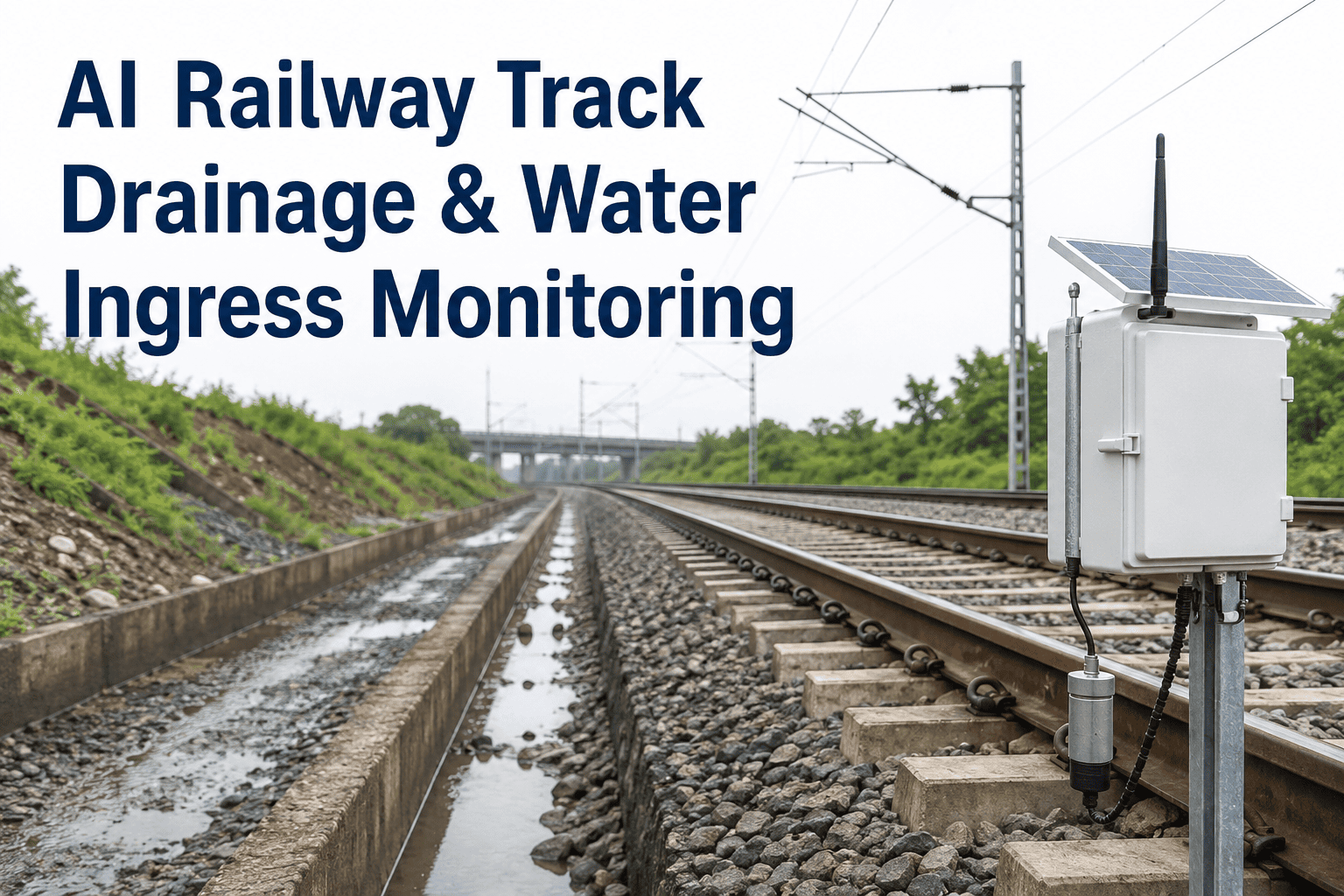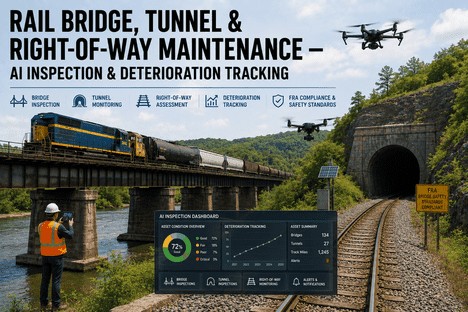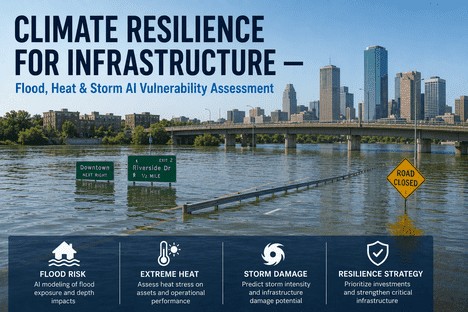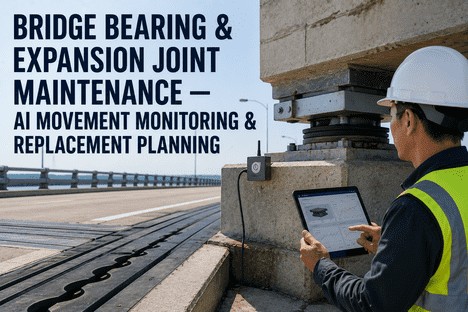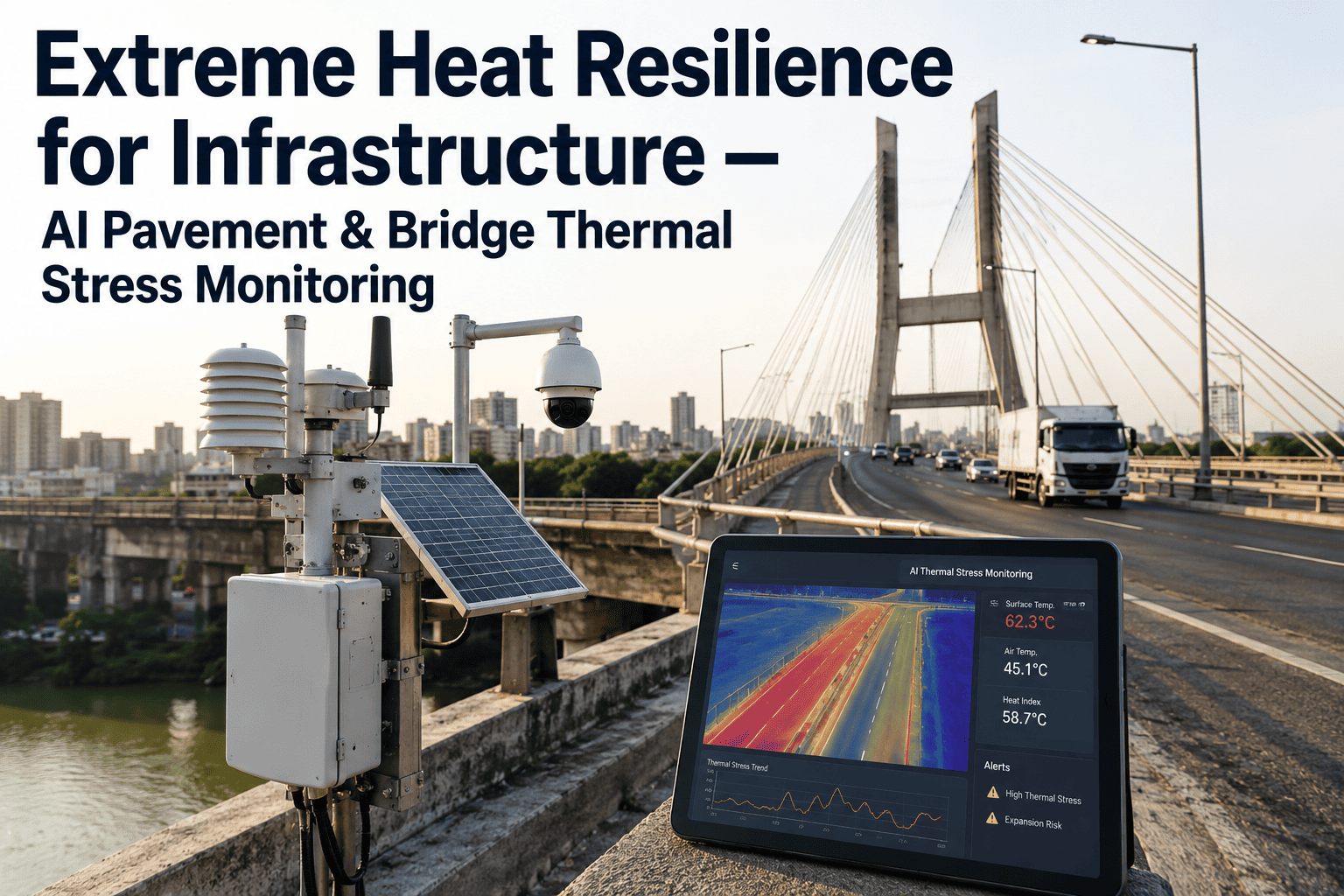
Extreme heat doesn't wait for a maintenance window. In the summer of 2024, New York's Third Avenue Bridge sat stuck open for hours after its metal expanded past what its mechanism could handle, roads buckled across Washington and Wisconsin on the same hot afternoons, and Amtrak passengers were warned of heat-related delays before a daylong outage even began. Continuous welded rail is especially exposed — when temperatures rise, the rail expands, tension builds inside the material, and combined with the load of a passing train that tension can bend the track sideways into what engineers call a sun kink, a failure mode already linked to more than 2,100 U.S. derailments. Nearly every EHS program has a heat-illness plan for workers. Far fewer have an equivalent plan for the pavement, bridges, and track those workers and everyone else depend on. See how iFactory turns pavement, expansion joint, and rail thermal data into an early warning system before a heat event becomes an incident.
Extreme Heat Resilience for Infrastructure: Know Which Asset Is Approaching Its Thermal Limit Before It Fails
AI-powered thermal stress monitoring for pavement buckling risk, bridge expansion joint capacity, and rail track stress — built for EHS teams managing infrastructure risk on top of everything else on a warming-climate watch list.
Extreme Heat Doesn't Attack Infrastructure the Same Way Twice
Pavement, bridge expansion joints, and rail track all fail under heat stress through genuinely different mechanisms, which is exactly why a single generic "hot weather advisory" isn't a resilience strategy. A road segment, a bridge joint, and a rail line can all sit under the same regional heat warning and carry three completely different levels of actual risk, because each one is reacting to a different physical property — surface material, joint design tolerance, or rail pre-stress — rather than simply "how hot is it outside." Each one needs its own signal, its own baseline, and its own threshold.
The Thermal Risk Band: Where Each Asset Moves From Normal to Critical
Ambient air temperature is a poor proxy for what these assets actually experience — dark pavement and steel rail routinely run far hotter than the air around them, sometimes by a wide enough margin that a comfortable-sounding forecast high still leaves an asset in genuine danger. That gap is also why rail temperature measurements alone aren't considered sufficient for predicting buckling risk — the track's structure and how it's anchored affect how much a given rise in temperature actually translates into compressive stress. The visual below maps out how each asset's risk escalates as its own material temperature, not the forecast high, climbs through its working range.
The Specific Signal Behind Each Heat-Related Failure Mode
None of these require a forecast — they require a direct measurement of the asset itself, compared continuously against a model of how that specific asset should behave at a given temperature.
| Asset | Signal Monitored | What It's Compared Against | What an Alert Means |
|---|---|---|---|
| Pavement | Surface and sub-surface temperature at monitored segments | Historical buckling incidents and joint-spacing design tolerance | Segment approaching the range where slab buckling has previously occurred |
| Bridge Expansion Joint | Real-time joint displacement paired with bridge temperature field | A temperature-displacement relationship model built from long-term monitoring data | New displacement readings deviating from the expected model — a sign of performance degradation |
| Rail Track | Rail temperature relative to its installed neutral temperature | Track design tolerance and known buckling risk margins for that rail segment | Rail temperature closing in on the point where compressive stress risks a sun kink |
The Infrastructure That Was Designed for Yesterday's Climate Is Operating in a Hotter One
Most pavement, bridge, and rail infrastructure currently in service was engineered against historical temperature data that no longer reflects current conditions, let alone where those conditions are heading. Average U.S. temperatures are projected to warm somewhere between 3°F and more than 9°F by the end of the century depending on emissions trajectories, and heat waves made worse by that warming trend are already expected to increase the frequency of buckling incidents rather than stay at a stable, manageable baseline. That's a meaningful planning problem for an EHS or resilience program, because a threshold that was conservative a decade ago may already be marginal today, and a monitoring program that only checks in when a heat advisory is issued has no way of catching that drift until an asset actually fails.
This is also, functionally, an infrastructure health question with the same shape as any other predictive maintenance problem — the earlier a specific deviation is caught, the cheaper and less disruptive the fix. Infrastructure health is often compared to human health for exactly this reason: problems caught only in their late stages tend to be the most expensive and the most dangerous to resolve, while the same issue caught early is often a routine, scheduled intervention instead of an emergency closure.
Weather Advisory Response vs. Asset-Level Thermal Monitoring
A regional heat advisory tells an EHS team it's hot. It doesn't tell them which bridge joint is 2 degrees from its design limit or which rail segment needs a speed restriction this afternoon rather than next week. That gap is where the two approaches genuinely diverge, and it's the gap that determines whether a team is reacting to a forecast or reacting to an actual, asset-specific risk that's building right now.
- Blanket precautions applied region-wide, regardless of which specific assets are actually near their limit
- Rail temperature measurements alone are treated as sufficient, even though structure and movement affect real risk
- Buckling, a jammed joint, or a sun kink is typically discovered after it's already happened, not before
- Response decisions rely on a forecast high, not the asset's own material temperature at that moment
- Every monitored segment, joint, and rail section is scored against its own design tolerance and history
- Displacement and temperature data are combined into a model, not read as isolated numbers
- Alerts fire while an asset is still inside a manageable range, giving time for a targeted response action
- Speed restrictions, lane closures, or inspection dispatch can be scoped to the specific segment at risk
A Forecast Tells You It's Hot. It Doesn't Tell You Which Asset Is About to Fail.
iFactory monitors pavement temperature, bridge expansion joint displacement, and rail track stress continuously, scoring each asset against its own design tolerance so your team acts on the specific segment at risk, not a region-wide guess.
Four Steps To an Actual Heat Resilience Strategy, Not Just a Hot-Weather Memo
A resilience strategy is only as useful as the specificity behind it. Plenty of EHS programs already have a version of steps one and two — some historical awareness of problem spots and some form of temperature tracking — but stop short of translating that into a documented escalation threshold and a named owner for the response action. These four steps are what separate a documented plan from a plan that actually changes what happens on a 105-degree afternoon, and each one builds directly on the one before it.
Most EHS heat programs I've worked with are genuinely thorough about worker safety — hydration schedules, work-rest cycles, heat-illness recognition training. Almost none of them extend the same discipline to the pavement, bridges, and track those same workers rely on every day. A rail segment doesn't care that the crew took their scheduled water break if it buckles under them an hour later. Treating infrastructure thermal stress as a resilience category, with its own thresholds and its own response plan, is the piece most programs are still missing.
Frequently Asked Questions
Extend Your Heat Resilience Plan to the Infrastructure Your Workforce Depends On
iFactory monitors pavement, bridge expansion joints, and rail track continuously against each asset's own thermal tolerance, so your team gets a targeted alert before a heat event becomes a buckled road, a stuck bridge, or a derailment risk.