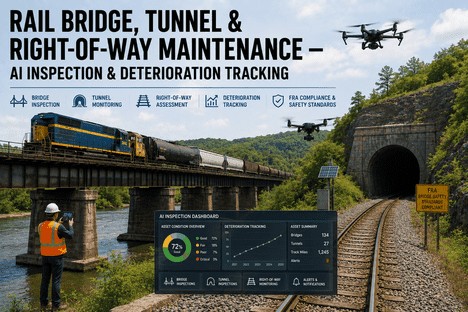
Of the 69,509 railroad bridges under Federal Railroad Administration oversight, six structural engineers are responsible for auditing the inspection programmes that keep them safe. One in nine US bridges is structurally deficient. The average age of a rail bridge in America is 54 years — well past its original 50-year design life. And when a rail bridge fails, it does not give a warning in the form of a quarterly inspection report. It fails under a passing train, as the Big Sioux River bridge collapse demonstrated in 2024, when rising waters scoured a foundation that no routine visual inspection had flagged because the scour was happening below the waterline, invisible to every inspector who had walked that deck in the preceding months. The gap between the infrastructure the rail industry operates and the inspection infrastructure it has to monitor it is widening every year. iFactory's Rail Infrastructure Inspection and Deterioration Tracking module was built to close that gap — starting with the bridges, tunnels, and right-of-way structures that define the safety ceiling of every rail network.
AI Rail Inspection · Bridge Deterioration Tracking · Tunnel Structural Monitoring · Right-of-Way Analytics · FRA Compliance
69,509 Rail Bridges. Three FRA Bridge Specialists per 23,000 Structures. One Platform That Connects Inspection Data to Maintenance Action.
iFactory's Rail Infrastructure Inspection module gives operations directors a unified deterioration tracking view across every bridge, tunnel, and right-of-way asset — with AI-powered defect detection, FRA-compliant inspection documentation, and real-time structural health scoring from a single platform.
Railroad bridges under FRA oversight inspected by just six agency engineers — the ratio of structures to dedicated oversight staff is among the widest in any regulated industry
54 yrs
Average age of US rail bridges — past the 50-year design life of most structures, with deterioration accelerating as steel, concrete, and timber components age beyond intended service limits
10x
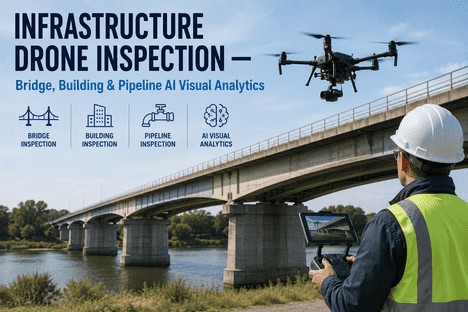
Faster data collection speed achieved by AI-equipped drone inspections over traditional manual methods — covering the same bridge in hours that previously required days of lane closures and crew mobilisation
$6.3B
Projected global bridge inspection market by 2029 — rail and transit infrastructure represent the fastest-growing segment as regulators mandate more frequent and more data-rich inspection regimes
Three Asset Classes, One Deterioration Problem — Why Rail Infrastructure Inspection Cannot Be a Siloed Activity
Bridge engineers inspect bridges. Track inspectors inspect right-of-way. Tunnel specialists inspect tunnels. Each discipline produces its own reports, uses its own inspection frequency, and maintains its own records. The structure being inspected is the same physical network, but the inspection data lives in separate files, separate systems, and separate management reviews. A scour condition at a bridge abutment affects the track geometry on the approach. A tunnel drainage failure accelerates ballast degradation on the section through the bore. A right-of-way slope failure can destabilise a bridge pier at the base of the same embankment. These interactions are invisible in siloed inspection programmes. iFactory brings all three asset classes into a single deterioration tracking environment where cross-asset dependencies are surfaced automatically rather than discovered after a failure.
How Siloed Rail Infrastructure Inspection Fails — and What the Pattern Looks Like
The Bridge Blind Spot
Annual walkdown inspections miss what is happening below the waterline and inside the structure.
FRA Part 237 requires every railroad bridge to be inspected at least once per calendar year, with no more than 540 days between inspections. The vast majority of these inspections are visual walkdowns conducted by bridge inspectors who document cracks, corrosion, and component condition on paper forms or handheld devices. What they cannot see — scour depth at foundations, internal corrosion in hollow box girders, incipient fatigue cracks in welded connections hidden behind paint and accumulated grime — accumulates undetected between inspection cycles. When the BNSF bridge over the Big Sioux River collapsed in 2024, the scour that undermined its foundation had been developing for months below the water surface, invisible to every scheduled inspection.
Hidden Degradation + Scour Risk
The Tunnel Visibility Problem
Liner deterioration, water intrusion, and track geometry changes inside tunnels are detected late because access windows are narrow and inspection conditions are poor.
Rail tunnels present unique inspection challenges. Limited lighting, restricted access windows during overnight possessions, and the sheer length of modern tunnel bores mean that comprehensive internal inspections are conducted far less frequently than surface assets. Concrete liner cracking, water intrusion through joints, spalling in arched sections, and track ballast degradation accelerated by confined drainage conditions develop over extended periods between inspections. A tunnel that experiences gradual liner deterioration over five years may not trigger any threshold until a piece of spalled concrete falls onto the track — at which point the structural issue has already progressed to a safety event requiring immediate traffic suspension and emergency repair.
Access-Limited Inspection + Latent Deterioration
The Right-of-Way Blindness
Slope stability, drainage erosion, and vegetation encroachment along the right-of-way are inspected at lower frequency and lower resolution than the track itself.
The right-of-way corridor includes embankments, drainage channels, retaining walls, culverts, slope stability zones, and vegetation management areas — assets that collectively represent a significant portion of infrastructure risk but receive proportionally less inspection attention than bridges or track. A blocked culvert that goes undetected through a wet season can cause localised embankment saturation that leads to a slope failure under the next heavy rainfall event. A retaining wall showing the early signs of tilt may not be inspected for another six months if wall inspections follow a different schedule than track inspections for the same corridor section. The failure of right-of-way assets causes service disruptions every year — most of them preventable with higher-resolution, higher-frequency inspection coverage that AI-enabled monitoring can deliver at a fraction of the cost of manual inspection cycles.
Bridge inspection reports, tunnel condition assessments, and track geometry data live in separate systems with no cross-asset correlation.
When a bridge inspector documents a scour condition at a pier foundation, that data typically stays in the bridge management system. The track maintenance team responsible for the approach track on both sides of the bridge may never see that report. When a tunnel drainage failure is identified during a liner inspection, the track maintenance team planning ballast renewal through the same tunnel section is rarely notified. Without a unified infrastructure data environment, the interdependencies between bridge condition, tunnel health, track geometry, and right-of-way stability are managed by human exception rather than systematic correlation. The result is that maintenance interventions are sequenced by asset class rather than by the integrated risk profile of the corridor as a whole.
Correlated Risk Missed + Suboptimal Capital Allocation
Inspecting Bridges, Tunnels, and Right-of-Way in Separate Systems Does Not Produce a Safe Network. It Produces Three Sets of Isolated Reports. iFactory Unifies the Picture.
A single platform view of every bridge, tunnel, and right-of-way asset's structural health score, inspection history, deterioration trend, and compliance status — updated in real time from AI drone surveys, sensor networks, and field inspector documentation in one unified infrastructure dashboard.
What iFactory's Rail Infrastructure Inspection and Deterioration Tracking Module Actually Does
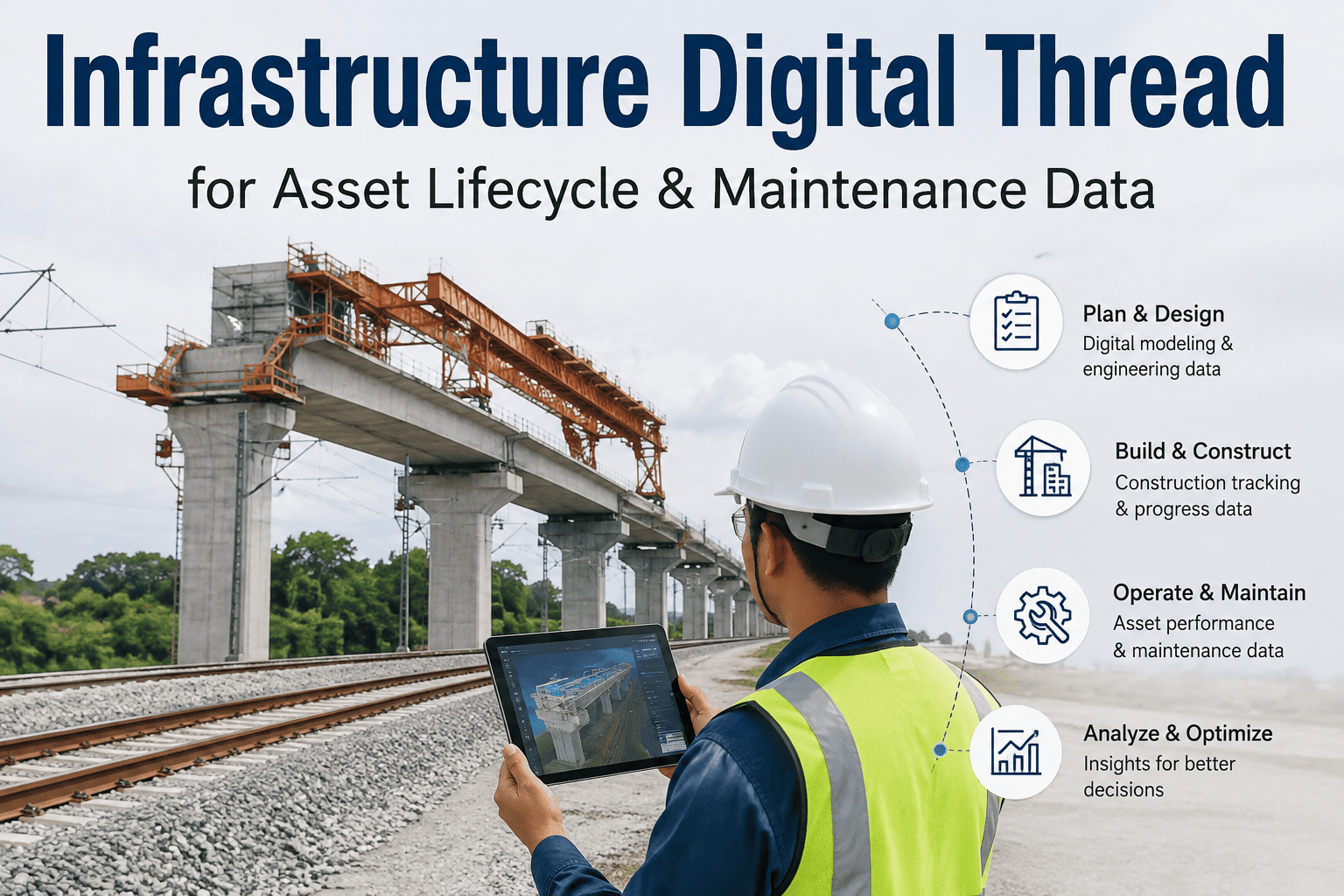
iFactory is not an inspection tool that generates reports. It is an infrastructure intelligence platform where every bridge, tunnel, and right-of-way asset is registered with its structural characteristics, inspection history, deterioration trend, and compliance status in a single data environment — with asset-specific inspection workflows that match each structure type's regulatory requirements and deterioration patterns while producing a unified network-level view that operations directors have never had access to before.
Capability 01
AI-Powered Bridge Deterioration Tracking — From Walkdown Reports to Continuous Structural Health Scoring
FRA Part 237 Compliance
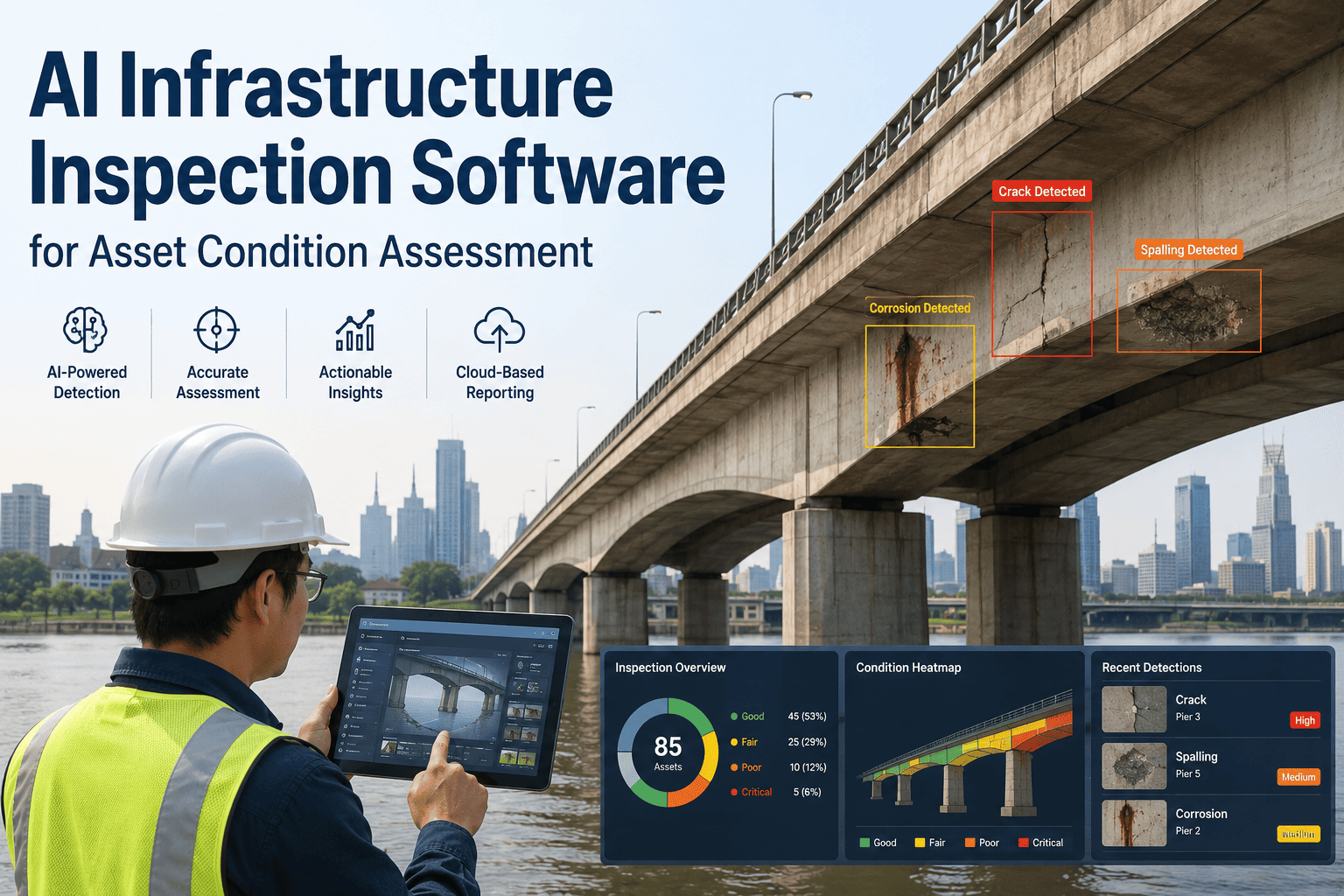
iFactory's bridge inspection module ingests data from every available source — drone-mounted LiDAR and thermal imaging surveys, ultrasonic testing of steel members, underwater sonar for foundation scour monitoring, and manual inspector observations logged in the field. AI models trained on thousands of defect signatures identify fatigue cracking in steel, spalling and delamination in concrete, corrosion progression in structural members, and scour development at foundations. Each bridge is assigned a dynamic structural health score that updates with every new inspection data point and reflects the deterioration trajectory rather than just the current snapshot. When a bridge's health score crosses a configurable threshold, the system generates a directed alert to the bridge engineer and the operations director simultaneously — ensuring that the escalation path is activated before the next scheduled inspection cycle would have identified the issue.
AI defect detection from drone and sensor data
Dynamic structural health scoring with trend analysis
FRA-compliant inspection record generation
Capability 02
Tunnel Structural Monitoring — Detecting Liner Degradation, Water Intrusion, and Track Geometry Changes Inside the Bore
Enclosed Structure Intelligence
Tunnel inspection in iFactory combines multiple sensing modalities to overcome the access and lighting limitations that have historically reduced inspection quality in enclosed rail structures. LiDAR-equipped drones operating in GPS-denied environments map liner geometry at sub-centimetre resolution, detecting deformation that indicates structural movement. Thermal imaging identifies water intrusion pathways through liner joints that are invisible to standard cameras. AI models classify concrete liner cracking by width, orientation, and activity — distinguishing active cracks that require structural assessment from stable shrinkage cracks that do not. Track geometry data inside the tunnel bore is correlated with liner condition data so that ballast degradation accelerated by tunnel drainage conditions is identified as a track-structure interaction issue rather than treated as an isolated track maintenance item. Every tunnel inspection generates a condition report that meets FRA and FHWA TOMIE documentation standards without requiring manual report writing.
LiDAR-based liner deformation mapping
Thermal water intrusion detection
Track-structure interaction analytics
Capability 03
Right-of-Way Corridor Analytics — Slope Stability, Drainage, Retaining Walls, and Vegetation Management in One Continuous View
Corridor-Wide Visibility
The right-of-way corridor represents the largest geographic footprint of any rail infrastructure asset class and the least digitally monitored. iFactory's right-of-way module processes data from track geometry measurement cars, drone corridor surveys, satellite imagery, and field inspector observations to create a continuous deterioration profile for every component of the corridor. Slope stability is monitored through InSAR satellite data and drone photogrammetry that detect sub-centimetre ground movement indicating incipient slope failure. Drainage infrastructure — culverts, ditches, and drainage channels — is tracked through AI analysis of corridor imagery that identifies blockages, erosion, and sedimentation before they cause localised flooding or embankment saturation. Retaining walls are scored on tilt progression, drainage effectiveness, and structural condition. Vegetation encroachment is mapped against clearance standards with automated alerts when growth approaches minimum clearance thresholds. All corridor assets are correlated with track geometry data so that a drainage failure affecting track modulus in a specific section triggers a coordinated response from both the drainage maintenance team and the track maintenance team simultaneously.
InSAR and drone slope stability monitoring
Drainage infrastructure AI condition scoring
Vegetation encroachment automated alerting
Capability 04
Network-Level Infrastructure Health Dashboard — Every Bridge, Tunnel, and Corridor Asset's Status in One Real-Time View
Director-Level Oversight
The network-level infrastructure dashboard in iFactory aggregates structural health scores, inspection compliance status, deterioration trends, and maintenance recommendation data from every bridge, tunnel, and right-of-way asset in the network — presented in a single configurable view designed for the operations director who needs to understand the overall infrastructure risk posture at a glance. Assets are colour-coded by health score band with drill-down to individual inspection records, defect annotations, and deterioration trend charts. Compliance status with FRA Part 237 bridge inspection requirements and FRA Part 213 track safety standards is tracked automatically, with alerts generated when any asset approaches its inspection due date. Capital planning scenarios can be modelled at the network level — simulating the impact of deferring a bridge rehabilitation programme by one year or accelerating tunnel liner repairs across five structures — so that investment decisions are based on quantified risk projections rather than inspection backlog pressure.
Cross-asset health score aggregation
FRA compliance auto-tracking and alerting
Network-level capital planning simulation
Traditional vs AI-Enabled Rail Infrastructure Inspection — The Measurable Difference
Inspection Dimension
Traditional Approach
With iFactory AI Platform
Bridge Inspection Cycle
Annual walkdown with snooper truck — 2 to 4 days per structure for comprehensive inspection including traffic management and crew mobilisation
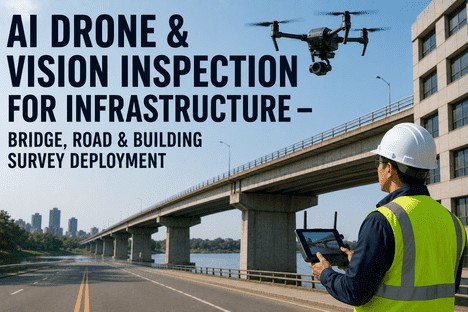
Drone survey in 2 to 4 hours per structure with AI defect detection; continuous structural health scoring between inspection cycles via embedded sensor data
Defect Detection Coverage
Visual inspection of accessible surfaces only; underwater foundations and internal box girders inspected on extended cycles or only when visible defects are found
Multi-spectral coverage of all surfaces including thermal for moisture, LiDAR for deformation, sonar for scour, and ultrasonic for internal steel defects — all correlated in a single asset record
Deterioration Tracking
Point-in-time condition ratings compared across annual inspection cycles; deterioration trend inferred from year-over-year rating changes
Continuous deterioration trajectory calculated from every inspection and sensor data point; AI models predict when each defect will reach critical severity for proactive scheduling
Cross-Asset Correlation
Bridge, tunnel, track, and right-of-way data in separate systems; interdependencies managed through manual review and institutional knowledge
All asset classes in a single geospatially indexed platform; automated cross-asset alerts when condition changes in one asset type affect adjacent infrastructure
"
We manage 1,200 bridges, 34 tunnels, and over 800 kilometres of right-of-way across our network. Before iFactory, the bridge team used one system, the tunnel team used another, and the track maintenance team had their own entirely separate data environment. When a bridge scour event was identified at a river crossing, there was no automated mechanism to inform the track team that the approach geometry might be affected. The first time I saw all three asset classes in one dashboard — with health scores, inspection compliance status, and deterioration trends on a single screen — I realised how much correlated risk we had been managing by luck rather than by system. We identified seven locations where bridge scour, drainage insufficiency, and track geometry degradation were developing simultaneously in the same corridor section. Those seven sections are now our top capital priority. We would never have found them without the cross-asset view.
— Director of Infrastructure Maintenance, Class I Freight Railroad — 22 Years Rail Infrastructure
Conclusion
The rail infrastructure inspection market is heading toward $3.42 billion by 2030, with bridge inspection services alone projected to reach $6.3 billion globally by 2029. The assets being inspected are ageing, the inspection workforce is under pressure, and the regulatory framework — FRA Part 237 for bridges, Part 213 for track, and the FHWA TOMIE standards for tunnels — demands inspection quality and frequency that manual methods alone cannot sustain across 69,509 bridges and thousands of tunnel and right-of-way kilometres. The organisations that shift from periodic, siloed manual inspection to continuous, AI-enabled, cross-asset deterioration tracking will outperform those running disconnected inspection programmes on every metric that matters: defect detection accuracy, inspection cycle efficiency, capital allocation precision, regulatory compliance confidence, and the safety of the network that depends on all of them.
iFactory's Rail Infrastructure Inspection and Deterioration Tracking module connects every bridge, tunnel, and right-of-way asset into a single real-time infrastructure health view — with AI-powered defect detection from drone, sensor, and field inspection data, FRA-compliant inspection documentation, dynamic structural health scoring, and the network-level dashboard that gives operations directors the information they need to make good capital decisions before deterioration becomes a safety event. Book a Demo to see how the platform maps to your network's specific bridge count, tunnel inventory, and right-of-way corridor configuration, or talk to an expert about your current rail infrastructure inspection programme and how to structure the data you already possess into a unified, AI-enabled deterioration tracking strategy.
Frequently Asked Questions
Yes. iFactory's inspection documentation module is designed to meet the record-keeping requirements of 49 CFR Part 237 (Bridge Safety Standards) and 49 CFR Part 213 (Track Safety Standards). Every inspection record generated through the platform — whether from AI defect detection, drone survey, or manual inspector input — includes the required metadata: asset identification, inspection date, inspector qualification reference, defect description with severity classification, location reference, and photographic or sensor evidence. Records are stored in an audit-proof electronic format compliant with FRA's record retention requirements. The platform also supports FRA audit preparation by generating structured inspection programme documentation on demand, including inspection schedule compliance reports, inspector qualification records, and bridge inventory updates. Book a Demo to review the compliance documentation framework for your regulatory jurisdiction.
iFactory's platform is sensor-agnostic and contractor-agnostic. Drone inspection data in standard formats — geotagged imagery, orthomosaic maps, LiDAR point clouds, thermal radiometric data — can be ingested from any commercial drone platform or inspection contractor. The AI defect detection models process the ingested data and update the asset's structural health score automatically. Rail operators who own their drone fleets can integrate directly through the platform's data pipeline. Operators who use external inspection contractors can ingest the contractor's deliverable data through a standardised upload interface. The structural health scoring engine treats all data sources equally, scoring the asset based on the totality of available inspection evidence regardless of how it was collected. Talk to an expert about your current inspection data pipeline and the fastest integration path for your drone programme.
Yes. iFactory's capital planning module uses the deterioration trajectory data from every tracked asset to model future condition states under different investment scenarios. The operations director can define a set of candidate interventions — bridge rehabilitation, tunnel liner repair, retaining wall replacement, drainage improvement programme — and the platform simulates the impact of each intervention or combination of interventions on the network's aggregate structural health score, asset condition distribution, and projected maintenance cost over a configurable planning horizon of up to 20 years. The output is a prioritised capital plan ranked by risk reduction per dollar invested, enabling data-driven budget requests that are grounded in modelled deterioration projections rather than reactive backlog pressure. Book a Demo to see capital planning scenarios modelled for a representative infrastructure profile matching your network.
For a network with 500 to 700 bridges, associated tunnels, and right-of-way corridors, iFactory's standard implementation covers: weeks one to three for asset register population and existing inspection data migration; weeks four to six for structural health scoring model configuration and FRA compliance template setup; weeks seven to ten for drone integration and AI defect detection model training on your asset types; and weeks eleven to twelve for director-level dashboard configuration and team training. The first network-level infrastructure health dashboard is typically available within 30 days, populated with existing inspection data and initial structural health scores. Full operational capability — including AI defect detection from drone surveys, cross-asset deterioration correlation, and capital planning scenario modelling — is typically available within 12 weeks of project start. Book a Demo to build the implementation plan specific to your network's asset count, current data maturity, and inspection programme structure.
Annual Walkdown Inspections of 69,509 Bridges Are Not a Safety Programme. Continuous AI-Powered Deterioration Tracking of Every Asset Is.
iFactory's Rail Infrastructure Inspection and Deterioration Tracking module — AI-powered defect detection, FRA-compliant inspection documentation, dynamic structural health scoring, cross-asset deterioration correlation, and network-level capital planning. The single platform your infrastructure network has been missing.