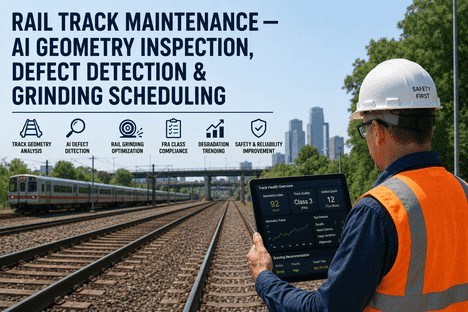
A single undetected rail defect on a Class 4 main line carrying 40 million gross tons annually does not announce itself. It propagates under the surface — growing from a microscopic inclusion to a transverse fracture over thousands of tonnage cycles — until the moment a 286,000-pound freight car applies dynamic load at 60 mph and the rail breaks. The Federal Railroad Administration records hundreds of track-caused derailments annually, with rail defects alone accounting for over 30% of all rail-related incidents. For operations directors managing track infrastructure across regional, main line, and transit networks, the challenge is not the availability of inspection data — it is converting that data into prioritised, predictive maintenance decisions before the defect becomes a service disruption. The global market for AI-driven rail inspection is accelerating rapidly, with autonomous track geometry measurement systems, computer vision defect detection, and predictive degradation modelling fundamentally reshaping how railroads maintain their most expensive fixed asset.
Track Geometry AI · Rail Defect Detection · Predictive Grinding · FRA Compliance · Asset Optimisation
Every Mile of Track Generates Inspection Data. iFactory Turns That Data into a Prioritised, Predictive Maintenance Plan for Your Entire Network.
iFactory's AI-driven track maintenance module integrates geometry measurement data, ultrasonic rail flaw detection, computer vision defect identification, and grinding optimisation into a single predictive platform — giving operations directors a real-time view of track condition, degradation trends, and maintenance priority across every class of track in the network.
30%+
of all rail-related derailments are caused by rail defects — the majority of which propagate undetected beneath the surface through thousands of tonnage cycles before failure
5x
More track inspection coverage at one-fifth the cost per mile delivered by autonomous AI-driven geometry systems compared with manned inspection vehicles
50%
Extension in rail service life achievable through optimised grinding cycles guided by AI analysis of wear patterns, surface fatigue, and profile degradation data
12x
Return on investment within three years for railroads deploying AI-driven predictive track maintenance — measured in avoided derailments, extended asset life, and reduced overtime
The Real Problem with Track Maintenance Is Not the Inspection Volume — It Is the Interpretation Gap
Class 1 railroads alone generate terabytes of track geometry data annually. Transit authorities run ultrasonic rail flaw detection on every main line segment at regulated intervals. Hi-rail inspection vehicles capture millions of images of ties, fasteners, and surface conditions every month. The data exists. What is missing — and what causes the gap between inspection and prevention — is the intelligence layer that converts raw measurement data into a prioritised, actionable maintenance programme calibrated to FRA class standards, actual degradation rates, and available maintenance window capacity.
How Disconnected Track Maintenance Operations Fail — and Why Even Well-Inspected Railroads Still Miss Critical Defects
The Degradation Blind Spot
Geometry data tells you where the track is today. It does not tell you where it will be next month — unless you have a degradation model.
FRA Track Safety Standards mandate specific geometry tolerances for each track class — gauge, cross-level, alignment, longitudinal level, and twist. Traditional maintenance programmes compare each inspection reading against the threshold and flag exceptions. This misses the critical pattern: the degradation rate. A track segment drifting toward a threshold at an accelerating rate will fail between inspection cycles. A segment that has been stable at the same measurement for six cycles needs no intervention. Without degradation modelling, every exception looks the same — and the operator cannot distinguish between urgent geometry degradation and benign measurement variation.
Reactive Threshold Management + Missed Degradation Trends
The Rail Defect Detection Gap
Ultrasonic testing catches internal defects at 5 mph. The train behind it is running at 60 mph on the same rail.
Conventional ultrasonic rail flaw detection vehicles operate at low speeds and fixed schedules — typically testing each main line segment on a 30- to 90-day cycle depending on tonnage and FRA class. Between testing cycles, internal defects propagate without visibility. The limitation is not the technology — it is the gap between detection cycles. An internal rail defect growing at 1.5 inches per 10 million gross tons can progress from a Class 1 indication to a critical transverse defect within a single inspection interval. AI models that correlate tonnage, rail temperature, curvature, and prior defect history can predict which segments are at elevated risk between testing cycles — and prioritise which segments need early retesting.
Inspection Interval Risk + Unpredicted Propagation
The Grinding Optimisation Problem
Grinding removes metal. Without precise targeting, it removes service life along with the defects.
Rail grinding is the most effective intervention for extending rail life — but only when applied at the correct interval with the correct metal removal profile. A grinding programme running on a fixed calendar schedule removes metal from segments that do not need it while delaying intervention on segments with accelerating surface fatigue. Each unnecessary grinding pass removes 0.1 to 0.3 millimetres of rail head that cannot be recovered — directly reducing the total tonnage the rail can carry before mandatory replacement. Precision grinding guided by AI analysis of wear patterns, surface fatigue accumulation, and profile deviation can extend rail life by up to 50% compared with interval-based grinding programmes.
Premature Metal Removal + Shortened Rail Life
The Maintenance Window Conflict
Every hour of track time costs revenue. Without prioritisation, urgent geometry corrections compete with planned grinding and defect repairs.
Track access for maintenance is the most constrained resource in railroad operations. On a main line carrying 60 trains per day, a four-hour maintenance window costs tens of thousands in delay credits and service disruption. When geometry exceptions, defect indications, and grinding requirements are managed in separate systems with separate priority frameworks, the operations director cannot answer the fundamental question: which maintenance activity on which track segment delivers the greatest safety and service life benefit for this four-hour window? AI-driven maintenance prioritisation solves this by scoring every intervention against a unified risk framework — combining defect criticality, geometry degradation rate, grinding efficiency, and window availability.
Uncoordinated Scheduling + Wasted Track Access
Track Geometry AI · Predictive Rail Maintenance · Defect Prioritisation · Grinding Optimisation · FRA Compliance
Managing Track Geometry Data in a Spreadsheet Is Not a Maintenance Programme. iFactory Manages the Full Decision Cycle from Inspection to Intervention.
A single platform that ingests track geometry data, ultrasonic rail flaw reports, computer vision inspection output, and grinding profile measurements — delivering unified defect prioritisation, degradation trend analysis, maintenance window optimisation, and FRA compliance documentation from a single predictive intelligence engine.
What iFactory's AI-Driven Track Maintenance Module Actually Does
iFactory is not a data visualisation layer that shows you track inspection reports in a prettier format. It is a unified predictive maintenance platform that ingests geometry measurement data, ultrasonic flaw detection outputs, computer vision defect identification, and grinding profile measurements into a single intelligence engine — then produces prioritised, window-optimised maintenance plans calibrated to FRA class standards, actual degradation behaviour, and the specific tonnage profile of each track segment.
Capability 01
Track Geometry Degradation Modelling — Predict Which Segments Will Fail Before They Violate FRA Class Tolerances
FRA Class Compliance
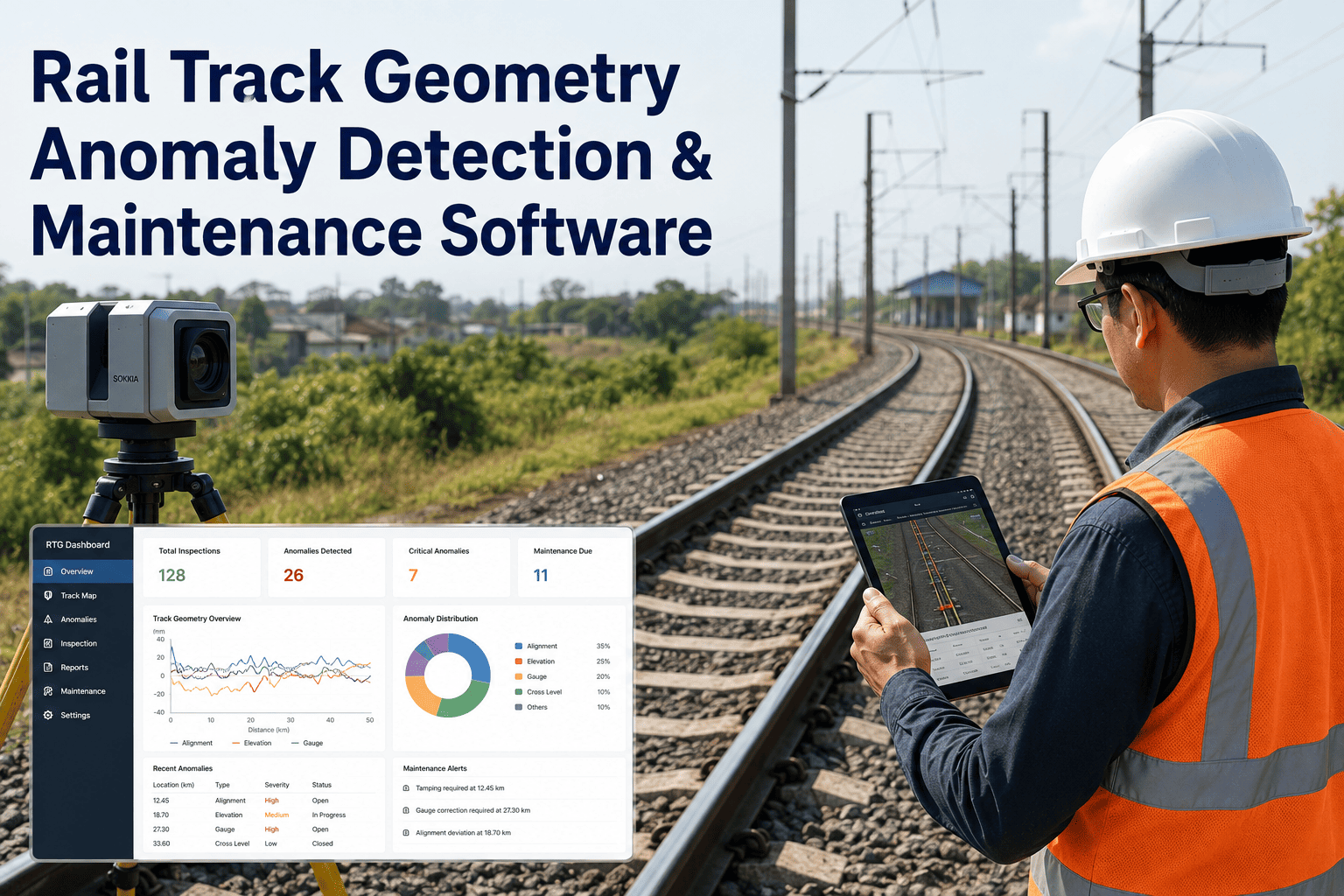
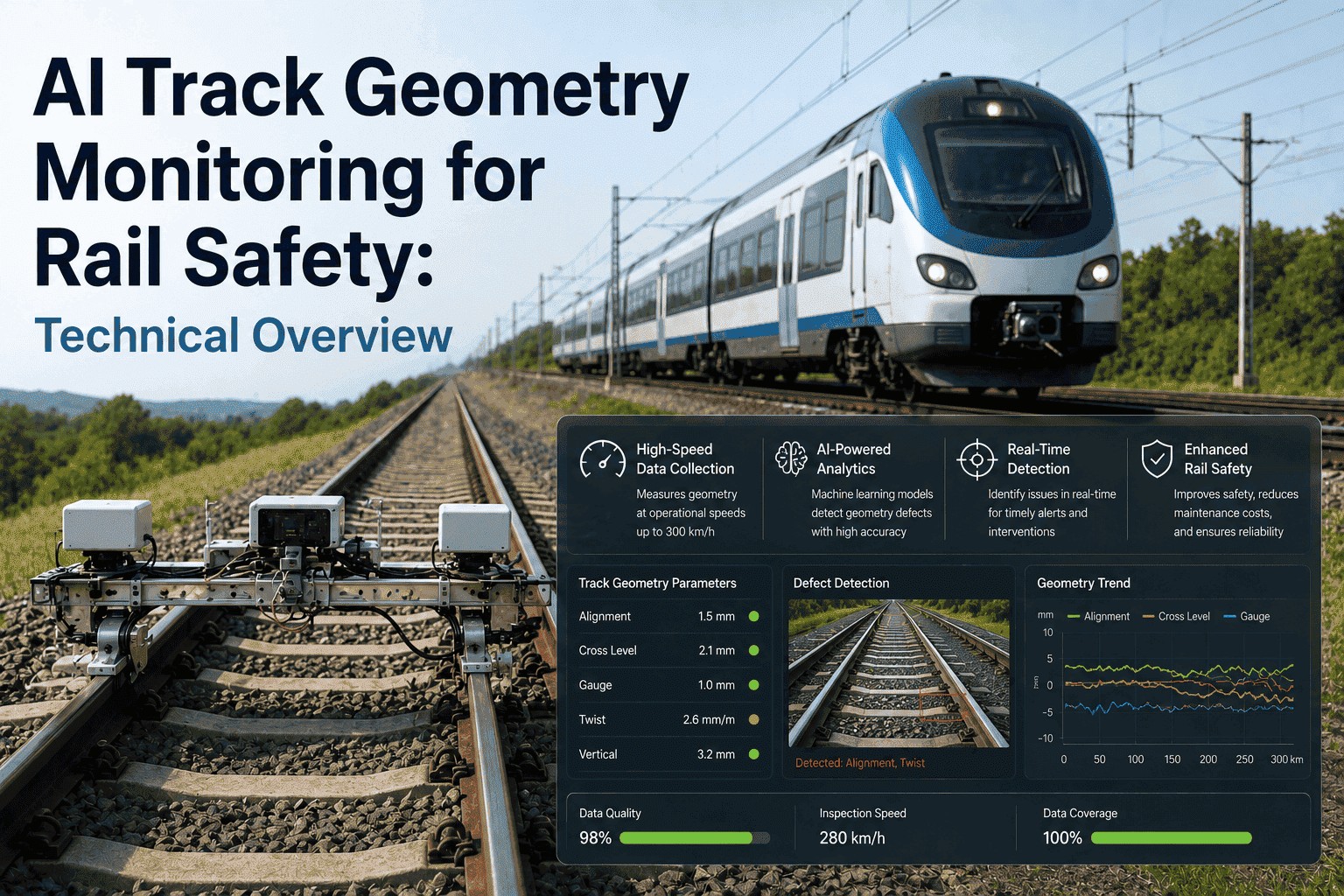
iFactory ingests track geometry measurement data from autonomous geometry cars, hi-rail inspection vehicles, and wayside monitoring systems — covering gauge, cross-level, longitudinal level, alignment, and twist for every track segment in the network. The platform applies AI-driven degradation modelling that analyses historical measurement trends, traffic tonnage, curvature, and maintenance history to predict when each segment will exceed its FRA class tolerance threshold. Instead of reacting to geometry exceptions after they appear in the latest inspection report, operations directors see a forward-looking degradation map showing which segments are on track to violate class standards — with the predicted week of exceedance, the specific geometry parameter driving the violation, and the recommended tamping or surfacing intervention window. Segments with accelerating degradation rates are flagged weeks before they trigger an FRA exception, enabling proactive scheduling that prevents service disruptions.
Multi-parameter degradation prediction
FRA class-specific threshold modelling
Recommended intervention sequencing
Capability 02
Unified Rail Defect Management — Ultrasonic Flaw Detection, Computer Vision, and Risk-Based Prioritisation in One View
Defect Intelligence
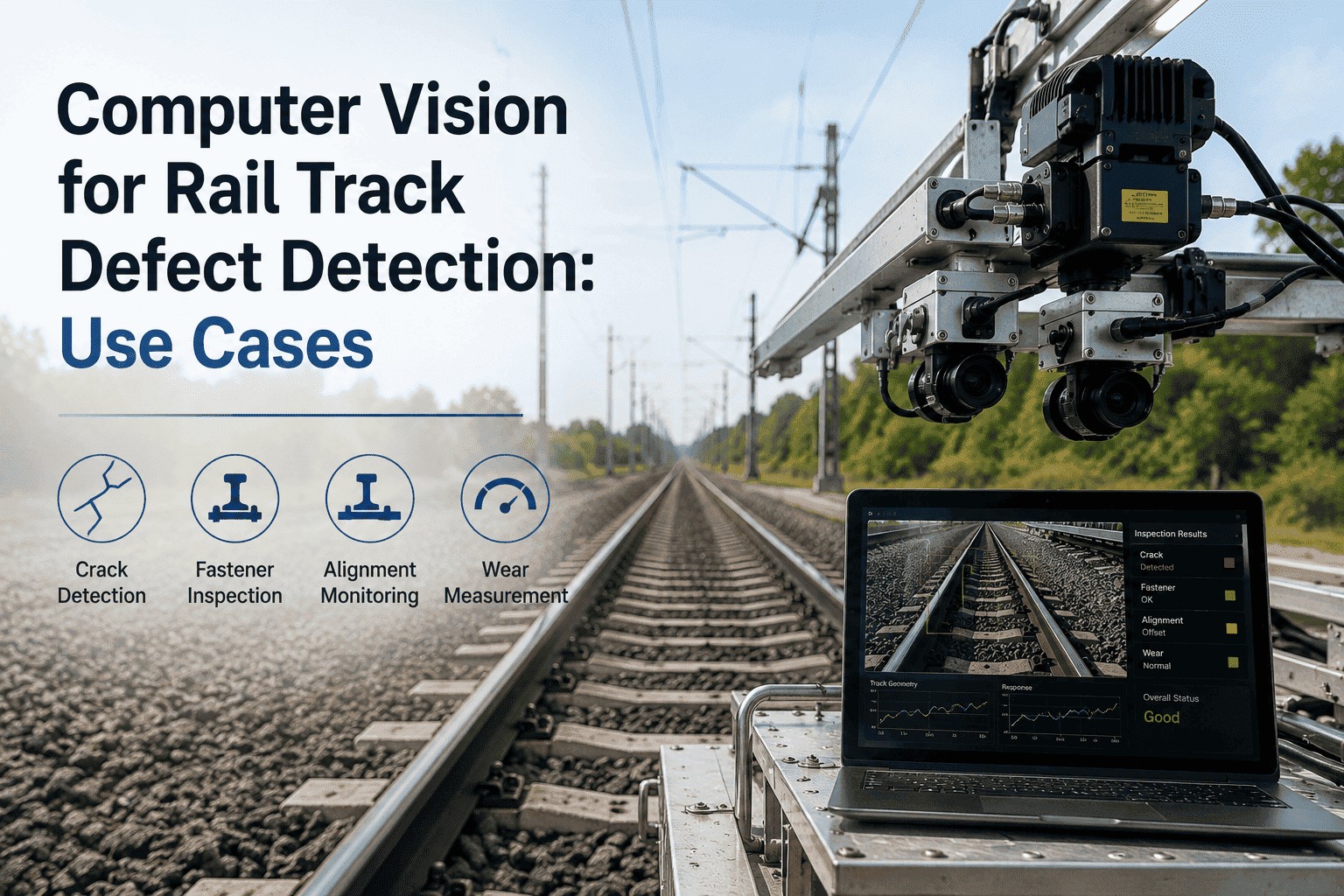
iFactory aggregates rail defect data from multiple detection sources — ultrasonic flaw detection vehicles, computer vision surface inspection systems, and manual inspection reports — into a unified defect register. Each defect is classified by type (transverse defect, vertical split head, detail fracture, shelling, head check, weld defect), severity grade, location, and propagation history. The platform applies risk-based prioritisation that considers defect type, rail section tonnage, operating speed, curvature, and time since last test to generate a network-wide defect priority score. Operations directors see every known defect on a track map, colour-coded by criticality, with the recommended retest interval, the maintenance window required for removal, and the projected growth trajectory if left unaddressed. When a defect crosses the critical threshold between inspection cycles, the platform generates an escalation alert with the recommended speed restriction and remedial action timeline.
Multi-source defect data aggregation
Risk-based criticality scoring
Propagation modelling and escalation
Capability 03
Precision Rail Grinding Intelligence — Optimise Every Grinding Pass to Maximise Rail Life, Not Just Remove Metal
Grinding Optimisation
iFactory's grinding intelligence module analyses rail profile measurement data, surface fatigue indicators, lubrication history, and curvature profiles to generate segment-specific grinding recommendations. Instead of applying a standard grinding pattern across the entire territory, the platform calculates the optimal metal removal depth, grinding pattern, and pass count for each segment based on its actual wear condition and surface fatigue accumulation. Segments with significant head check development receive more aggressive grinding profiles. Segments with minimal surface fatigue receive lighter maintenance grinding that preserves rail head material. The platform tracks grinding quality index over successive cycles, identifying segments where the grinding pattern is consistently under- or over-correcting the profile. Over successive grinding cycles, the AI model learns which intervention parameters produce the longest interval between grinding passes for each combination of curvature, tonnage, and rail metallurgy — progressively extending the grinding cycle and the total service life of the rail.
Segment-specific grinding profiles
Metal removal optimisation
Cycle extension through AI learning
Capability 04
Network-Level Maintenance Window Optimisation — Every Track Access Hour Allocated to the Highest-Value Intervention
Window Intelligence
Track access windows are the most expensive and constrained resource in railroad maintenance. iFactory's network-level optimiser ingests geometry degradation predictions, defect priority scores, grinding requirements, and planned capital works — then generates an optimised maintenance schedule that allocates every available window to the highest-value intervention across the entire network. The platform considers window duration, geographic proximity of multiple defects, equipment mobilisation costs, and the interdependency between interventions — for example, scheduling grinding immediately after surfacing on the same segment to maximise the window value. Operations directors see a rolling 90-day maintenance plan with clear priority rankings, resource requirements, and the projected condition impact of executing versus deferring each intervention. When an unexpected track access cancellation occurs, the optimiser automatically reallocates the lost capacity to the next-highest-priority intervention within the affected corridor.
Unified intervention prioritisation
Rolling 90-day optimised schedule
Real-time window reallocation
How iFactory Maps Track Class Standards to AI-Driven Inspection and Maintenance Parameters
FRA Track Class
Inspection & Geometry Tolerance Framework
iFactory AI Configuration for This Class
Class 1-2 (10-25 mph)
Relaxed geometry tolerances, monthly visual inspection minimum, less frequent ultrasonic testing cycles, lower annual tonnage exposure
Extended inspection interval optimisation, cost-constrained maintenance prioritisation, degradation modelling for low-tonnage segments with limited inspection history
Class 3 (40-60 mph)
Standard geometry tolerances, twice-weekly visual inspection, quarterly ultrasonic testing typical, moderate tonnage corridors moderate defect risk
Accelerating degradation detection, defect risk-based retest interval adjustment, grinding cycle optimisation for moderate curvature and tonnage
Class 4 (60-80 mph)
Tighter geometry tolerances, twice-weekly visual inspection, 30-day ultrasonic testing typical, high tonnage corridors, elevated defect risk profile
High-frequency degradation trend analysis, defect propagation modelling, precision grinding profile management, critical window optimisation
Class 5-6 (80-110 mph)
Strictest geometry tolerances, frequent inspection cycles, continuous rail testing programmes, premium defect detection requirements, high-speed risk consequences
Real-time defect alerting threshold, continuous degradation monitoring, automated FRA compliance reporting, predictive grinding quality assurance, zero-tolerance defect tracking
"
We operate 2,400 track miles across three regions with a mix of Class 3, 4, and 5 main line track. Before iFactory, our geometry data lived in one system, our ultrasonic rail flaw reports in another, our grinding records in a third, and our maintenance scheduling in a fourth. Every Monday morning, my planning team spent four hours cross-referencing outputs to decide what to put in that week's track access windows. With iFactory, I open one dashboard and see every geometry exception with a degradation trend line, every active rail defect colour-coded by criticality, every segment's grinding status, and a prioritised window plan that tells me exactly which three interventions deliver the greatest safety and life extension benefit for this week's available track time. The first month we used it, we identified fourteen growing geometry exceptions that our old threshold-based system had not flagged as urgent because they were still within tolerance — but they were all accelerating toward failure within the next six to eight weeks. We scheduled them before they became service disruptions.
— Director of Track Maintenance, Regional Freight Railroad — 24 Years Track Engineering and Maintenance Operations
50%
Extension in Rail Service Life
Railroads deploying AI-guided precision grinding report up to 50% longer rail life compared to interval-based grinding programmes — measured in total gross tonnage carried before mandatory replacement
60%
Reduction in Emergency Track Work
Predictive track maintenance programmes report a 60% decrease in emergency geometry and defect repairs as degrading conditions are identified and scheduled before they trigger urgent intervention
93%+
Surface Defect Detection Accuracy
AI computer vision models achieve over 93% mean average precision in detecting rail surface defects — head checks, shells, spalling, and corrugation — versus 60-70% for manual visual inspection
Conclusion
Rail is the most expensive asset a railroad owns — and the most expensive one to replace prematurely. The gap between having inspection data and making optimal maintenance decisions is not a technology gap — it is an intelligence gap. The data from geometry cars, ultrasonic flaw detection vehicles, computer vision systems, and grinding profile measurements already exists in every railroad's operations. What has been missing is the unified predictive intelligence layer that converts that data into a prioritised, window-optimised, FRA-compliant maintenance plan that tells operations directors exactly when to intervene, where to intervene, and which intervention delivers the greatest value for the most constrained resource in the network: track access time.
iFactory's AI-driven track maintenance module connects every inspection data source, every defect register, and every grinding programme into a single predictive platform — with degradation modelling, risk-based defect prioritisation, precision grinding optimisation, and network-level maintenance window scheduling that transforms track maintenance from a reactive, segment-by-segment function into a centrally managed, predictively optimised infrastructure programme. Book a Demo to see how the platform maps to your network's specific track class profile and inspection infrastructure, or talk to an expert to begin your track maintenance intelligence assessment and get your first predictive degradation dashboard live.
Frequently Asked Questions
Your Track Inspection Data Already Exists. The Intelligence to Act on It Is What Has Been Missing.
iFactory's AI-driven track maintenance module — geometry degradation prediction, unified defect management, precision grinding optimisation, network-level maintenance window scheduling, and FRA compliance automation. The intelligence layer every track maintenance operation has been missing.