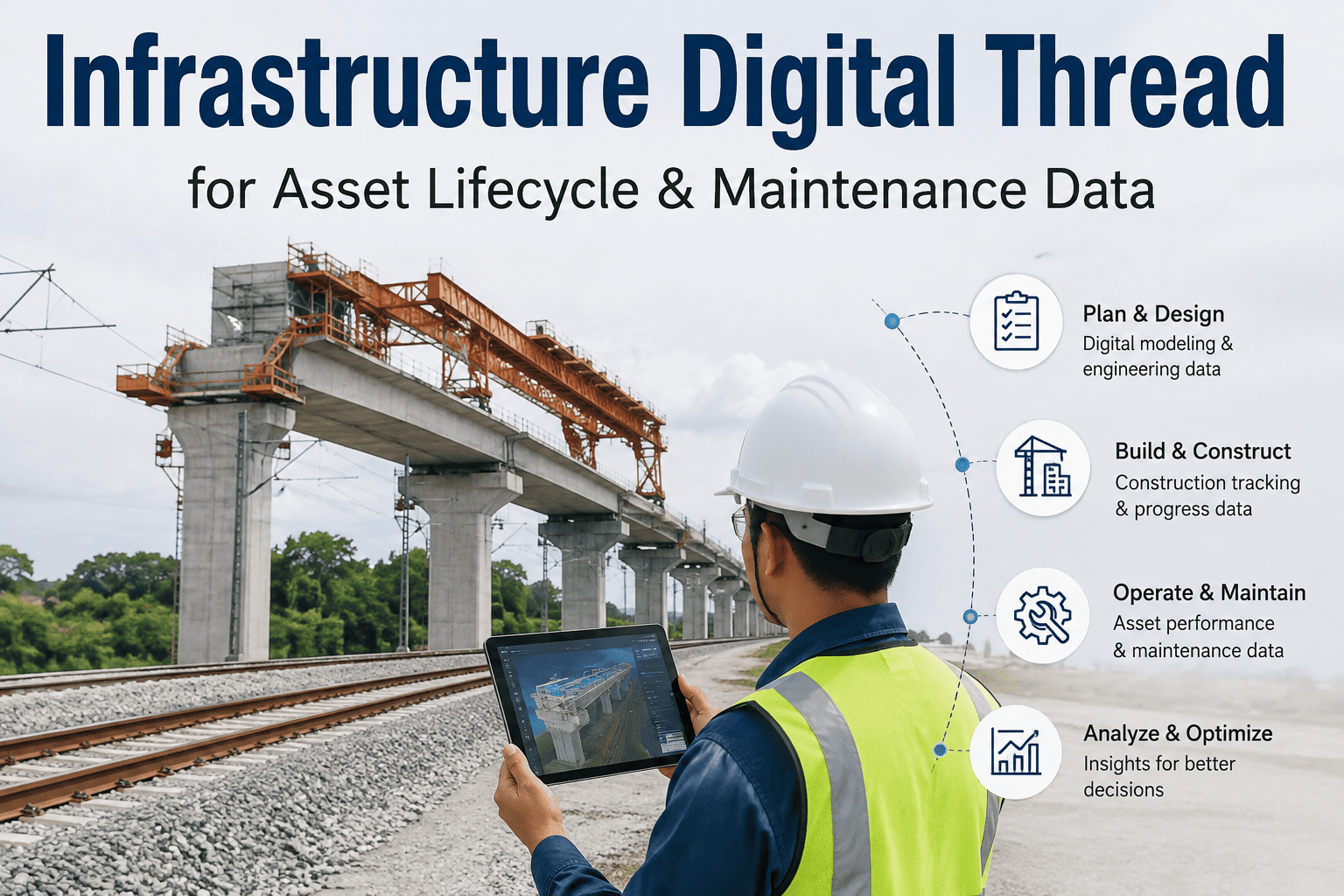
Infrastructure management automation is delivering measurable cost reductions across municipalities and large-scale facility operators in 2026. Organizations still relying on manual dispatch, paper-based inspections, and spreadsheet-driven capital planning are spending 30-40% more on maintenance than their automated peers — and losing ground in federal grant competitions that reward data-driven condition evidence. By connecting AI health scoring, automated work order generation, and real-time condition monitoring into a single platform, infrastructure teams are cutting unplanned downtime by 50%, reducing maintenance costs by 30%, and extending asset service life by 25%. This guide explains exactly how automation transforms each layer of infrastructure operations — and how iFactory's platform connects every data stream into cost-saving action.
Where Manual Infrastructure Management Wastes Budget
Before deploying automation, infrastructure managers need to identify the specific manual processes that drive preventable cost in their current operations. These four failure modes exist in every organization still running manual dispatch and paper-based condition tracking.
Reactive Dispatch
Manual dispatch treats every work request equally. Without automated risk ranking, critical assets wait behind routine tasks — and emergency repairs cost 3–5× planned interventions.
Manual Reporting
Compliance reports manually assembled from disconnected sources take weeks, contain gaps, and produce weaker federal grant applications than automated evidence packages.
Skill Mismatch
Manual assignment ignores technician qualifications. Sending under-qualified staff to complex repairs drives rework, callbacks, and wasted labor hours across the portfolio.
Over-Maintenance
Calendar-based maintenance services assets that don't need it yet — wasting 30-40% of maintenance budget on unnecessary interventions while missing assets that actually need attention.
Still running manual dispatch and paper-based inspections? See how automation eliminates these cost drivers — book your free 30-minute demo.
Automation Technologies That Drive Cost Reduction
Infrastructure management automation combines five integrated capabilities that replace manual processes at every stage — from condition detection through compliance documentation.
iFactory Automation Architecture: iFactory connects all five automation layers into a single cloud-native platform — AI Health Scoring triggers work orders, skill matching routes technicians, Digital Twin models capital scenarios, and the compliance engine generates documentation. No middleware, no manual handoffs, no gaps between detection and action.
How Automation Converts Condition Data Into Cost Savings
Automation delivers cost reduction through a continuous cycle that connects condition detection to optimally timed, skill-matched intervention — eliminating the manual bottlenecks that inflate maintenance spend.
Continuous Condition Detection Replaces Periodic Inspections
IoT sensors and AI Health Scoring monitor asset condition continuously — catching deterioration weeks before it becomes visible during manual inspections and eliminating the 3–5× emergency repair premium.
Automated Risk Ranking Prioritizes Highest-Impact Interventions
Skill-Matched Dispatch Eliminates Rework Costs
Every auto-generated work order routes to the technician with the right qualifications, closest proximity, and available capacity — increasing first-time fix rates and eliminating callback cycles that waste labor hours.
Automated Documentation Closes Every Work Order Loop
From sensor signal to completed repair, every step is automatically documented — creating the audit trails that compliance frameworks require and the condition evidence that federal grant programs score highest.
Automation Impact Across Operational Areas
Automation reduces costs across four distinct operational areas simultaneously — each generating measurable savings that compound across the full infrastructure portfolio.
Maintenance Labor
Cost Impact:
- Eliminate unnecessary site visits
- Reduce rework and callbacks by 40%
- Optimize technician travel routes
Emergency Repairs
Cost Impact:
- 50% fewer emergency callouts
- Eliminate 3–5× repair premium
- Reduce overtime and surge costs
Capital Planning
Cost Impact:
- 25% extended asset service life
- Defer replacements with evidence
- Stronger grant applications
Compliance Overhead
Cost Impact:
- 85% less reporting time
- Always audit-ready
- Zero manual compilation
End-to-End Automation — One Platform
iFactory connects AI condition detection, automated work orders, skill-matched dispatch, and compliance reporting into a single workflow — ensuring every condition signal converts to cost-saving action.
Automation Integration With Existing Systems
iFactory's automation platform delivers full value when connected to every existing data system — eliminating silos and generating automated compliance documentation from live operational data.
Existing Data Sources
- IoT sensor streams
- GIS asset records
- Field inspection inputs
- Energy meter feeds
- Legacy CMMS data
iFactory Automation Platform
Automated Outputs
- Risk-ranked work orders
- Capital planning reports
- Federal grant evidence
- Net-zero dashboards
- State of Good Repair docs
Automation Readiness Checklist
Measuring Automation ROI Over Time
Establishing clear performance metrics from day one ensures your organization captures and documents the full cost-reduction value of automation as AI models improve and workflows mature.
Expert Perspective
"The infrastructure organizations achieving the lowest cost-per-asset in 2026 share one structural advantage: they have automated the entire chain from condition detection to work order closure. Manual dispatch is the most expensive bottleneck in infrastructure management — not because the dispatcher is slow, but because manual triage cannot process the volume of condition signals that IoT-connected portfolios generate. Automation does not replace the maintenance team. It removes the administrative overhead that prevents skilled technicians from spending their time on the work that actually extends asset life."
Conclusion
Infrastructure management automation reduces operational costs across every layer of the maintenance cycle — from condition detection through compliance documentation. When AI Health Scoring, automated work orders, skill-matched dispatch, Digital Twin capital simulation, and compliance automation operate as an integrated system, organizations eliminate the emergency repair premium, optimize workforce utilization, extend asset service life, and generate audit-ready evidence that strengthens federal grant applications. The technology is proven and deployable today through platforms like iFactory — purpose-built for municipalities and facility operators across the US and Canada.
Turn Automation Into Funded Infrastructure Action
iFactory connects condition detection, automated dispatch, skill-matched routing, and compliance reporting into a single platform — ensuring every asset signal converts to cost-saving action, automatically tracked and documented.