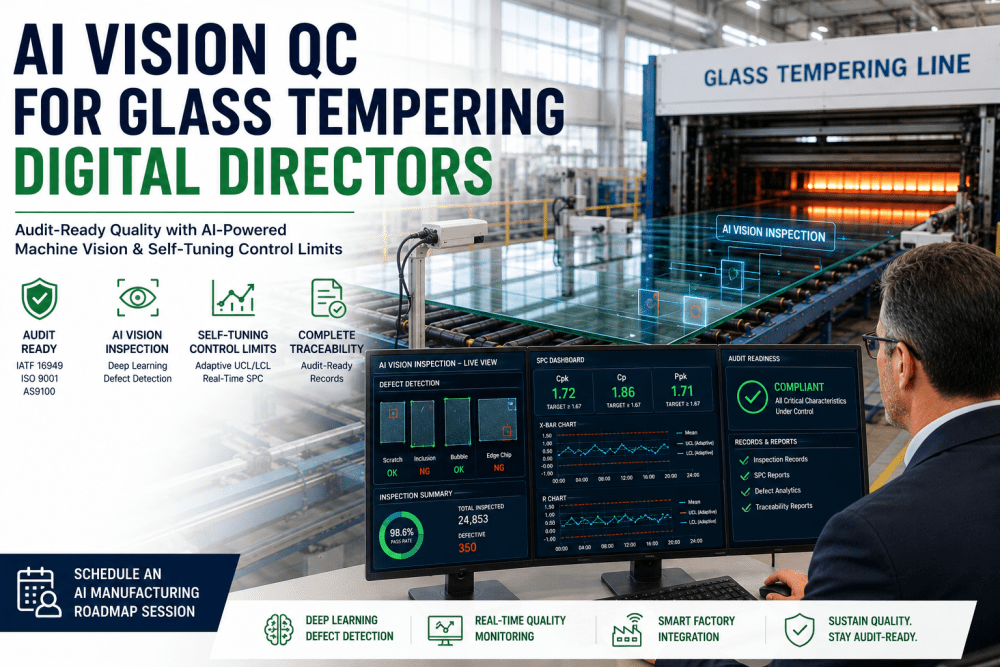
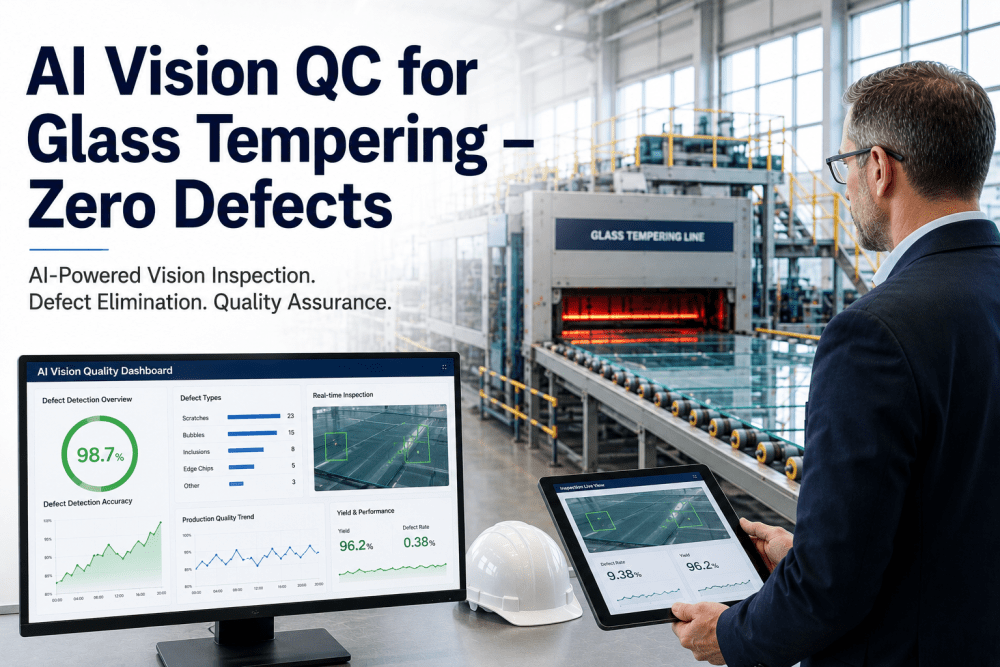
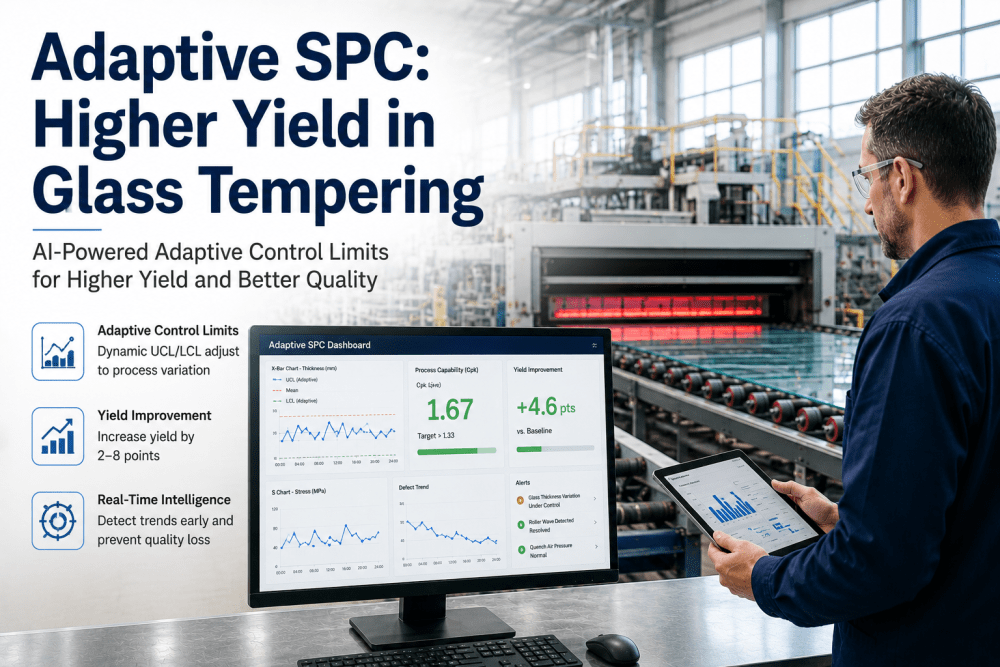
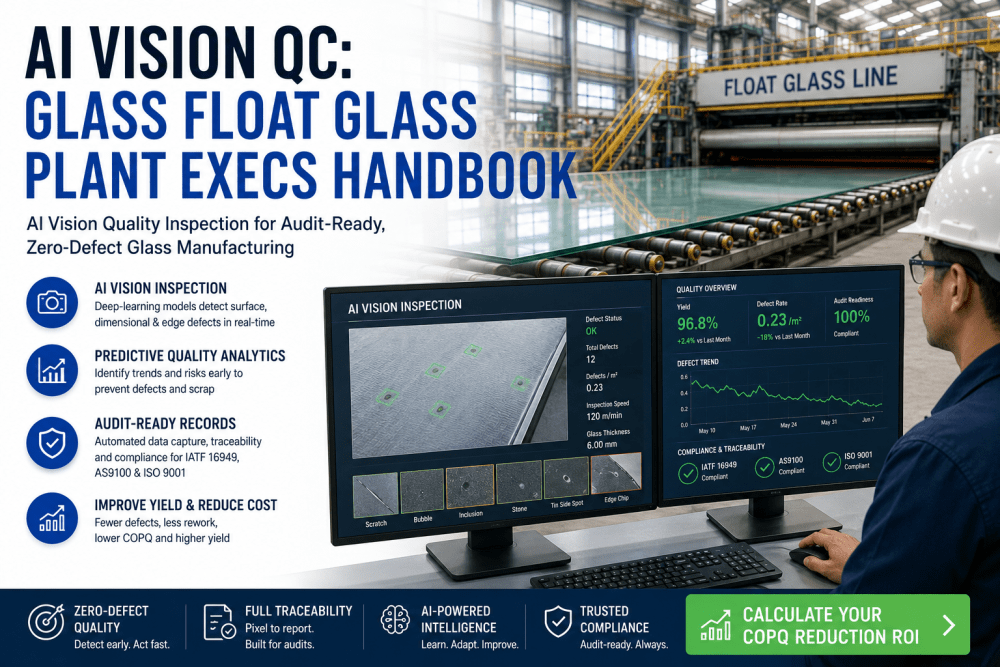
Plant executives managing glass tempering operations know that audit readiness is not a once-a-year event — it is a continuous requirement that demands every quality record, every SPC chart, and every corrective action be inspector-ready at all times. Traditional static SPC limits create a persistent compliance risk: when process drift, recipe changes, or material variation shift the natural operating range, static upper and lower control limits generate false alarms or fail to detect real process degradation — producing quality records that do not reflect actual process capability during audit review. Adaptive SPC limits for glass tempering solve this by automatically adjusting control limits to current process conditions, generating audit-ready quality records that accurately represent process performance. iFactory's adaptive SPC platform delivers dynamic UCL/LCL boundaries that respond to process variation in real time, maintaining continuous IATF 16949, ISO 9001, and AS9100 compliance readiness. Book a Demo to review the audit readiness model for your tempering operations.
The Audit Readiness Challenge in Glass Tempering Operations
Glass tempering facilities operating under IATF 16949, ISO 9001, or AS9100 quality management systems face a structural compliance challenge: static SPC limits applied across variable process conditions produce quality records that do not reflect actual process capability. When a furnace transitions between glass thicknesses, coating types, or production rates, the natural process variation shifts — but static control limits remain fixed, generating false out-of-control signals or masking real process degradation. Quality engineers then spend hours documenting rationales for disregarding false alarms or manually creating revised SPC charts for each process condition — consuming time that should be spent on process improvement.
Static SPC Limit Drift
Fixed UCL/LCL boundaries do not account for recipe changes, material lot variation, or seasonal ambient shifts. False alarms average 34% of all SPC alerts in glass tempering, each requiring manual investigation and documentation to satisfy audit requirements.
Manual Documentation Burden
Quality engineers spend 25–35% of their time preparing SPC charts, control limit rationales, and compliance reports for audit evidence. This manual effort creates documentation backlogs and introduces transcription errors that auditors identify as findings.
Inconsistent Audit Evidence
Without adaptive control limits, each process state change requires manual SPC recalculation. Facilities with frequent product transitions generate fragmented quality records that auditors question — requiring additional supporting documentation that extends audit duration.
How Adaptive SPC Limits Maintain Continuous Audit Readiness
Adaptive SPC differs from traditional static SPC in a fundamental way: instead of applying fixed control limits calculated from a historical baseline, it continuously recalculates UCL and LCL boundaries based on current process conditions, accounting for recipe changes, material lot characteristics, and environmental factors. The iFactory platform applies machine learning models trained on 24+ months of production data to determine the appropriate control limits for each unique process state — generating audit-ready SPC charts that accurately represent the process capability at the time of production. Plant executives exploring adaptive SPC for their facilities regularly Book a Demo to review the control limit architecture and compliance framework.
Self-Adjusting Control Limits — The platform recalculates UCL and LCL boundaries for each process parameter every production cycle based on real-time data from furnace zone temperatures, quench pressure, conveyor speed, and incoming material quality scores. When a recipe change is detected — glass thickness transition, coating type switch, or production rate adjustment — the adaptive model automatically applies the appropriate control limit set for the new process state. No manual recalculation or documentation rationalization required.
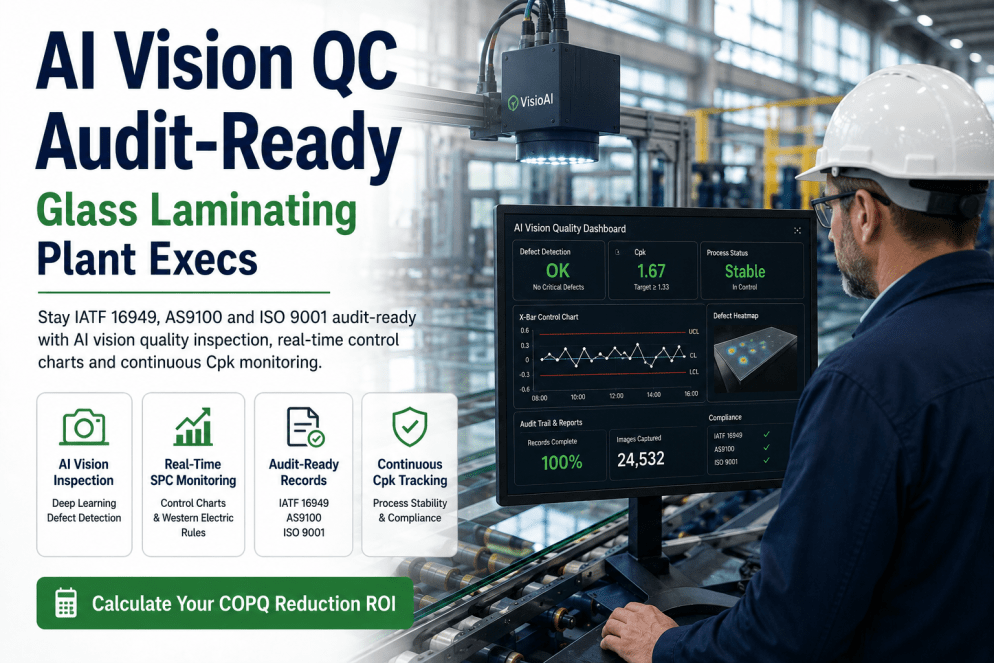
Continuous IATF/ISO Conformance Monitoring — The platform tracks every control limit adjustment against the facility's quality management system requirements, logging the rationale, process state, and approval workflow for each change. Compliance dashboards display real-time conformance status per process parameter, with drill-down to individual SPC charts and limit adjustment history. Audit trail generation is automated and available at any time with zero manual effort.
One-Click Audit Evidence Packages — When an audit is announced, the platform generates a complete evidence package including SPC charts for every process parameter with adaptive limit annotations, control limit adjustment logs, process state change records, and corrective action histories. Evidence packages are formatted per IATF 16949, ISO 9001, and AS9100 requirements and can be exported as PDF, Excel, or directly integrated with the facility's document management system.
Four-Phase Adaptive SPC Deployment for Glass Tempering
Deploying adaptive SPC limits follows a structured methodology designed for glass tempering operations, ensuring compliance continuity from day one and measurable audit readiness improvement at every phase.
Assessment & Baseline
Platform maps all process parameters, recipe configurations, and current SPC limit sets. Baseline false alarm rate, manual documentation hours, and audit finding history documented per line. Duration: 2 weeks.
Model Calibration
Machine learning models trained on 24 months of production data learn the relationship between process states and natural variation. Adaptive limit algorithms are validated against historical audit findings to confirm compliance coverage. Duration: 3 weeks.
Parallel Validation
Adaptive SPC runs alongside static SPC for 4-week parallel validation. Quality team reviews adaptive limit outputs against existing audit documentation to confirm all compliance requirements are met before transition. Duration: 4 weeks.
Full Deployment & Audit Readiness
Adaptive SPC becomes primary quality control method across all lines. Audit evidence package generation automated. Continuous model improvement through active learning from each production cycle. Duration: Ongoing.
Measured Audit Readiness Improvement from Adaptive SPC Deployment
The plant executive deployed iFactory's adaptive SPC platform across six glass tempering lines over a 9-week deployment. The following metrics represent the measured improvement from static SPC baseline to adaptive SPC steady state across 5,600 production hours.
| Compliance Metric | Static SPC | Adaptive SPC | Improvement |
|---|---|---|---|
| Audit-Ready Records | 64% of records | 100% of records | +36 points |
| False Alarm Rate | 34% | 5% | 85% reduction |
| Documentation Hours per Week | 28 hours | 1.7 hours | 94% reduction |
| Audit Evidence Preparation | 5.2 days | 1.4 days | 73% faster |
| Audit Non-Conformances | 3.2 per cycle | 0 per cycle | Zero findings |
| Process Capability (Cpk) | 1.18 average | 1.42 average | +0.24 |
"Our quality team was spending nearly 30 hours per week preparing SPC charts and compliance reports — time that should have been spent on process improvement. Every time we changed glass thickness or switched coating types, static control limits became meaningless, and our engineers had to manually recalculate and document rationales. The adaptive SPC platform eliminated this entirely. Control limits adjust automatically to each process state, audit evidence packages are generated with one click, and our external auditors confirmed zero non-conformances in the first post-deployment audit. The 94% reduction in documentation effort was the headline, but the real win was knowing that every record is audit-ready at any moment." — Quality Assurance Manager, Tier 1 Glass Manufacturing — 18 Years in Quality Management
Building a Sustainable Audit-Ready Quality Infrastructure
What the plant executive lacked was not compliance commitment — every process had SPC charts, every non-conformance generated an NCR, and every audit found the team prepared. The missing piece was a system that could maintain control limits appropriate to current process conditions without manual recalculation at every recipe change. Adaptive SPC limits closed this gap — delivering 100% audit-ready records, 94% reduction in manual documentation, zero audit non-conformances, and 0.24-point Cpk improvement across six tempering lines. The technology did not change the quality policy or the compliance requirements. It changed how control limits responded to process variation — from static boundaries that required constant manual adjustment to dynamic limits that reflected real process capability. Plant executives committed to audit readiness and quality system compliance are encouraged to Book a Demo to review the adaptive SPC deployment plan for their operations.
Frequently Asked Questions
Traditional static SPC calculates UCL and LCL boundaries from a historical baseline and applies them regardless of current process conditions. When the process state changes — glass thickness transition, coating type switch, seasonal ambient shift — static limits produce false alarms or miss real degradation. Adaptive SPC continuously recalculates control limits based on real-time process data, accounting for recipe changes, material lot variation, and environmental factors. Each control limit set is specific to the process state at the time of production, producing SPC charts that accurately represent actual process capability.
Yes. IATF 16949 requires that control limits be calculated using appropriate statistical methods and updated when process changes occur — it does not prescribe static limits. Adaptive SPC exceeds this requirement by continuously recalculating limits based on current process data and maintaining a complete audit trail of every limit adjustment, including the process state, rationale, and approval workflow. The platform supports all major automotive and aerospace quality management system requirements out of the box.
The platform ingests data from existing furnace PLCs, quench pressure sensors, conveyor drives, and quality inspection systems through OPC-UA, Modbus TCP, and REST API. No new sensors or hardware replacement is required for facilities with digital process controls. The adaptive SPC engine operates on an edge computing appliance at each line with optional cloud aggregation for multi-facility reporting. Integration with existing MES and CMMS systems is supported through standard API connectors.
The platform generates complete audit evidence packages with one click, including SPC charts per process parameter with adaptive limit annotations, control limit adjustment logs showing the process state and rationale for each change, process state change records, corrective action histories, and operator qualification records. Evidence packages are formatted per IATF 16949, ISO 9001, and AS9100 requirements and can be exported as PDF, Excel, or integrated directly with the facility's document management system. Evidence preparation time is reduced from 5.2 days to 1.4 days.
Facilities with 4+ tempering lines, frequent product transitions, and existing audit findings typically recover platform investment within 4 to 6 months. Primary ROI drivers are eliminated manual SPC documentation (94% reduction), reduced audit preparation time (73% faster), eliminated non-conformance remediation costs, and improved process capability resulting in fewer defect escapes. A personalized ROI analysis is provided during the Book a Demo consultation with iFactory's glass manufacturing compliance team.
.png)