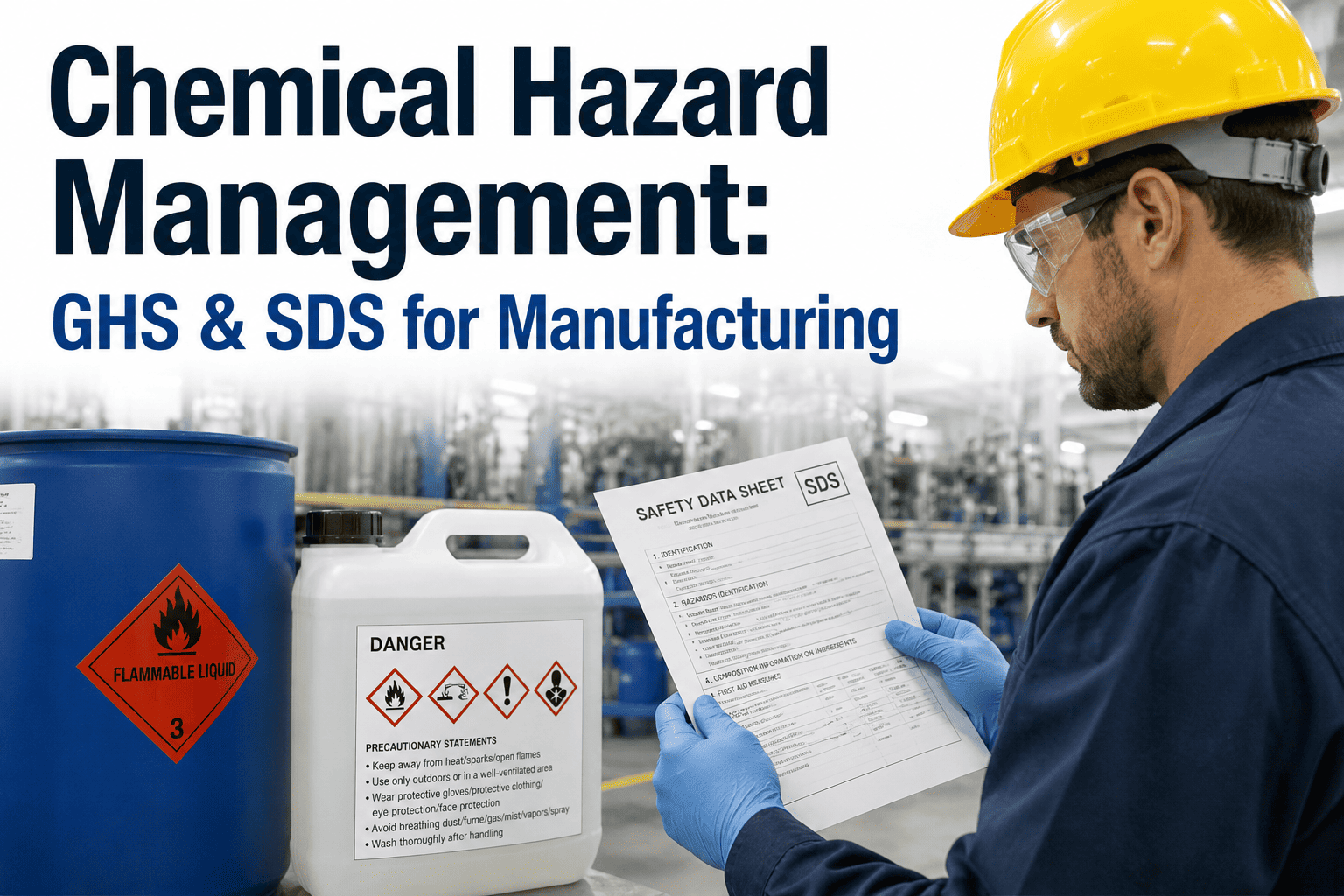
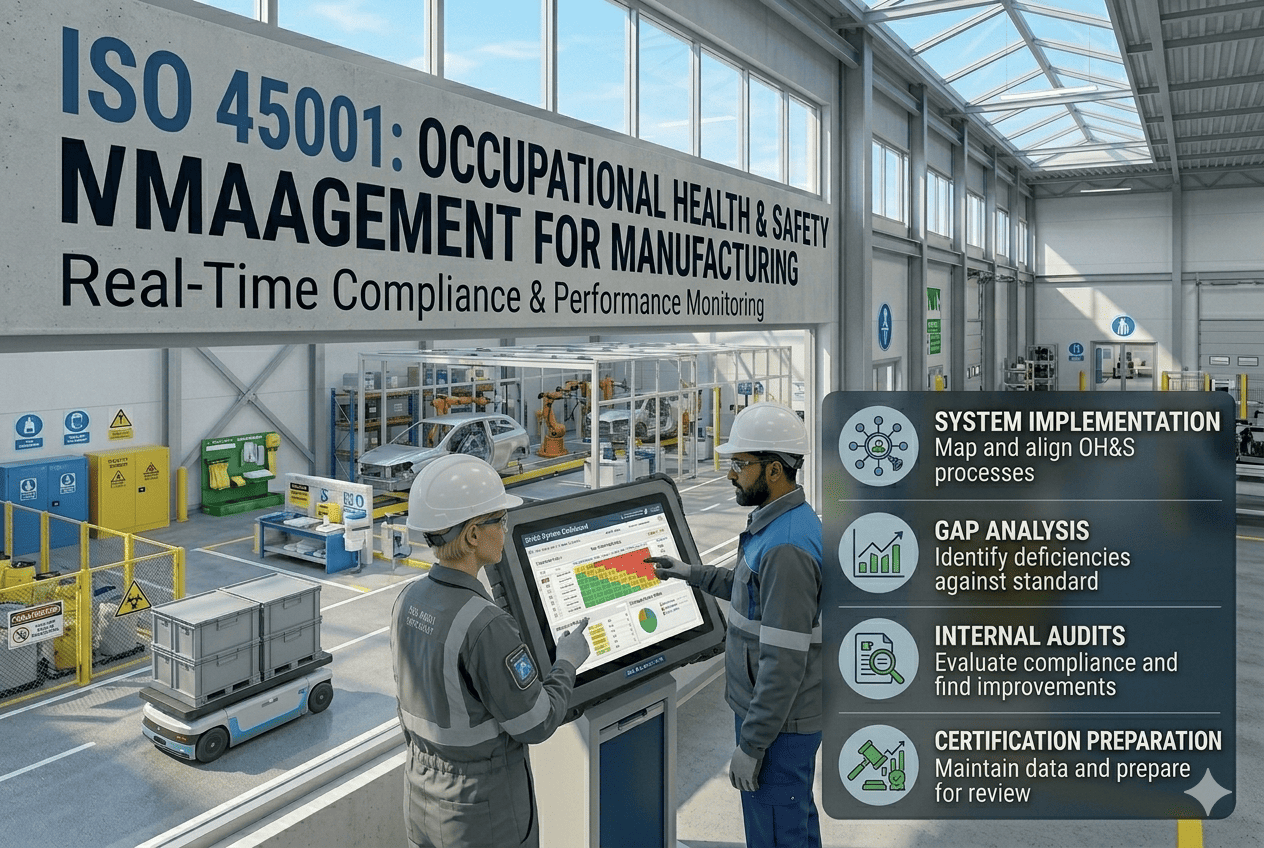
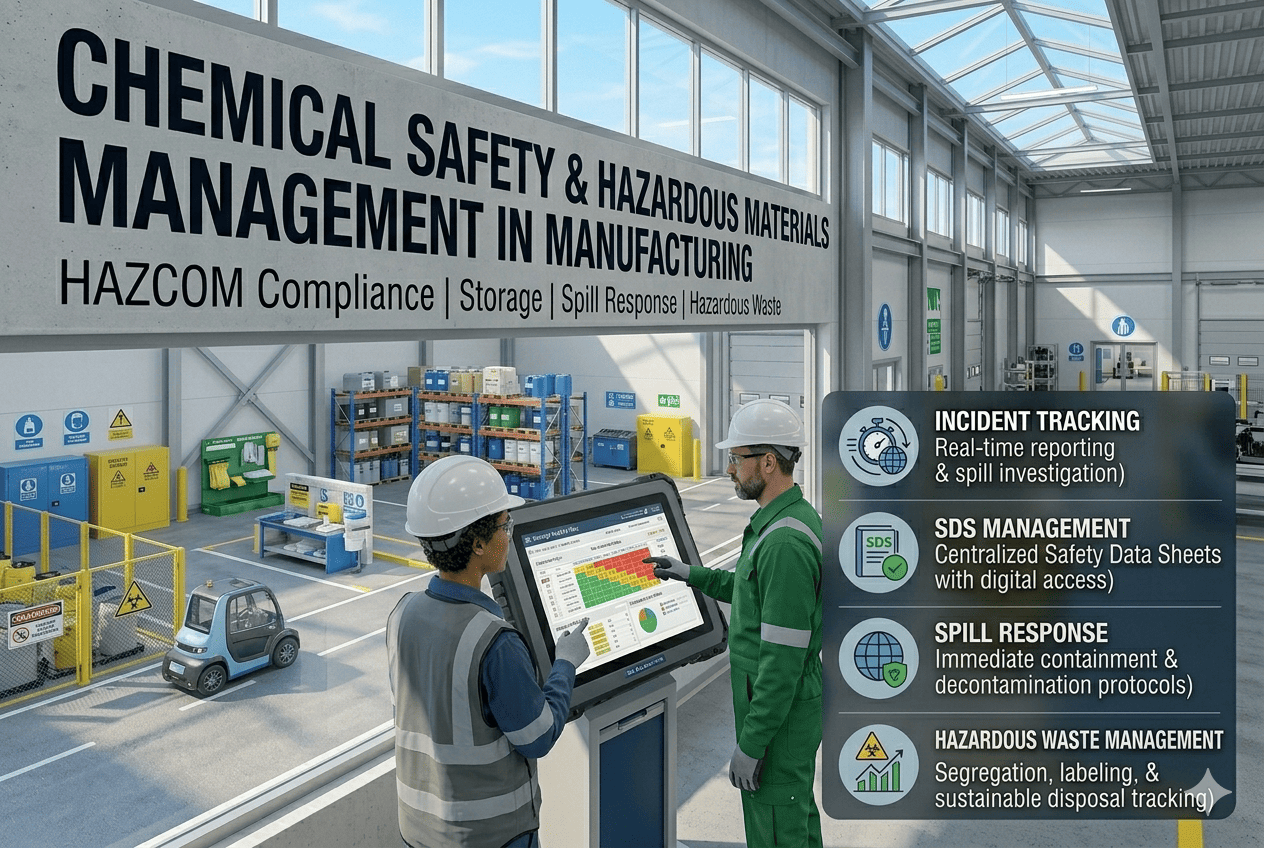
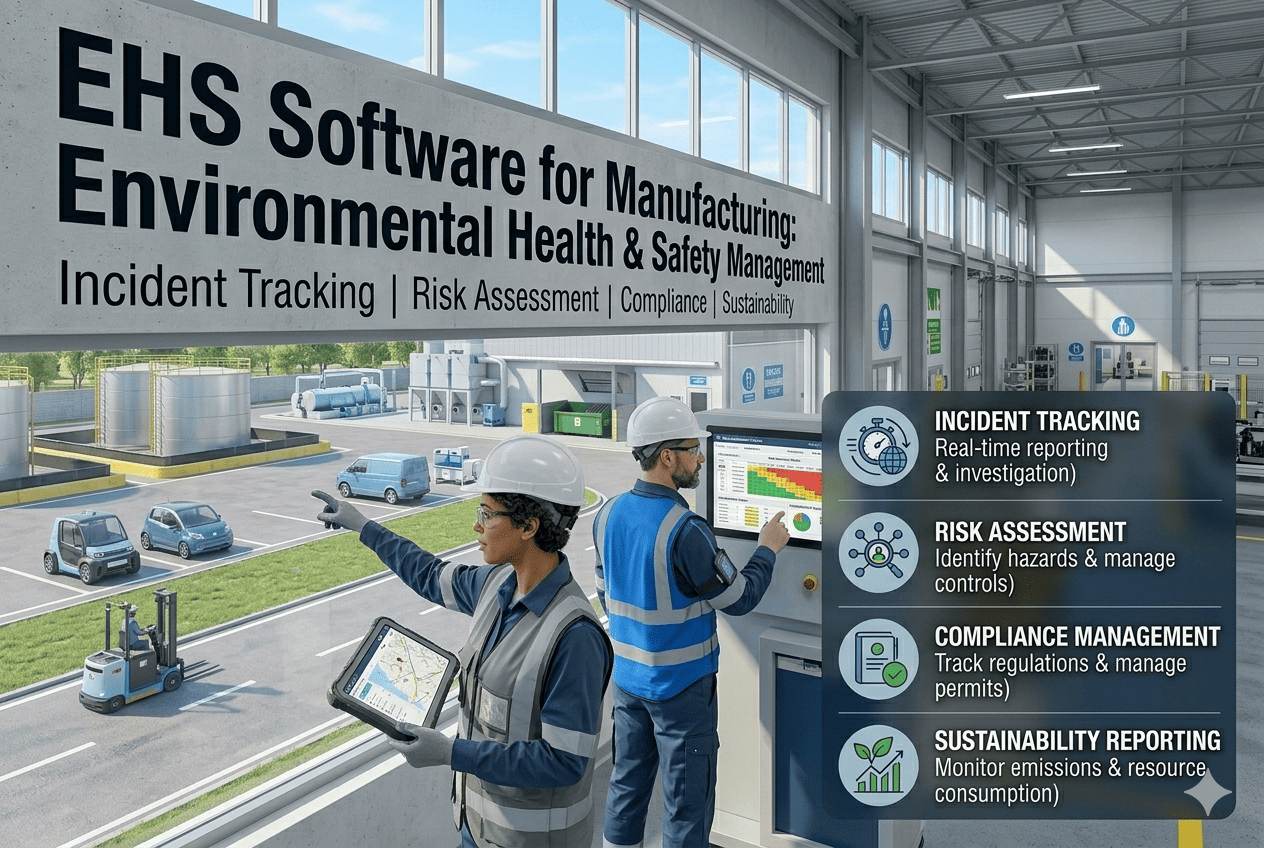
A missing or outdated Safety Data Sheet is one of the most frequently cited violations OSHA finds on a plant floor, and it rarely shows up because a plant ignored chemical safety entirely. It shows up because a chemical inventory that was accurate on the day it was built drifted out of sync with what is actually stored in the plant six months later, one new solvent added by a maintenance team, one product reformulated by a supplier, one binder that never got updated after the last audit. Studies of on-site chemical inventories have found that only a fraction of the chemicals workers are actually exposed to have a matching, current Safety Data Sheet on file. Closing that gap takes an inventory process that stays current between audits, not just during them. Plants building that process can book a demo to see how monitoring supports it.
SAFETY & EHS · GHS & SDS MANAGEMENT · 2026
Chemical Hazard Management That Stays Accurate Between Audits
An accurate GHS-compliant inventory, correctly segregated storage, and a labeling and training program that doesn't quietly drift out of date is what turns HazCom from your most-cited violation into a system that actually protects workers.
What an Out-of-Date HazCom Program Actually Costs
Hazard Communication has sat near the top of OSHA's most-cited standards list for years, and the pattern behind most of those citations is almost always the same, an inventory that no longer matches what is physically on site, a Safety Data Sheet that was never updated after a supplier reformulated a product, or a label that fell off a secondary container and never got replaced. None of these require a plant to be careless about chemical safety in general, they require only that the system tracking chemicals stop keeping pace with what actually changes week to week. Purchasing adds a new adhesive without EHS knowing, a supplier reformulates a coolant and issues a revised SDS that never reaches the binder, a contractor brings in a cleaning product that never enters the facility's own inventory at all. Each gap is small on its own, but auditors rarely find just one, because a facility whose inventory has drifted in one area has usually let it drift everywhere.
$165,514
is the current maximum OSHA penalty for a willful or repeat HazCom violation, several times higher than a standard citation.
~40%
is roughly the match rate some on-site inventory studies have found between chemicals actually present and their corresponding SDS records.
94%
of existing Safety Data Sheets are estimated to need some revision to align with the HazCom 2024 update to GHS Revision 7.
90 Days
is the typical window a facility has to update an SDS once new hazard information about a chemical becomes available.
The Five Requirements a Compliant Program Has to Cover
OSHA's Hazard Communication Standard, 29 CFR 1910.1200, builds a compliant program out of five interlocking pieces. Skipping any one of them, even while the other four look solid, is enough to draw a citation, because an auditor who finds a gap in one area typically starts checking the others more closely.
Written HazCom Program
A documented plan covering how the facility handles labeling, SDS access, and training, kept current as processes change.
Chemical Inventory
A complete, accurate list of every hazardous chemical on site, including anything brought in by contractors.
GHS Container Labeling
Every primary and secondary container carries the required pictograms, signal word, and hazard statements.
SDS Access & Currency
A current 16-section SDS for every listed chemical, reachable by any employee at any point in a shift.
CONTINUOUS HAZCOM MONITORING
Keep the Inventory Accurate Between Audits, Not Just Before Them
See how live tracking of chemical inventory, SDS currency, and label condition supports your HazCom program.
Matching PPE to the Actual Hazard, Not a Generic Chemical List
A single blanket PPE rule, gloves and goggles for every chemical task, is easier to write into a procedure than it is to actually keep workers safe with, because different hazard classes call for genuinely different protection. Skin contact hazards from a corrosive need a different glove material than a solvent that permeates standard nitrile within minutes, and a task generating vapors above the exposure limit needs respiratory protection that a splash-rated apron does nothing to provide. Treating every chemical task under one generic PPE rule is a common shortcut, and it is also one of the more dangerous ones, since it creates the appearance of protection without actually matching the equipment to the route of exposure the SDS describes for that specific product.
Skin Contact
Glove material is selected against the specific chemical's permeation and breakthrough time, not a generic nitrile default.
Inhalation
Respirator selection follows measured or estimated exposure against the chemical's permissible exposure limit.
Eye & Face
Splash goggles for liquid handling, face shields added where a reaction or spray risk is present.
Body Protection
Chemical-resistant aprons or suits are matched to the SDS-listed hazard class, not assumed from the task alone.
Spill Response, From First Notice to Closed Incident
STEP 1
Contain & Alert
Stop the spread with available containment, alert nearby workers, and pull the relevant SDS for exposure and reactivity guidance.
STEP 2
Evacuate If Needed
Any spill exceeding the trained team's capacity or releasing vapors above safe levels triggers evacuation, not an attempted cleanup.
STEP 3
Clean Up With Matched PPE
Trained responders in PPE matched to the specific chemical's hazard class perform containment and cleanup per the written procedure.
STEP 4
Dispose & Document
Waste is disposed of per regulatory requirements, and the event is logged with root cause review, not just a cleanup confirmation.
Spill kits stationed near the storage areas most likely to need them, matched to the specific hazard classes stored there rather than one generic kit for the whole plant, make the difference between an event that stays contained and one that spreads before anyone reaches the right absorbent material.
What Plant EHS Leaders Are Saying
We assumed our SDS binder was complete because nobody had flagged a gap in years. When we finally cross-checked it against a physical walk of the plant, we found chemicals purchasing had added that never made it into the inventory, some of them sitting in the same cabinet as an incompatible material.
EHS Manager, Discrete Manufacturing Facility
Frequently Asked Questions
What is the difference between GHS and HazCom?
GHS, the Globally Harmonized System, is the international standard for classifying chemical hazards and communicating them through consistent labels and a standardized 16-section Safety Data Sheet format. HazCom is OSHA's US regulation, 29 CFR 1910.1200, which adopts GHS as the framework employers must follow domestically. In practice the two terms are often used together, since a US facility's HazCom program is built directly on GHS classification and formatting requirements, and staying current with GHS revisions is how a facility stays compliant with the underlying HazCom standard.
How often does a Safety Data Sheet need to be updated?
There is no fixed calendar requirement, but most guidance recommends a review every three to five years even without a known change, and an update within ninety days whenever new hazard information becomes available from the manufacturer. In practice, the more common failure is not missing a scheduled review, it is missing a supplier reformulation or a new hazard classification that should have triggered an update outside the normal cycle. Teams building a review cadence can review current practice through
support.
Who is responsible for SDS documentation on contractor-supplied chemicals?
The host employer is generally responsible for ensuring that a current SDS is accessible for every hazardous chemical present on the premises, including chemicals brought in by a cleaning crew, a maintenance contractor, or any other outside vendor. Missing SDS documentation for a contractor-supplied chemical is one of the most frequently cited HazCom violations, precisely because it falls into a gap between the contractor's own program and the host facility's inventory. A written agreement clarifying which party maintains which records closes most of this gap before it becomes a citation.
What should a chemical inventory actually include?
A compliant inventory lists every hazardous chemical present on site by the name that matches its SDS and label, along with whether a current SDS is on file and the manufacturer's contact information. The inventory does not need to restate the specific hazards of each chemical, since those live on the SDS and label themselves, but it does need to be complete and current enough that an auditor or an emergency responder can trust it. Plants can
book a demo to see how continuous tracking keeps this list accurate as purchasing changes.
Why do PPE recommendations vary so much between different chemicals?
Different hazard classes attack the body through different routes, a corrosive threatens skin and eyes on contact, a volatile solvent threatens the respiratory system through vapor, and no single glove material or respirator cartridge protects equally well against all of them. Selecting PPE against the specific hazard class and exposure route listed on each chemical's SDS, rather than applying one blanket rule across every task, is what keeps protection actually matched to the risk. A generic PPE policy is often the reason a worker is technically wearing protective equipment and still gets exposed.
SAFETY & EHS · GHS & SDS MANAGEMENT
Move From a Static Binder to a Tracked Chemical Inventory
See how live inventory, SDS currency, and label tracking fit into your plant's current HazCom program.