Choosing a smart manufacturing platform is easy to get wrong in a specific, expensive way: pick based on the flashiest demo instead of the criteria that actually determine whether the platform survives contact with your plant floor. Most failed rollouts don't fail because the software lacked features — they fail because production monitoring, quality management, and maintenance optimization were never evaluated against the same standard, so the selected platform excelled at one and quietly underperformed at the other two. This comparison walks through the evaluation criteria that actually separate platforms in practice. If you're mid-evaluation right now, our team can walk through how iFactory stacks up against your specific requirements.
Platform Selection
Best Smart Manufacturing Platform: A Real Comparison
Feature analysis, integration capability, and evaluation criteria across production monitoring, quality management, and maintenance optimization.
Why Most Platform Comparisons Miss the Point
Feature checklists are the most common way plants compare platforms, and they're also the least useful. Nearly every serious platform on the market claims to support production monitoring, quality management, and maintenance — the differences that actually matter show up in how deep that support goes, how well it integrates with what you already run, and how the platform behaves once real production volume and messy data hit it.
Depth Over Breadth
A platform that does three things well usually outperforms one that claims ten features at a shallow level of capability.
Integration Reality
Native connectors to your actual MES, PLCs, and quality systems matter more than a long list of theoretical integrations.
Scalability Under Load
Demo performance rarely reflects how a platform behaves across multiple lines and full production data volume.
Time to Value
How quickly the platform delivers a usable result matters as much as its theoretical long-term capability ceiling.
Core Capability Comparison
| Capability | Basic Platforms | iFactory |
|---|
| Production Monitoring | Line-level dashboards only | Real-time, line and unit-level visibility |
| Quality Management | Manual hold and reject logging | Automated defect detection and traceability |
| Maintenance Optimization | Scheduled maintenance calendars | Condition-based and predictive maintenance triggers |
| System Integration | Limited pre-built connectors | Broad MES, SCADA, and ERP integration |
| Deployment Speed | Multi-quarter implementation typical | Phased rollout with early pilot value |
Want this comparison mapped against your own current systems? Talk to our team for a tailored evaluation.
Evaluating Production Monitoring Capability
Production monitoring is the most commoditized category on this list, which is exactly why it's easy to under-evaluate. The real question isn't whether a platform shows a dashboard — it's whether that dashboard reflects true real-time status, whether it scales to every line without becoming unusable, and whether the underlying data can actually feed the analytics you'll want later.
1
Data Latency
Check how close to real-time the platform actually reports, not just what the marketing claims.
2
Line Coverage
Confirm the platform scales cleanly across every line type in your plant, not just the newest one.
3
Historical Depth
Verify how much historical data is retained and queryable for trend analysis later.
4
Alert Logic
Test whether alerts are configurable enough to avoid the fatigue of constant false positives.
Evaluating Quality Management Capability
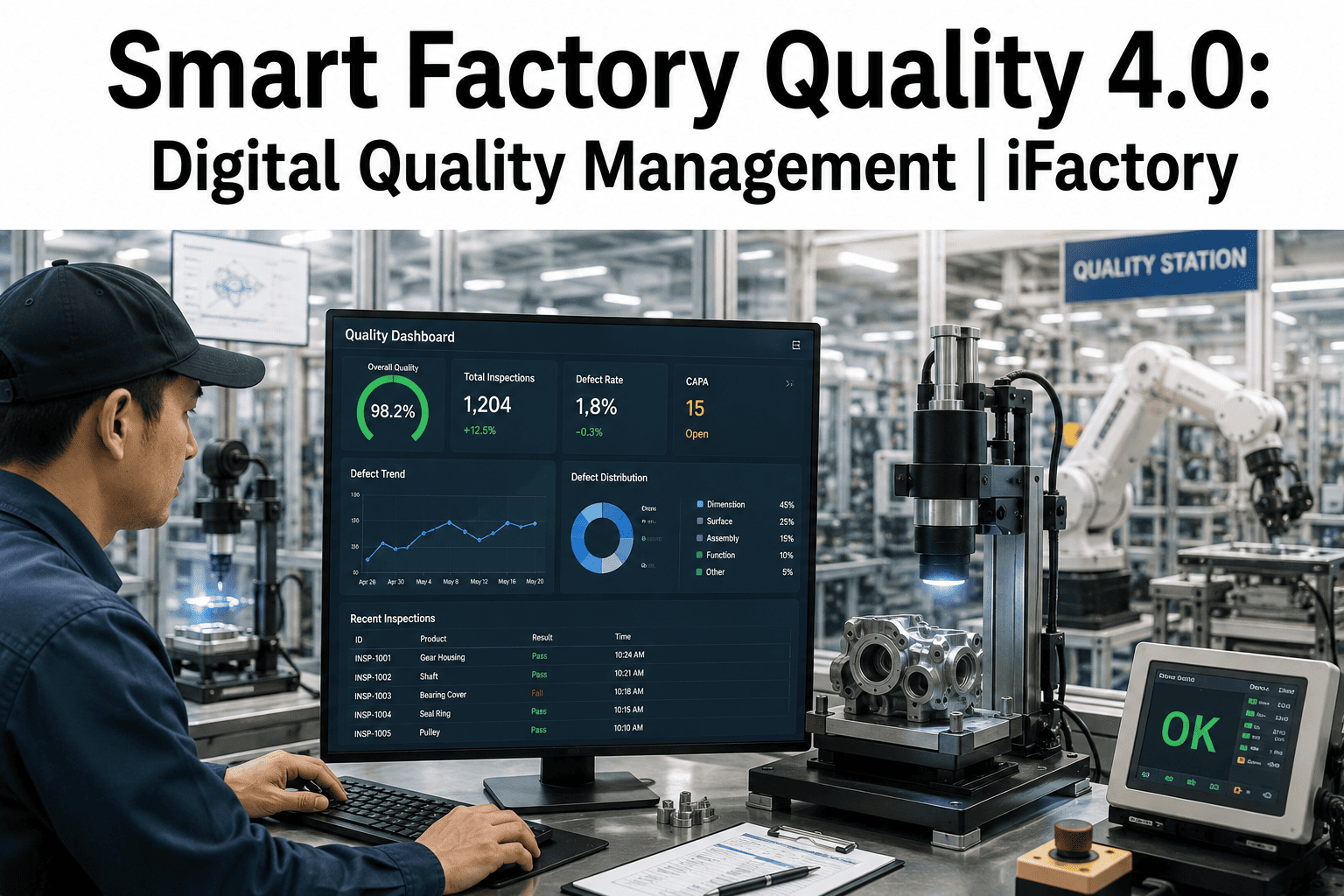
Quality management inside a smart manufacturing platform ranges from a simple digital hold log to full AI-driven defect detection with automatic traceability. The right depth depends on your defect rate and the cost of a field escape, but underestimating this category is one of the most common evaluation mistakes plants make.
Traceability Depth
Confirm whether the platform can trace a defect back to specific inputs, shift, and machine, not just log that one occurred.
Detection Method
Understand whether quality checks are manual entry, rule-based, or AI vision-driven, and what that means for your defect types.
Root Cause Support
Look for built-in tools that help connect a quality trend back to a likely process cause, not just a report of the trend itself.
Compliance Fit
Verify the platform supports the specific documentation and audit trail requirements of your industry.
Evaluating Maintenance Optimization Capability
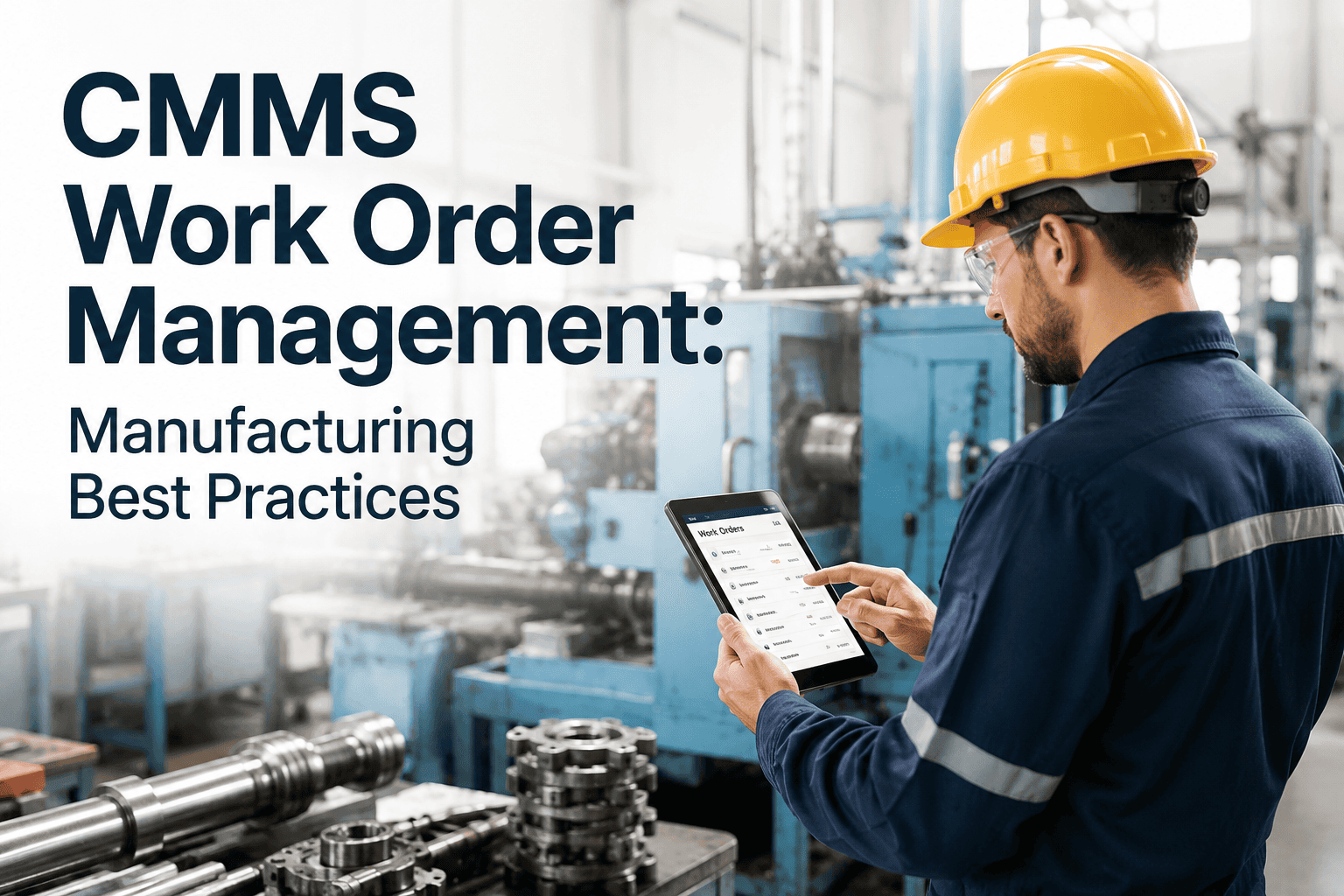
Maintenance capability spans a wide range, from a digital calendar that reminds you a PM is due, to a condition-based system that predicts a bearing failure weeks before it happens. Understanding where a platform actually sits on that spectrum, rather than assuming "predictive" means the same thing everywhere, is essential to a fair comparison.
Scheduled
Calendar-based reminders only
Condition-Based
Triggers from real sensor thresholds
Predictive
Failure forecasting from trend models
Curious what predictive maintenance looks like on your own equipment data? Book a 30-minute walkthrough with our team.
Integration Capability: The Category Most Often Underestimated
A platform's feature list matters far less than whether those features can actually connect to your plant's existing systems. Integration friction is the most common reason a promising pilot never scales to a full deployment, because the value of any capability depends entirely on getting clean, current data in and useful output back out.
Native MES Connectors
Pre-built integrations reduce implementation risk compared to platforms that require custom integration work for common systems.
Legacy PLC Support
Older equipment on the floor needs a realistic integration path, not an assumption that everything will be replaced first.
ERP Connectivity
Production and quality data becomes far more useful when it can flow into planning and financial systems automatically.
API Flexibility
An open API matters for the integrations that aren't pre-built today but will be needed as the plant's system landscape evolves.
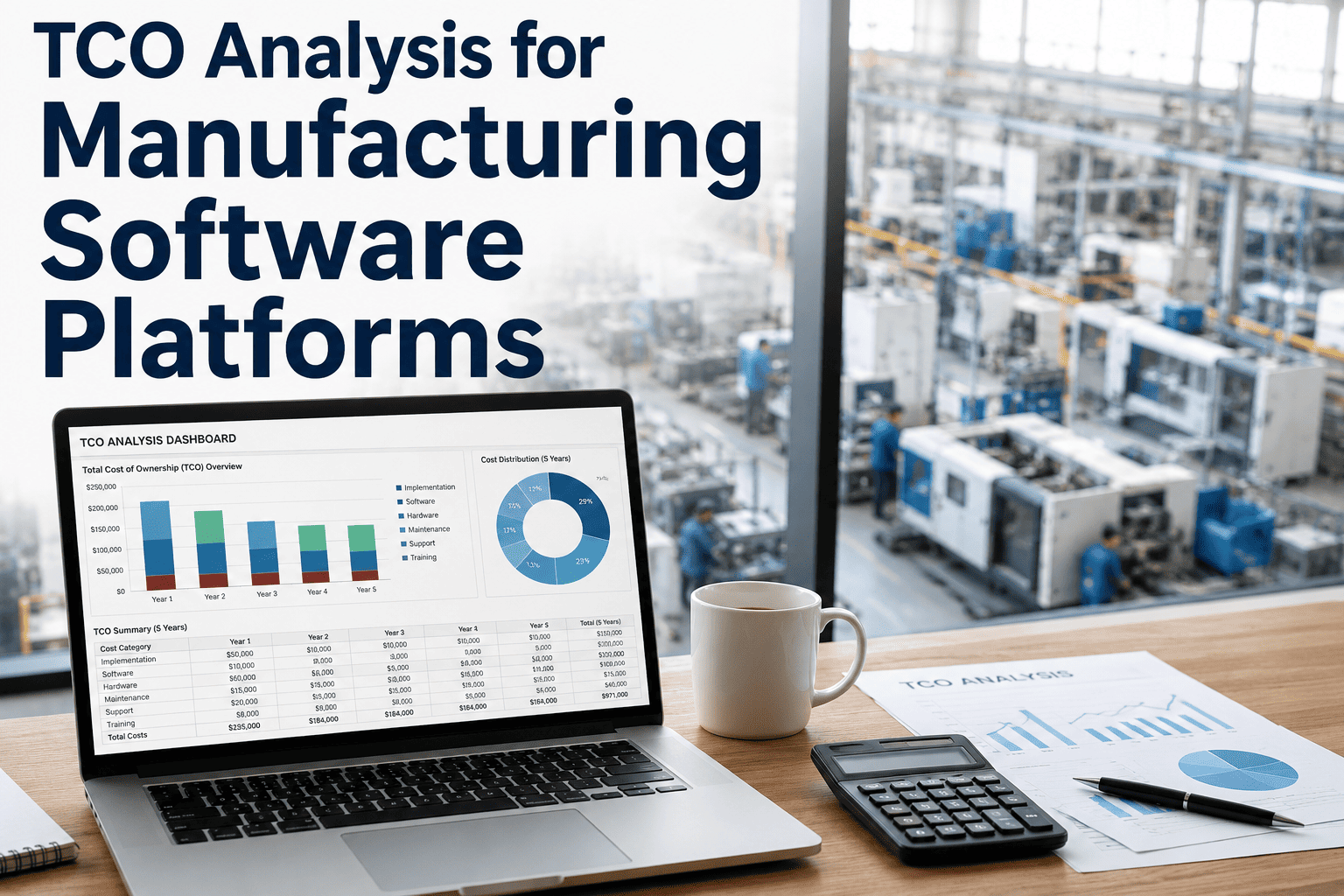
Total Cost of Ownership: Beyond the License Fee
The sticker price on a platform quote rarely reflects what it actually costs to run over several years. Implementation labor, integration work, training, and ongoing support all shape the real cost, and skipping this analysis is a common reason budgets run over mid-deployment.
| Cost Component | Often Underestimated? | Why It Matters |
|---|
| Implementation labor | Yes | Custom integration work can exceed the software cost itself |
| Ongoing support | Sometimes | Response time and support depth vary widely between vendors |
| Training and adoption | Yes | Low adoption erodes value regardless of platform capability |
| Scaling costs | Sometimes | Per-line or per-user pricing can grow faster than expected |
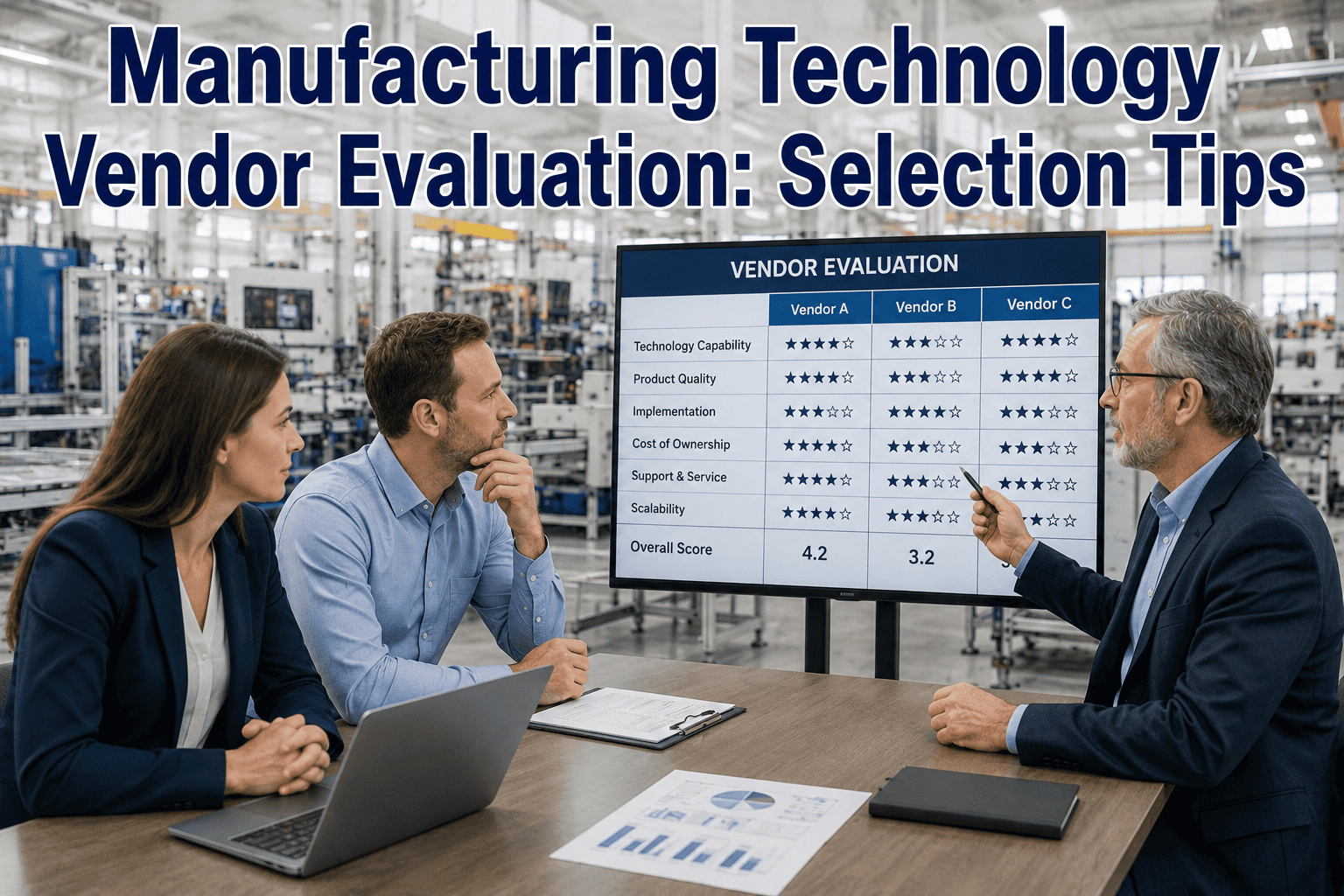
A Practical Vendor Evaluation Checklist
Beyond the capability comparison, a few practical questions tend to separate a platform that scales well from one that stalls after the pilot phase.
Reference Customers
Ask for references running a similar plant type and scale, not just a general customer list.
Support Model
Understand who handles issues after go-live and what response times actually look like in practice.
Roadmap Alignment
Check whether the vendor's product roadmap points toward the capability areas your plant will need next.
Data Ownership
Confirm your plant retains clear ownership and export rights to its own historical data.
Want help scoring a shortlist of platforms against these criteria? Talk to our team for an independent perspective.
Frequently Asked Questions
How should we weigh feature breadth against integration capability when comparing platforms?
Integration capability should generally carry more weight in the decision, because a feature-rich platform that can't connect cleanly to your existing MES, PLCs, and ERP will underdeliver on nearly every one of those features in practice. A narrower platform with strong native integration to your specific systems tends to produce faster, more reliable value than a broader one built around generic connectors.
Our team can help assess integration fit against your actual system list.
What's a realistic timeline to see value from a new smart manufacturing platform?
This depends heavily on integration complexity and deployment scope, but a phased rollout starting with one line or one capability area typically produces measurable results faster than an attempt at a full simultaneous deployment. Platforms that require a multi-quarter implementation before any usable output tend to lose organizational momentum before they reach that first milestone, which is worth factoring into the comparison itself.
Do we need a platform that covers production, quality, and maintenance equally well?
Not necessarily at the outset — many plants get the most initial value from strength in one category, typically production monitoring or maintenance, before expanding into the others. What matters more for the long-term decision is whether the platform can grow into full coverage on a shared data foundation, rather than requiring separate disconnected tools for each category as needs expand.
How do we evaluate a platform's AI-driven capability versus a rule-based one?
Rule-based systems are more predictable and easier to configure for known failure modes or defect types, while AI-driven systems can catch patterns that weren't explicitly programmed but require more data and validation time to trust. The right choice often depends on how well-understood your failure and defect modes already are, and whether you have enough historical data to properly train and validate an AI-driven approach.
What should a pilot evaluation actually test before a full platform decision?
A good pilot tests real integration with your actual systems, not a sandboxed demo environment, and it runs long enough to capture normal production variability rather than just a clean best-case week. It should also involve the actual floor staff who will use the platform daily, since adoption friction discovered during a pilot is far cheaper to address than after a full rollout.
Book a demo to see how a structured pilot with iFactory typically runs.
Compare Against Your Own Systems, Not a Demo Script.
See How iFactory Fits Your Plant's Actual Requirements
Bring your current systems, defect types, and maintenance approach. We'll show you exactly where iFactory fits and where it doesn't.