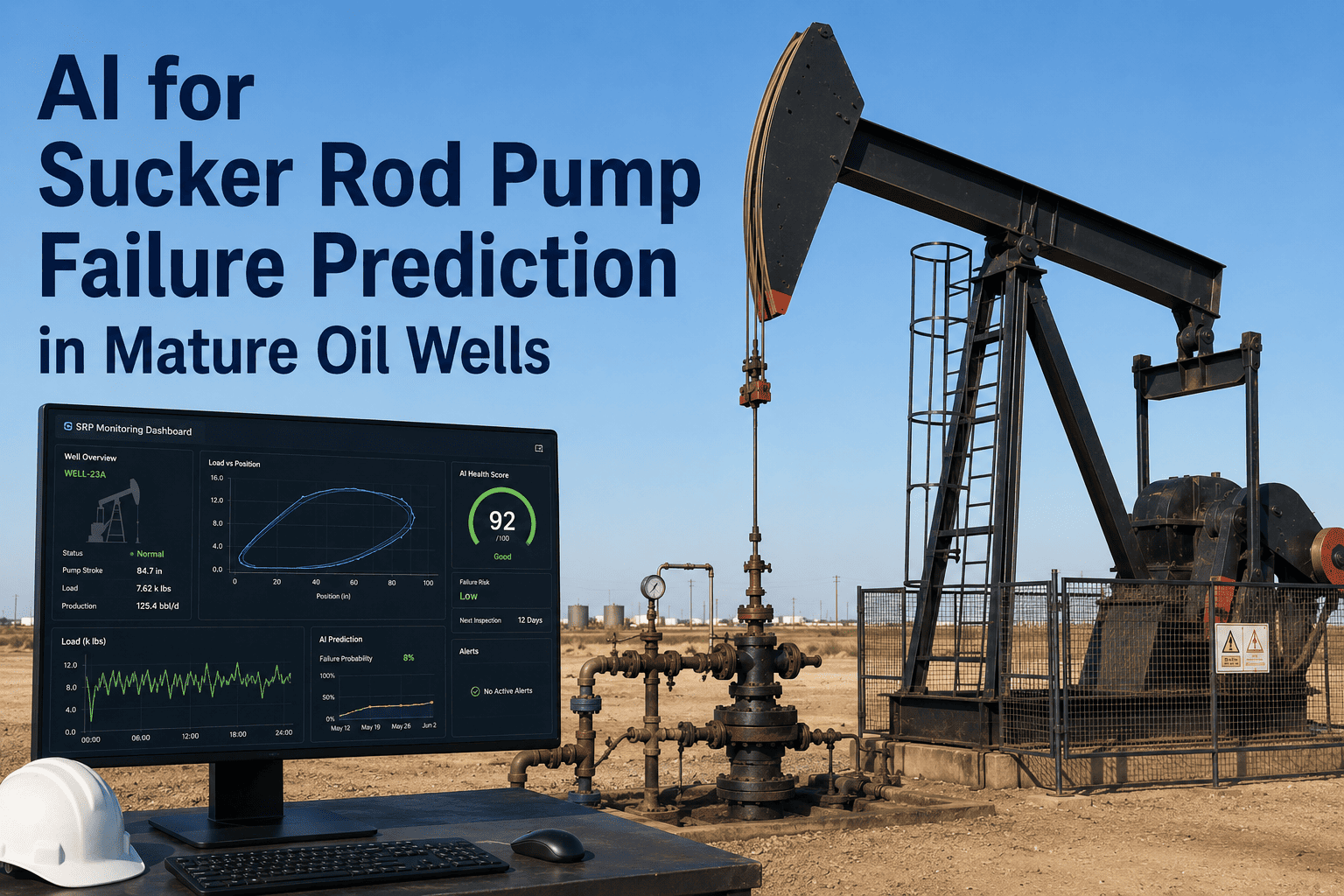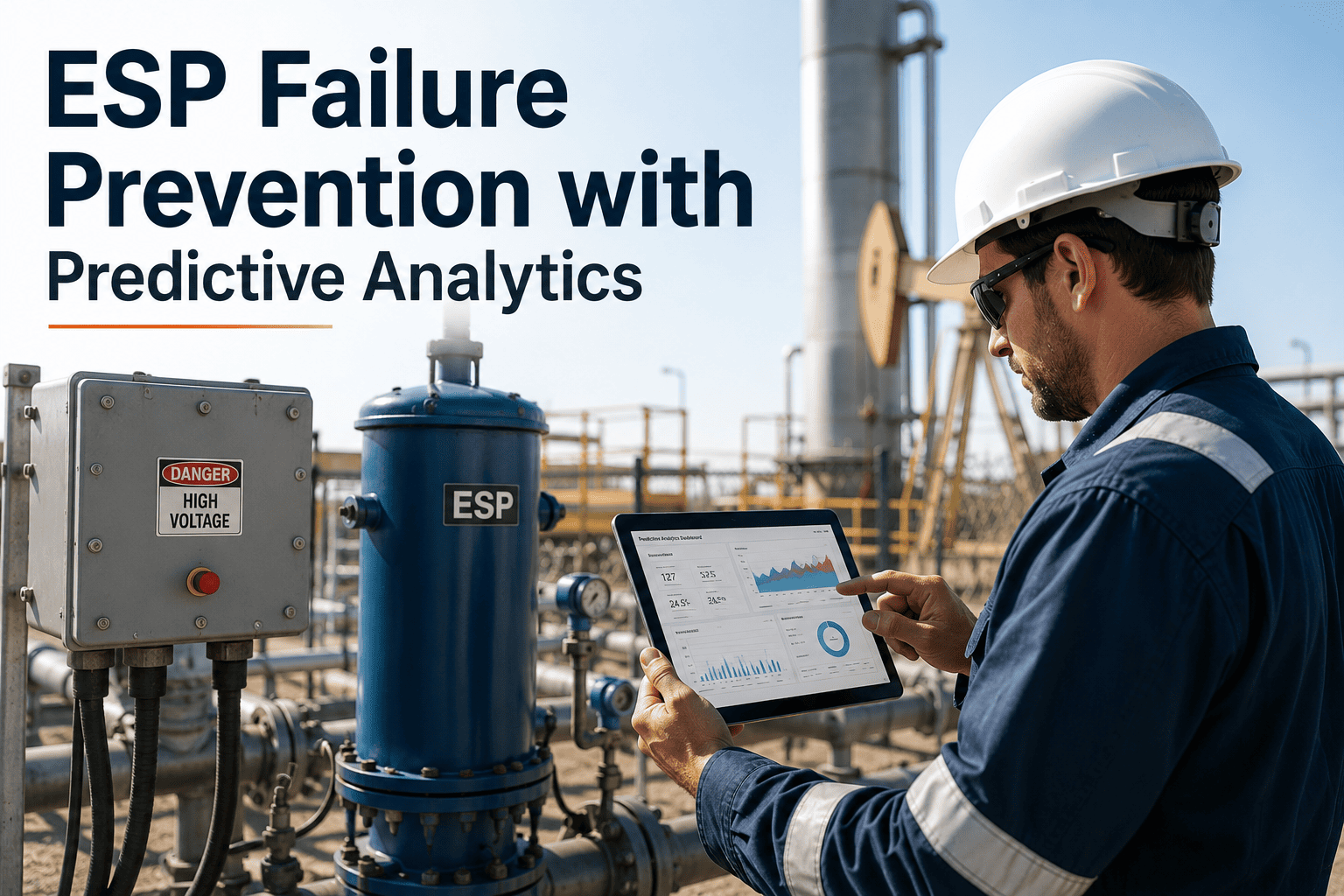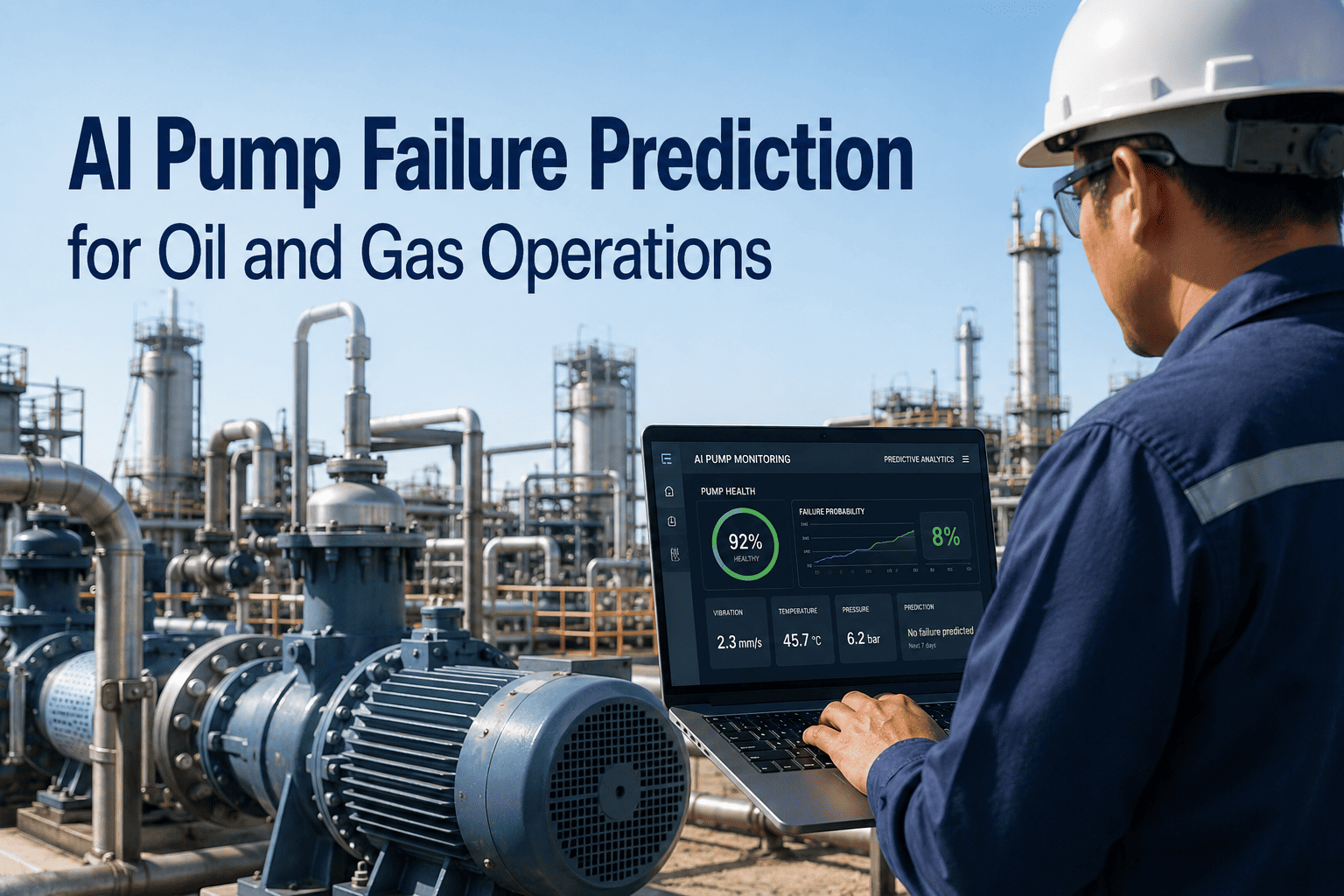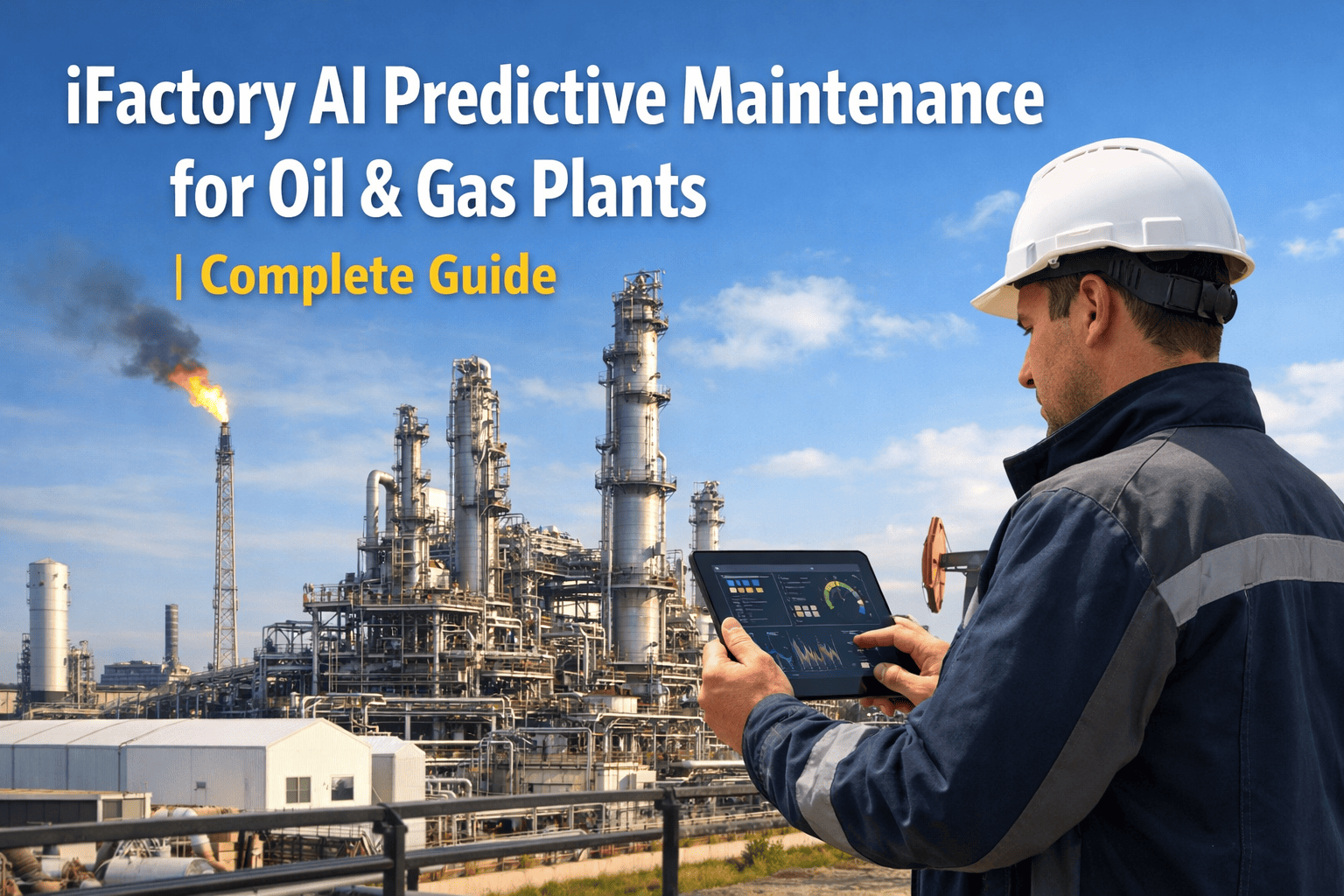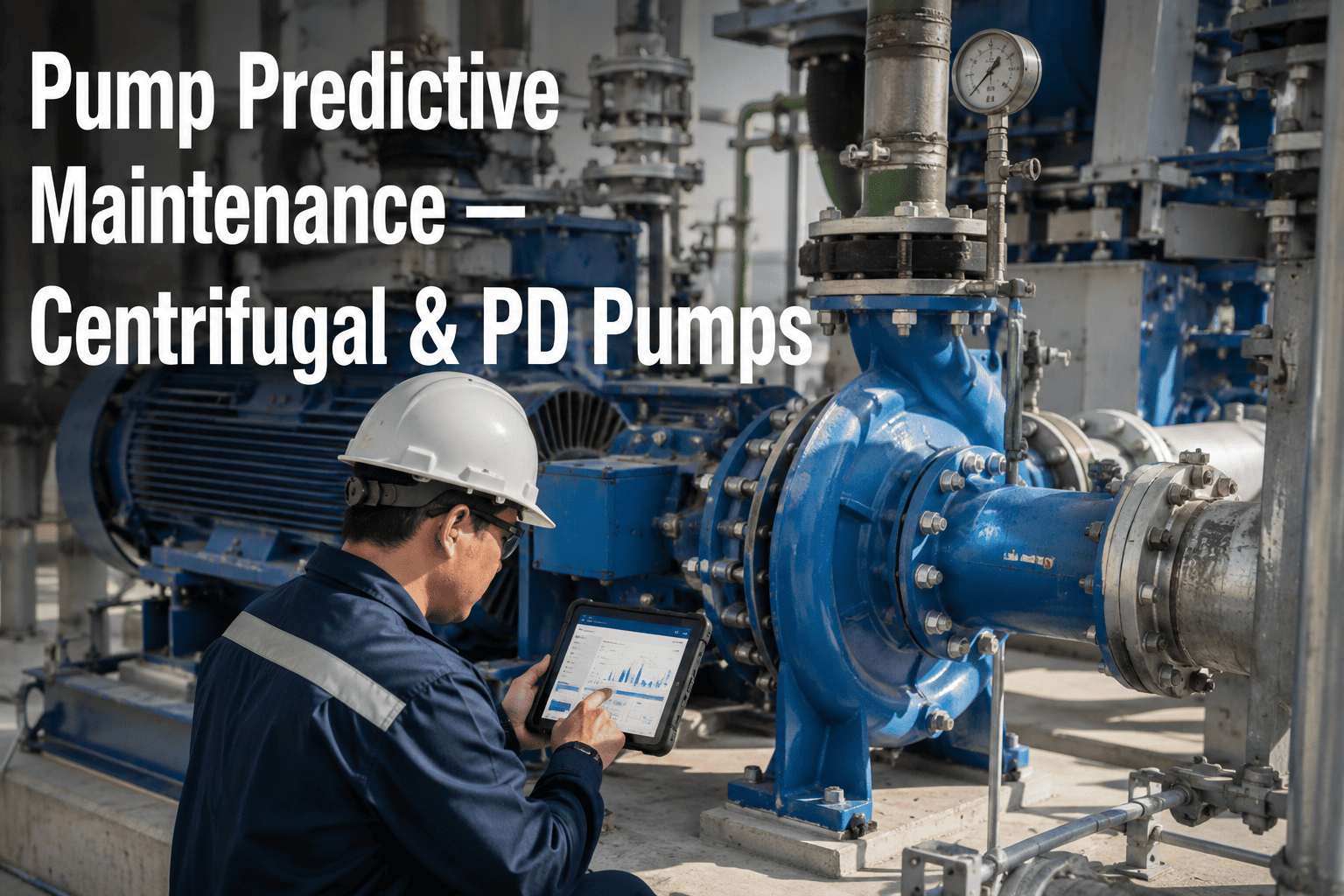
In the high-stakes environment of oil and gas operations, pump reliability is the backbone of productivity. Whether managing centrifugal pumps in upstream production or positive displacement pumps in midstream pipelines, unplanned failures can cascade into millions of dollars in lost revenue, environmental hazards, and safety risks. Traditional reactive maintenance is no longer viable; the industry demands a shift toward predictive maintenance (PdM) that leverages AI, IIoT sensors, and advanced analytics to foresee failures before they occur. This comprehensive guide explores the technical nuances of pump PdM, focusing on cavitation detection, seal failure prediction, impeller wear monitoring, and alignment diagnostics. By integrating real-time data with machine learning models, operators can achieve unprecedented uptime and efficiency. Book a Demo to see how iFactory transforms your pump reliability program.
Optimize Your Pump Fleet Today
Reduce downtime by 40% with AI-driven predictive maintenance. Discover the power of real-time pump health analytics.
Understanding Pump Failure Mechanisms
Centrifugal and positive displacement pumps operate under fundamentally different principles, yet both are susceptible to common failure modes that predictive maintenance can address. Centrifugal pumps rely on rotational energy to move fluids, making them prone to cavitation when net positive suction head (NPSH) drops below required levels. This causes vapor bubbles to collapse violently, eroding impeller surfaces and reducing efficiency. Positive displacement pumps, on the other hand, use reciprocating or rotating elements to displace fluid, leading to wear in seals, valves, and liners due to abrasive particles or improper lubrication. Seal failures in PD pumps often result from dry running or excessive pressure, while centrifugal pumps face alignment issues from thermal expansion or foundation settling. Vibration analysis, oil debris monitoring, and temperature trending form the core of PdM strategies for both types, but the interpretation of data requires domain-specific models trained on historical failure patterns. Advanced AI systems can differentiate between benign fluctuations and early-stage anomalies, enabling maintenance teams to act with precision.
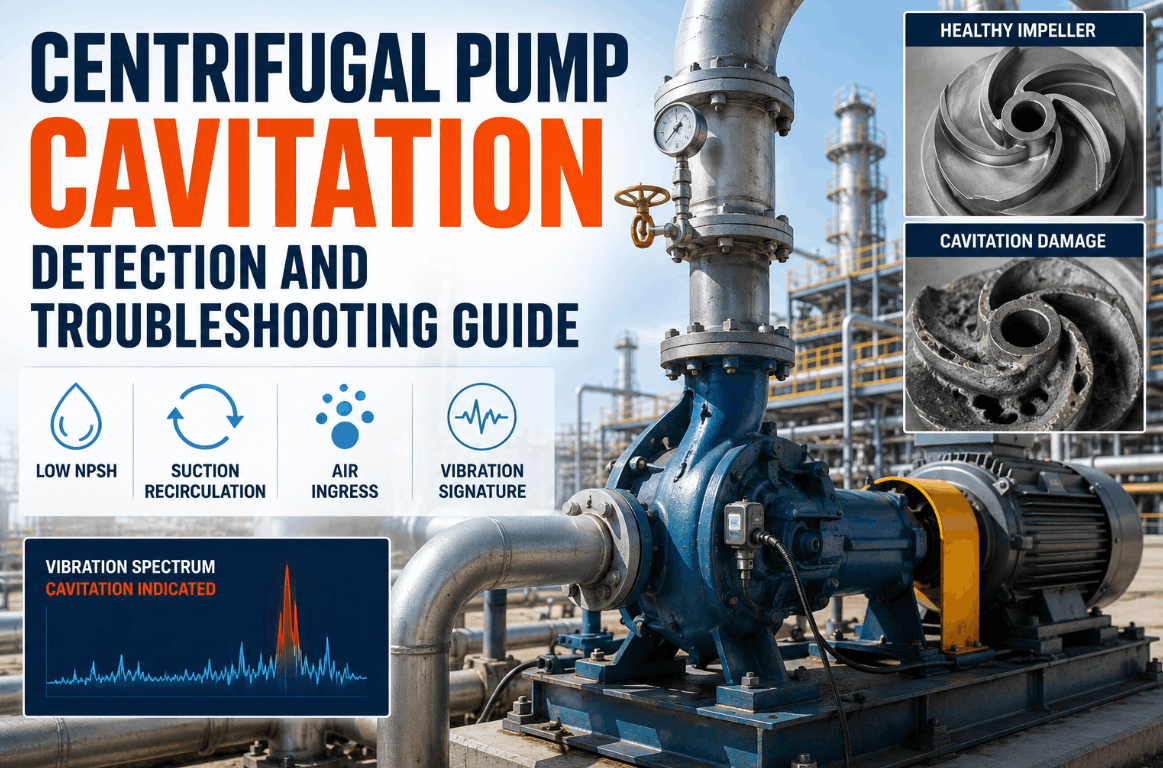
Cavitation Detection
High-frequency vibration sensors detect vapor bubble collapse signatures. AI models isolate cavitation from background noise, allowing early intervention before impeller damage occurs. Real-time NPSH calculations trigger alerts when conditions become critical.
Seal Failure Prediction
Monitoring seal chamber pressure, temperature, and leakage rates provides early warnings. Machine learning algorithms analyze trends to predict seal degradation, reducing catastrophic leaks and environmental spills.
Impeller Wear Analytics
Using motor current signature analysis and vibration spectrum changes, AI quantifies impeller wear progression. This enables condition-based overhauls rather than schedule-based replacements, saving costs.
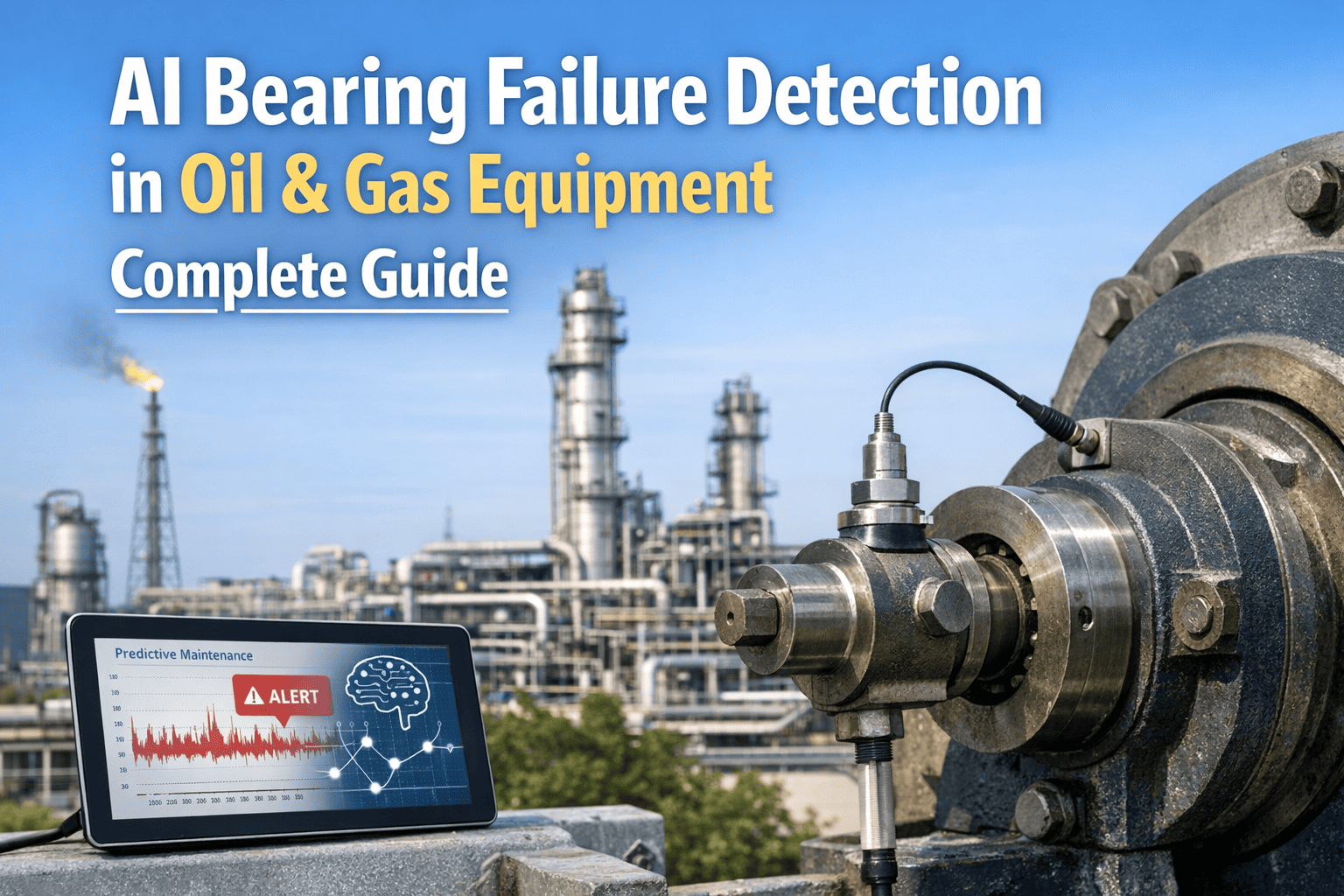
Alignment & Bearing Diagnostics
Laser alignment data combined with bearing temperature and vibration trends reveals misalignment and bearing fatigue. Predictive models schedule corrections during planned outages, avoiding emergency shutdowns.
Implementing a Pump PdM Program
Sensor Deployment
Install wireless vibration, temperature, pressure, and flow sensors on critical pumps. Ensure data acquisition at 10 kHz for centrifugal pumps and 5 kHz for PD pumps to capture relevant failure frequencies.
Data Integration
Connect sensor streams to a centralized IIoT platform. Use edge computing for real-time anomaly detection and cloud-based models for long-term trend analysis.
Model Training
Train AI models on historical failure data and normal operating envelopes. Use supervised learning for known failure modes and unsupervised learning for novel anomaly detection.
Alert & Workflow Integration
Configure alerts with severity levels and integrate with CMMS for automatic work order generation. Ensure maintenance teams receive actionable insights, not raw data.
Comparison: Centrifugal vs. Positive Displacement Pump Monitoring
| Parameter | Centrifugal Pump | Positive Displacement Pump |
|---|---|---|
| Primary Failure Mode | Cavitation, impeller wear | Seal failure, valve wear |
| Key Sensor Type | Accelerometer, pressure transducer | Pressure sensor, flow meter |
| Data Frequency | 10 kHz | 5 kHz |
| AI Model Focus | Vibration spectrum analysis | Pressure/flow deviation patterns |
| Maintenance Trigger | Efficiency drop > 5% | Leakage rate increase > 10% |
Transform Your Pump Reliability Strategy
Leverage AI to predict failures before they happen. Achieve operational excellence with iFactory's pump PdM solutions.
Advanced Analytics for Pump Efficiency Decline
Efficiency decline in pumps often precedes catastrophic failure by weeks or months. By monitoring the relationship between flow rate, pressure differential, and motor power consumption, AI models can calculate real-time efficiency trends with high precision. For centrifugal pumps, efficiency curves shift as impeller wear increases, while PD pumps show efficiency drops due to internal leakage past worn seals or valves. Advanced PdM platforms use regression analysis to estimate remaining useful life (RUL) and recommend optimal intervention points. This approach not only prevents unexpected breakdowns but also optimizes energy consumption, as pumps operating below peak efficiency consume more electricity. In oil and gas applications, where pumps often run continuously for years, even a 1% efficiency improvement translates to substantial cost savings. Integrating efficiency data with production planning allows operators to schedule maintenance during low-demand periods, minimizing revenue loss.
Case Study: Upstream Pump Reliability
A major oil producer implemented iFactory's PdM on 50 centrifugal pumps across three fields. Within six months, unplanned downtime dropped by 45%, and maintenance costs reduced by 30%. The system detected cavitation in a water injection pump two weeks before failure, allowing a planned replacement.
Case Study: Midstream Pipeline Pumping
A midstream operator deployed PdM on 20 positive displacement pumps at a pipeline booster station. Seal failure alerts prevented three major leaks, saving an estimated $2 million in cleanup costs and regulatory fines. Pump availability increased to 99.2%.
Integrating Pump PdM with Enterprise Asset Management
Predictive maintenance does not operate in isolation; it must be integrated with existing enterprise asset management (EAM) and computerized maintenance management systems (CMMS) to deliver full value. iFactory's platform provides APIs and connectors that sync real-time pump health data with work order systems, inventory management, and financial planning. When an AI model predicts bearing degradation, the system automatically checks spare parts availability, estimates repair costs, and schedules a work order for the next planned shutdown. This closed-loop approach ensures that predictive insights translate into actionable maintenance events without manual intervention. Additionally, historical data from PdM feeds back into asset lifecycle models, improving future procurement and design decisions. For oil and gas companies managing thousands of pumps across multiple sites, this integration is critical for scaling reliability programs efficiently.
Frequently Asked Questions
What types of pumps can benefit from predictive maintenance?
Predictive maintenance is applicable to all pump types used in oil and gas, including centrifugal, positive displacement, diaphragm, and screw pumps. The key is selecting appropriate sensors and AI models tailored to each pump's failure modes. For more details, visit our support page.
How does cavitation detection work in practice?
Cavitation detection relies on high-frequency accelerometers (10-20 kHz) that capture the acoustic signature of collapsing vapor bubbles. AI algorithms filter out background noise and compare the signal to known cavitation patterns. When detected, the system can recommend adjusting pump speed or suction pressure. Book a Demo to see a live example.
What is the ROI of implementing pump PdM?
ROI varies by application, but typical savings include 30-50% reduction in maintenance costs, 40-60% decrease in unplanned downtime, and extended pump life by up to 60%. Energy savings from optimized operation add another 5-10%. Payback periods are often less than 12 months. Contact us for a custom ROI analysis.
Can PdM be retrofitted on older pumps?
Yes, wireless sensors can be installed on any pump without major modifications. Edge computing devices collect data and transmit it to the cloud for analysis. iFactory's platform is designed for easy retrofitting, making it suitable for brownfield sites. Book a Demo to learn more.
How accurate are AI predictions for pump failures?
With sufficient training data, AI models achieve 85-95% accuracy in predicting failures 2-4 weeks in advance. Accuracy improves over time as more operational data is collected. iFactory's models are continuously retrained to adapt to changing conditions. Visit our support page for case studies.
Ready to Revolutionize Your Pump Maintenance?
Join industry leaders who trust iFactory for AI-driven pump predictive maintenance. Start your journey to zero unplanned downtime today.