Every quarter, multi-campus health system executives face a silent crisis: revenue is leaking through fragmented workflows, compliance gaps are multiplying across facilities, and operational benchmarks vary so wildly between campuses that portfolio-level decisions are made on incomplete data. The cost of inaction is not stagnation — it is measurable financial hemorrhage, compounding risk exposure, and a widening clinical performance gap that erodes patient trust and payer relationships. iFactory Healthcare's Multi-Site Management platform closes this gap with centralized analytics, automated compliance documentation, and portfolio-wide benchmarking — purpose-built for enterprise health systems that cannot afford operational inconsistency at scale.
Is Operational Inconsistency Costing Your Health System Millions?
Centralize analytics, standardize compliance, and benchmark every campus from a single command center — built for CFOs, COOs, and System CMOs managing complex portfolios.
The Multi-Campus Standardization Imperative
Health systems operating across five or more campuses consistently report the same three failure modes: siloed reporting that delays executive decision-making, inconsistent compliance postures that create regulatory exposure, and no reliable mechanism for benchmarking clinical and financial performance across facilities. iFactory's Multi-Site Management feature eliminates all three simultaneously.
Legacy Friction vs. iFactory Optimized Excellence
The table below captures the exact operational delta between fragmented multi-campus management and a fully standardized iFactory-powered health system portfolio.
| Operational Dimension | Legacy Friction (Current State) | iFactory Optimized Excellence | Financial / Clinical Impact |
|---|---|---|---|
| Portfolio Reporting | Manual Excel consolidation, 5–10 day cycle | Live centralized dashboard, real-time refresh | +40% Decision Velocity |
| Compliance Documentation | Campus-by-campus manual filing, inconsistent formats | Automated, system-wide compliance templates | Zero Regulatory Gap |
| Performance Benchmarking | No cross-campus visibility, subjective assessments | Objective KPI benchmarking across all facilities | 15% Throughput Gain |
| Revenue Cycle Integrity | Siloed billing data, delayed leakage detection | Portfolio-wide revenue analytics with anomaly alerts | $2M+ Annual Recovery |
| Staff Workload Allocation | Campus-level guesswork, reactive staffing | Predictive staffing models driven by census data | Burnout Reduction |
| Audit Preparedness | 3–4 weeks of manual preparation per audit | Continuous audit-ready documentation trail | 98% Audit Pass Rate |
What Multi-Site Management Delivers Across Your Portfolio
Centralized Reporting Hub
- Single dashboard aggregating data from all campuses
- Role-based access for system executives and campus leads
- Drill-down from portfolio view to facility-level metrics
- Automated report scheduling with executive distribution
Portfolio Benchmarking Engine
- Campus-vs-campus KPI comparison across 50+ metrics
- Percentile ranking for clinical and operational performance
- Trend analysis identifying outlier facilities before crises
- Exportable benchmark reports for board presentations
Compliance Standardization
- System-wide policy templates enforced across all sites
- Automated documentation for Joint Commission readiness
- Real-time compliance gap detection with escalation alerts
- Immutable audit trail for every documented workflow action
Revenue Integrity Analytics
- Cross-campus revenue cycle monitoring in a unified view
- AI-flagged anomalies indicating coding errors or denials
- Payer mix and contract performance analysis by facility
- Denied claims waterfall tracking with recovery prioritization
How Standardization Drives Clinical & Staff Outcomes
Staff Burnout Reduction
- Eliminates redundant manual data entry across systems
- Predictive staffing prevents chronic under-resourcing
- Automated workflows reduce administrative cognitive load
- Consistent protocols reduce cross-campus role confusion
Patient Throughput Gains
- Bottleneck identification across the full care continuum
- Transfer coordination standardized between campuses
- Capacity dashboards enable proactive bed management
- Discharge planning automation reduces length-of-stay
Clinical Quality Consistency
- System-wide clinical protocol adherence monitoring
- Outcome variance analysis flags quality outlier campuses
- Infection control and safety metrics tracked in real time
- Readmission risk scoring standardized portfolio-wide
From Fragmented Operations to Unified Intelligence — in 90 Days
Operational Gap Audit (Days 1–14)
- Map current data flows across all campuses
- Identify revenue leakage points and compliance exposures
- Baseline KPI capture across all facilities
Platform Configuration & Integration (Days 15–45)
- EHR and billing system API connections established
- Role-based dashboard configuration for all user tiers
- Compliance template library deployed system-wide
Benchmarking & Validation (Days 46–75)
- Live campus-vs-campus performance benchmarking activated
- Revenue anomaly detection tuned to health system payer mix
- First executive portfolio report generated and validated
Full Deployment & Continuous Optimization (Day 76–90)
- All campuses live on unified iFactory platform
- Ongoing AI-driven anomaly alerts and compliance monitoring
- Quarterly system health review with iFactory success team
Stop Managing Campuses in Silos. Start Leading a Unified Health System.
iFactory's Multi-Site Management platform gives system executives one dashboard for performance, compliance, and revenue integrity — across every facility in the portfolio.
Multi-Campus Health System Operations — Frequently Asked Questions
How does iFactory integrate with existing EHR systems across multiple campuses?
iFactory uses vendor-neutral API connectors compatible with Epic, Cerner, Meditech, and major HIS platforms. Each campus connects independently, with data normalized into a unified schema that enables system-wide comparison without requiring EHR standardization across facilities. Book a Demo to review our integration library.
Can the platform support health systems with both acute and ambulatory campuses?
Yes. iFactory's Multi-Site Management module is designed for mixed-portfolio health systems. Acute inpatient, surgical, ambulatory, and long-term care facilities can all be managed within the same dashboard, with KPI sets automatically adjusted by facility type for meaningful benchmarking.
How quickly can a new campus be onboarded to the platform?
Standard campus onboarding takes 10–15 business days, including EHR connection, data validation, and role-based access configuration. Health systems with standardized IT infrastructure can onboard new facilities in as few as 7 days. Book a Demo to see our onboarding playbook.
Does the platform meet HIPAA and CMS data security requirements?
Absolutely. iFactory is fully HIPAA-compliant, hosted on certified healthcare cloud infrastructure with AES-256 encryption at rest and in transit. Every platform action generates an immutable audit log meeting CMS, Joint Commission, and state-level regulatory documentation requirements.
What is the ROI timeline for a 10-campus health system?
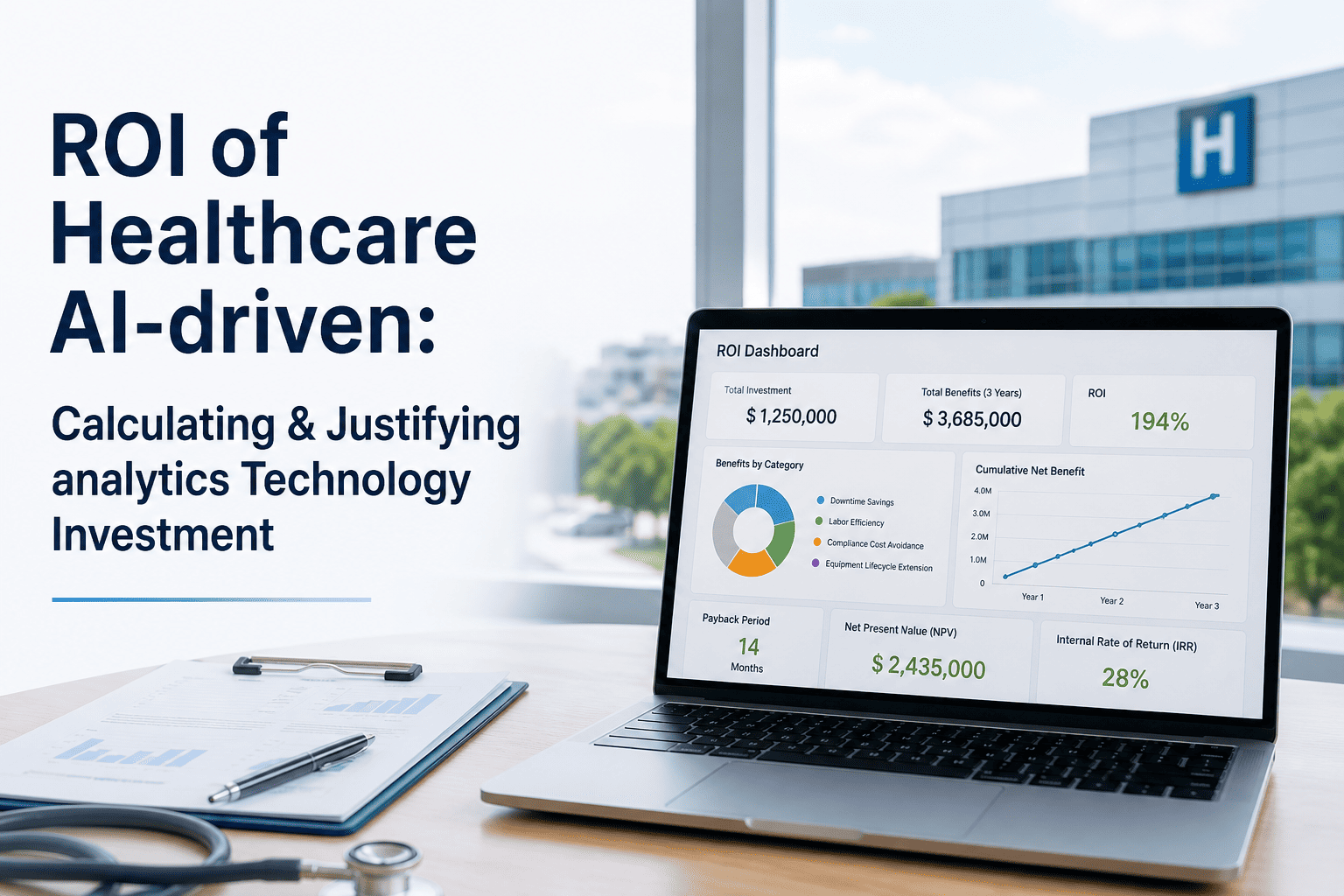
Most health systems of 8–15 campuses recover platform investment within 6–9 months through reduced reporting overhead, compliance penalty avoidance, and revenue cycle integrity gains. Year-two ROI typically exceeds 300% as predictive analytics reduce capital replacement costs and avoidable readmissions. Request an Operational Gap Audit for a custom ROI projection.