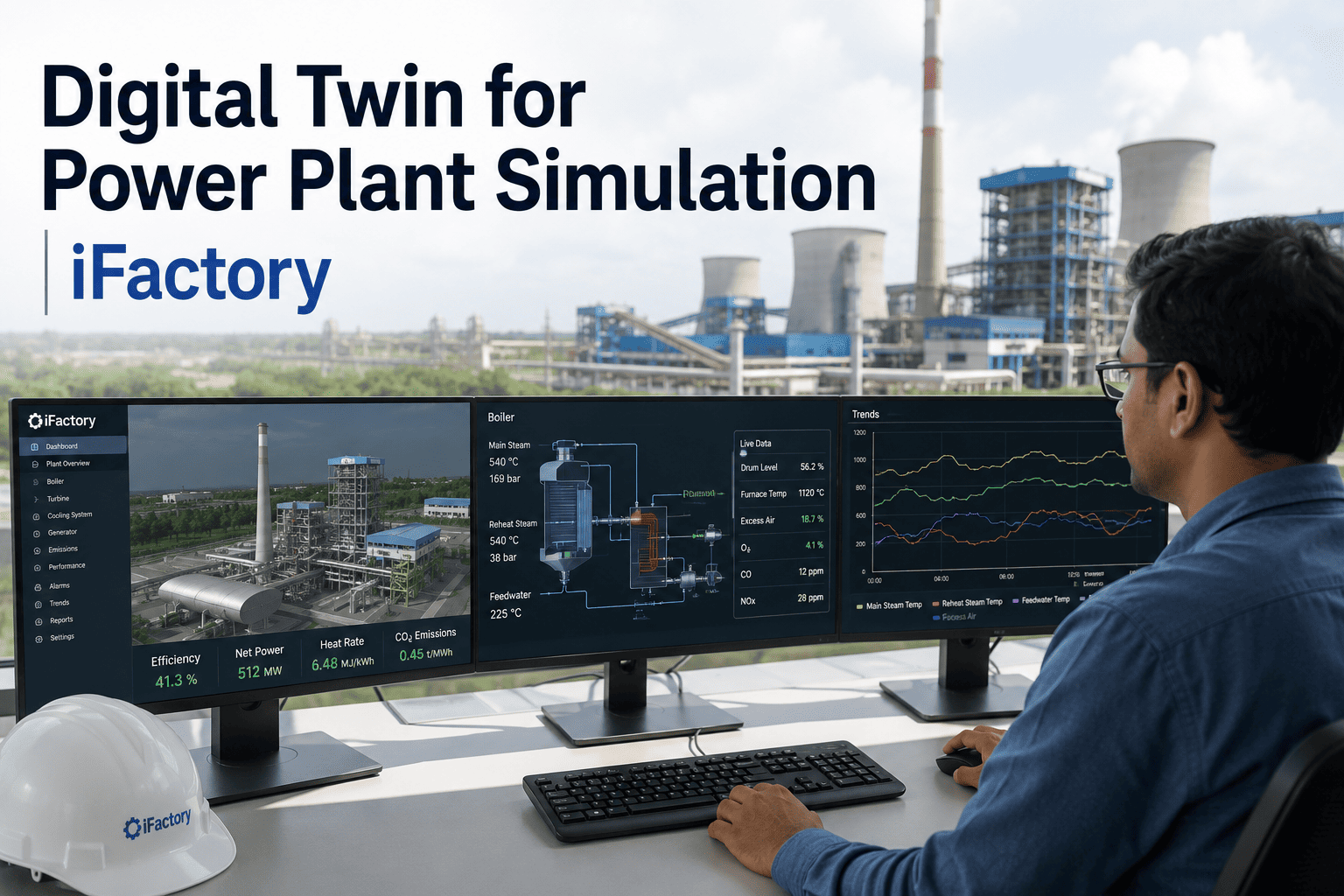
The U.S. natural gas storage network — 400+ underground facilities across 30 states — still relies on manual wellhead readings, periodic inventory surveys, and SCADA alerts that arrive after the deviation has already occurred. In an era of volatile gas prices, renewable intermittency, and tightening EPA methane regulations, that latency is no longer acceptable. Midstream operators deploying AI-driven optimization on storage assets are cutting withdrawal forecast errors by up to 45%, reducing cushion gas requirements, and transforming storage fields from passive inventory warehouses into active, revenue-optimizing grid assets.
Ready to Transform Your Underground Storage Operations with AI?
iFactory's AI platform ingests real-time wellhead data, geological models, and market signals to optimize injection and withdrawal scheduling, predict equipment failures before they occur, and maintain EPA compliance — all from a single unified dashboard.
Why Underground Gas Storage Demands AI-Driven Optimization
Underground gas storage facilities operate at the intersection of geology, thermodynamics, and real-time market economics — a complexity that traditional spreadsheet-based planning and manual wellhead monitoring simply cannot manage at scale. Reservoir behavior shifts with every injection and withdrawal cycle, wellhead performance degrades unpredictably, and EPA methane reporting requirements now demand continuous monitoring rather than periodic estimates. AI optimization replaces reactive operations with predictive intelligence, enabling storage operators to maximize working gas capacity, minimize fuel gas consumption, and respond to price signals with precision that manual workflows cannot match. Book a Demo to see how iFactory's AI platform maps your storage field's unique geological and operational profile.
| Parameter | Traditional Operations | AI-Optimized (iFactory) | Business Impact | Risk Level Eliminated |
|---|---|---|---|---|
| Withdrawal Forecasting | Historical averages + manual adjustment | Real-time ML models incorporating weather, demand, and storage pressure | Forecast error reduced by 45%; fewer imbalance penalties | High |
| Inventory Management | Weekly tank gauging + paper logs | Continuous mass balance with AI anomaly detection | Real-time inventory accuracy within 0.5% | High |
| Wellhead Monitoring | Manual pressure checks; reactive repair | Predictive analytics with automated alerting | Unplanned well downtime reduced by 55% | High |
| Cushion Gas Management | Static estimates; infrequent reassessment | Dynamic modeling of reservoir pressure gradients | 10-15% reduction in cushion gas requirements | Medium |
| EPA Compliance Reporting | Manual data aggregation; lagging indicators | Continuous methane monitoring with auto-generated reports | Reporting time cut by 70%; audit-ready data | High |
Core AI Technologies Reshaping Storage Field Operations
AI optimization of underground gas storage is not a single technology but an integrated stack of machine learning models, digital twin simulations, and real-time data ingestion that together transform how storage operators manage their assets. Each technology layer addresses a specific operational bottleneck — from wellhead performance prediction to market-responsive withdrawal scheduling — and together they create a unified intelligence layer that continuously improves as more operational data flows through the system.
Predictive Wellhead Analytics
Machine learning models trained on historical wellhead pressure, temperature, and flow data predict performance degradation and equipment failure 2-3 weeks before conventional threshold-based alarms. This early warning window enables proactive intervention that eliminates emergency shutdowns and extends well life by optimizing drawdown rates across the field.
Digital Twin Simulation
High-fidelity digital twins of the full storage field — reservoir, wells, gathering lines, and compression — enable operators to simulate injection and withdrawal scenarios under varying market and weather conditions. Each simulation identifies the optimal operating envelope that maximizes working gas capacity while maintaining reservoir integrity across every cycle.
AI Demand Forecasting
Deep learning models ingest weather forecasts, pipeline flow data, LNG export schedules, and power generation demand to predict withdrawal requirements with 7-14 day lead times. This foresight enables storage operators to position inventory optimally across the storage field, capturing peak pricing opportunities that reactive scheduling consistently misses.
Automated Compliance Monitoring
Continuous methane detection data streams feed AI models that differentiate between routine emissions and fugitive leaks, generating EPA Subpart W reports automatically with audit trails attached to every data point. This eliminates manual data transcription and ensures regulatory submissions are always complete and on time.
A Practical Roadmap for Deploying AI on Underground Storage Assets
Deploying AI optimization across underground gas storage assets requires more than installing software — it demands a structured integration strategy that connects field instrumentation, geological models, and market data feeds into a unified intelligence platform. The roadmap below guides storage operations teams through a systematic deployment that delivers measurable ROI within the first storage cycle. Book a Demo to walk through iFactory's pre-built storage optimization templates with our midstream solutions team.
Audit Instrumentation and Data Availability
Map every wellhead, compressor, and pipeline sensor currently installed across your storage field. Identify data gaps where additional pressure, temperature, or flow measurement is needed to train AI models effectively. Prioritize instrumentation upgrades at wells with the highest historical failure rates or the greatest impact on withdrawal capacity.
Integrate SCADA and Geological Data Feeds
Connect existing SCADA systems, wellhead controllers, and geological survey data into iFactory's ingestion layer. Standardize on OPC-UA and MQTT protocols to ensure seamless data flow from field instrumentation into the AI platform. Historical data — minimum 3 years of wellhead and storage performance records — is loaded to train baseline predictive models.
Deploy Digital Twin and Train ML Models
Build the digital twin of your storage reservoir and well network using iFactory's pre-configured midstream templates. Train predictive models on your historical operational data, calibrating withdrawal forecast algorithms against actual flow performance. Model accuracy is validated against a holdout dataset representing at least one full storage cycle.
Configure Optimization Dashboard and Alert Logic
Define key performance indicators — withdrawal forecast accuracy, working gas capacity utilization, wellhead health scores, and compliance status — in iFactory's operations dashboard. Configure tiered alert thresholds that differentiate between routine operational variance and critical events requiring immediate engineering response.
Validate, Go Live, and Scale Across Assets
Run the AI platform in parallel with existing operations for one full injection-withdrawal cycle, comparing model recommendations against actual decisions. After validation, transition to AI-assisted operations on the pilot storage field, then replicate the same configuration, models, and dashboard templates across your entire storage portfolio.
Industry Expert Perspective: AI's Transformational Role in Gas Storage
"The gas storage industry has been operating with 20-year-old decision frameworks while the volatility of the market has increased fivefold. AI optimization is not a competitive advantage anymore — it is becoming a requirement for operators who want to avoid imbalance penalties, maintain EPA compliance, and capture the value of their storage assets in a market where price swings of 50 cents per MMBtu can determine whether a storage field is profitable or not. "
Measurable ROI — What AI Optimization Delivers Across Storage Operations
The financial case for AI optimization of underground gas storage is built from measurable operational improvements that directly impact the balance sheet: reduced balancing penalties, lower fuel gas consumption, deferred capital expenditure on cushion gas, and avoided regulatory fines. es.
Operational Efficiency
- Withdrawal forecast accuracy improved by 45%
- Fuel gas consumption reduced by 8-12% per cycle
- Wellhead maintenance deferred from emergency to scheduled
- Working gas capacity utilization increased by 12-18%
Cost Reduction
- Imbalance penalties reduced by up to 60%
- Cushion gas investment reduced by 10-15%
- Emergency well intervention costs eliminated
- EPA reporting labor reduced by 70%
Revenue & Compliance
- Peak pricing capture improved by 20-25%
- EPA Subpart W reporting fully automated
- Field life extended through optimized drawdown rates
- Multi-field portfolio optimization unlocks 5-8% aggregate value
The Future of Underground Gas Storage Is AI-Driven
Underground gas storage is entering a new operating paradigm where the speed and accuracy of AI-driven optimization are no longer optional — they are the baseline for competitive storage operations. Operators who continue to rely on manual wellhead monitoring, spreadsheet-based inventory management, and reactive compliance reporting are accumulating operational and regulatory risk with every storage cycle.
Deploy AI Optimization on Your Storage Assets with iFactory
Midstream operators across the U.S. are using iFactory's AI platform to transform underground gas storage operations — cutting forecast errors, reducing penalties, and automating EPA compliance from wellhead to report.
AI Gas Storage Optimization — Frequently Asked Questions
What specific AI technologies are used for underground gas storage optimization?
Underground gas storage optimization relies on an integrated stack of machine learning models including gradient-boosted trees and deep neural networks for wellhead performance prediction, physics-informed digital twins for reservoir simulation, and transformer-based time series models for demand forecasting. These models ingest SCADA data, geological surveys, weather feeds, and market pricing signals to generate withdrawal forecasts, injection schedules, and equipment health predictions that continuously improve as more operational data accumulates. iFactory's platform bundles these AI capabilities into a unified interface designed specifically for midstream storage operations.
How long does it take to deploy AI optimization on an existing storage field?
A typical AI deployment on an existing underground storage field takes 10-14 weeks from project kickoff to validated operation. The timeline includes 3-4 weeks for instrumentation audit and SCADA integration, 3-4 weeks for digital twin construction and model training on historical data, 2-3 weeks for dashboard configuration and alert logic setup, and 2-3 weeks for parallel validation against existing operations. Operators who already have comprehensive SCADA infrastructure and clean historical data can complete deployment in as few as 8 weeks. Discuss your specific storage field deployment timeline with iFactory's midstream team.
What is the typical ROI payback period for AI optimization of gas storage?
Midstream operators typically recover AI optimization investment within 9-15 months through a combination of reduced imbalance penalties (40-60% reduction), lower fuel gas consumption (8-12% savings), deferred well intervention costs, and improved peak pricing capture (20-25% improvement). A single avoided imbalance penalty during a high-volatility period — which can range from $100,000 to $500,000 for a mid-size storage field — can alone justify a significant portion of the total platform investment.
Can AI optimization be deployed on storage fields with legacy instrumentation?
Yes — iFactory's AI platform is designed to integrate with existing field instrumentation regardless of vintage. The platform supports legacy 4-20mA analog signals, Modbus RTU, and proprietary SCADA protocols through a flexible edge gateway layer that normalizes data into a consistent format for AI model ingestion. For fields with limited instrumentation coverage, iFactory can recommend a priority sensor upgrade plan that targets the highest-value measurement points — typically wellhead pressure and flow — while deferring less critical instrumentation investments to later deployment phases.
How does AI optimization address EPA methane monitoring requirements for storage fields?
EPA's updated methane regulations under Subpart W and the Greenhouse Gas Reporting Program require continuous monitoring and accurate quantification of emissions from storage field equipment — requirements that manual calculation methods cannot satisfy reliably. iFactory's AI platform ingests continuous methane detection data from fixed sensors and OGI (optical gas imaging) surveys, applies ML models to differentiate between routine pneumatic emissions and fugitive leaks, and generates automated Subpart W reports with full audit trails.
Start Your AI Storage Optimization Pilot with iFactory
Leading midstream operators trust iFactory to deliver AI-driven optimization across their underground gas storage assets — reducing forecast error, eliminating penalties, and maintaining EPA compliance with a unified intelligence platform built for the energy industry.