A pressure vessel inspection turns up wall thinning below the original design thickness. The default reaction at most plants is to schedule a replacement — a decision that can run past two million dollars once you count the vessel itself, engineering, and the outage window it forces. API 579-1/ASME FFS-1 exists because that default is frequently wrong. This walks through how Level 1, 2, and 3 assessments replace that assumption with an engineering calculation of actual remaining strength, and how to book a demo to see how a digital FFS workflow fits into your existing inspection program.
Pressure Vessel Failure Risks · API 579
Fitness for Service: API 579 for Power Plant Equipment
Evaluate damaged pressure vessels, piping, and tanks for continued service using API 579-1/ASME FFS-1 — Level 1, 2, and 3 assessments for corrosion, cracks, and creep damage, without defaulting to premature replacement.
The Core Question
Run, Repair, or Replace — Answered With Engineering, Not Guesswork
Every damaged pressure vessel, piping run, or tank on a power plant floor eventually forces the same three-way decision: keep it running as-is, repair the specific damage found, or replace the component outright. Without a structured engineering basis, that decision defaults to whichever option feels safest to the person making it — which usually means the most conservative and most expensive path, replacement, even when the equipment has substantial remaining strength. That default isn't irrational caution so much as a rational response to not having a defensible alternative on hand at the moment the finding gets discussed.
API 579-1/ASME FFS-1 replaces that default with a calculation. The standard provides recognized procedures for evaluating brittle fracture, general and local metal loss, pitting corrosion, crack-like flaws, creep damage, and several other degradation mechanisms — quantifying whether a component still meets its Maximum Allowable Working Pressure and how much remaining life it has, rather than treating any detected flaw as automatic grounds for shutdown.
FFS assessment determines which path the data actually supports — not which path feels safest by default.
The Three Levels
Level 1, 2, and 3 — Matching Analysis Depth to the Damage
Each level represents a trade-off between the amount of inspection data required, the engineering expertise needed to perform it, and the level of conservatism built into the result. Choosing the right starting level, and knowing when to escalate, is most of what determines whether an FFS program actually saves the plant money or just adds another layer of paperwork on top of a replacement decision that was going to happen anyway.
Level 1
Conservative Screening
The most conservative and fastest assessment path, designed to be performed by plant inspectors or maintenance engineers using basic field data and minimum calculations. If a component passes Level 1, it is safe with a high degree of certainty — but many components that are actually fine will fail this conservative screen and need to move to Level 2.
Typical user: Plant inspector or maintenance engineer
Level 2
Detailed Engineering Analysis
Applied when equipment fails the Level 1 screen but is not actually unsafe — it simply needs a more precise calculation. Level 2 requires more inspection data and a higher level of engineering expertise, and it recovers a meaningful share of components that Level 1's conservatism would have otherwise sent straight to replacement.
Typical user: Qualified engineer with FFS training
Level 3
Advanced Numerical Analysis
Reserved for high-value assets or complex damage scenarios where Level 2 still isn't conclusive, typically involving finite element analysis. This level demands the most data and the most specialized expertise, but it can justify continued operation of critical equipment that a less rigorous analysis would have condemned.
Typical user: Specialist engineer, often third-party certified
What Gets Evaluated
Damage Mechanisms API 579 Covers on Power Plant Equipment
The standard organizes its assessment procedures around specific, well-defined damage mechanisms rather than a generic "is this flaw bad" checklist, because the correct calculation genuinely differs depending on whether the finding is broad wall thinning, a localized pit pattern, or a crack. Getting the mechanism identification right at the start of an assessment is what makes the rest of the process reliable.
General and Local Metal Loss
Wall thinning from corrosion or erosion, evaluated against remaining thickness requirements to determine current MAWP and remaining corrosion allowance.
Pitting Corrosion
Localized pit patterns assessed for depth, density, and pattern against acceptance criteria distinct from general wall loss calculations.
Crack-Like Flaws
Fracture mechanics-based evaluation of cracks and crack-like indications, determining whether a flaw is stable under current operating conditions.
Creep Damage
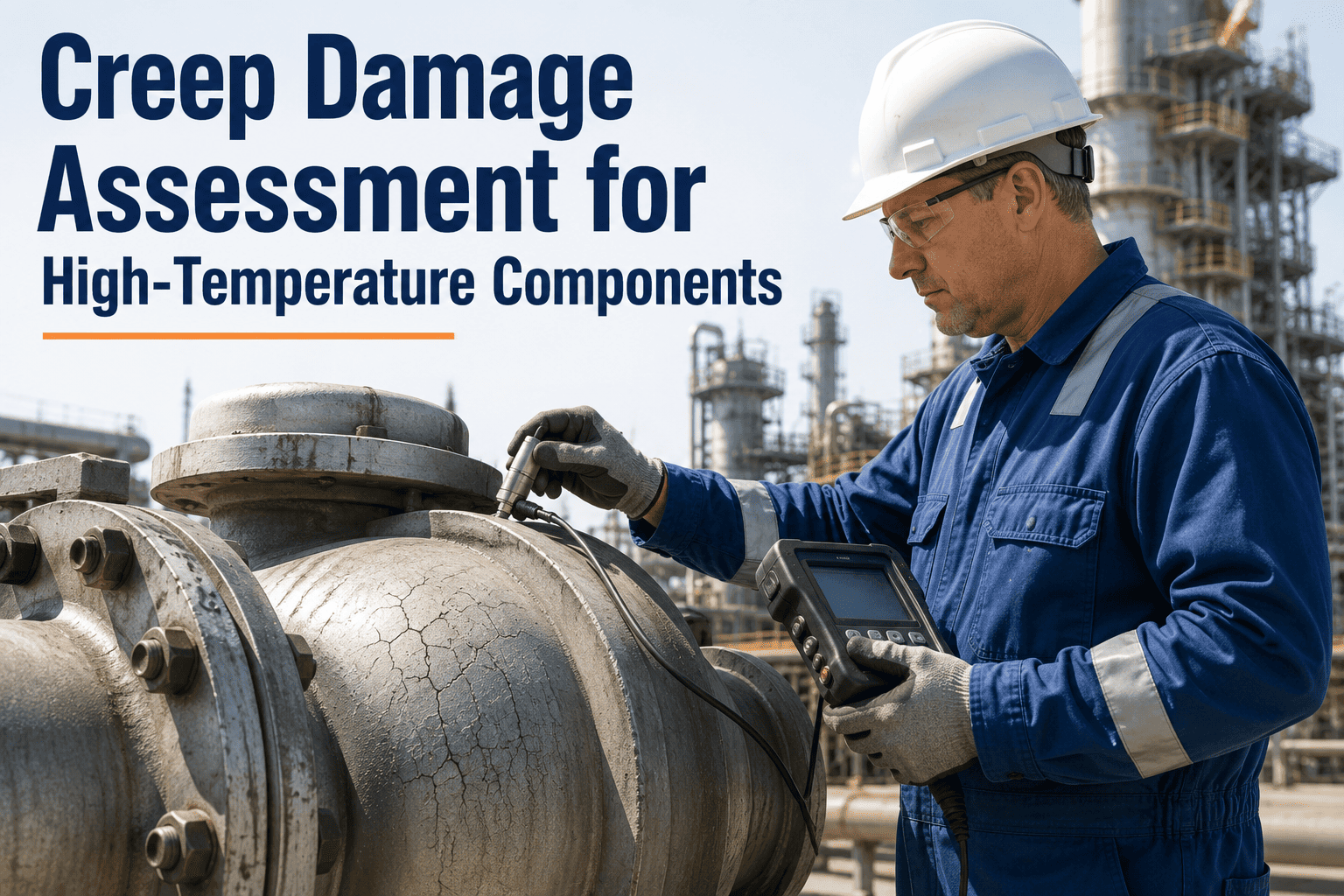
Remaining life calculation for high-temperature components subject to long-term creep deformation, common in boiler and steam system equipment.
Weld Misalignment and Shell Distortion
Geometric deviations from original construction tolerances evaluated for their impact on stress distribution and structural integrity.
Dents, Gouges, and Combinations
Mechanical damage assessed individually and in combination, since a dent-gouge pair carries different risk than either defect alone.
See FFS Assessment Data Managed Alongside Your Inspection Records
A short walkthrough shows how Level 1 through 3 assessment data, remaining life calculations, and run-repair-replace decisions can live in one system tied to your existing inspection history.
The Economics
What an FFS Assessment Is Actually Weighed Against
The value of an FFS program is easiest to see side by side — what the plant is exposed to if it defaults straight to replacement on every finding, against what a proper assessment can actually confirm instead.
Cost of Defaulting to Replacement
A crude unit vessel nearing minimum wall thickness can face replacement costs exceeding two million dollars once engineering and fabrication are included.
Replacement typically forces an extended outage window, not just the vessel swap itself.
A single forced or extended outage at a mid-size generating unit can run into the millions in lost generation and emergency costs.
What an FFS Assessment Can Confirm Instead
The vessel may operate safely for several more years, allowing replacement during a planned turnaround instead of an emergency shutdown.
A derated MAWP or a targeted repair may resolve the finding without a full replacement.
A documented remaining-life figure supports scheduling capital replacement on the plant's timeline, not the inspection finding's timeline.
How an Assessment Actually Proceeds
From Inspection Finding to Run-Repair-Replace Decision
01
Damage Mechanism Is Identified
Inspection data — thickness readings, crack indications, pitting patterns — is matched to the specific damage mechanism API 579 has a procedure for, since the assessment path depends entirely on getting this identification right.
02
Level 1 Screening Is Applied First
The fastest, most conservative check is run against the field data. If the component passes, the decision is settled with minimal engineering time invested.
03
Failed Screens Escalate to Level 2
A component that fails the conservative Level 1 check moves to detailed engineering analysis, which frequently confirms the equipment is still fit for continued service under its actual operating conditions.
04
High-Value or Complex Cases Reach Level 3
Where Level 2 still isn't conclusive, finite element analysis provides the most precise answer, typically reserved for equipment where the cost of getting the decision wrong is highest.
05
Run, Repair, or Replace Is Documented
The assessment concludes with a documented remaining-life figure and a specific recommendation, giving planners a defensible basis for scheduling the next inspection interval or capital decision.
Where FFS Fits
API 579 Compared to the Inspection Codes It Works Alongside
| Standard | What It Covers | Relationship to FFS |
| API 510 |
Pressure vessel inspection code |
References API 579 for evaluating findings |
| API 570 |
Piping inspection code |
References API 579 for piping degradation assessment |
| API 653 |
Storage tank inspection |
References API 579 for tank shell and bottom evaluation |
| NB-23 |
National Board Inspection Code |
References API 579 for structural integrity evaluation |
| API 579-1/ASME FFS-1 |
Engineering assessment methodology |
The analysis standard the above inspection codes point to |
The Numbers Behind the Case
Why This Matters for an Aging Generation Fleet
39 yrs
Average age of a U.S. coal-fired power plant today
$2M+
Typical replacement cost for a major vessel nearing minimum wall thickness
$1.5M–$3M
Typical cost of a single unplanned shutdown at an aging generating unit
3 Levels
Of assessment rigor, matched to damage complexity and asset value
Applied Example
A Vessel That Didn't Need to Wait for a Shutdown
A steam generation unit's routine inspection found local wall thinning on a pressure vessel that fell below the original design thickness, triggering an automatic recommendation for replacement under the plant's conservative internal policy. Rather than scheduling an emergency outage, the reliability team ran a Level 1 screen against the finding, which the vessel failed — as expected for a conservative check on a real flaw. Escalating to a Level 2 assessment, incorporating actual operating pressure, temperature, and the specific geometry of the thinned area, showed the vessel retained sufficient remaining strength to operate safely at its current MAWP for an additional several years, with a defined re-inspection interval to confirm the corrosion rate held steady.
The plant avoided an unplanned outage entirely and folded the eventual vessel replacement into a turnaround already scheduled two years out, at a fraction of the cost and disruption an emergency swap would have caused. The lesson that generalizes: a flaw that fails a conservative screening check is not the same thing as a flaw that makes equipment unsafe — and the gap between those two conclusions is exactly what Level 2 and Level 3 assessment exists to close. Plants that treat every failed Level 1 screen as a final answer are, in effect, paying for the most expensive decision every time, whether or not the data actually supports it.
Readiness Check
Signs Your Inspection Program Needs a Structured FFS Workflow
1Inspection findings that fail conservative thickness checks default straight to replacement recommendations
2FFS calculations, when performed, live in spreadsheets disconnected from your inspection history
3Your fleet includes equipment approaching or past its original design life
4Capital replacement decisions are made reactively around inspection findings rather than planned turnarounds
5Remaining-life documentation for past assessments is difficult to locate when a similar finding recurs
If two or more of these sound familiar, centralizing FFS assessment data alongside inspection records is usually the fastest way to see how many findings that currently trigger replacement recommendations would actually pass Level 2 analysis. Most reliability teams are surprised by how many past findings, revisited with a proper assessment, would have supported continued operation.
Keeping the Record Defensible
What an FFS Record Needs to Survive the Next Inspection Cycle
| Record Element | Why It Matters Later |
| Damage mechanism identification |
Confirms the correct assessment procedure was applied to this specific finding |
| Assessment level and calculations used |
Lets a future reviewer verify the conclusion without redoing the analysis from scratch |
| Documented remaining life and MAWP |
Sets the re-inspection interval and the trigger point for the next assessment |
| Reviewer qualification |
Confirms the level of expertise matched the complexity of the assessment performed |
A component that passes Level 2 analysis today with a five-year remaining-life figure needs that conclusion easy to find in five years, tied to the same component, not buried in a spreadsheet that has since been replaced or a folder nobody remembers the naming convention for. This is usually the gap that turns a good one-time assessment into a program that actually compounds in value over multiple inspection cycles.
Common Questions
API 579 Fitness for Service, Explained
Does a Level 1 failure mean the equipment is actually unsafe?
Not necessarily. Level 1 is intentionally conservative — it's designed for quick screening using minimal data, so many components that are genuinely fit for continued service will still fail this check. A Level 1 failure is a signal to move to Level 2 detailed analysis, not an automatic condemnation of the equipment.
Book a demo to see how a Level 1 to Level 2 escalation would be tracked in a digital workflow.
Who is qualified to perform each level of FFS assessment?
Level 1 assessments are typically performed by plant inspectors or maintenance engineers using basic field data and defined calculations. Level 2 requires a qualified engineer with FFS training and more detailed inspection data, while Level 3 generally involves a specialist engineer, often third-party certified, applying advanced numerical methods like finite element analysis for the most complex or highest-value cases.
Talk to support about how assessment records for each level can be organized by qualified reviewer.
How does API 579 relate to inspection codes like API 510 or API 570?
API 510, API 570, API 653, and NB-23 govern how and when equipment gets inspected and what gets documented during that inspection. API 579-1/ASME FFS-1 is the engineering analysis standard those inspection codes point to once a finding needs evaluation — it's the methodology for deciding what an inspection result actually means for continued operation, not a replacement for the inspection itself.
What kind of equipment does this apply to in a power plant specifically?
API 579 covers pressure vessels, piping systems, and storage tanks broadly, which in a power plant context includes boiler drums, steam headers, feedwater piping, and other pressure-retaining components exposed to corrosion, creep, and thermal cycling over decades of service. Creep damage assessment in particular is common on high-temperature boiler and steam system components.
Contact our team to discuss which equipment categories in your fleet are the highest priority for a structured FFS workflow.
How long does moving from an inspection finding to a documented FFS decision typically take?
A Level 1 screen can often be completed quickly using data already on hand from the inspection itself. Level 2 analysis takes longer since it requires more detailed data and engineering time, and Level 3 the longest given the specialized analysis involved — but even a Level 3 assessment is typically far faster and less disruptive than an emergency replacement forced by a default-to-replace decision made without any FFS analysis at all.
Book a scoping call to talk through timelines for your specific equipment and damage type.
Stop Defaulting to Replacement on Every Finding
Bring FFS Assessment Data Into Your Inspection Workflow
See how iFactory connects inspection findings, Level 1 through 3 FFS calculations, and remaining-life documentation in one place, so run-repair-replace decisions are backed by data instead of default caution.