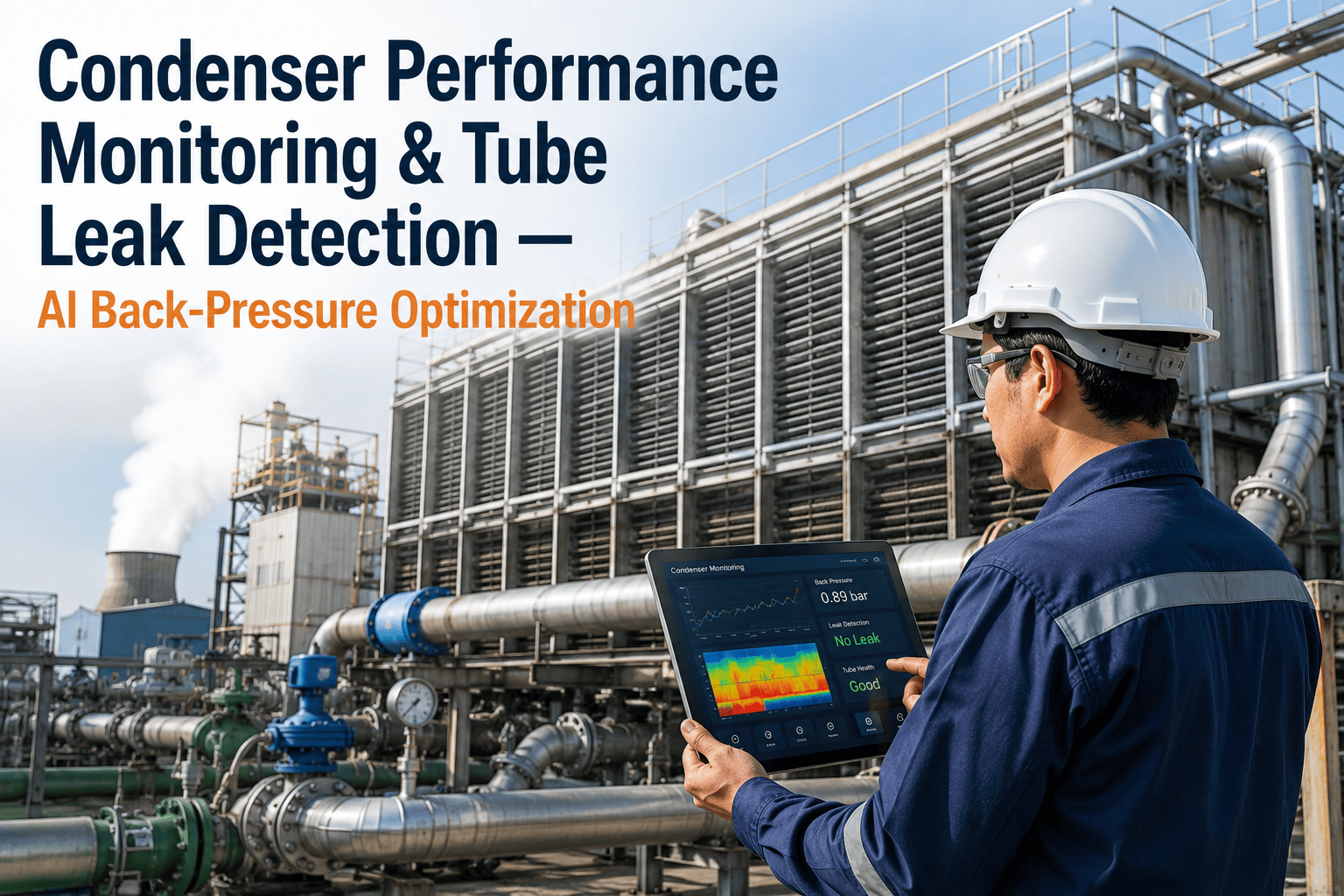
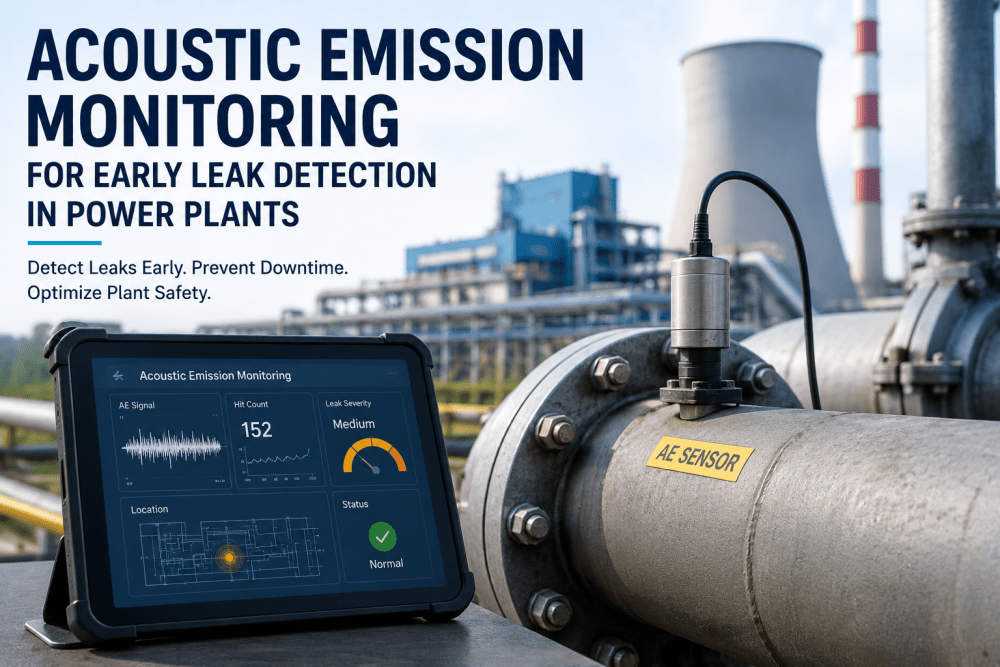
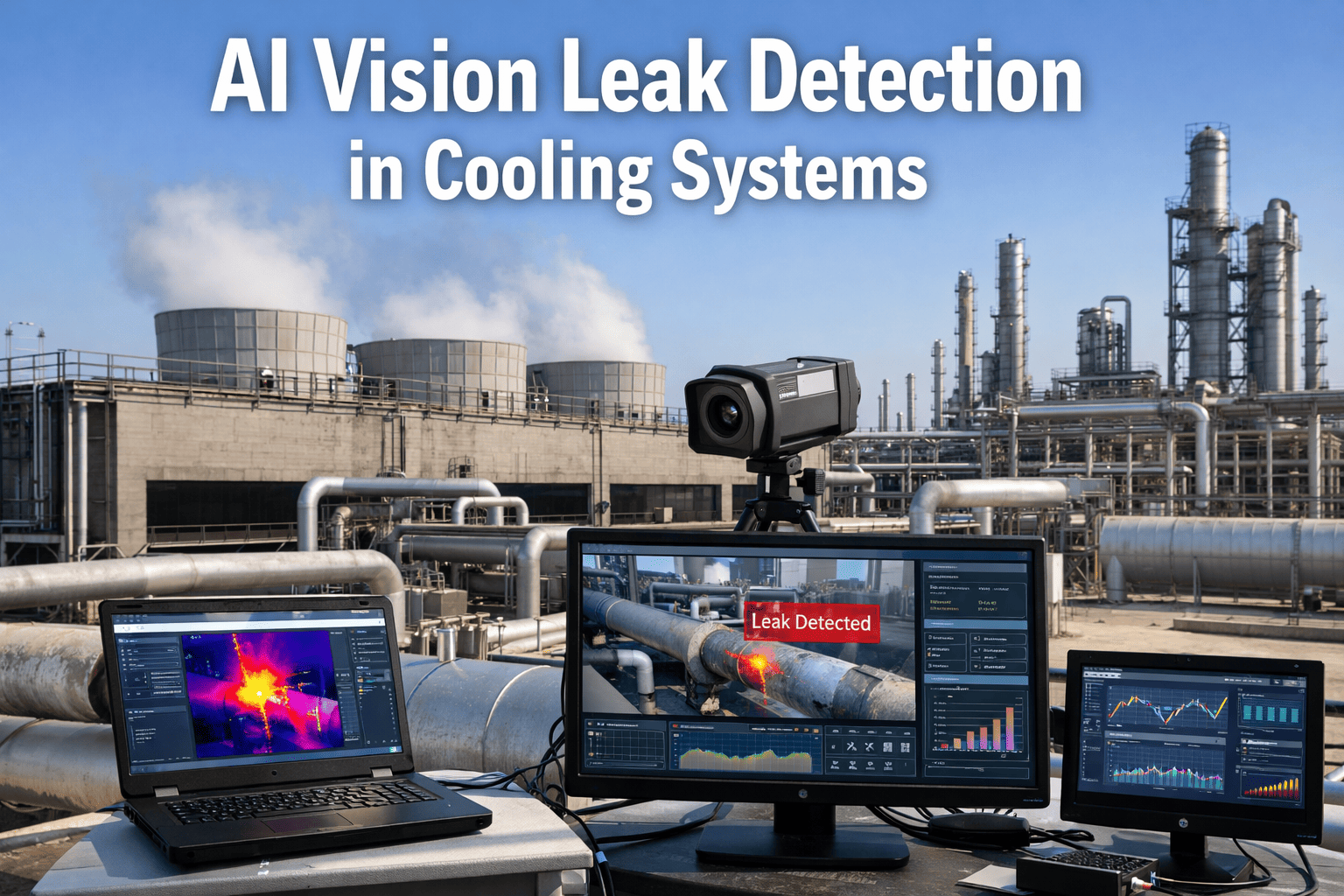
A switchgear room technician doing a routine walk-through catches a faint hissing sound near a circuit breaker interrupter, and six months later a work order finally gets filed once someone notices SF6 makeup gas usage has crept up again. In between, the plant has been losing a gas whose global warming potential runs into the tens of thousands relative to CO2, and nobody logged when the leak actually started. Fugitive emissions from gas turbine fuel systems, compressor seals, and SF6-filled switchgear rarely announce themselves the way a process trip does, they surface months later as a rising makeup-gas bill or a failed emissions report. A structured leak detection and repair program closes that gap by surveying known leak points on a schedule, quantifying what is found, and tracking repairs through to verified close-out instead of losing them in a punch list. You can book a demo to see LDAR tracking mapped against your own equipment list.
FUGITIVE EMISSIONS · LEAK DETECTION AND REPAIR · METHANE & SF6
Find the Leak Before the Makeup-Gas Bill Finds It For You
iFactory tracks LDAR surveys, leak quantification, and repair verification against every fuel gas, SF6, and refrigerant component in the plant, so a slow leak shows up as a trend line instead of a surprise line item.
Refrigerant Systems
Normal
Compressor Seals
Leak Detected
WHY GAS LOSS STAYS INVISIBLE
The Leak Was Never Hidden, It Was Just Never Surveyed on Schedule
Most fugitive emission sources in a power plant are not exotic, they are ordinary flange connections, valve packing, seal faces, and gasketed joints spread across acres of piping, ductwork, and switchgear bays. What breaks a leak detection program is rarely the survey method itself, it is the gap between surveys, the component nobody added to the route after a retrofit, and the SF6 makeup log that gets updated monthly with no link back to which breaker actually needs attention.
80/20
Typical share of total fugitive emissions traced back to a small fraction of components once a full survey is run
Months
Common lag between a leak starting and a facility noticing it through makeup gas consumption alone
1 Route
Single digital survey route replacing scattered spreadsheets, paper tags, and disconnected makeup-gas logs
Leak Points Scattered With No Route
Thousands of flanges, valves, and seals across the plant with no single list of what needs to be checked, when, or by whom.
Surveys Catch a Moment, Not a Trend
A handheld reading tells you what a component is doing right now, not whether it has been climbing for three surveys in a row.
SF6 Logged, Never Localized
Monthly makeup-gas totals confirm gas is being lost somewhere in the switchyard without pointing at which breaker or compartment.
Repairs Close Without Verification
A work order gets marked complete once a technician tightens a fitting, but nobody re-surveys the point to confirm the leak actually stopped.
SOURCE-SPECIFIC DETECTION METHODS
Different Gas Sources Call for Different Detection Methods
A single detection method rarely covers every fugitive emission source in a plant, fuel gas systems, SF6 switchgear, refrigerant loops, and compressor seals each behave differently under survey, and each has its own regulatory expectation for how often it gets checked and how a find gets documented.
| Emission Source |
Primary Gas |
Detection Method |
Typical Survey Interval |
| Fuel Gas System |
Methane |
Optical gas imaging camera, Method 21 sniffer |
Quarterly to monthly |
| SF6 Switchgear |
Sulfur hexafluoride |
SF6-specific leak detector, acoustic emission sensor |
Annual, plus event-triggered |
| Refrigerant Systems |
HFC/HCFC refrigerants |
Electronic refrigerant sniffer, UV dye trace |
Annual, tied to charge size |
| Compressor & Valve Seals |
Methane, process gas |
Ultrasonic acoustic detector, soap solution confirmation |
Quarterly |
Turn Scattered Survey Data Into One Traceable Program
iFactory links every survey reading, quantified leak, and repair verification back to the specific component, so nothing gets lost between the handheld device and the emissions report.
HOW A LDAR PROGRAM ACTUALLY RUNS
From Component List to Verified Repair in Five Steps
A working LDAR program is less about the detection instrument and more about the discipline of routing, tagging, and closing the loop on every component that gets flagged, so a find from March is still traceable in November.
1
Identify
Component inventory built by system and gas type
›
2
Survey
Route walked on schedule with the right instrument
›
3
Quantify
Reading logged and compared against prior surveys
›
4
Repair
Work order prioritized by leak rate and gas type
›
5
Verify
Re-survey confirms the leak is actually closed
SURVEY APPROACH COMPARISON
Annual Walkdowns Miss What a Trend Would Have Caught Early
The gap between an annual handheld survey and continuous monitoring is not just detection speed, it is how much history exists behind a single reading when someone finally decides whether a component needs a work order today or can wait for the next outage.
| Approach |
Detection Speed |
Cost per Component |
Regulatory Fit |
| Handheld Annual Survey |
Slow, up to 12 months lag |
Low |
Meets minimum requirements only |
| Quarterly Instrument Survey |
Moderate, trend visible within a quarter |
Moderate |
Exceeds minimum, supports trending |
| Continuous Point Monitoring |
Fast, near real-time on monitored points |
Higher upfront, lower over time |
Strongest audit position |
WHERE LDAR PROGRAMS GO WRONG
Common Mistakes That Turn a Minor Leak Into a Major One
Incomplete Component Inventory
A retrofit or minor piping change adds new flanges and valves that never get added to the survey route.
No Trend Comparison
Each survey reading is evaluated on its own against a pass/fail threshold instead of against its own history.
Repair Without Re-Survey
A technician tightens a fitting and closes the work order without confirming the leak rate actually dropped.
SF6 Tracked Only in Aggregate
Total makeup gas is logged monthly with no breakdown by compartment, so a slow leak hides inside a plant-wide number.
CASE SCENARIO
The SF6 Leak That Was Hiding in a Monthly Total
Before
A combined-cycle plant tracked SF6 makeup gas as a single monthly total across the entire switchyard. Usage had been climbing gradually for four months, but with no component-level breakdown, nobody could tell which of the fourteen breakers was responsible, and the annual acoustic survey was still eight weeks out.
After
Once makeup-gas entries were logged against individual breaker compartments, a clear upward trend appeared on one 230kV breaker three weeks after the pattern started. A targeted acoustic survey confirmed a seal degradation issue, and the repair was scheduled and verified before the compartment reached a low-pressure alarm condition.
GETTING STARTED
Four Steps to Move From Reactive to Trended Leak Detection
1
Build a full component inventory by system, gas type, and criticality, including anything added since the last retrofit.
2
Set survey intervals by source, quarterly for fuel gas and compressor seals, annual plus event-triggered for SF6.
3
Log every reading against component history, not just against a pass/fail threshold.
4
Require a re-survey before any leak-related work order is closed, and keep that verification on record.
FREQUENTLY ASKED QUESTIONS
Questions Environmental and Reliability Teams Ask First
Does this replace our existing OGI camera and handheld leak detectors?
No, iFactory is built to sit alongside the detection instruments you already use rather than replace them. The platform captures readings from optical gas imaging cameras, SF6 detectors, and ultrasonic instruments and links each one to the specific component and survey date, so the equipment on the floor stays the same while the tracking behind it becomes far more reliable.
Book a demo to see it configured around your current instrumentation.
How does trending actually help if a component still passes the threshold check?
A component can pass a single-point threshold check while its readings climb steadily across several surveys, and that upward pattern is often the earliest real signal of a developing leak. Trending flags that pattern well before the reading crosses a hard limit, giving the team a chance to schedule a repair proactively instead of reacting to a failed check.
Contact our support team to review how trend flags are configured.
Can SF6 makeup gas really be tracked down to the individual breaker?
Yes, as long as makeup-gas fill events are logged against the specific compartment rather than a plant-wide total, the platform can trend each breaker independently and flag the one responsible for an unusual climb. This is typically the single biggest improvement teams see, since aggregate SF6 totals are the most common reason a leak goes unlocalized for months.
Book a demo to see compartment-level SF6 tracking in action.
What happens if a repair is closed out without a re-survey?
The platform can flag a leak-related work order as incomplete until a re-survey reading is logged against that component, preventing a repair from being marked closed on the strength of a technician's judgment alone. This closes one of the most common gaps in LDAR programs, where a fitting gets tightened but the leak rate is never actually confirmed to have dropped.
Contact our support team to discuss verification workflow options.
Can we retrieve full survey history for a component years after installation?
Yes, every survey reading, quantification, and repair record tied to a component remains searchable by tag number, system, or survey date for as long as the component has been tracked in the platform. This is usually the exact history that is hardest to reconstruct from paper logs or scattered spreadsheets when an auditor asks for it.
Book a demo to see long-term component history retrieval.
Give Every Leak Point a Trend Line Instead of a Snapshot
iFactory tracks survey readings, quantified leaks, and repair verification against every fuel gas, SF6, and refrigerant component in the plant. Book a demo and see it running on your own equipment list.