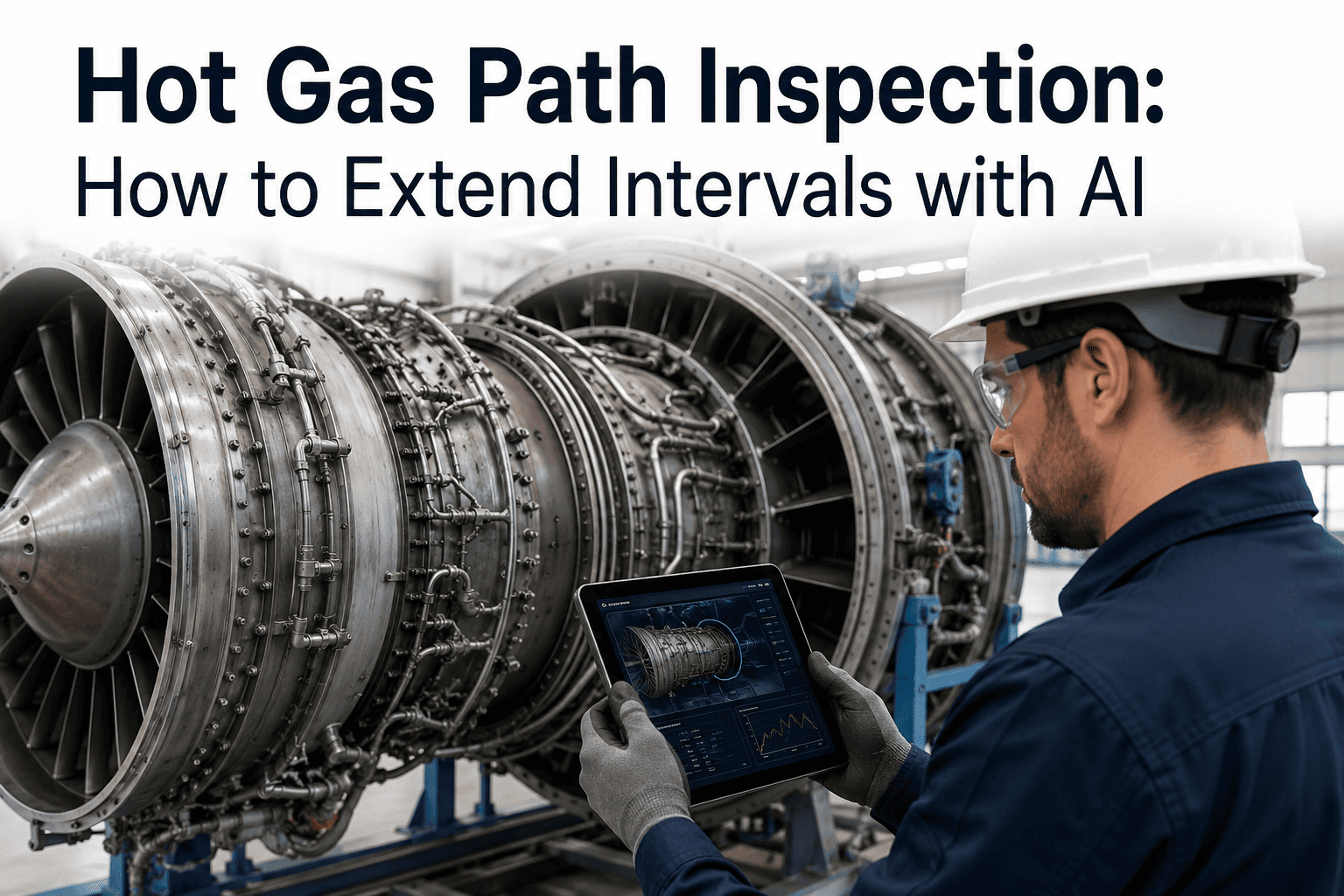
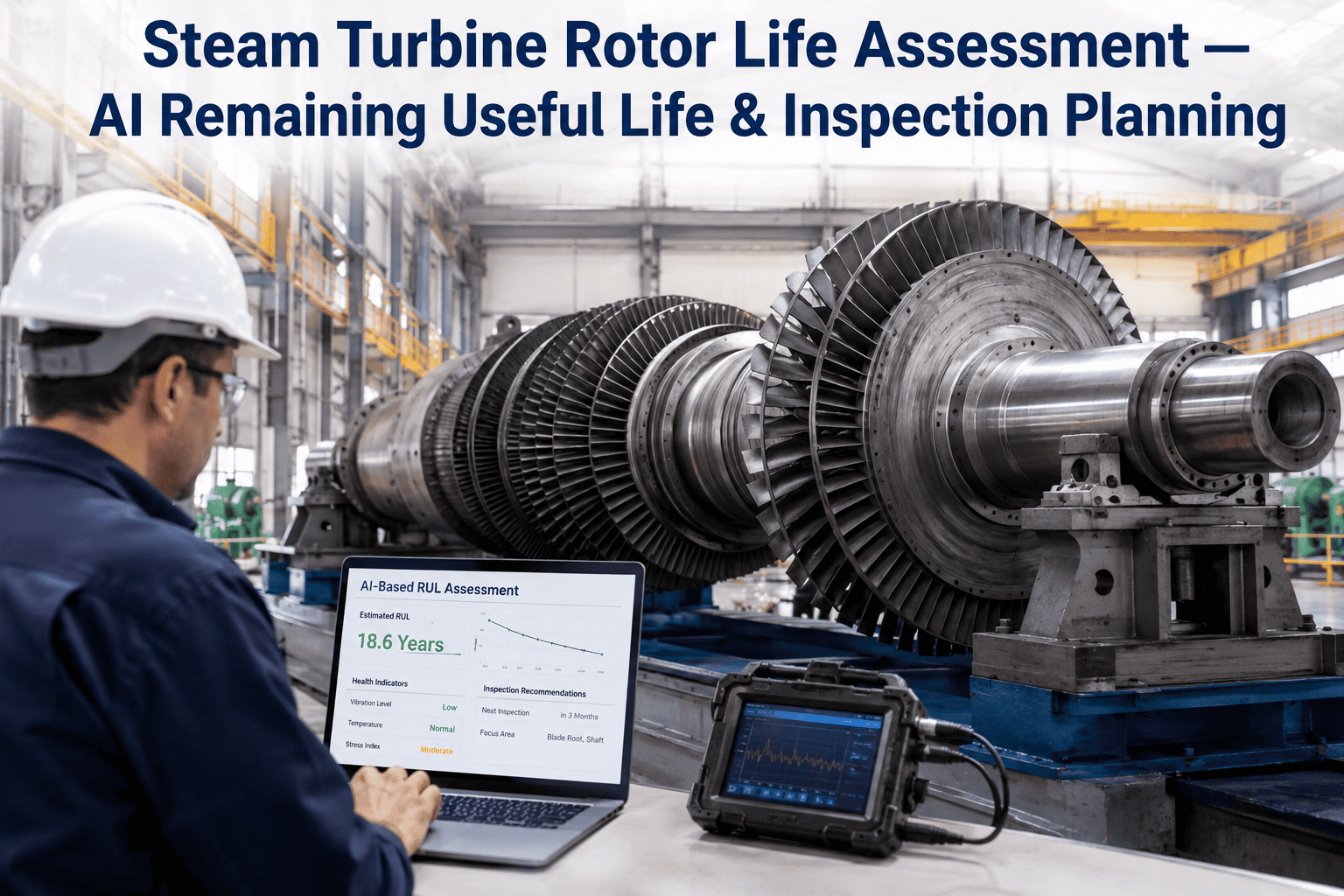
A hot gas path inspection can cost three to five million dollars and take a unit offline for weeks, so the decision to move one forward or push one back is rarely made lightly — yet most plants still schedule it off a single number: fired hours since the last outage. That number misses everything that actually determines blade life, including how many cold starts a unit endured, how severe its trips were, and what condition the coating was in at the last borescope. Operators who track equivalent operating hours and combine it with borescope trend data are finding they can safely extend intervals on units running gentle duty cycles, and catch units running harsher cycles before a scheduled inspection turns into an unplanned one, a shift that is increasingly guided by iFactory support for fleet-wide tracking.
Power Generation · Hot Gas Path Life Management
The Same Fired Hours Do Not Mean the Same Blade Life
Two identical turbines with the same run hours can have wildly different remaining hot section life depending on how they were actually operated — and that difference is exactly what equivalent operating hours is built to capture.
$3–8M
Cost of a blade failure event when a hot section inspection is deferred past its safe interval
100–200x
Fatigue damage a single cold start can inflict, expressed in equivalent steady-state hours
20–40%
Interval extension possible beyond OEM recommendation when condition data confirms margin
1,000–2,000
Equivalent operating hours by which a missed interval can turn a repair into a rotor casing failure
Why Clock Hours Aren't Enough
How Equivalent Operating Hours Actually Gets Calculated
EOH weighting exists because thermal cycling damages hot section metal in a way that steady running simply does not. A unit making frequent fast starts consumes life far faster than its logbook hours suggest.
01
Base fired hours — the starting point, counted the same way every OEM manual defines it, but insufficient on its own.
02
Start factoring — each start, and especially each fast or emergency start, is converted into an hours-equivalent penalty based on thermal shock severity.
03
Trip severity — trips from high load create the most severe thermal shock and carry the heaviest EOH weighting of any single event type.
04
Fuel and load profile — liquid fuel operation and peak-load duty cycles both accelerate hot section consumption relative to baseload natural gas running.
See Your Real EOH, Not Just Your Fired Hours.
iFactory weights every start, trip, and load excursion automatically so your inspection interval reflects actual blade condition.
Borescope Findings That Actually Matter
Four Categories Drive Almost Every Interval Decision
Coating Spallation
Exposed base metal accelerates oxidation quickly once it starts. Trended coating loss area across successive inspections is one of the strongest predictors of remaining blade life.
Tip Clearance Growth
Rubs and creep elongation widen the gap between blade tip and shroud, quietly reducing efficiency long before it becomes a mechanical risk.
Surface Oxidation Pattern
Discoloration reveals how much thermal stress a component has absorbed, often diverging from what raw operating hours alone would predict.
Crack Initiation Sites
Trailing edge and cooling hole cracking are the findings most likely to force an unscheduled repair scope regardless of interval planning.
Calendar-Based vs. Condition-Based
What Changes When Intervals Are Set From Data Instead of a Manual
Approach
Calendar / OEM-Only
Condition-Based with AI
Trigger
Fixed fired-hour interval regardless of duty cycle
Weighted EOH plus borescope trend and confidence range
Cycling units
Often over-inspected or under-inspected relative to actual wear
Interval reflects actual start and trip severity absorbed
Deferral risk
No visibility into margin, deferral is a guess
Remaining life estimate with confidence interval supports the call
Typical outcome
Nominal interval applied fleet-wide
20–40% extension on gentle-duty units, earlier flag on harsh-duty units
Extension Readiness
What Has to Be True Before You Push an Interval Out
Extending a hot gas path inspection is a data decision, not a hope. Four conditions need to line up before an extension is defensible to a maintenance planning group or an insurer.
01
Weighted EOH margin — the unit's factored hours since last inspection sit meaningfully below the point where OEM life curves flag concern.
02
Stable duty cycle — no recent shift toward more frequent starts, faster start profiles, or higher trip counts that would outdate the current EOH trend.
03
Clean recent borescope — the last inspection showed no active crack initiation, minimal coating loss progression, and tip clearance within tolerance.
04
Documented confidence range — the remaining-life estimate carries a confidence band tight enough to support the extension in an audit or OEM warranty conversation.
Interval Risk Factors
Operating Patterns That Should Shorten, Not Extend, an Interval
Rising Start Frequency
A unit shifting from baseload toward daily cycling duty consumes hot section life far faster than its prior EOH trend would suggest.
Recent High-Load Trips
Any trip from high load in the period since the last inspection should reset the extension conversation until the borescope confirms no new damage.
Liquid Fuel Switching
Periods of liquid fuel operation accelerate deposit buildup and corrosion risk relative to the natural gas baseline the interval was set against.
Compressor Fouling Left Unwashed
Unaddressed fouling raises firing temperature to hold load, quietly accelerating hot section consumption beyond what EOH alone captures.
From the Fleet
What Six Frame 7FA Units Revealed About Nominal EOH
Before we tracked weighted equivalent operating hours, our overhaul scheduling ran off nominal hours from the control system with no adjustment for start severity or trip events. Once we brought in weighted tracking, we found our peaking units had consumed roughly thirty percent more hot section life than the nominal hours indicated because of their fast-start and trip severity profile. We moved the inspection forward by four thousand hours on two units, and the borescope confirmed the blades were at exactly the condition the model had predicted.
— Fleet Reliability Manager, Combined Cycle Operator
Frequently Asked Questions
Hot Gas Path Inspection Intervals — Common Questions
Is it safe to extend a hot gas path inspection interval beyond the OEM recommendation?
Extension is safe when it is backed by condition data confirming the unit has meaningful remaining margin, typically drawn from weighted equivalent operating hours combined with recent borescope trend results rather than run hours alone. Operators who confirm margin this way have documented safe extensions of twenty to forty percent beyond OEM intervals on gentler duty cycles.
Book a demo to see the margin calculation for your own units.
Why does a peaking unit consume hot section life faster than a baseload unit?
Every start and stop cycles hot section metal through a wide temperature swing, and a single cold start can inflict thermal fatigue equivalent to one hundred to two hundred hours of steady operation. A peaking unit accumulates far more starts per fired hour than a baseload unit, which is exactly what equivalent operating hours weighting is designed to capture.
What borescope findings most often force an inspection interval to move up rather than extend?
Coating spallation with exposed base metal, tip clearance growth beyond trended tolerance, and early crack initiation at trailing edges or cooling holes are the findings most likely to shorten a planned interval, since all three accelerate once they begin rather than progressing at a steady rate.
How much does a trip event add to equivalent operating hours compared to a normal start?
A high-load trip creates a more severe thermal shock than a routine start or stop because the temperature change happens far faster and less predictably, so trip events typically carry the heaviest EOH penalty of any single operating event tracked in a factored hours model.
Can weighted EOH tracking be layered onto an existing fleet without new sensors?
In most cases yes, since the start counts, trip events, load profile, and fuel type needed for weighted EOH calculation already exist in the plant historian or DCS, and the calculation logic can be applied on top of that existing data.
Contact support to review what your current historian already captures.
Schedule the Inspection Your Turbine Actually Needs
Weighted EOH tracking, borescope trend analysis, and remaining-life confidence ranges built for every unit in your fleet.