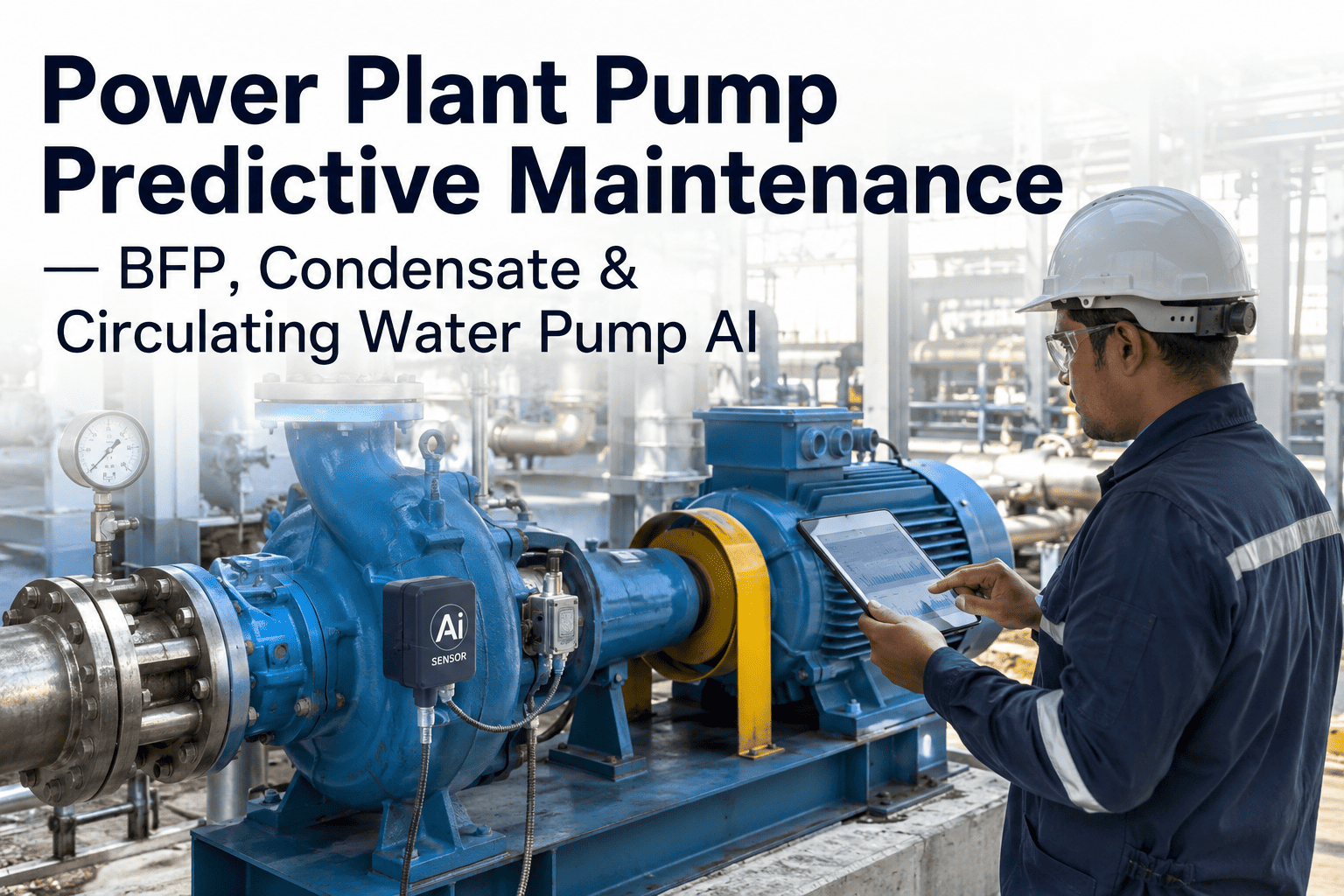
A feedwater pump seal rarely fails without warning — it weeps first, then drips, then streams, and every stage in between is a chance to intervene before the pump has to come off line. Mechanical seals and packing systems sit on nearly every pump in a power plant, from boiler feed and condensate service to circulating water, and a leak on any one of them is either a housekeeping nuisance or the first sign of a seal face about to fail completely. The difference between those two outcomes is almost always how early the leakage trend was caught. AI-powered leakage detection and condition trending watches every seal and packing point continuously, so a slow weep gets flagged and scheduled long before it becomes an unplanned process leak. See continuous seal and packing monitoring running against your own feedwater, condensate, and circulating water pumps with a Book a Demo.
Mechanical Seal & Packing Maintenance in Power Plants
AI leakage detection and condition trending across every power plant pump seal and packing point — catching seal failures in feedwater, condensate, and circulating water service before they become process leaks.
Mechanical Seals vs. Compression Packing — Different Signals, Different Failure Paths
Mechanical Seals
Compression Packing
Three Stages Between a Healthy Seal and a Process Leak
Weep Stage
A faint moisture film or occasional drop appears at the seal face or packing gland. Machine runs normally. This is the ideal intervention point, typically resolved with a gland adjustment or seal inspection.
Drip Stage
Consistent dripping develops, often accompanied by a rising vibration or temperature trend at the seal housing. Planned seal or packing replacement should be scheduled at this stage.
Stream Stage
Continuous flow indicates seal face failure or severe packing wear. Process fluid loss, contamination risk, and potential unplanned pump shutdown are all active risks at this point.
Five Checks Running at Every Seal and Packing Point
Leakage Rate Trending
Visual and sensor-based leakage rate tracked over time rather than checked once per rounds cycle.
Seal Chamber Temperature
Rising temperature trends flag lubrication breakdown or face friction before visible leakage starts.
Vibration at Bearing Housing
Seal-induced shaft disturbance often shows up in vibration before it shows up as visible fluid loss.
Gland Adjustment History
Frequency of manual gland adjustments trended to flag packing nearing the end of usable life.
Barrier Fluid Condition
Pressure and level trending on dual seal barrier fluid systems catches seal face damage early.
How a Leakage Trend Becomes a Scheduled Repair
Continuous Observation
Leakage rate, temperature, and vibration data captured at every monitored seal and packing point around the clock.
Stage Classification
AI classifies each point into weep, drip, or stream stage and trends the rate of progression between stages.
Priority Ranking
Seals and packing points nearing stream stage are ranked ahead of stable weep-stage points still within tolerance.
Work Order Scheduling
CMMS integration opens a work order with the trend history attached, scheduled before the pump reaches stream stage.
Turn Leakage Trends Into Planned Work, Not Emergency Calls
Connect existing rounds data and sensors to AI-powered seal and packing condition trending across your pump fleet.
Pump Systems With the Highest Seal Failure Consequence
Boiler Feedwater Pumps
High-pressure, high-temperature service where seal failure risks both water loss and thermal damage to the seal chamber.
Condensate Pumps
Near-vacuum suction conditions where seal air ingress is as much a risk as fluid leakage outward.
Circulating Water Pumps
Large packing-sealed pumps where gland adjustment frequency is a strong early indicator of packing end of life.
Cooling Water Pumps
Continuous-duty service pumps where unplanned seal replacement forces a cooling capacity reduction plant-wide.
Chemical Injection Pumps
Small seals handling aggressive chemistry where early leakage detection prevents environmental release events.
Ash & Slurry Pumps
Abrasive service pumps where packing wear accelerates quickly and monitoring intervals matter more than elsewhere.
What Actually Causes Premature Seal and Packing Failure
A leaking seal is a symptom, not a diagnosis. Fixing the immediate leak without addressing what caused it usually means the same pump is back on the work order list within a few months.
Shaft Misalignment
A misaligned pump shaft transmits stress into the seal faces or packing rings, accelerating wear well beyond normal service life.
Dry Running Events
Loss of prime or cavitation strips lubrication from the seal faces in seconds, often causing damage before an operator notices.
Incorrect Gland Adjustment
Over-tightened packing accelerates shaft sleeve wear, while under-tightened packing allows excessive leakage and air ingress.
Chemical Incompatibility
A seal elastomer or packing material not matched to the process fluid degrades faster than the rated service life would suggest.
Building the Business Case for Continuous Seal Monitoring
Reliability teams pitching this internally usually need to show what an unplanned seal failure actually costs against the cost of watching for it continuously.
Avoided Unplanned Pump Outages
Catching a weep before it reaches stream stage keeps the repair inside a planned maintenance window instead of an emergency call-out.
Reduced Environmental Risk
Early detection on chemical injection and process pumps lowers the risk of a reportable release event reaching regulators.
Lower Parts Spend
Scheduled seal and packing replacement at the drip stage avoids the collateral shaft sleeve and bearing damage a stream-stage failure causes.
We had a condensate pump seal go from a barely noticeable weep to a full stream over a single weekend, and by the time the day shift caught it we had already lost hours of production dealing with the cleanup and emergency parts sourcing. With leakage trending running continuously now, that same progression would have been flagged at the weep stage days earlier, with plenty of time to schedule the seal swap during a normal maintenance window instead of an emergency call-out.
Frequently Asked Questions
Q: How does AI leakage detection actually measure something as small as a weep?
Detection combines camera-based visual monitoring at accessible seal points with sensor inputs like seal chamber temperature, vibration, and barrier fluid pressure where those systems already exist. The model is trained to distinguish a genuinely new weep from routine background moisture that some packing arrangements are designed to have, which is one of the more common false-alarm sources in manual rounds-based inspection. Configuration accounts for whether a pump is mechanically sealed or packed, since the acceptable baseline is different for each. Walk through how detection is calibrated for your pump fleet with a Book a Demo.
Q: Do we need cameras at every single pump seal, or can this work from existing sensor data alone?
Cameras add meaningful value at high-consequence seal points where visual leakage progression is the clearest early signal, but the platform is also built to work from existing sensor data alone where cameras aren't practical. Seal chamber temperature, vibration at the bearing housing, and barrier fluid pressure on dual seal systems can each contribute to a condition trend even without a camera in place. Most deployments use a mix, prioritizing cameras for the pumps with the highest failure consequence and sensor-only trending elsewhere.
Q: Can the system tell the difference between normal packing leakage and a developing failure?
Yes, this distinction is central to how packing monitoring is configured, since some designed leakage is expected and healthy for lubrication and cooling of the packing rings. The model establishes a baseline leakage rate specific to each packing arrangement and flags deviations from that baseline rather than flagging leakage itself. A rising trend, an increase in gland adjustment frequency, or a sudden jump in rate are all treated as meaningfully different signals from stable, expected packing weep.
Q: How does this integrate with our existing rounds-based inspection process?
Continuous monitoring is designed to complement rounds-based inspection rather than eliminate it, since operators walking the floor still catch things a fixed camera or sensor cannot. Findings from AI monitoring can be pushed into the same mobile rounds application operators already use, so a flagged seal shows up as a prioritized check item on the next round instead of requiring a separate system to watch. Reach out through Support Contact to review how this fits your current rounds workflow.
Q: What's a realistic timeline to see value after deployment starts?
A pilot on a set of high-consequence pumps such as boiler feedwater and condensate service can typically be live within four to six weeks, including camera placement where used, sensor integration, and baseline calibration for each seal and packing arrangement. Most plants see their first meaningful leakage trend flagged within the first month of live monitoring, often on a pump that had been quietly weeping without anyone tracking the progression. Fleet-wide expansion is then phased in based on pump criticality and failure history.
Never Let a Weep Become an Emergency Again
See continuous seal and packing leakage monitoring running against your own pump fleet, live.