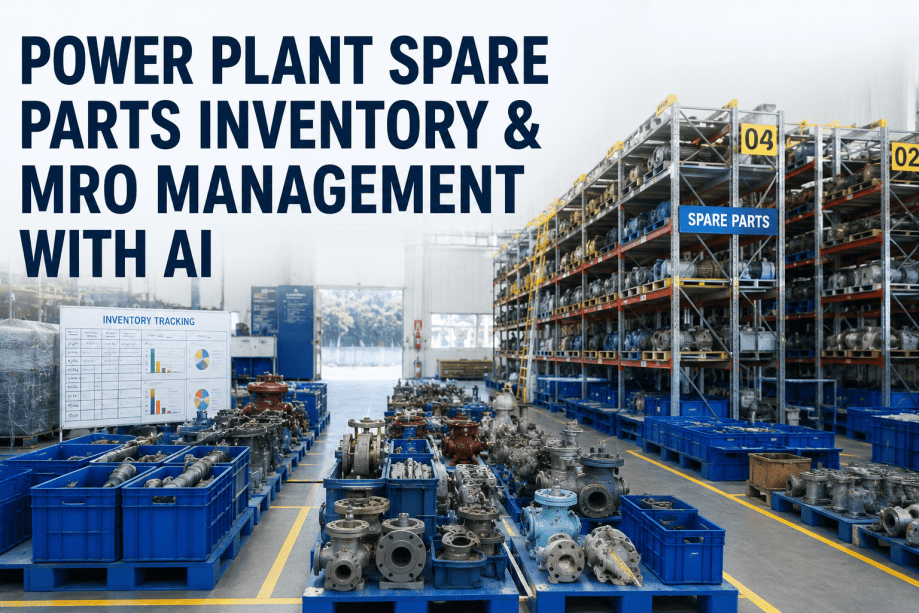
In a typical U.S. power plant, spare parts inventory represents $8–$18 million in tied-up capital, yet stockouts on critical components remain the leading cause of forced outage extensions. Power plants that Book a Demo of iFactory's inventory analytics platform report 28% improvement in inventory turnover and 45% reduction in stockout-related forced outage extensions within the first year of deployment.
Why Power Plant Inventory Management Fails Under Traditional Approaches
The Five Structural Drivers of MRO Inefficiency
Power plant inventory management operates at the intersection of unpredictable failure patterns, long supplier lead times, and pressure to maintain availability at any cost. The systems designed to manage this complexity — spreadsheets, legacy ERP reorder points, and tribal knowledge — were not built for the demand volatility of a modern generating fleet. .Book a Demo
Traditional vs. AI-Driven Inventory Management: A Direct Comparison
What Changes When Demand Intelligence Replaces Static Planning
The table below documents how iFactory's AI-driven approach transforms each dimension of power plant inventory and MRO management. The difference is not incremental — it represents a structural shift from reactive stock management to predictive supply chain intelligence.Book a Demo
| Inventory Dimension | Traditional Approach | iFactory AI Approach | Operational Impact |
|---|---|---|---|
| Reorder Point Setting | Set once at ERP go-live; manually reviewed annually | Updated weekly using rolling consumption data and failure probability models | Stockout risk reduced by 52% with no increase in average inventory value |
| Demand Forecasting | Based on 3-year historical average consumption | AI models using asset condition trends, seasonality, and planned outage schedules | Forecast accuracy improved from 62% to 89% across all spare parts categories |
| Supplier Lead Time Management | Static lead time values in ERP; updates only after stockout event | Real-time supplier performance tracking with automated lead time alerts | Expedite fees reduced by 58% through early identification of lead time slip |
| Obsolete Inventory Disposition | No systematic review; parts sit in stores indefinitely | 24-month zero-consumption flag triggers automated disposition workflow | Obsolete inventory value reduced by 40% within first year of deployment |
| Cross-Plant Transfer | Informal phone calls between stores managers | Fleet-wide inventory visibility with automated surplus-to-need matching | Inter-plant transfers increase by 300%; emergency procurements drop by 35% |
| MRO Procurement Consolidation | Department-level purchasing with no spend analytics | Unified procurement analytics with supplier consolidation recommendations | Average unit price reduction of 12% through volume consolidation |
The Four Cost Centers of Unoptimized MRO Inventory
Where Power Plants Lose Money in Spare Parts Management
The financial impact of unoptimized inventory extends across four distinct cost centers. Most plants track only the direct carrying cost line item, missing the larger compound impact of stockouts, obsolescence, and procurement inefficiency. iFactory's inventory analytics quantifies each cost center and targets specific reduction levers.
The iFactory Inventory Optimization Framework
A Five-Stage Approach From Baseline to Autonomous Replenishment
Moving from reactive to predictive inventory management follows a structured progression. iFactory's implementation framework is calibrated to the plant's existing ERP and CMMS infrastructure and typically achieves measurable ROI within the first 90 days.
Frequently Asked Questions
How does AI predict spare parts demand in power plants?
iFactory's demand forecasting engine combines three data streams: equipment condition trends from connected sensors and CMMS inspection records, historical consumption patterns adjusted for seasonality and outage cycles, and failure probability models that calculate the likelihood of specific component failures over a rolling 90-day window. These three inputs are processed through a machine learning model that generates weekly demand probability distributions for every spare part SKU tied to monitored equipment.
What is the difference between traditional EOQ and AI-driven inventory optimization?
Traditional Economic Order Quantity (EOQ) calculates a single optimal order quantity based on fixed assumptions about demand rate, ordering cost, and holding cost. These assumptions are static — they do not change until a human recalculates them, which in practice happens annually at best.
Can iFactory integrate with our existing ERP or CMMS for inventory management?
Yes. iFactory's inventory analytics platform integrates with major ERP systems including SAP, Oracle E-Business Suite, and Microsoft Dynamics, and with CMMS platforms including Maximo, Infor EAM, and SAP Plant Maintenance. The integration is bidirectional: iFactory reads inventory master data, consumption history, and open purchase orders from the ERP/CMMS, applies its AI analytics layer, and writes back optimized reorder points, purchase requisitions, and supplier performance updates. The platform typically achieves full ERP integration within 4–6 weeks using pre-built API connectors. Book a Demo to discuss your plant's specific ERP architecture and integration requirements.
What inventory metrics should power plants track to measure MRO performance?
The four essential metrics for power plant MRO inventory performance are inventory turnover ratio (annual cost of goods sold divided by average inventory value — target: 2.5–4.0 for power generation), stockout frequency (number of stockout events per 1,000 SKUs per quarter — target: fewer than 2).
How long does it take to see ROI from AI-driven inventory management?
Most power plants achieve measurable ROI within 90–120 days of deployment. The first ROI driver is typically the identification and disposition of obsolete inventory — most plants find $500,000–$1.5 million of obsolete parts in their initial inventory audit that can be disposed of immediately, recovering storage space and eliminating associated carrying costs. The second driver is the reduction in emergency procurement.
Conclusion: From Inventory Cost Center to Reliability Enabler
The Data-Driven Path to Zero Stockout Operations
Power plant spare parts inventory has traditionally been managed as a cost center — a necessary expense to be minimized. What is missing is the analytics platform that connects these data streams, applies predictive demand models, and converts the output into automated inventory decisions. iFactory's inventory analytics platform delivers exactly that capability. Book a Demo to see how your plant's existing data can transform MRO inventory from a balance sheet burden into a competitive reliability advantage.



.png)