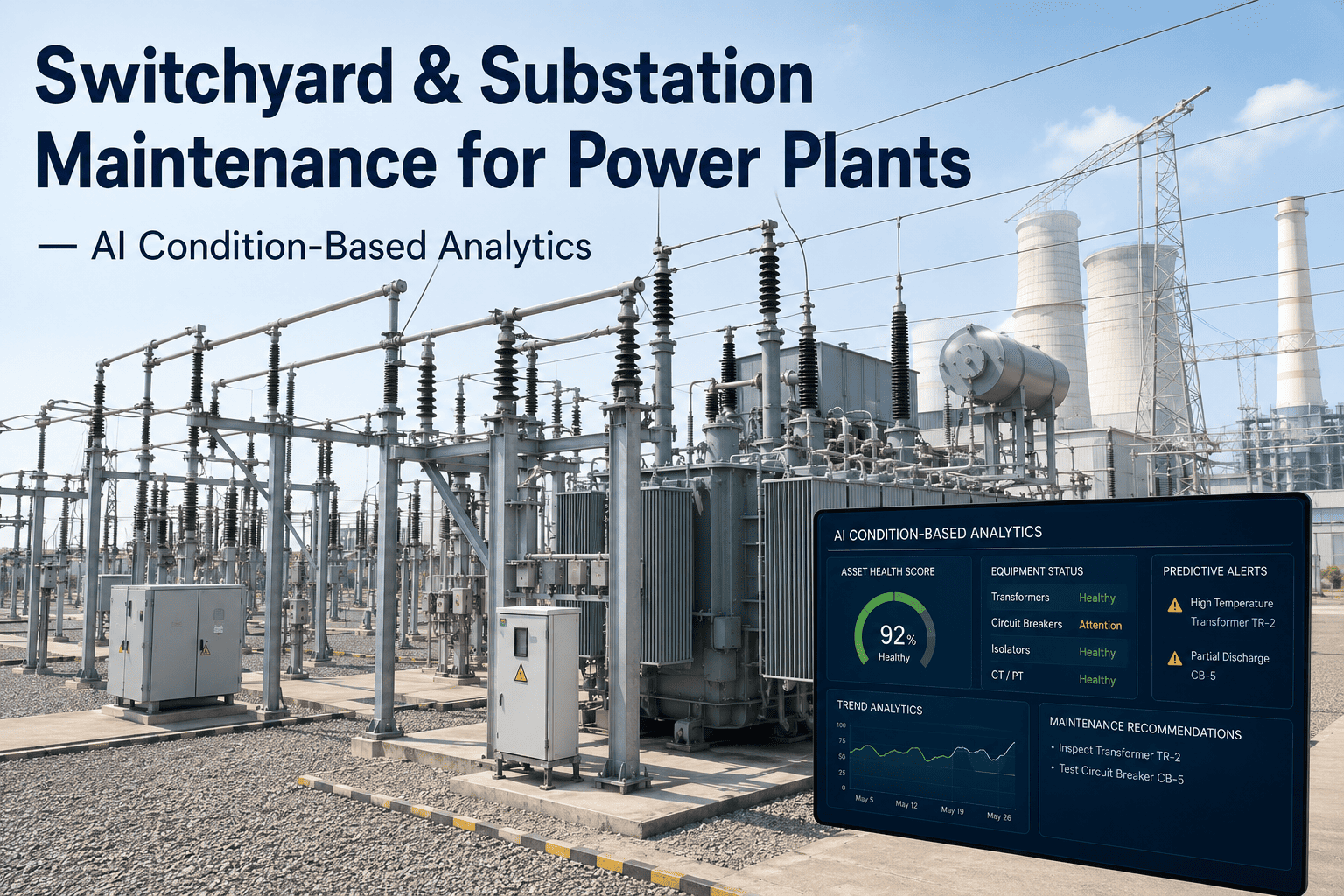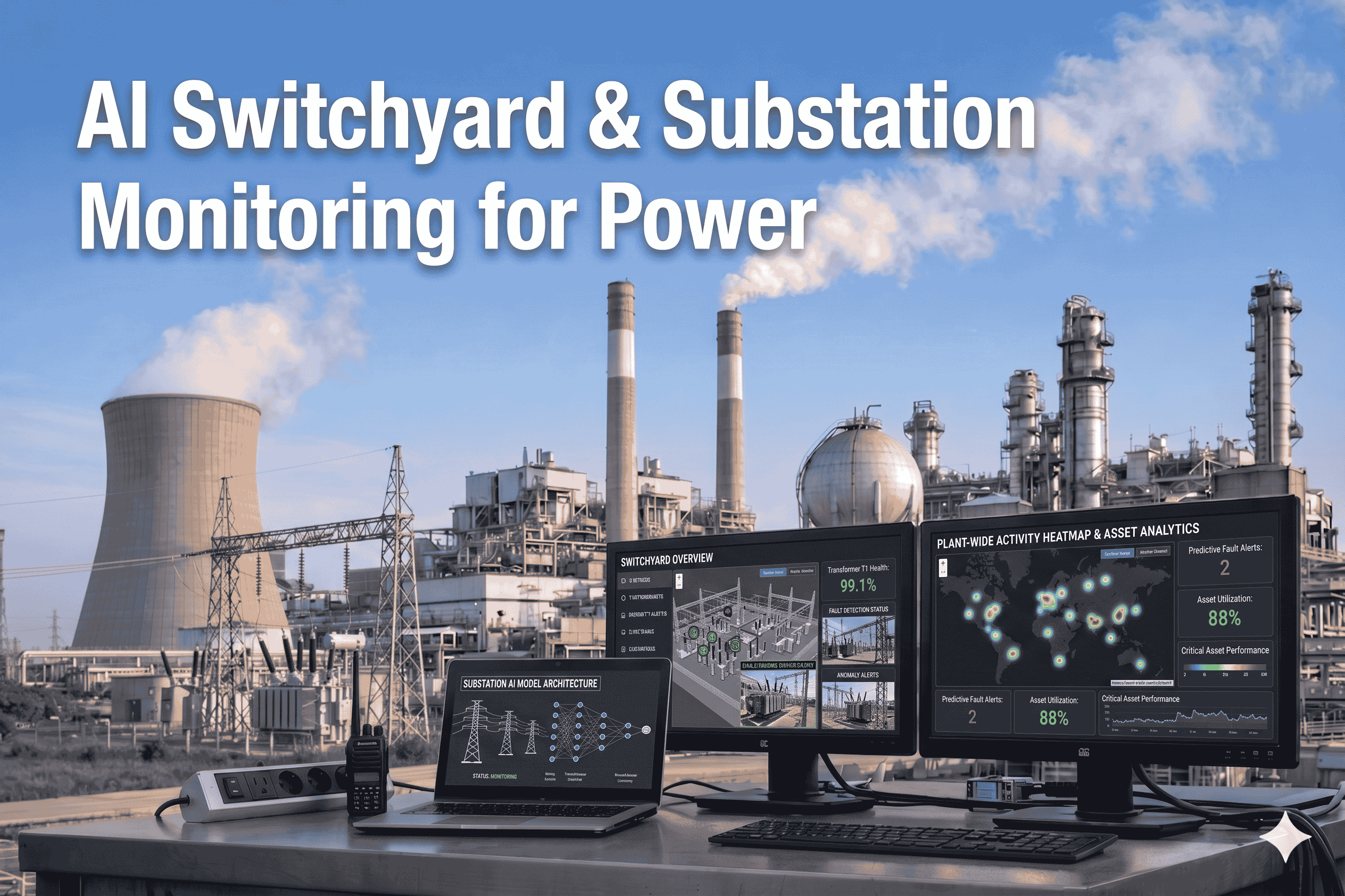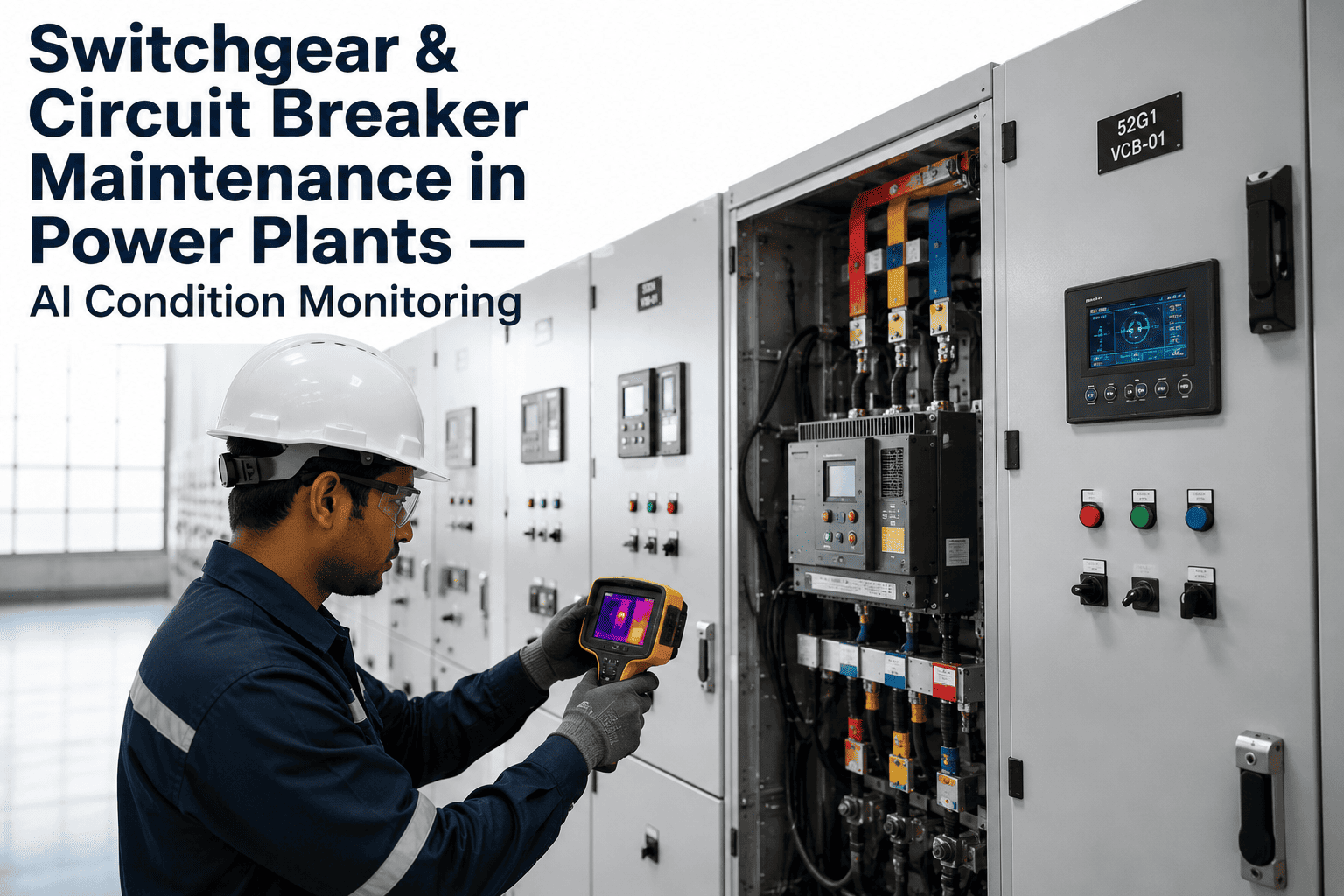
In modern power plants, switchgear and circuit breakers form the critical backbone of electrical protection and distribution systems. These assets are responsible for isolating faults, ensuring personnel safety, and maintaining grid stability under extreme operational stress. However, traditional time-based maintenance approaches often lead to either unnecessary downtime or undetected degradation, both of which carry significant financial and safety risks. Engineering teams face mounting pressure to transition from reactive or calendar-based strategies to predictive, data-driven methodologies that leverage real-time sensor data and advanced analytics. This comprehensive guide explores how artificial intelligence and condition-based monitoring can revolutionize switchgear and circuit breaker maintenance in power generation environments. By integrating AI-driven diagnostics with existing SCADA and protection systems, reliability engineers can achieve unprecedented levels of asset visibility and operational efficiency. For a deeper dive into how iFactory can transform your maintenance strategy, Book a Demo with our team of industry experts.
Intelligent Switchgear & Circuit Breaker Condition Monitoring
Transition from calendar-based to AI-driven predictive maintenance for high-voltage protection systems. Reduce unplanned outages by up to 60% and extend asset life by 30%.
Ready to Transform Your Maintenance Strategy?
Implement AI-powered condition monitoring for your switchgear fleet. Gain real-time visibility into breaker health and contact wear.
The Imperative for AI-Driven Switchgear Maintenance
Power plant switchgear operates under continuous electrical and mechanical stress. Circuit breakers must reliably interrupt fault currents, often in hostile environments with high temperatures, humidity, and contamination. Traditional maintenance intervals, typically based on manufacturer recommendations or regulatory requirements, fail to account for actual operating conditions. This leads to either premature maintenance—wasting resources and introducing human error—or delayed intervention, resulting in catastrophic failures. The financial impact of a single switchgear failure can exceed millions of dollars in repair costs, lost generation, and grid penalties. Moreover, arc flash incidents pose severe safety risks to personnel. AI-driven condition monitoring addresses these challenges by continuously analyzing key parameters such as contact resistance, SF6 gas density, insulation resistance, and mechanism timing. Machine learning models detect subtle patterns indicative of degradation, enabling proactive maintenance before failures occur. This shift from reactive to predictive maintenance is not just an operational improvement; it is a strategic imperative for modern power generation facilities aiming to maximize reliability and profitability.
Contact Wear Monitoring
Track cumulative I²t and arc energy to estimate remaining contact life. AI models analyze load profiles and fault history to predict wear progression, enabling optimal timing for contact replacement.
SF6 Gas Condition Assessment
Monitor gas density, moisture content, and decomposition byproducts in real time. Early detection of leaks or contamination prevents loss of dielectric strength and ensures reliable arc quenching.
Insulation Resistance Trending
Continuous measurement of insulation resistance across phases and to ground. AI algorithms detect moisture ingress, surface contamination, or aging degradation, triggering alerts before breakdown occurs.
Operating Mechanism Timing
Analyze open and close times, coil currents, and mechanism vibrations. Deviations from baseline indicate mechanical wear, lubrication issues, or misalignment, allowing preemptive corrective action.
Partial Discharge Analysis
High-frequency sensors capture partial discharge activity within switchgear compartments. AI classifies discharge types and severity, pinpointing insulation defects before they escalate to flashover.
Thermal Imaging Integration
Fuse infrared temperature data with electrical load profiles. AI identifies abnormal heating patterns in busbars, connections, and contacts, indicating loose connections or overloading.
Implementation Roadmap for AI Condition Monitoring
Sensor Deployment & Data Acquisition
Install IoT sensors on critical switchgear and breakers: contact resistance monitors, SF6 density transducers, partial discharge couplers, and mechanism travel sensors. Ensure data integration with existing SCADA and protection relays.
Baseline Establishment & Model Training
Collect historical data from maintenance logs, DFR records, and sensor archives. Train machine learning models on normal operating patterns, fault signatures, and degradation curves. Validate against known failure events.
Real-Time Analytics & Alerting
Deploy AI inference engines at the edge or cloud to process streaming data. Generate actionable alerts for anomalous conditions, prioritized by severity and predicted time to failure. Integrate with CMMS for automated work order creation.
Continuous Improvement & Fleet Learning
Implement feedback loops where maintenance outcomes and post-event analyses refine model accuracy. Enable fleet-wide learning across multiple plants to improve prediction robustness and reduce false alarms.
Optimize Your Breaker Maintenance with AI
Leverage real-time data and predictive analytics to maximize switchgear reliability. Reduce manual inspections and extend maintenance intervals safely.
Key Parameters for AI-Driven Condition Monitoring
| Parameter | Sensor Type | Critical Threshold | AI Prediction Horizon |
|---|---|---|---|
| Contact Resistance | Micro-ohmmeter | > 1.5x baseline | 3-6 months |
| SF6 Gas Density | Density transducer | < 90% rated | 1-3 months |
| Insulation Resistance | Megohmmeter | < 1 GΩ | 2-4 months |
| Open/Close Time | Travel sensor | > 20% deviation | 1-2 months |
| Partial Discharge | HFCT / UHF sensor | > 100 pC | 0.5-2 months |
| Coil Current | Current probe | > 15% deviation | 2-3 months |
Traditional vs. AI-Driven Maintenance: A Quantitative Comparison
Traditional Time-Based
- Fixed intervals (e.g., every 6 months)
- High labor and downtime costs
- Misses incipient faults
- Reactive to failures
- No data-driven prioritization
AI-Driven Condition-Based
- Maintenance triggered by actual condition
- Optimal resource allocation
- Early fault detection (weeks to months ahead)
- Predictive and prescriptive
- Continuous improvement via ML
Strategic Benefits for Power Plant Operations
Enhanced Reliability
AI monitoring reduces the probability of breaker failure during fault conditions, ensuring protection system integrity and minimizing cascading outages.
Cost Optimization
Extend maintenance intervals safely, reduce spare parts inventory, and lower labor costs by focusing resources on assets that genuinely need attention.
Safety Improvement
Early detection of SF6 leaks, insulation degradation, and mechanism wear reduces arc flash risk and protects personnel from hazardous events.
Regulatory Compliance
Maintain auditable records of equipment condition, supporting compliance with NERC, IEC, and other standards for protection system maintenance.
Frequently Asked Questions
What types of switchgear and breakers are best suited for AI condition monitoring?
AI-driven condition monitoring can be applied to virtually all types of medium and high voltage switchgear, including air-insulated (AIS), gas-insulated (GIS), and hybrid systems. For circuit breakers, the technology works with SF6, vacuum, and oil breakers. However, the highest ROI is typically seen on critical assets such as generator breakers, transmission breakers, and bus-tie breakers where failure consequences are severe. Retrofitting existing switchgear with sensors is often more cost-effective than replacement, and iFactory's modular solutions can be adapted to various vintages and manufacturers. For a feasibility assessment of your specific fleet, Book a Demo with our engineering team.
How does AI differentiate between normal aging and imminent failure in circuit breakers?
AI models are trained on large datasets containing both normal operating data and historical failure records. By analyzing multivariate patterns—such as the correlation between contact resistance, operating time, and coil current—the models learn to distinguish gradual degradation from accelerating wear. For instance, a slow increase in contact resistance over years is normal aging, while a sudden spike combined with mechanism timing drift indicates an impending failure. The AI also considers contextual factors like recent fault duty cycles, ambient temperature, and load history. This nuanced analysis enables highly accurate predictions with low false positive rates. To see how this works with your data, Book a Demo.
What is the typical implementation timeline and cost for an AI condition monitoring system?
Implementation timelines vary based on plant size and existing infrastructure. For a typical power plant with 50-100 switchgear compartments, the sensor deployment and data integration phase takes 4-8 weeks. Model training and baseline establishment require an additional 4-6 weeks, during which historical data is curated and algorithms are validated. Full go-live with real-time alerts is achievable within 12-16 weeks. Costs depend on sensor types, number of assets, and integration complexity, but typical ROI is realized within 12-18 months through reduced maintenance costs, fewer outages, and extended asset life. For a detailed quote and project plan tailored to your facility, Book a Demo.
Can AI monitoring integrate with existing SCADA and protection relay systems?
Yes, iFactory's platform is designed for seamless integration with major SCADA protocols (IEC 61850, DNP3, Modbus) and protection relay data streams. The AI engine can ingest data from existing CTs, VTs, and protection relay event records, enriching the condition assessment with fault current magnitudes, durations, and breaker operation counts. This integration eliminates the need for standalone sensor networks and leverages existing capital investments. Our middleware ensures data synchronization and time alignment for accurate analysis. For a technical discussion on integration architecture, Contact Support.
What happens if the AI system detects a critical anomaly? How are alerts handled?
When the AI detects a critical anomaly, it generates a prioritized alert with detailed diagnostic information, including the affected asset, parameter deviation, predicted time to failure, and recommended corrective actions. Alerts are integrated into the plant's CMMS for automated work order creation, and can also be sent via email, SMS, or dashboard notifications. For high-severity events, the system can trigger immediate alarms in the control room. The platform includes a feedback mechanism where maintenance engineers can document the actual findings, which is used to continuously improve model accuracy. To see the alerting workflow in action, Book a Demo.
Future-Proof Your Switchgear Maintenance
Adopt AI-driven condition monitoring to maximize uptime, enhance safety, and reduce costs. Our experts are ready to guide you through every step of the journey.