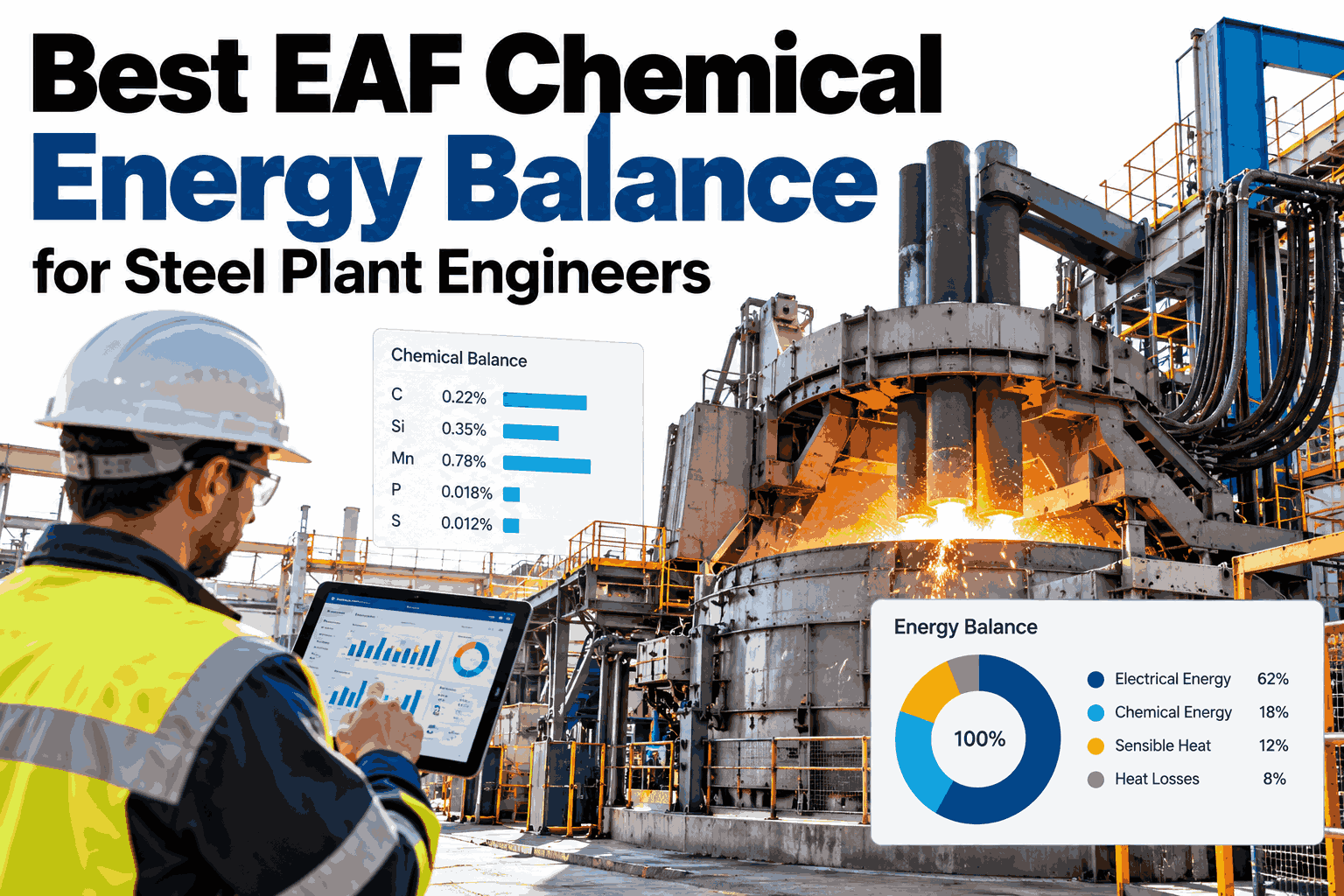
Every heat in an electric arc furnace is paid for twice: once in electricity at the transformer, and once in oxygen, gas and carbon at the injectors. Chemical energy from those sources melts scrap, builds foamy slag and takes load off the arc, but it also costs yield, refractory and off-gas heat. The best practice is not maximum chemical input, it is the balance where the next unit of oxygen or fuel stops paying for itself. Engineers working toward that balance can see how iFactory AI compares electrical and chemical energy heat by heat on live furnace data before retuning injection practice.
Best EAF Chemical Energy Balance for Steel Plant Engineers
See where each heat's energy comes from, and tune oxygen, carbon and burners so they offset electricity without costing you yield.
Why the Balance Matters
Electricity is the most visible energy in an EAF, but it is not the only lever. Shifting a share of the work to chemical sources changes cost, tap-to-tap time and yield together.
Chemical energy can be cheaper per kWh delivered than power, depending on prices and efficiency.
Faster melting shortens power-on time and can lift furnace productivity.
Too much oxygen burns iron, wears refractory and wastes heat in the off-gas.
The right answer changes with scrap mix, power price and furnace design, which is why a fixed recipe for every heat leaves money behind.
Four Chemical Energy Sources
Each source does a different job, and each has a cost that appears somewhere else in the heat.
Burn gas with oxygen to heat and melt cold spots in the scrap early in the heat.
Oxidises carbon, silicon and other elements, releasing heat inside the bath.
Adds carbon for foamy slag and reaction heat, and reduces iron oxide in the slag.
Burns carbon monoxide above the bath so more heat stays in the furnace.
See Your Heats Broken Down by Energy Source
Book a 30-minute session and iFactory AI will show how electrical and chemical energy, yield and tap-to-tap time are compared across your own heats.
Which Tool Leads in Each Phase
Chemical energy works best when it follows the heat. A phase-by-phase review of your own practice shows where timing is off.
| Tool | Bore-in | Melting | Flat bath and refining |
|---|---|---|---|
| Oxy-fuel burners | Lead | Support | Limited |
| Oxygen lancing | Limited | Lead | Support |
| Carbon injection | Limited | Support | Lead |
| Post-combustion | Limited | Lead | Support |
This is a general pattern, not a recipe. Furnace design, scrap and charging practice move the boundaries.
The Break-Even Test
Compare the cost of one useful kilowatt-hour from each source, not the price of the input. The assumptions below are illustrative.
Side costs matter: lost yield, extra electrode or refractory wear and off-gas losses can erase the advantage. Test the balance heat by heat, not on price alone.
What Too Much Chemical Energy Costs
The edge of the balance is where extra input starts to hurt. Four signs show you have passed it.
More iron ends up as oxide in the slag.
Refractory and electrodes wear faster under hot, oxidising conditions.
Heat leaves with the gas instead of staying in the bath.
Each extra unit saves less electricity than the one before.
Measures Engineers Should Track
These seven signals show whether the balance is moving in the right direction.
Where iFactory AI Fits
iFactory AI joins power profile, injection, gas and yield data for each heat, so engineers see the balance and its effect on cost per tonne.
Heat-by-heat balance
Electrical and chemical energy are shown for every heat, with yield and tap-to-tap time alongside.
Practice comparison
Compare crews, scrap mixes and recipes to find which combinations deliver the best total cost.
Recommendations for engineers
Suggested setpoint changes come with their evidence, and engineers decide what to trial.
Ask in plain language
Ask which heats used more oxygen than needed this week and receive the ranked list.
iFactory AI arrives pre-configured on an NVIDIA server that ships racked and ready with software pre-loaded. Scope covers cabling, network, ERP and MES integration, team training and 24x7 remote monitoring.
Frequently Asked Questions
What is chemical energy in an electric arc furnace?
It is the heat released by burning fuel and by oxidising elements such as carbon and silicon in the bath, supplied through burners, oxygen lances and carbon injection. It works alongside electrical energy from the arc. You can watch the electrical and chemical split shown on sample furnace data in a live session.
How much chemical energy is the right amount?
It depends on furnace design, scrap mix, power price and gas and oxygen cost, so no single figure fits every plant. The right level is where extra input stops reducing total cost per tonne. To find yours, request a balance review with the iFactory AI team, or ask support what heat data to share.
Does more oxygen always save electricity?
Not always. Extra oxygen can oxidise iron, wear refractory and send heat out with the gas, which can outweigh the electricity saved. Returns also diminish with each additional unit. A short product tour of diminishing-return analysis shows how that point is found.
How does carbon injection help the electrical side?
Carbon and oxygen together build foamy slag that covers the arc, which improves heat transfer to the bath and cuts radiation losses. That raises effective arc efficiency. It also adds reaction heat. See how slag practice links to power use in a guided walkthrough.
How do we trial changes safely?
Change one setting at a time, run enough heats for a fair comparison, and track yield, energy, tap-to-tap time and wear together. Keep safety limits fixed throughout. Clear before and after data protects both the process and the decision. Schedule a walkthrough of trial tracking to see how comparisons are set up.
Find the Balance Point for Every Heat
iFactory AI compares electrical and chemical energy, yield and tap-to-tap time heat by heat. Book a walkthrough to see it built around your own furnace.