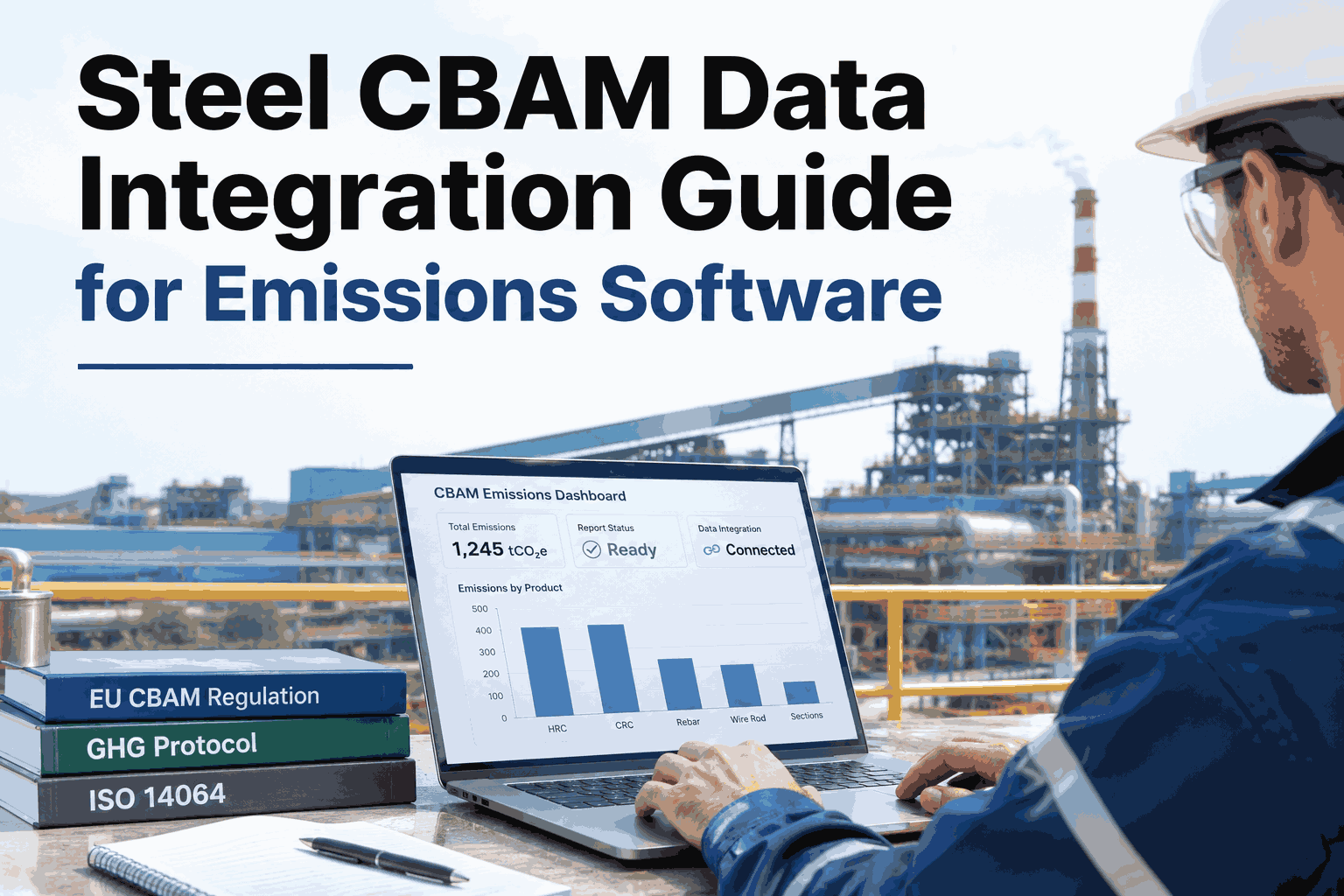
An embedded emissions number only matters if it survives a verifier's questions, and most of the rejected or corrected CBAM declarations from Indian exporters trace back to the same root cause: the underlying data could not be traced back to a specific source. A plant-wide average pulled from an annual energy bill does not meet the standard an EU verifier expects, even if the final number happens to be accurate. Measurement, traceability and documented evidence are three separate requirements, and meeting only one or two of them still leaves a declaration vulnerable to challenge. Getting this right the first time avoids the cycle of correction, resubmission and delay that follows a weak evidence trail. Exporters reviewing their own data readiness can see how iFactory AI checks emissions data against verifier expectations before the next declaration is due.
CBAM Data Quality Requirements for Indian Steel Exporters
Measurement, traceability and evidence standards that meet EU verifier expectations without a correction cycle.
Where Weak Data Usually Comes From
Most data quality gaps are not about having too little data. They are about the data being the wrong shape.
A plant-wide annual figure cannot be traced back to the specific batch a shipment came from.
Default emission factors substitute for actual measured data where a verifier expects the latter.
Data without a clear chain of custody from measurement to declaration cannot be verified.
Each of these gaps is fixable before a declaration is submitted. Fixing them after a verifier flags the issue costs far more time.
What a Verifier Actually Checks
Verification standards focus on a small number of specific questions about where the data came from.
| Requirement | What Satisfies It | What Doesn't |
|---|---|---|
| Source-level data | Readings tied to a specific furnace or line | A plant-wide annual average |
| Batch traceability | Production records linked to shipment lot numbers | No link between production and shipment records |
| Documented methodology | A written, consistent calculation method on file | Ad hoc calculation that varies by reporting period |
| Audit trail | Timestamped records from measurement to declaration | Figures that cannot be traced back to a raw reading |
Find Out Where Your Data Falls Short Before a Verifier Does
Book a 30-minute session and bring a recent declaration. iFactory AI will check it against each verification requirement.
Building the Evidence Trail
A defensible declaration can trace every number back through four stages.
What iFactory AI Supports
The platform builds the traceable data chain a verifier expects, rather than relying on a plant-wide estimate.
Source-Level Data Capture
Emissions data is captured at the furnace, line or meter level rather than averaged plant-wide.
Batch-to-Shipment Linking
Production data is linked automatically to the shipment lots it corresponds to.
Documented Methodology
Calculation methods are version-controlled and consistent across reporting periods.
Audit-Ready Export
A full evidence package exports in a format built for verifier review.
iFactory AI builds the data capture and traceability layer around existing plant metering and production systems.
Expert Review
Exporters are often surprised that the accuracy of the final number matters less to a verifier than whether it can be traced. A correct figure with no chain of custody is treated the same as an unverifiable one, which is a hard lesson to learn mid-declaration.
Batch-to-shipment linking is the step most plants skip first, usually because production and export documentation live in separate systems that were never connected. Closing that gap early is consistently the highest-value fix we see.
Frequently Asked Questions
Is default emission factor data ever acceptable?
Default values are generally accepted during the transitional period but are expected to be phased out in favor of actual measured data as the definitive period takes hold. Relying on defaults indefinitely increases the risk of a declaration being challenged. Ask about your current reliance on default values in a working session.
How granular does source-level data actually need to be?
Data tied to a specific furnace, line or major utility meter is generally sufficient; it does not need to go down to individual equipment components. The goal is tracing a declaration back to a production unit, not an exhaustive sensor-by-sensor breakdown. Ask support for a granularity benchmark for your plant type.
What does batch-to-shipment linking actually look like in practice?
It means a specific production batch's emissions data can be matched to the shipment lot number that batch ended up in, so a verifier can trace the declared figure back to the material actually exported. This typically requires connecting production records to export documentation that often sit in separate systems today. See a sample linking setup in a live session.
Can historical declarations be corrected if the underlying data was weak?
Corrections are possible but can trigger additional scrutiny on future declarations, so most exporters prioritize fixing the data pipeline going forward rather than reworking every past filing. Contact support to discuss your specific correction situation.
How long does it take to move from averaged to source-level data?
Most plants can establish source-level capture and batch linking within six to nine weeks, depending on how much of the metering and production data is already digitized. Plants starting from largely manual records take longer. Book a readiness assessment to estimate your own timeline.
Build a Declaration That Survives a Verifier's Questions
iFactory AI builds the source-level, traceable evidence trail CBAM verification expects. Book a session to check your own data.