Every Indian steel producer facing CBAM eventually reaches the same question: which low-carbon technology path actually makes sense for this plant, and in what order. Hydrogen DRI, EAF conversion and carbon capture each cut embedded carbon differently, cost differently, and arrive on a different timeline, and a plant rarely has the capital to pursue all three at once. Picking the wrong first move does not just waste capital; it delays the carbon intensity reduction that CBAM cost exposure is directly tied to. A clear-eyed priority ranking, built around a specific plant's route, capacity and capital position, replaces a generic industry roadmap with a decision the plant can actually execute. Producers weighing this decision can see how iFactory AI ranks investment paths against a plant's own carbon and cost data before committing capital.
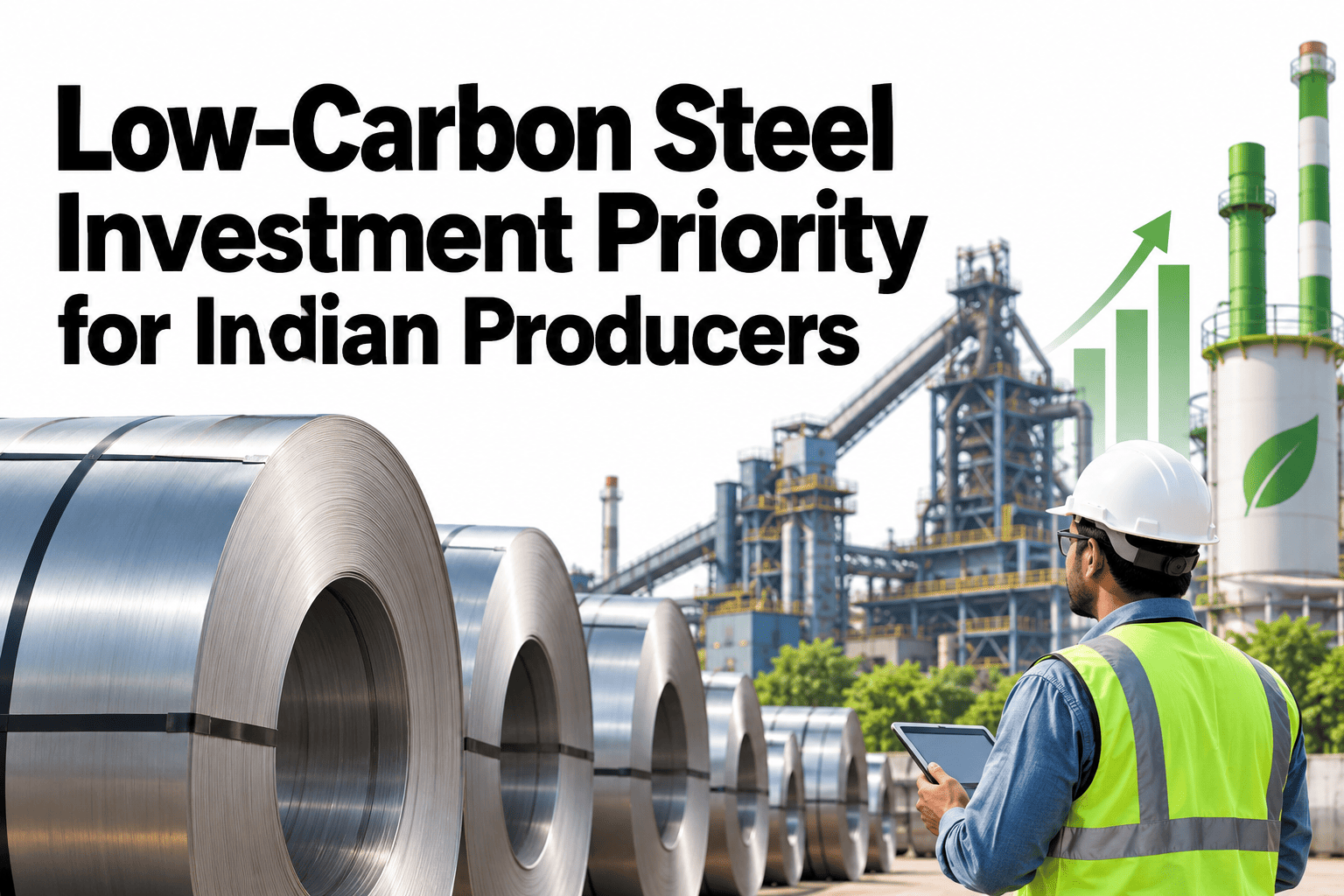
Low-Carbon Steel Investment Priority for Indian Producers
Hydrogen DRI, EAF conversion and CCUS technology paths, ranked against a plant's own route, capacity and capital position.
Why a Generic Roadmap Doesn't Transfer
Industry-wide decarbonization roadmaps rarely account for what makes one plant's situation different from another's.
A blast furnace plant and an existing EAF plant face entirely different starting points.
What a well-capitalized integrated producer can commit differs sharply from a mid-size mill.
Hydrogen DRI and EAF conversion both depend on power and hydrogen infrastructure that varies by region.
A roadmap built for the industry average rarely matches a specific plant's constraints closely enough to guide a real capital decision.
Comparing the Three Paths
Each path trades off differently between carbon reduction, capital intensity and how soon it delivers results.
| Path | Best Fit For | Key Constraint |
|---|---|---|
| Hydrogen DRI | Plants with access to low-cost renewable power | Hydrogen supply infrastructure still maturing |
| EAF Conversion | Plants with reliable scrap supply access | Scrap availability and quality variability |
| CCUS | Existing blast furnace assets with long remaining life | Storage or utilization infrastructure needed nearby |
Rank These Paths Against Your Own Plant Data
Book a 30-minute session and bring your route mix and capital plan. iFactory AI will rank investment priority against your actual constraints.
A Phased Approach, Not a Single Bet
Most producers that succeed here sequence investment rather than committing everything to one path at once.
What iFactory AI Supports
The ranking is built from the plant's own data, not an industry-wide default.
Route-Level Carbon Baseline
Each production route's current carbon intensity anchors the comparison between paths.
Capital-Constrained Ranking
Options are ranked against the capital the plant can realistically commit, not an ideal budget.
CBAM Cost Offset Modeling
Each path's projected carbon reduction is tied back to its effect on CBAM cost exposure.
Phased Sequencing Plan
A recommended order of investment is built around dependencies and payback timing.
iFactory AI builds the priority ranking using the plant's own route, cost and capital data. Scope covers baseline measurement, scenario comparison, and sequencing.
Expert Review
The producers who move fastest are rarely the ones chasing the single highest-impact technology first. They start with whichever path their current infrastructure and capital position support without a long lead-time dependency, then layer in the bigger bet once that first step is funding itself.
Hydrogen DRI gets the most attention in industry discussion, but for many Indian plants an EAF conversion or a targeted CCUS retrofit delivers a faster, more certain payback against near-term CBAM exposure. The right first move depends entirely on what is already in place at the plant.
Frequently Asked Questions
Is hydrogen DRI always the best long-term option?
It offers one of the largest carbon reductions available, but it depends on low-cost renewable power and maturing hydrogen infrastructure that is not uniformly available yet. For some plants, it is the right long-term direction but not the right first step given current constraints. Discuss your specific infrastructure access in a working session.
How does scrap availability affect the EAF conversion decision?
EAF conversion depends on a reliable, reasonably consistent scrap supply, and scrap quality variability can affect both output quality and the realized carbon reduction. Plants in regions with strong scrap collection networks are generally better positioned for this path. Ask support about scrap supply assessment for your region.
Does CCUS make sense for a plant without nearby storage infrastructure?
Without nearby storage or utilization options, captured carbon has nowhere to go, which significantly limits CCUS viability regardless of capital available. This is usually the first constraint checked before ranking CCUS as a near-term option. Request an infrastructure feasibility review.
Can two paths be pursued at the same time?
Yes, once capital allows, running a second path in parallel can accelerate overall carbon reduction, though most producers find sequencing manages risk and cash flow better than starting both at once. The right approach depends heavily on the plant's capital position. Contact support to model a parallel investment scenario.
How often should the priority ranking be reassessed?
An annual reassessment is typical, since hydrogen and CCUS technology costs are still moving and CBAM pricing assumptions can shift the relative attractiveness of each path. Book a session to set a reassessment schedule aligned with your capital planning cycle.
Pick the Right First Move, Not Just the Biggest One
iFactory AI ranks hydrogen DRI, EAF conversion and CCUS against your own route, capital and CBAM exposure. Book a session to see your ranking.