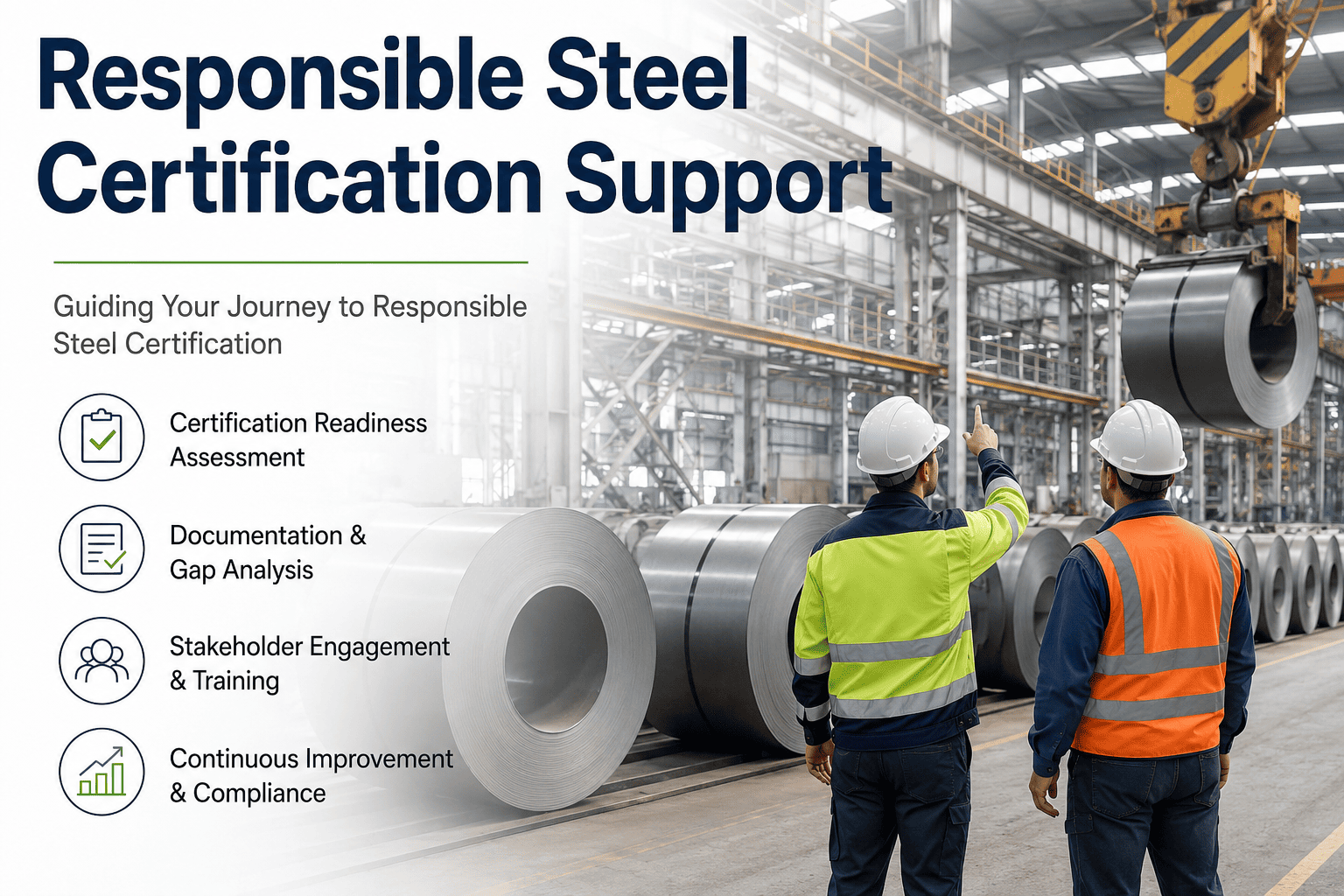
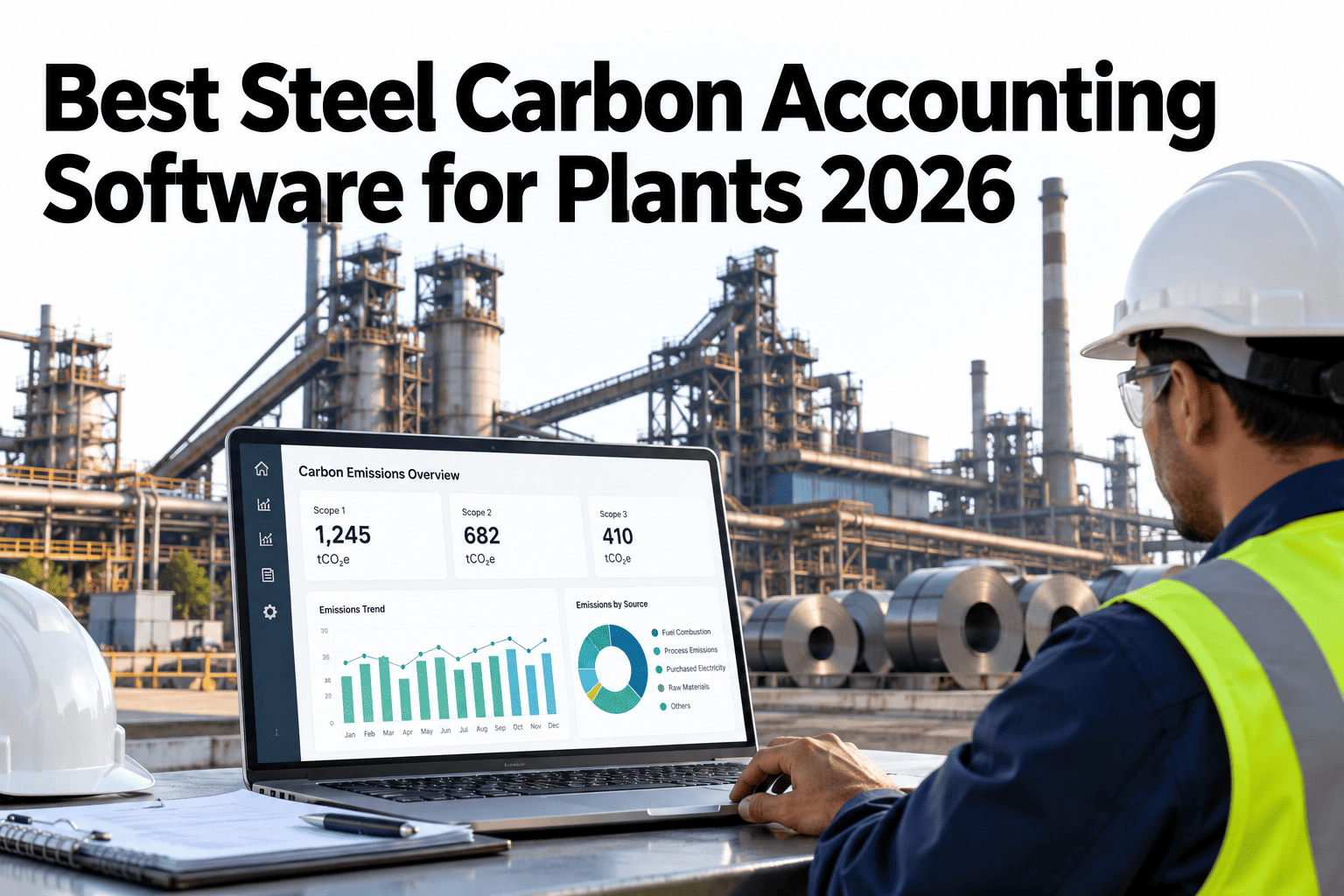
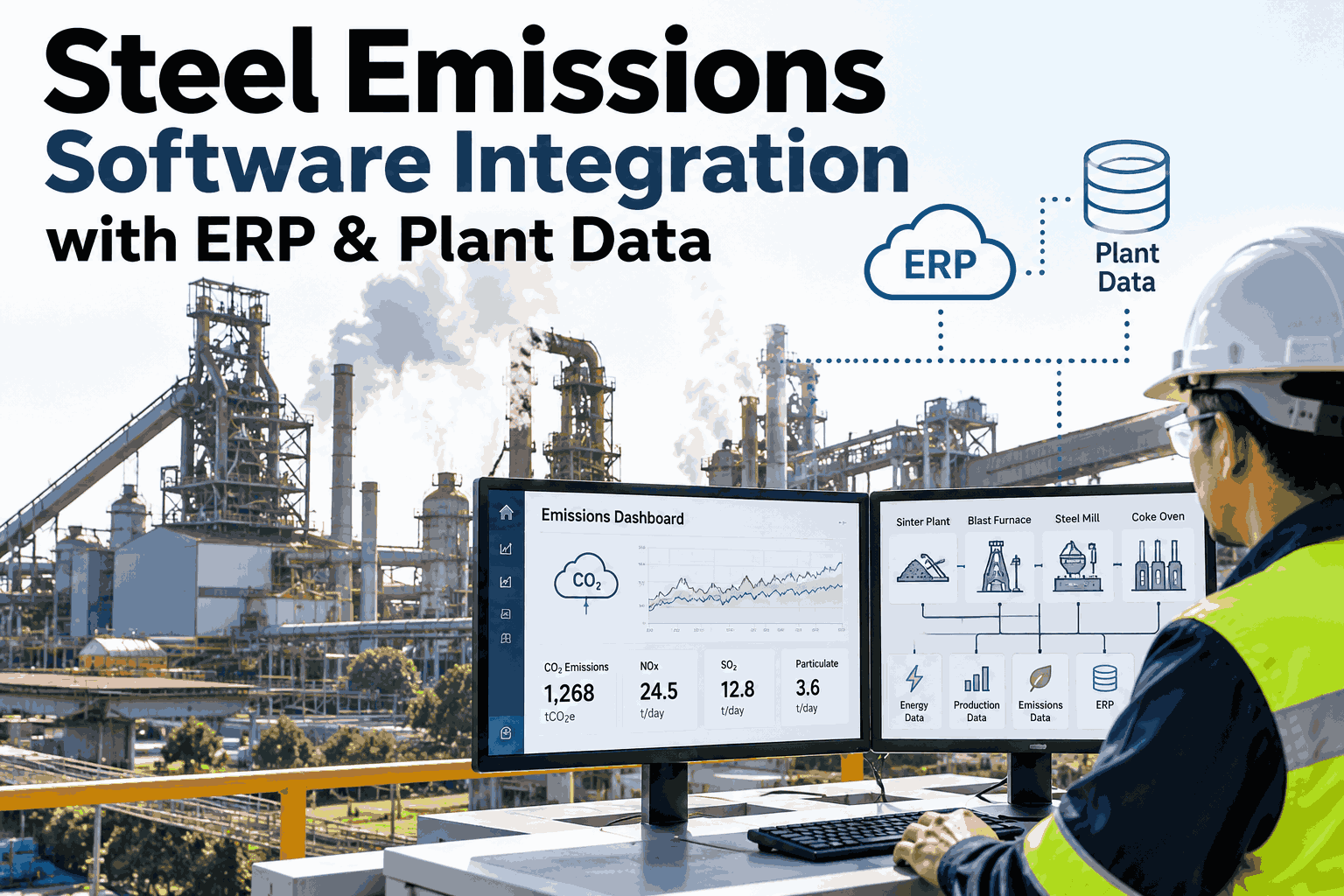
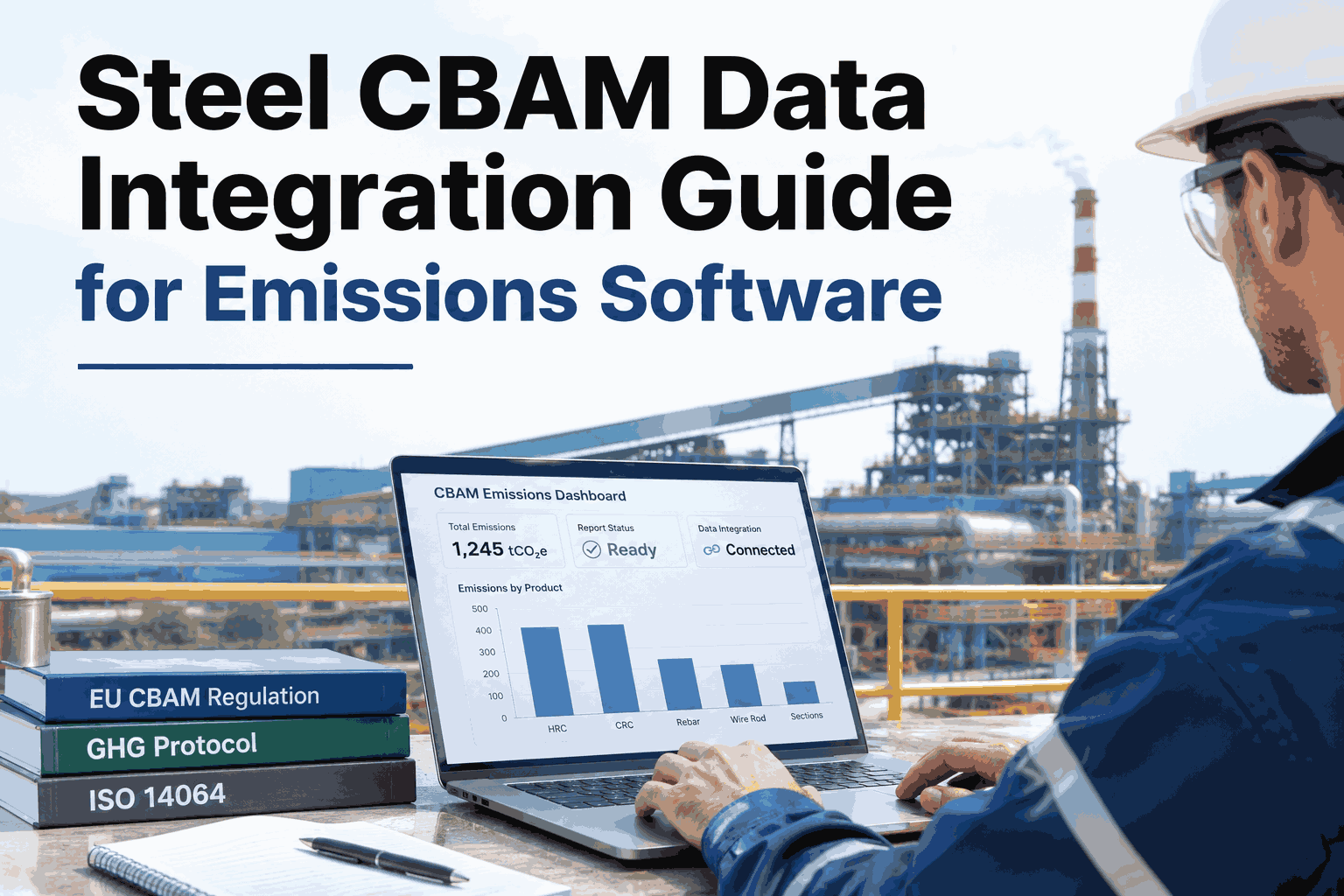
ResponsibleSteel certification now spans 13 principles and roughly 530 individual requirements, covering everything from blast furnace maintenance logs to community engagement records and greenhouse gas accounting. What used to be a competitive differentiator is turning into a market access requirement, as customers and investors increasingly ask which sites carry the certificate before they sign a contract. The problem for most mills isn't whether they meet the standard operationally — it's whether they can prove it with evidence an independent auditor will accept. Assembling that evidence manually across departments is where certification timelines quietly blow out to 18 months or more, and you can book a readiness review to see exactly where your documentation gaps sit.
Certification Intelligence
530 Requirements. 13 Principles. One Audit Day That Decides It All.
AI-driven evidence capture pulls maintenance, safety, water, and emissions data automatically into an audit-ready record — so ResponsibleSteel certification stops being a documentation scramble.
530
Requirements across 13 principles
12-18 mo
Typical certification timeline
10%
Share of global emissions from steelmaking
The 13 Principles, at a Glance
1-3
Business Integrity & Management
6-7
Labor Rights & Occupational Health
8-9
Environment & Biodiversity
10-11
Water Stewardship & Community
12-13
Climate Change & Responsible Sourcing
Where Certification Timelines Actually Break
| Evidence Type | Manual Process | AI-Assisted Process |
|---|
| Maintenance & inspection records | Scattered across paper logs and spreadsheets | Captured continuously from CMMS and sensor data |
| Safety incident history | Reconstructed manually before audit | Logged in real time, audit-ready on demand |
| Emissions & energy data | Calculated retroactively by finance or EHS teams | Tracked continuously against GHG accounting rules |
| Water & effluent compliance | Periodic lab samples with gaps | Continuous monitoring with automated logs |
Turn 18 Months of Evidence Gathering Into a Standing System
iFactory maps your existing plant data — maintenance, safety, energy, water — directly against ResponsibleSteel's 13 principles, so your team walks into audit day with 90% of the evidence already organized.
The Certification Journey
Phase 1
Self-Assessment & Gap Mapping
Existing plant data is mapped against all 530 requirements to surface exactly where documentation is missing or incomplete.
Phase 2
Evidence Collection
Maintenance, safety, water, and emissions data is automatically consolidated into a single, continuously updated evidence system.
Phase 3
Audit & Certification Decision
An independent certification body reviews the evidence and issues a certificate valid for three years, with a surveillance audit at 18 months.
Why It's Worth Getting Ahead of This
90%
Documentation pre-organized before audit begins
3 yrs
Certificate validity once achieved
18 mo
Point at which a surveillance audit checks progress
Frequently Asked Questions
What does ResponsibleSteel certification actually require from a plant?
The current Production Standard contains 13 principles and approximately 530 requirements covering business integrity, labor rights, occupational health, environmental performance, water stewardship, community engagement, and climate commitments. Each requirement needs documented evidence, not just a policy statement, which is why most of the certification timeline is spent gathering and organizing records rather than changing how the plant actually operates. You can see how this evidence gets structured through
our support documentation.
How long does the certification process usually take?
Most sites report a 12 to 18 month journey from initial self-assessment to a certification decision, largely driven by how scattered the existing evidence is across departments. Plants that already track maintenance, safety, and environmental data in a connected system tend to move through the process faster, since the audit evidence is already assembled rather than needing to be reconstructed from paper records and disconnected spreadsheets.
Can AI actually help with a certification that's fundamentally about documentation?
Yes — because most ResponsibleSteel evidence already exists somewhere in plant data, it's just not connected. AI platforms pull maintenance records, safety incidents, water quality readings, and energy consumption into one continuously updated system mapped against each of the 13 principles. That turns certification from a one-time scramble into a standing capability that also makes the mandatory 18-month surveillance audit far less disruptive.
Does certification require ISO 14001 as a prerequisite?
Yes, sites applying for ResponsibleSteel certification are generally expected to hold ISO 14001 certification for the operational site in question. This environmental management system provides part of the structural foundation the ResponsibleSteel audit builds on, particularly around environmental performance tracking and continuous improvement processes that overlap with several of the 13 principles.
What happens after certification is achieved?
A certificate is valid for three years, but it isn't a one-time achievement — a surveillance audit at the 18-month mark checks progress against any non-conformities identified during the original audit. Plants that maintain continuous evidence collection rather than reverting to manual tracking after certification tend to pass surveillance audits with far less preparation effort.
Book a readiness review to plan for that ongoing cycle from the start.
Your Next Audit Shouldn't Start With a Document Hunt
See how iFactory maps your existing plant data against every ResponsibleSteel requirement — so certification and every surveillance audit after it become routine, not a crisis.