Rolling out AI powered quality inspection on a sewing or finishing line is less about the camera and more about everything that has to be ready before the camera is switched on: defect definitions, machine coverage, operator buy-in and a plan for comparing results against what the floor already trusts. Teams that skip this groundwork often end up with a working system nobody fully trusts, because the pilot was rushed and no baseline existed to measure it against. A structured deployment checklist turns that risk into a sequence of decisions made in order. For a checklist mapped to your own lines, you can walk through a deployment plan with our team.
Deployment checklist
Everything Your Team Needs Before AI Inspection Goes Live
A structured checklist for defining defects, running a fair pilot and scaling AI powered quality inspection across your sewing and finishing lines without losing the floor's trust.
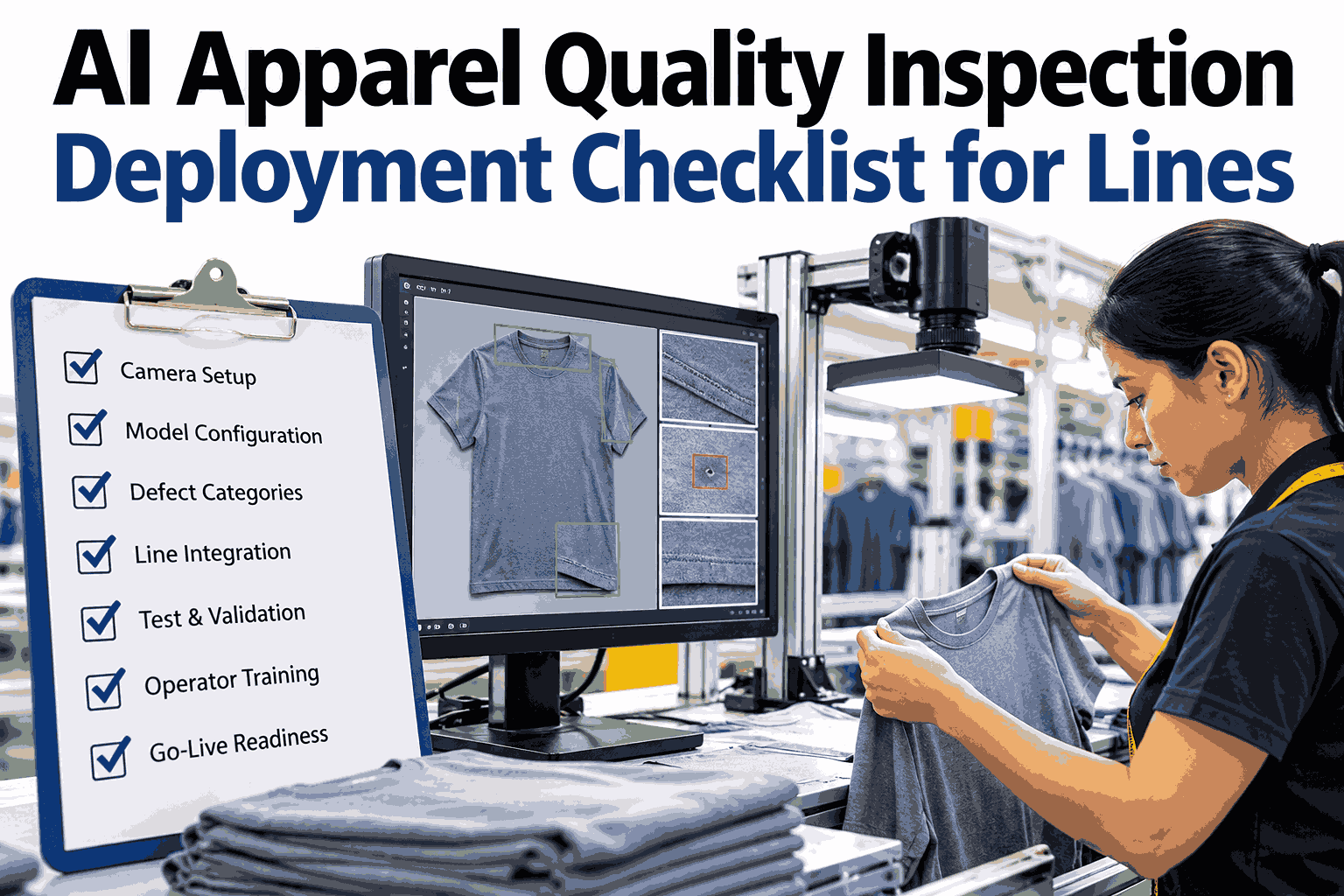
Quick look: readiness checklist preview
Defect definitions agreed with quality team
Pilot line and machine list confirmed
Baseline rejection rate recorded
Operator alert workflow decided
Why rollouts stall
The Points Where AI Quality Projects Usually Lose Momentum
Most delays do not come from the technology itself. They come from decisions that were never made clearly before the first camera was installed, so the pilot has nothing firm to be measured against.
01
Defect definitions differ between the quality manual and what inspectors actually flag on the floor.
02
No baseline rejection or rework figure exists, so nobody can show the pilot made a difference.
03
Operators were never told why a camera is watching their station, which slows adoption.
04
IT and quality plan the rollout separately, so fault data never reaches systems people already check.
Every one of these is fixable before go-live, which is exactly what a deployment checklist is for: turning informal assumptions into decisions that are written down and agreed by name.
The checklist
The Deployment Checklist by Phase
Breaking the rollout into four phases keeps each checklist short enough to actually finish, instead of one long list that never gets fully ticked off.
Phase 1: Define
Defect list and severity grading agreed with quality
Tolerance bands and buyer limits documented per style
Baseline rejection, rework and claim figures recorded
Pilot line, machines and styles selected
Phase 2: Pilot
Cameras installed and tuned to pilot machines
System run alongside manual checking, not instead of it
Operators briefed on what alerts mean and what to do
Daily comparison of flagged faults against manual results
Phase 3: Scale
Pilot results reviewed against the agreed baseline
Coverage extended to additional lines and machine types
Fault data connected to production and quality systems
Supervisor training extended beyond the pilot team
Phase 4: Stabilize
Recurring faults reviewed weekly by machine and operator
Tolerance bands revisited as new styles are added
Reporting shared routinely with production leadership
Ownership handed from project team to floor management
Turn This Checklist Into Your Own Rollout Plan
Bring your line layout, machine list and current rejection figures, and we will help you map each phase against your own floor.
Self-assessment
Score Your Line's Readiness Before You Commit a Date
Before scheduling a pilot, it helps to rate the floor honestly against a short set of criteria. A line that is not fully ready on paper can still move forward, as long as the gaps are known in advance.
| Readiness criteria | Status |
|---|
| Written defect definitions exist and are current | Ready |
| Baseline rejection and rework data is available | Partial |
| A named owner exists for quality, production and IT | Ready |
| Operators have been told why cameras are being added | Not started |
| A system exists to receive fault data after the pilot | Partial |
This table is an example scorecard, not a live assessment of any single factory. The habit matters more than the numbers: rating each line this way before committing a go-live date saves rework later.
Ownership
Who Owns What During a Quality Inspection Rollout
A rollout with no named owner for a task tends to stall quietly, because everyone assumes someone else is handling it. Four roles usually cover a textile or apparel deployment.
Quality lead
Owns defect definitions, tolerance bands and the daily comparison against manual checking during the pilot.
Production lead
Owns line selection, operator briefing and the workflow for responding to station alerts.
IT or integration lead
Owns connecting fault and grading data to the systems quality and production already use.
Vendor or iFactory team
Owns camera setup, detection tuning and training the floor team on the review screen.
Avoid these
Common Deployment Pitfalls and How Teams Fix Them
These patterns repeat across textile and apparel floors regardless of plant size, and most are avoidable once a team knows to watch for them early.
Pitfall: Skipping the baseline
Without a recorded rejection rate before the pilot, nobody can prove the system actually helped.
Fix: record two to four weeks of normal results before any camera is switched on.
Pitfall: Pilot too broad
Running the pilot across many styles and machines at once makes the results hard to read clearly.
Fix: limit the pilot to a handful of styles on one line for the first few weeks.
Pitfall: Operators left out
When operators do not understand the alerts, they tend to ignore or override them on the floor.
Fix: brief operators before go-live on what each alert means and what action to take.
Pitfall: No data destination
Fault records that stay inside the inspection tool never reach the people who plan corrective action.
Fix: agree where fault data will live and who reviews it before scaling past the pilot.
What to expect
What Progress Looks Like at 30, 60 and 90 Days
Timelines vary by plant size and line count, but most rollouts that follow a staged checklist move through a similar shape.
Day 30
Pilot line running, daily comparison against manual checking underway.
Day 60
Pilot results reviewed, tolerance bands adjusted, rollout to further lines agreed.
Day 90
Multiple lines connected, reporting routine, ownership shifted to floor management.
These markers are a general guide rather than a guarantee, since plant size, machine variety and team availability all shift the pace. A short call to map a realistic timeline for your own lines is usually the fastest way to set expectations.
Frequently asked questions
What Teams Ask Before Starting Their Own Deployment
Do we need a baseline before we can even start the checklist?
A baseline makes the pilot easier to judge, but you can begin Phase 1 work such as defect definitions while a few weeks of baseline data are being collected in parallel. The two do not have to happen strictly one after the other.
Talk through your current data with our team first.
How many lines should the first pilot cover?
Most teams get clearer results from one line with a handful of styles rather than several lines at once, since a narrow pilot is easier to compare against manual checking. Scale comes in Phase 3, once the pilot has proven itself.
Ask support about sizing your pilot correctly.
Who should own the checklist itself during rollout?
A single project owner, usually from quality, should hold the checklist even though each item has its own owner, so progress does not depend on informal updates between departments. That owner reports status to leadership.
Discuss project ownership on a planning call.
What happens if the pilot does not beat the baseline?
A pilot that underperforms is still useful, because it usually points to a specific gap such as lighting, tolerance settings or operator understanding rather than the approach itself. The checklist is revisited and adjusted before a second attempt.
Review pilot results with the support team.
Does the checklist change for knit versus woven fabric lines?
The four phases stay the same, but the specific defect lists, tolerance bands and machine tuning inside each phase differ between knit and woven operations. Both can run the same checklist structure in parallel.
Map both line types with our specialists.
A plan beats a rushed pilot
Build Your Own Deployment Checklist With iFactory AI
Book a session to map defect definitions, pilot scope and ownership against your own sewing and finishing lines before you set a go-live date.