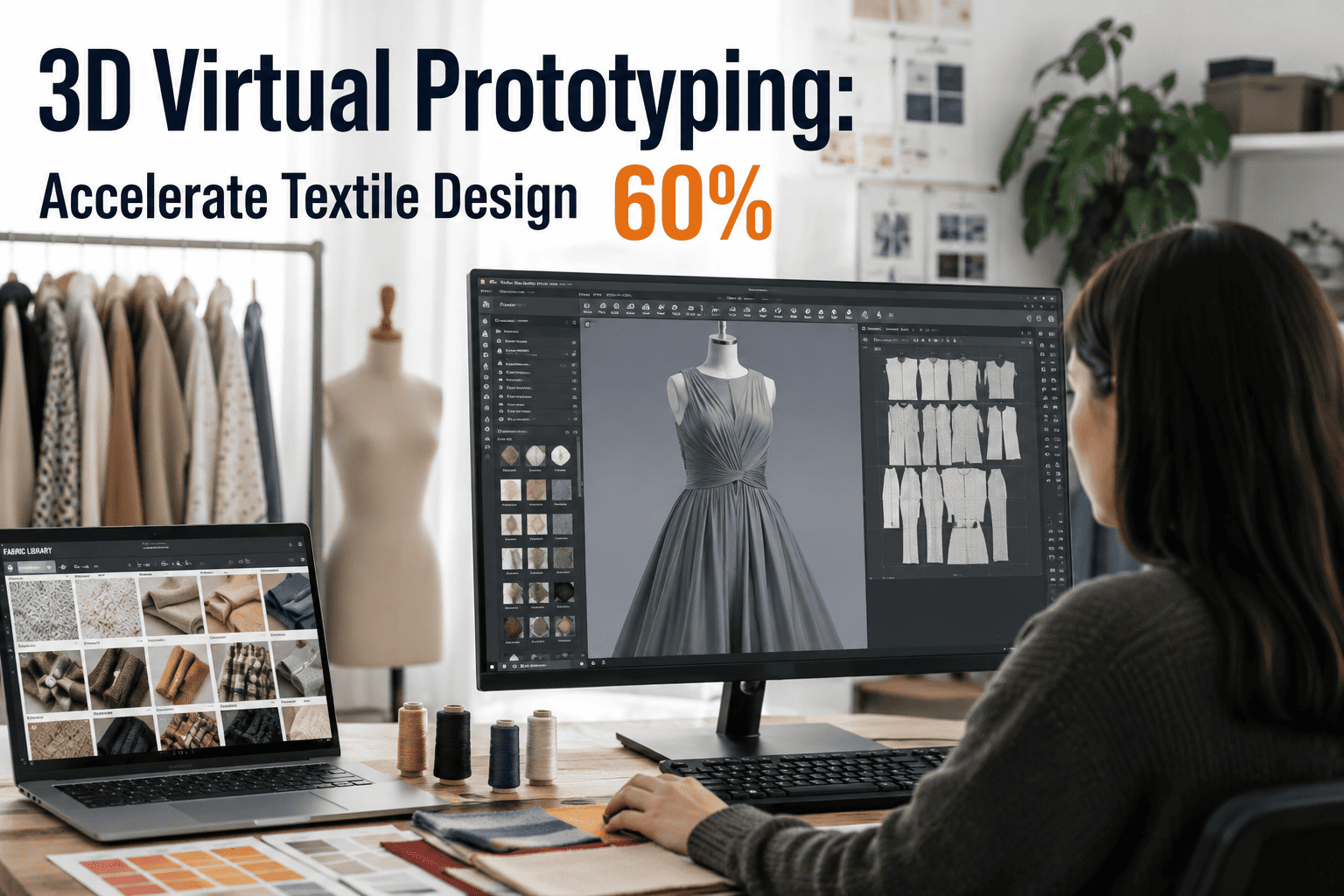
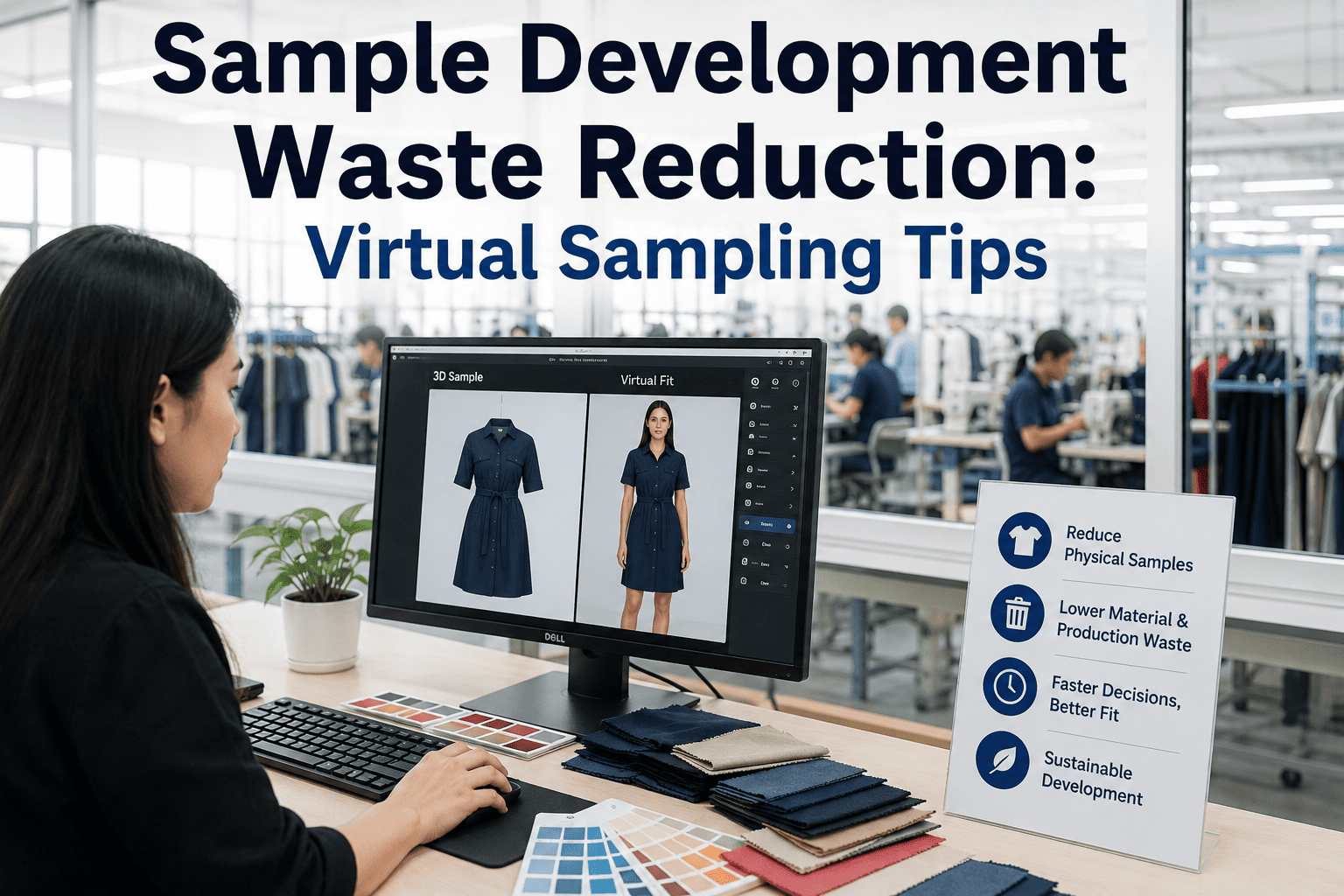
A design team finalizes a print, ships the tech pack to a mill overseas, and waits. Ten days later a physical sample arrives — the drape is wrong, the colorway looks nothing like the screen proof, and the whole cycle repeats. Multiply that by the four or five sample rounds a typical collection requires and a single style can burn six to eight weeks before anyone outside the design team has seen a finished garment. Brands that have shifted early sample rounds to 3D virtual prototyping are compressing that same cycle from weeks to days, cutting development cost by up to 30% in the process. Book a demo to see how iFactory brings virtual draping and online approval into your existing design workflow.
Slow Design Process → 3D Virtual Prototyping
Your Design Team Isn't Actually Slow. They're Waiting on Fabric That Has to Cross an Ocean Twice Before Anyone Even Approves It.
Every physical sample round is a full production cycle in miniature — cutting, sewing, shipping, review, revision, reshipping. 3D virtual prototyping replaces the early, iterative rounds with a digital garment that drapes, moves, and photographs like the real fabric, so the physical sample that finally gets cut is close to final on the first try rather than the fourth or fifth attempt.
60-70%
Reduction in concept-to-approval time documented by early-adopter design teams
2-3 hrs
Sample approval time with virtual sampling, versus 7-10 days for a physical round trip
60-90%
Reduction in physical sampling cost once early rounds move to 3D
The Core Comparison
What a Sample Round Actually Costs in Physical Fabric and Time vs. Virtual Draping
The two workflows look similar on a project timeline — both end with a sample that gets reviewed and either approved or sent back for revision. The similarity ends there. Everything between "design finalized" and "sample reviewed" is where the two paths diverge completely, and that gap compounds across every round a style requires before final approval.
| Stage |
Physical Sampling |
3D Virtual Prototyping |
| Pattern to first visual |
Pattern cut, fabric sourced and shipped, garment sewn — 5-10 days minimum before anyone sees a result |
Digital pattern draped on a virtual avatar using measured fabric properties — a matter of hours, not days |
| Colorway variations |
Each colorway requires a completely separate physical cut and sew — cost multiplies per version produced |
Unlimited colorways applied to the same digital garment at effectively zero marginal production cost |
| Review and approval |
Sample shipped internationally, reviewed in person or via photos, revision requested, then reshipped again |
Reviewed and annotated online by every stakeholder simultaneously, regardless of their physical location |
| Revision cycle |
Full physical remake required for each and every fit or drape adjustment requested |
Pattern adjusted digitally and redraped in the very same working session — no new fabric cut at all |
| Waste generated |
Every rejected sample consumes fabric, thread, labor, and shipping cost that cannot ever be recovered |
Rejected iterations consume no physical material whatsoever, at any stage of the review process |
The Digital Sampling Pipeline
Four Stages From Digital Pattern to a Fully Approved Design
3D virtual prototyping is not a single tool — it is a sequence of four stages, each building on the last, that together replace what used to require several physical sample rounds shipped back and forth across a supply chain, often spanning multiple countries and time zones per iteration.
Stage 1
Digital Pattern Input
The same 2D patterns used for eventual physical cutting are digitized, ensuring the virtual sample reflects the exact construction that will later go to production — not a stylized approximation built purely for visual review.
Stage 2
Virtual Draping & Fit
The pattern is virtually stitched and draped on a digital avatar using measured fabric parameters — weight, stretch, bend — so the simulated garment moves and drapes like the actual textile rather than a generic 3D render that only approximates the silhouette.
Stage 3
Colorway & Print Multiplication
Once the base drape is validated, every colorway and print variation can be applied to the same digital garment without cutting a single additional physical sample, turning what used to be a linear cost into a near-zero marginal one.
Stage 4
Online Approval & Handoff
Stakeholders across time zones review, annotate, and approve the digital sample in one shared session, and the approved version becomes the specification the eventual physical sample is built against — not a separate reference document.
See Your Own Sampling Cycle Compressed From Weeks to Days
iFactory brings virtual draping, colorway multiplication, and online approval into one workflow — connected to the same pattern and fabric data your design team already works with, not a separate system to maintain in parallel.
Beyond Speed
What Changes When Design, Merchandising, and Sourcing All Review the Same File
The speed gain from 3D virtual prototyping gets most of the attention, but the collaboration shift underneath it is just as significant. A physical sample can only be in one place at a time — a digital sample can be reviewed by every stakeholder simultaneously, regardless of time zone or office location.
Design and Merchandising Together
Merchandisers can weigh in on commercial viability at the same moment designers are reviewing fit and drape, rather than waiting for a physical sample to physically travel between departments or offices before a joint conversation can even start.
Sourcing Partners See It Early
Production and sourcing teams can flag construction or material feasibility concerns before a design is locked, instead of discovering a manufacturing constraint only after the first physical sample comes back and the design already feels final to everyone else.
Buyers Preview Before Commitment
Realistic digital previews let buyers evaluate a style and provide early feedback well before a physical sample exists, shortening the gap between initial concept and a committed order that used to depend entirely on shipping schedules.
This is also where annotation matters as much as visualization. A stakeholder who can mark up a specific seam, drape point, or color area directly on the 3D file communicates far more precisely than a written note attached to a photo of a physical garment — and that precision reduces the number of back-and-forth rounds needed to reach approval, which compounds into meaningful calendar time saved across a full collection.
Where Physical Samples Still Matter
The Hybrid Model: 3D for Fast Iteration, Physical for the Final Gold Seal
Virtual prototyping is not a full replacement for physical sampling, and design teams that treat it as one usually end up disappointed by a hand-feel or drape detail a screen cannot fully capture. The strongest workflows use each method for what it does best, treating the two as complementary tools rather than competing alternatives.
Use 3D Virtual Prototyping For
Early silhouette, proportion, and styling review before any fabric commitment is made
Colorway and print exploration across a full range without cutting new physical fabric each time
Catching obvious fit problems before any fabric is cut or shipped internationally
Sharing realistic previews with buyers and merchandisers ahead of a formal sample order
Keep Physical Samples For
The final "gold seal" sample confirming tactile quality before bulk production begins
Final color calibration under real lighting conditions, not a calibrated screen
Hand feel and wear-testing that a screen cannot replicate no matter how advanced the engine
Construction details where fabric parameters were estimated rather than precisely measured
Most brands running this hybrid model use 3D for roughly 70-80% of the iterative development process, reserving physical sampling for the single confirming round before bulk production — not eliminating physical samples, but eliminating the four or five rounds that used to happen before anyone was confident enough to order one. The physical sample that finally gets cut under this model starts from a design that has already survived several rounds of digital scrutiny, which is why it tends to require far fewer revisions than a first physical attempt built directly from a sketch.
Why Accuracy Depends on Input Data
A Virtual Sample Is Only as Good as the Fabric Data Behind It
The single most common reason a virtual prototyping rollout disappoints a design team is not the software — it is unmeasured fabric parameters standing in for real ones. A drape simulation built on guessed weight and stretch values will look plausible and still mislead every decision made from it, right up until a physical sample finally reveals the gap.
Measured, Not Estimated
Fabric weight, stretch, and bend should come from an actual physical swatch test, not a generic material library entry chosen because it looks similar on screen — the difference between the two rarely shows up until an approved design is already in production.
Updated as Fabric Changes
A finishing or dye process change alters drape behavior in ways that are not always visually obvious. Fabric parameters need to be re-measured when the underlying textile changes, not treated as a one-time input set at the start of a supplier relationship.
Validated Against a Physical Reference
Periodically checking a virtual drape against an actual physical sample of the same fabric keeps the simulation honest and catches drift before it affects a real approval decision, rather than discovering the gap only when a gold seal sample comes back wrong.
Getting Started
What a Realistic First Rollout Actually Looks Like
Design teams that succeed with 3D virtual prototyping rarely attempt a full switch on day one. The most reliable path starts narrow — one product category, one season, a handful of fabric types — and expands only once accuracy has been validated against physical results, rather than trusting the technology across an entire collection from the very first season.
1
Digitize a Core Fabric Set
Start by physically measuring the weight, stretch, and bend of the fabrics used most frequently across the current collection, rather than attempting to digitize the entire material library at once.
2
Run a Parallel Pilot
Select a handful of styles already in development and produce both a virtual prototype and a traditional physical sample, comparing the two directly before trusting the digital version alone for approval decisions on future styles.
3
Validate Against the Physical Result
Where the virtual and physical samples diverge, trace the gap back to a specific fabric parameter or pattern discrepancy and correct it — this validation step is what builds organizational trust in the digital process going forward, not just the software's accuracy claims on paper.
4
Expand by Category
Once accuracy is confirmed for the pilot fabrics and styles, extend the digitized library and workflow to additional product categories rather than switching the entire collection over simultaneously and risking a wider rollout on unvalidated assumptions.
The pilot phase is not a formality — it is the mechanism that catches whether a specific fabric class simulates reliably before an entire season's approval decisions depend on it. Skipping this validation step in favor of a faster full rollout is one of the more common reasons a promising pilot fails to scale into lasting organizational trust across the wider design team.
What This Looks Like Applied
The Design Team That Cut Their Sample Rounds From Five Down to Just One
A mid-sized apparel brand was running four to five physical sample rounds per style, each requiring a full international shipping cycle before feedback could be incorporated. Moving early-stage review to 3D virtual prototyping changed the shape of the entire development calendar, not just the speed of any single step within it.
500
Virtual prototypes produced monthly, versus roughly 50 physical samples produced under the previous workflow
65%
Reduction in total sampling cost across the full collection development cycle
40%
Fewer pattern errors caught digitally before physical cutting ever began
4-6 wks → days
Concept-to-approval cycle compression achieved for early design rounds specifically
The final physical sample still happened for every approved style — the gold seal round was never eliminated. What disappeared were the three or four physical rounds that used to happen before the design was even close to final, and with them, the shipping delays, fabric waste, and calendar risk each of those rounds carried.
Common Mistakes
Where 3D Prototyping Rollouts Commonly Go Wrong
01
Skipping the required physical fabric measurement step entirely.
Using a stock material library entry instead of measuring the actual fabric's weight, stretch, and bend produces a drape that looks convincing but does not represent reality — the exact failure mode a virtual sample is supposed to prevent. This shortcut is tempting because it is faster upfront, but it moves the risk downstream to a much more expensive point in the process.
02
Trying to eliminate physical samples completely and entirely.
Hand feel, real-world wear behavior, and precise color calibration under production lighting still need physical confirmation. A brand that skips the final gold seal sample to save time usually pays for it later in a production run that does not match expectations, at a scale far larger than a single sample could ever cost.
03
Treating the digital pattern and production pattern as separate artifacts.
If the virtual sample is built from a stylized approximation rather than the actual pattern that will later go to cutting, the approved digital design and the eventual physical garment can diverge in ways nobody catches until production — defeating the entire purpose of virtual approval as a specification.
04
Never revalidating fabric parameters against a physical reference.
Fabric behavior drifts as dye lots, finishing processes, or suppliers change. A parameter set measured once and never rechecked slowly becomes less accurate, and nobody notices until an approved virtual sample and the physical result stop matching — usually at the worst possible point in a production timeline to discover it.
Common Questions
3D Virtual Prototyping for Textile Design — Frequently Asked Questions and Answers
Can 3D virtual prototyping completely replace physical sampling?
Not entirely, and most experienced design teams do not attempt it. Modern virtual prototyping engines can replace roughly 70-90% of the iterative development process — the early silhouette, fit, and colorway review rounds that historically consumed the most time and material — while a final physical "gold seal" sample remains standard practice to confirm tactile quality, exact color under production lighting, and construction details a screen cannot fully capture. Brands that try to skip the gold seal round entirely to save additional time typically discover the gap in the worst possible place: after bulk production has already started.
Book a demo to see where the line falls for your specific fabric types.
How accurate is a virtual drape simulation compared to how the real fabric will actually behave?
Accuracy depends almost entirely on the fabric parameter data feeding the simulation — weight, stretch, and bend measured from an actual physical swatch produce a highly reliable drape prediction, while parameters estimated or pulled from a generic material library can look convincing on screen while misrepresenting real fabric behavior in ways that only surface once a physical sample is finally cut. The technology itself is mature enough for production decisions when fed accurate input data; the gap almost always traces back to unmeasured or outdated fabric properties rather than a limitation of the simulation engine itself. Teams that invest in proper fabric digitization upfront consistently report higher confidence in skipping early physical rounds than teams that treat the material library as good enough.
iFactory validates fabric parameters against physical reference samples to keep simulation accuracy high over time.
What is the realistic timeline for a design team to see ROI from adopting 3D virtual prototyping?
Most brands report a full return on investment within 12 to 18 months, with the savings coming from reduced shipping costs, lower sample room labor, and significantly compressed time-to-market rather than any single large line item. Teams typically see meaningful cycle-time improvement within the first one to two collections, since the technology does not require a full supply chain overhaul to start delivering value on the early-stage design rounds where most physical sampling waste concentrates. The investment case tends to strengthen further once colorway and print exploration — which previously scaled linearly with physical sample cost — moves to a near-zero marginal cost model instead.
Do we need to replace our existing pattern-making software to adopt 3D virtual prototyping?
No — the strongest implementations build directly on top of the 2D patterns a design team already produces for physical cutting, rather than requiring a separate parallel design process that duplicates effort. This is important both for efficiency and for accuracy: a virtual sample built from the same pattern that will eventually go to production stays aligned with what actually gets manufactured, avoiding the divergence that happens when a stylized digital approximation is used instead of the real construction pattern. Most integrations connect through standard pattern file formats already in use, minimizing disruption to an existing design pipeline.
Book a demo to see how iFactory connects to your existing pattern workflow.
How does online approval actually speed up the review process compared to emailing photos of a physical sample?
Online approval allows every stakeholder — designer, merchandiser, buyer, production partner — to review, rotate, annotate, and comment on the same digital garment simultaneously regardless of time zone, compressing a review cycle that used to require sequential email threads and physical reshipping into a single shared session. Factories with mature virtual sampling capability report sample approval turnaround measured in hours rather than the seven to ten days typical of a physical round trip, because the bottleneck of shipping time is removed entirely from the loop rather than merely shortened. The precision of on-file annotation also reduces miscommunication that would otherwise require an additional clarifying round to resolve.
Stop Waiting Ten Full Days Just to Find Out a Sample Drapes Wrong
iFactory brings virtual draping, colorway multiplication, and online approval into your design workflow — built on the same patterns and fabric data your team already uses, not a parallel process to maintain alongside it season after season.