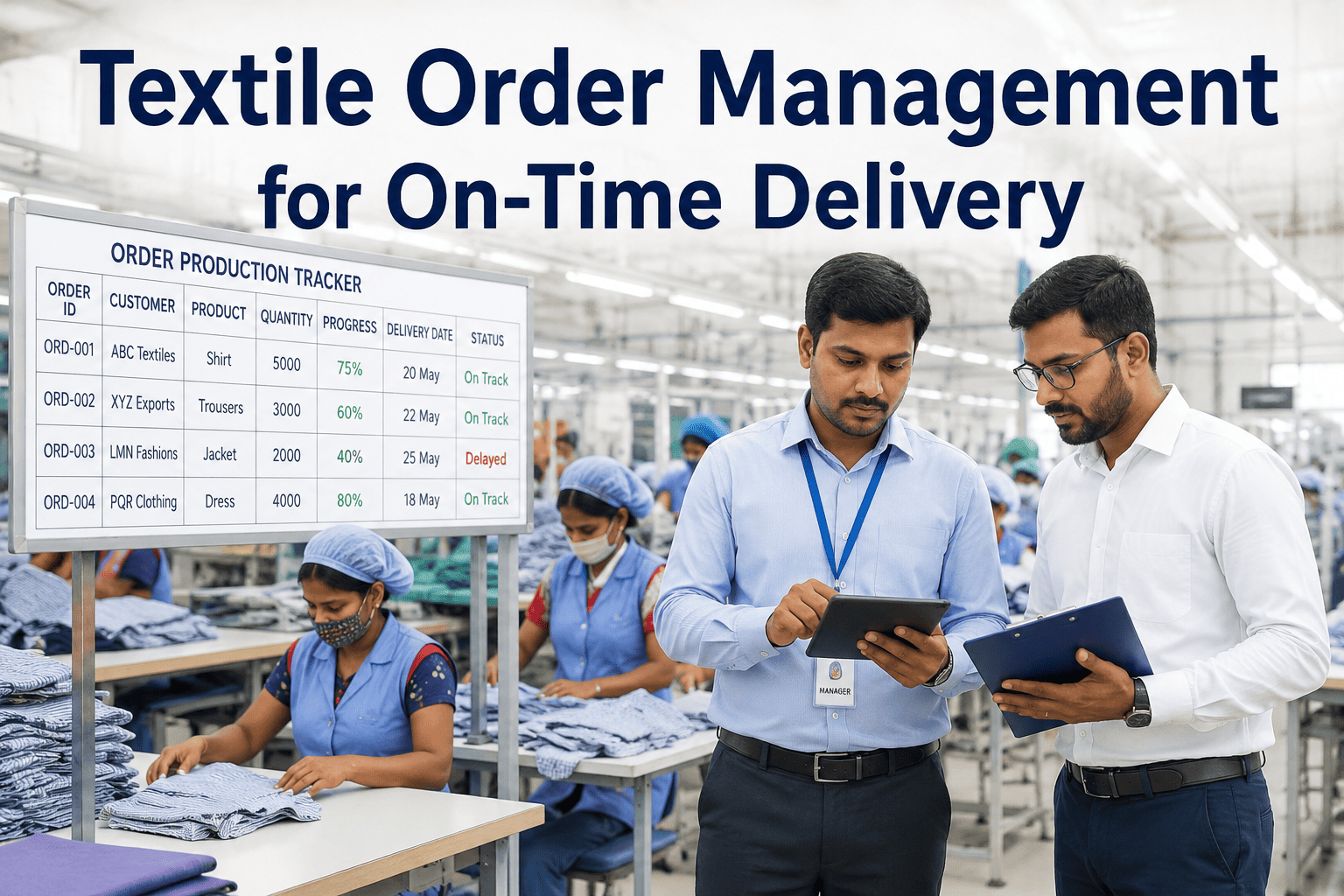
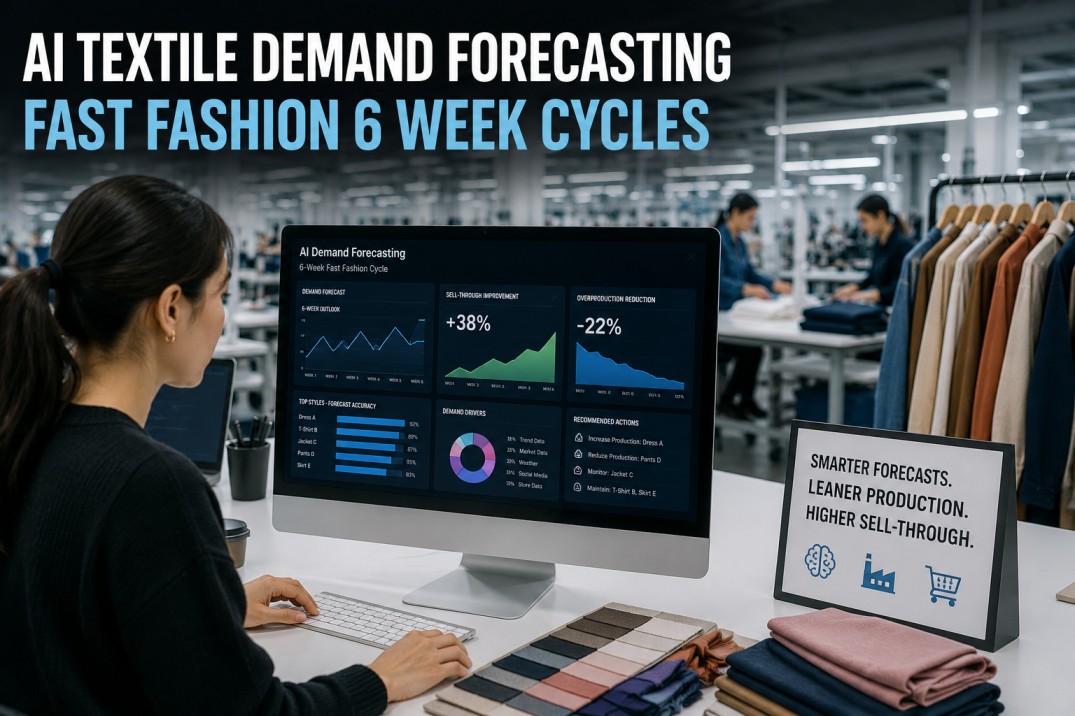
A buyer places an order on Monday expecting delivery in three weeks, and by the time the fabric actually reaches the cutting table, twelve of those days are already gone to nothing but waiting — waiting for dye lot approval, waiting for a machine to free up, waiting for a supervisor to sign a quality release that could have happened the same shift. Fast fashion brands don't tolerate that anymore, and the mills that can't compress their fabric-to-garment cycle into 15 to 21 days are quietly losing repeat orders to competitors who can. Lead time compression isn't about running machines faster — it's about killing the invisible waiting between steps, and that's a visibility problem before it's a speed problem. See how iFactory's production tracking layer exposes exactly where those hidden days are going.
Fast Fashion Speed to Market
Cut Fabric-to-Garment Lead Time to 15-21 Days
Process compression, parallel operations, and real-time production visibility that turns a 30-day cycle into a competitive 15 to 21 day turnaround without sacrificing quality checkpoints.
Where the Days Actually Disappear
Most mills think their lead time problem is a capacity problem, so they add shifts or buy another loom. But when you actually trace a fabric order from placement to garment-ready delivery, the machine time itself is usually a small fraction of total elapsed days — the rest disappears into approval queues, batch waiting, and handoffs between departments that don't share a common view of order status.
Approval & Sign-off Waiting
The chart above reflects a common pattern seen across mid-size fast-fashion suppliers: nearly two-thirds of total lead time is consumed by waiting rather than working. Attacking that waiting time, rather than trying to squeeze more speed out of already-efficient machines, is where the real 15-to-21-day window becomes achievable.
The Six-Stage Compression Timeline
Compressing lead time doesn't mean skipping steps — it means running steps in parallel wherever the process genuinely allows it, and giving every department the same real-time view of order status so nothing sits idle waiting to be noticed. The timeline below shows a compressed cycle built around parallel operations rather than the traditional strictly sequential handoff model.
Day 1-2
Order Confirmation & Material Allocation
Fabric specification, color, and quantity locked with raw material allocation triggered same-day rather than queued for next-day batch processing.
Day 2-6
Spinning & Weaving (Parallel Track)
Where yarn stock allows, weaving preparation begins in parallel with final spinning batches rather than waiting for the full spinning lot to complete.
Day 6-10
Dyeing & Finishing (Compressed Approval)
Dye lot approval happens against digital color-match records rather than waiting for a physical swatch to travel between departments.
Day 10-13
Quality Inspection (Real-Time Flagging)
Defects flagged and routed for rework immediately rather than batched into an end-of-shift inspection report that delays the whole lot.
Day 13-18
Cutting & Garment Construction
Cutting begins on approved fabric sections as they clear inspection, instead of waiting for the entire order to finish quality review first.
Day 18-21
Final QC & Dispatch
Final inspection and packing run against a live order dashboard so dispatch scheduling starts before the last garment is even finished.
See Your Own Cycle Mapped
Find the Hidden Days in Your Current Lead Time
Most mills are surprised by how much of their cycle is waiting rather than working once it's actually traced stage by stage against real order data.
Four Structural Changes That Enable Parallel Operations
Parallel processing only works if the underlying structure supports it — trying to run steps simultaneously on top of a system built for strict sequential handoffs just creates chaos and rework. These four changes are what actually make compression durable rather than a one-time rush job.
✓
Shared Order Visibility Across Departments
Every department works off the same live order status instead of relying on a supervisor's phone call or a paper traveler card to know what's ready for the next stage.
✓
Digital Color and Quality Sign-off
Approvals happen against recorded color and quality standards rather than requiring a physical swatch or sample to travel between buildings or shifts.
✓
Sub-Lot Release Instead of Full-Batch Release
Fabric sections that clear inspection move to the next stage immediately rather than waiting for the entire production lot to finish.
✓
Exception Alerts Instead of End-of-Shift Reports
Defects and delays get flagged the moment they're detected so corrective action starts within the hour, not discovered a full shift later in a summary report.
What Speed-to-Market Actually Buys You
Lead time compression isn't just an efficiency metric for internal reporting — it directly determines which buyers will place repeat orders and how much pricing power a mill retains in negotiation. Fast-fashion buyers routinely favor suppliers who can commit to and reliably hit a 15-to-21-day window over suppliers offering marginally lower unit prices but slower, less predictable turnaround.
Repeat Order Rate
Buyers consolidate volume with suppliers who consistently hit committed lead times, reducing the need to split orders across multiple mills for risk management.
Pricing Leverage
Reliable fast turnaround supports premium pricing on rush and mid-season replenishment orders that slower competitors simply cannot bid on.
Working Capital Efficiency
Shorter cycles mean capital tied up in work-in-progress inventory turns over faster, improving cash position without adding new financing.
Frequently Asked Questions
Is a 15-day lead time realistic for all fabric types, or only simpler constructions?
Simpler, single-color constructions with standard finishing reach the lower end of the 15-to-21-day range most consistently, while complex multi-color prints or specialty finishes tend to land closer to the upper end or slightly beyond it depending on dye-lot approval complexity. The compression techniques described here apply across construction types, but the achievable floor shifts based on how many approval and inspection stages the specific fabric requires.
Talk to our team about what's realistic for your specific product mix.
Doesn't running stages in parallel increase the risk of quality problems slipping through?
Parallel processing only removes waiting time between stages, not the inspection stages themselves — quality checkpoints stay in place, they just happen against real-time data rather than batched end-of-shift reports. In practice, catching defects earlier through real-time flagging tends to reduce total rework compared to discovering the same defect a full shift later after more fabric has already moved downstream.
Book a walkthrough to see how the quality gates are structured in a compressed cycle.
What's the biggest single change that shortens lead time without new capital investment?
Shared, real-time order visibility across departments is consistently the highest-impact, lowest-cost change, because so much lead time loss comes from a department simply not knowing that fabric is ready for the next stage until a supervisor manually communicates it. Mills that fix this visibility gap alone often see meaningful lead time reduction before touching machine capacity or shift structure at all.
Reach out to our team to see what this looks like for your current handoff process.
How do we measure whether our lead time compression efforts are actually working?
Track elapsed calendar days from order confirmation to dispatch-ready, broken down by stage, and compare that against your baseline stage-by-stage timing before any changes were made. The stages that show the biggest reduction in waiting time, not processing time, tell you where the compression effort is genuinely paying off versus where it's just moved the bottleneck somewhere else.
Book a demo to see this kind of stage-by-stage tracking on a live dashboard.
Can this compression approach work alongside existing ERP and MES systems, or does it require replacing them?
In most deployments, the visibility and tracking layer connects to your existing ERP and MES through standard integration surfaces rather than requiring a system replacement, so the compression work happens on top of what you already run rather than forcing a disruptive platform migration. This keeps the rollout timeline short and avoids the operational risk of a full system swap during a period when speed matters most.
Talk to our integration team about your specific current systems.
Ready to Compress Your Cycle?
See Where Your Lead Time Is Actually Going
Share your current order-to-dispatch timeline and we'll map exactly where the hidden waiting days are, and what a realistic 15-to-21-day target looks like for your product mix.