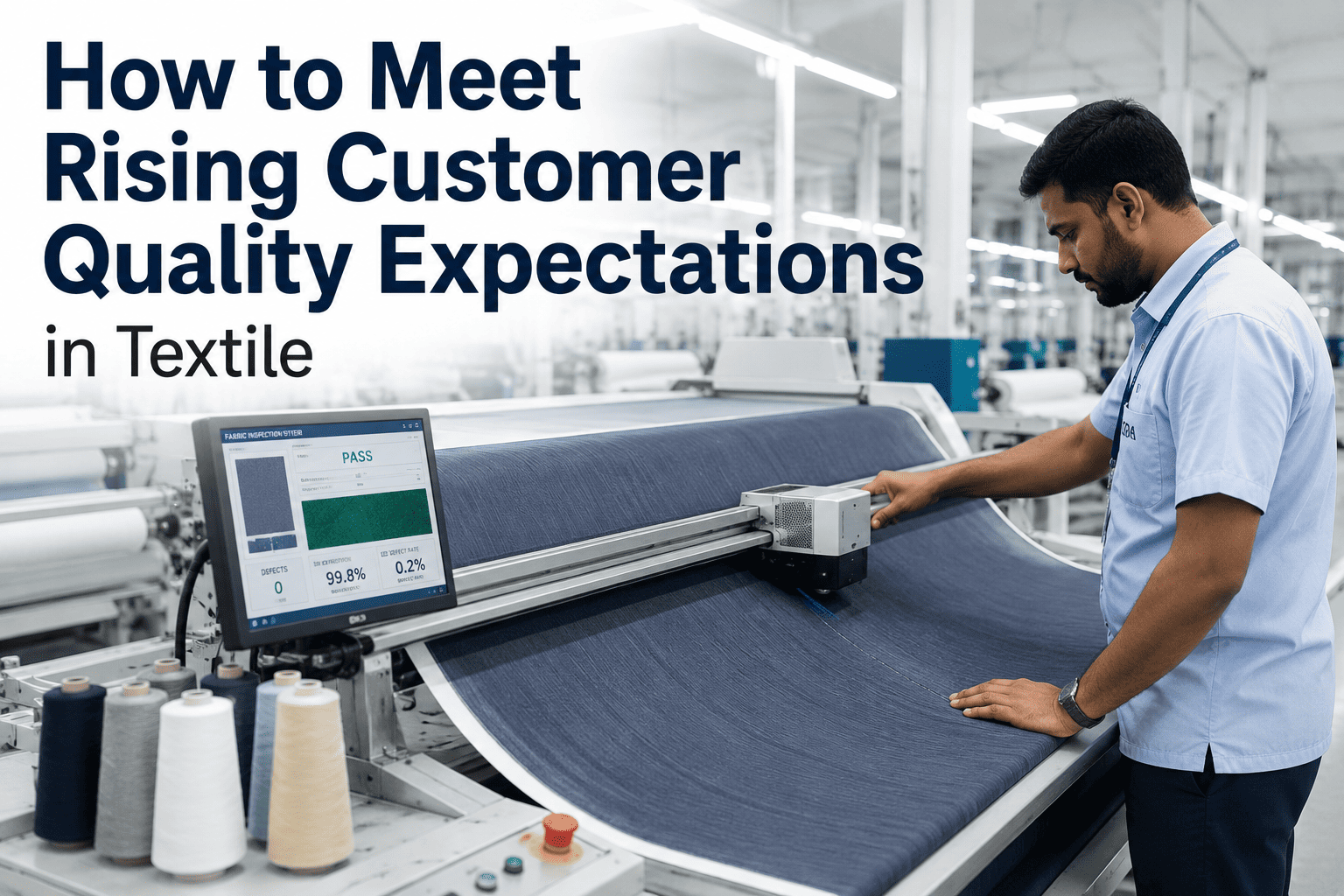
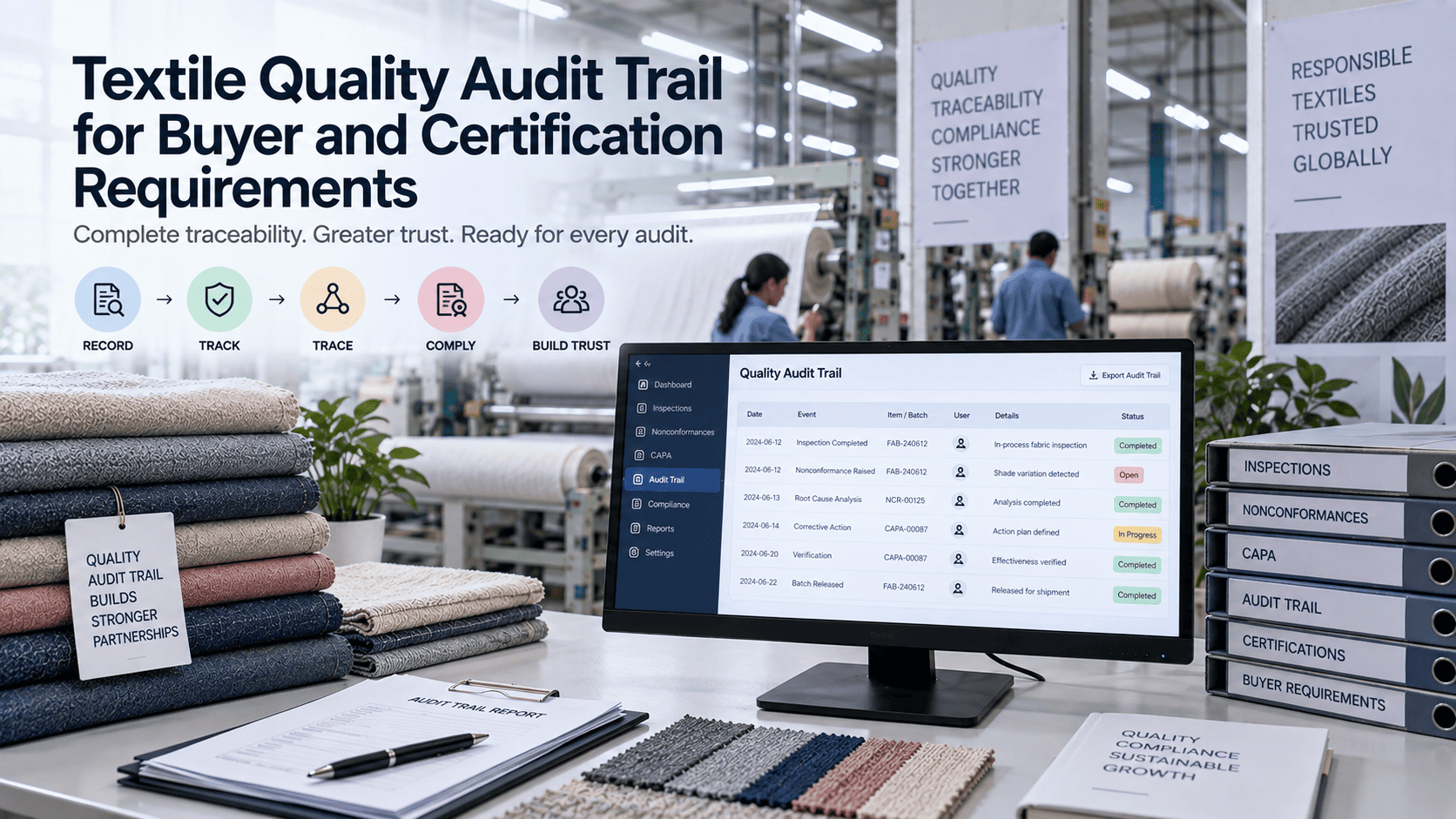
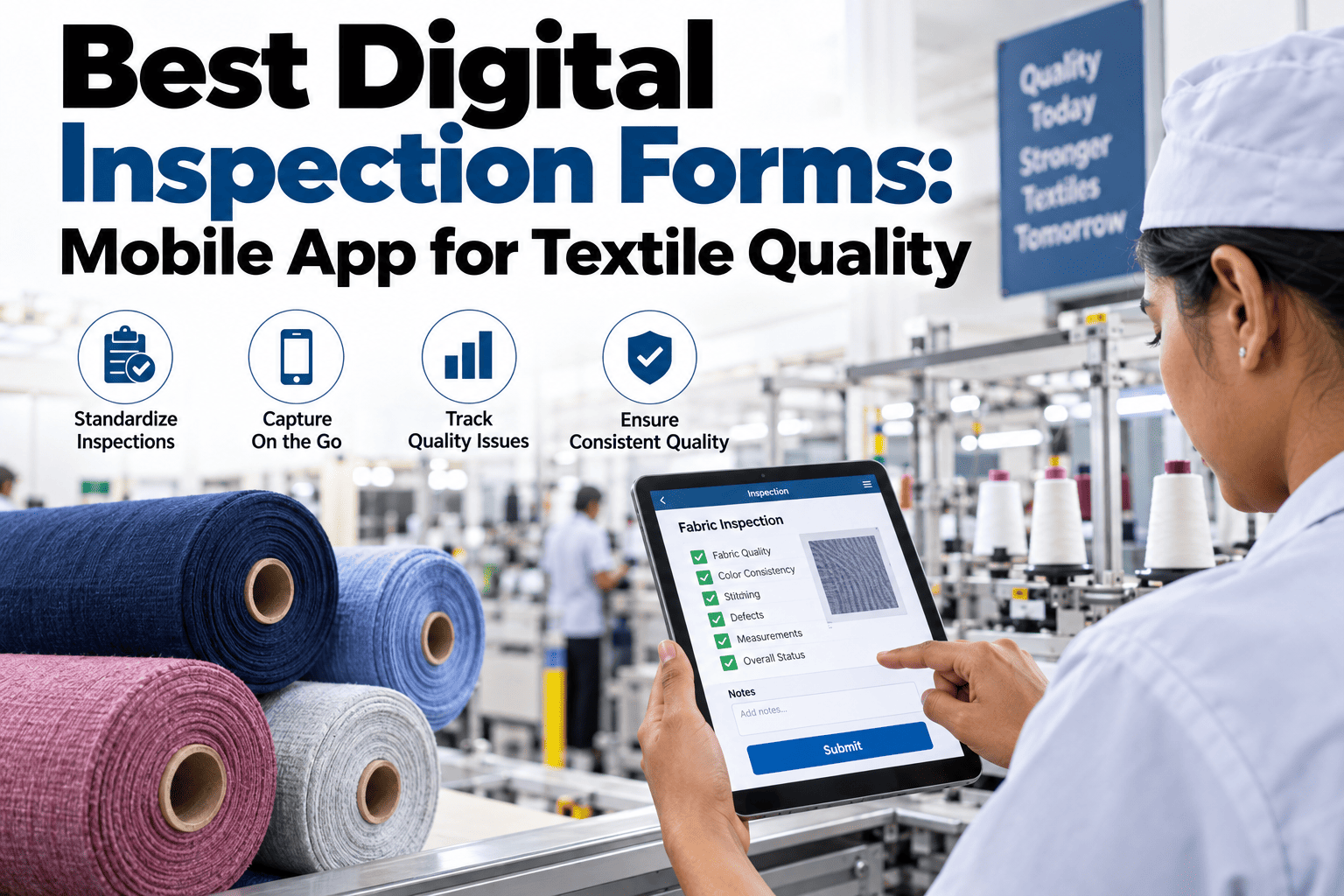
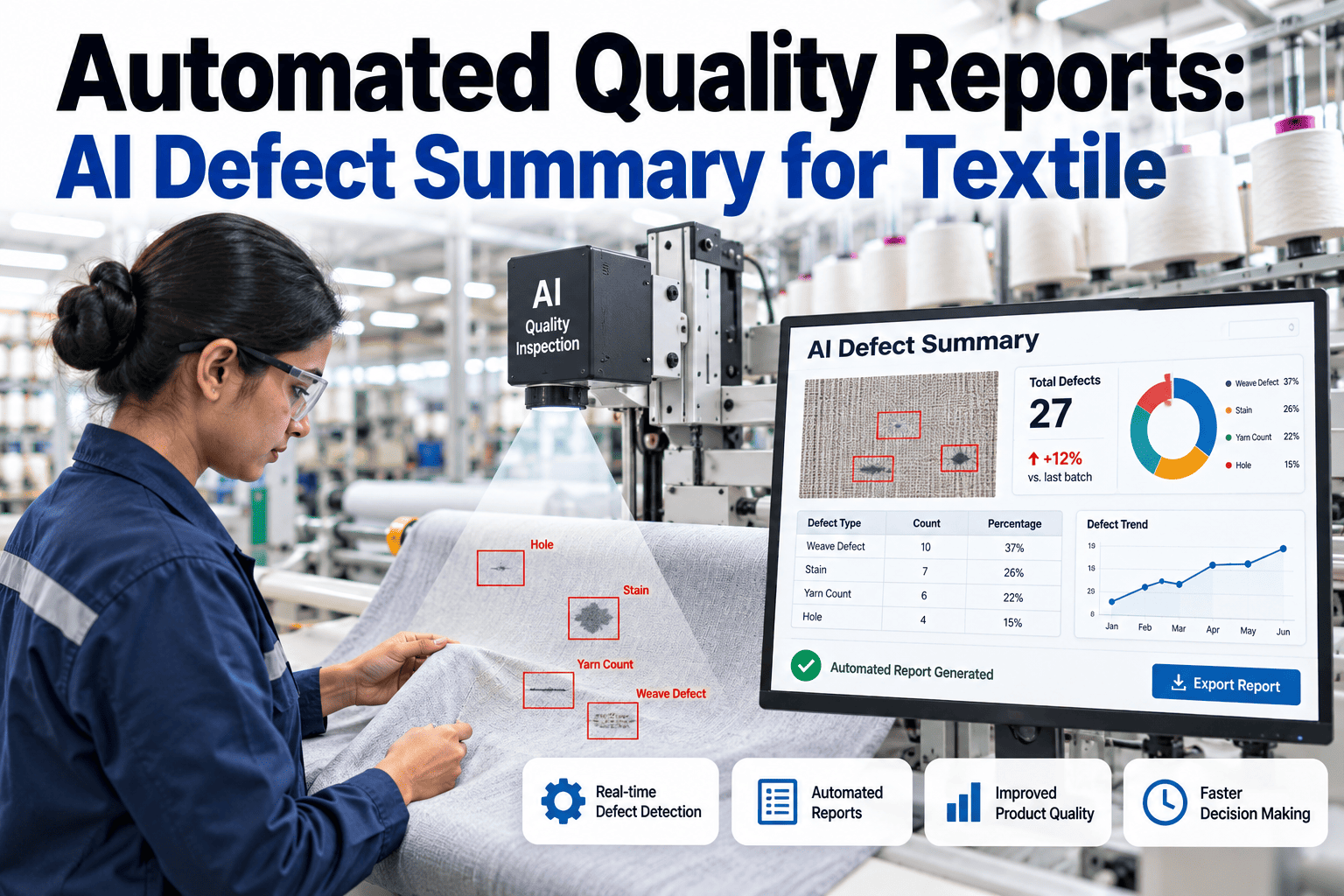
A textile mill owner in Nantong recently described the shift plainly: buyers now ask for defect traceability data before they will even discuss price. That single sentence captures how sourcing decisions have changed. A decade ago, a mill competed primarily on cost and capacity, with quality treated as a baseline assumption rather than a documented deliverable. Today, a brand's sourcing team wants to see the inspection record before the negotiation starts, and a mill that cannot produce one is often eliminated before price ever becomes the conversation. This shift rewards mills that can show their quality process, not just claim it, and it is exactly why booking a demo of a connected AI inspection and reporting system has become a practical first step for mills feeling this pressure directly.
TEXTILE QUALITY · BUYER EXPECTATIONS · INDUSTRY 4.0
Buyers Stopped Asking "How Much" First and Started Asking "Prove It"
iFactory turns AI inspection data into the documented, real-time quality record global buyers now expect before they will discuss a contract, closing the gap between what your mill's quality actually is and what a sourcing team can verify.
How the Sourcing Conversation Has Actually Changed
A DECADE AGO
"What's your price and capacity?"
Quality assumed, verified informally through sample approval and occasional audits
TODAY
"Show me your defect traceability data first"
Quality documented and verified before price is even discussed
WHAT'S ACTUALLY DRIVING THIS
Four Forces Pushing Buyers Toward Verified, Data-Backed Quality
This is not a passing preference or a handful of demanding clients. The shift toward documented, real-time quality verification is being driven by structural changes in how brands source and how regulators oversee the supply chains behind them.
01
Regulatory Traceability Requirements
Digital product passports and expanding chemical safety and sustainability regulations are turning documented traceability from a nice-to-have into a procurement condition brands cannot skip.
02
Multi-Sourcing Risk Management
Brands diversifying across more supplier countries need a consistent, comparable way to verify quality across mills they know less well individually than a single long-term partner.
03
Consumer-Facing Accountability
Rising consumer scrutiny of defect-free claims and ethical sourcing pushes brands to demand evidence they can stand behind publicly, not just a supplier's word.
04
Faster Production Cycles Leave No Room for Surprises
Compressed lead times mean a quality issue discovered late has less time to be absorbed, making upfront verification more valuable than after-the-fact correction.
None of these four forces are unique to any one brand relationship. They are reshaping the baseline expectation across the entire buyer landscape, which is why a mill treating this as a one-off customer request rather than a structural shift risks falling behind competitors who adapt first. The mills that recognize this earliest are not necessarily the largest or best-resourced, they are simply the ones who stopped treating quality documentation as an afterthought generated for a specific audit and started treating it as a standing operational output generated continuously, the same way production volume or energy consumption already is.
THE CLAIM-VS-EVIDENCE GAP
Why "We Have Good Quality" No Longer Closes a Deal
Most mills genuinely do run a serious quality program. The problem is rarely the underlying quality itself, it is the gap between what a mill knows internally and what it can actually hand a sourcing team as verifiable evidence in the timeframe a modern procurement decision requires.
| What a Buyer Now Asks For |
Typical Manual-Process Answer |
What a Connected System Provides |
| Defect rate by lot or SKU |
A summary compiled after the fact from paper inspection sheets |
Real-time defect data tied to lot number automatically |
| Consistency across shifts and inspectors |
Anecdotal assurance, difficult to verify independently |
Standardized AI grading applied identically regardless of shift |
| Historical trend over recent months |
Time-consuming manual compilation, often not readily available |
Dashboard trend view generated automatically from logged data |
| Proof a specific claim is accurate |
Verbal assurance from the mill's quality team |
Timestamped, photographed defect records tied to the specific roll |
The mills losing sourcing conversations today are frequently not the ones with worse quality, they are the ones who cannot produce the second column's answer fast enough when a sourcing team asks the first column's question during initial supplier evaluation rather than after a contract is already signed. This timing detail matters more than it might first appear. A mill that can eventually produce good data, but only after several days of manual compilation once a buyer specifically requests it, has already lost the advantage of looking prepared during that first evaluation call, even if the underlying numbers turn out to be strong once assembled.
See what your own quality data would look like to a buyer
iFactory connects your inspection process to a real-time, exportable quality record that answers a sourcing team's questions before they have to ask twice.
THREE PILLARS
What Actually Closes the Gap Between Claiming Quality and Proving It
Meeting the new baseline of buyer expectation is not one single technology purchase, it is three connected capabilities working together, and a mill that only builds one of the three still leaves an obvious gap a sourcing team will find.
AI Inspection
Consistent, automated defect detection that applies the same standard across every shift and inspector, removing the variability a buyer's own quality team would otherwise have to discount for.
Data-Driven Quality Management
Defect data tied to lot, SKU, and production line, aggregated automatically rather than reconstructed manually whenever a buyer asks a specific question.
Transparent Reporting
A dashboard or exportable report a sourcing team can review directly, rather than a summary filtered through a sales conversation before it ever reaches them.
Each pillar reinforces the other two. Inspection without reporting produces good data nobody outside the mill ever sees. Reporting without consistent inspection produces a polished dashboard built on inconsistent underlying data. All three together are what let a mill answer a buyer's traceability question with an actual record instead of a promise.
WHAT A REAL EVALUATION LOOKS LIKE
The Moment This Gap Actually Shows Up in a Sourcing Conversation
The abstract version of this shift is easy to nod along to. The concrete version is a specific, recurring moment in a real supplier evaluation call, and recognizing that moment is what makes the stakes tangible rather than theoretical.
The Question Arrives Earlier Than Expected
A sourcing team now often raises defect traceability during the first evaluation call, not as a follow-up after samples are approved, which catches mills still treating quality documentation as a later-stage formality off guard.
"We'll Send That Over" Reads as a Yellow Flag
A promise to compile and email data after the call signals a manual process to an experienced sourcing team, even when the mill's actual quality turns out to be excellent once the numbers arrive.
A Live Dashboard Changes the Tone of the Whole Call
Being able to pull up real defect trend data on screen during the conversation itself shifts the dynamic from a mill defending its quality to a mill demonstrating it, which is a materially different negotiating position.
This is the practical reason the technology investment matters beyond the quality improvements it produces internally. The data has to be available fast enough, and in a form clean enough, to use in exactly this moment, not just eventually assembled for an annual audit.
THE COMPETITIVE CONSEQUENCE
What Happens to Mills on Either Side of This Divide
The gap between mills that have made this shift and mills that have not is starting to show up directly in sourcing outcomes, not just in customer satisfaction scores.
Faster Supplier Qualification
A mill that can produce verified quality data immediately shortens its own path through a brand's supplier evaluation process, which increasingly treats data availability as a gating criterion.
Premium Positioning Over Price Competition
Verified consistency shifts the conversation away from being the cheapest option and toward being the most reliable one, a materially different negotiating position.
Resilience Against Sourcing Diversification
As brands spread orders across more countries and mills, a documented track record is what keeps an existing relationship from being treated as interchangeable with an unproven new supplier.
Reduced Dispute and Claim Exposure
A timestamped, photographed defect record protects a mill in exactly the disputes that used to come down to one party's word against another's.
TURNKEY DELIVERY
How iFactory Builds This Into Your Existing Quality Process
Meeting this new baseline does not require replacing your quality team or your existing inspection stations, it requires connecting what you already do to a system that captures, standardizes, and reports it automatically.
What Gets Built
AI vision inspection integrated at your existing inspection points
Defect data automatically tied to lot, SKU, and production line
Real-time dashboard accessible to your team and exportable for buyers
Timestamped, photographed defect records for dispute-proof documentation
Historical trend reporting generated automatically, no manual compilation
Deployment Timeline
Weeks 1–4: Inspection point audit, camera and system integration planning
Weeks 5–8: AI model training on your fabric mix, parallel validation against current process
Weeks 9–12: Go-live, dashboard and reporting rollout, team training
FREQUENTLY ASKED QUESTIONS
What Textile Mills Ask About Meeting Rising Buyer Quality Expectations
Is this really necessary if our current buyers haven't asked for this kind of data yet?
The shift toward documented traceability is happening at the industry level, driven by regulation, multi-sourcing risk management, and consumer accountability pressures rather than any single buyer's individual preference, which means a buyer who has not asked yet is likely to ask soon rather than never. Mills that build this capability ahead of an explicit request are positioned to win new sourcing conversations rather than scrambling to catch up once an existing buyer's procurement standards change.
Book a demo to see how quickly a data-backed quality record could be in place for your mill.
Our quality is genuinely good — isn't the data just extra paperwork on top of what we already do well?
Good underlying quality is exactly what makes this valuable rather than risky, since a mill with strong quality has the most to gain from being able to prove it quickly and consistently rather than relying on a sourcing team's trust built over time. The data is not extra paperwork bolted onto your process, it is the automatic byproduct of AI inspection that was going to happen anyway, captured and organized in a form a buyer can actually use.
Contact our support team to see how the reporting layer builds directly on inspection you're already running.
How do we handle sharing detailed defect data with a buyer without exposing information we'd rather keep internal?
Reporting is configurable by audience — a buyer-facing export can show exactly the summary-level metrics and lot-level traceability a sourcing conversation actually needs, while more granular internal data, like specific inspector performance or line-level operational detail, stays available only to your own team. The goal is giving buyers the verification they need, not handing over your entire internal operations dashboard.
Book a demo to see what a buyer-facing report actually looks like versus your internal view.
Can a smaller mill realistically compete on data transparency against larger, better-resourced competitors?
Yes, and in some respects a smaller mill can move faster, since a modular AI vision and reporting deployment does not require the scale or IT infrastructure investment that used to make this kind of system practical only for the largest operations. A mid-sized mill that adopts this capability ahead of a larger, slower-moving competitor can use verified quality data as a genuine differentiator rather than trying to compete purely on capacity or price where a larger mill holds a natural advantage.
Contact our support team to scope a deployment sized appropriately for your mill.
What's the realistic timeline before we could actually show a buyer this kind of data?
A full deployment typically reaches go-live with dashboard and reporting capability within nine to twelve weeks, but the underlying inspection and data capture often becomes usable internally well before the full reporting layer is polished for external sharing, since the AI model validation phase in weeks five through eight already generates real defect data as part of the process. Mills under active sourcing pressure sometimes prioritize getting a basic exportable report ready earlier in the timeline once inspection accuracy is validated, even before every dashboard feature is complete.
Book a demo to build a realistic timeline against your current sourcing conversations.
SHOW, DON'T JUST TELL
Turn Your Quality Process Into Evidence a Buyer Can Actually Verify
iFactory connects AI inspection, data-driven quality management, and transparent reporting into one system, so the next time a buyer asks for defect traceability data before discussing price, you already have the answer.