A single failed chemical test can pull a shipment off a retailer's floor after the fabric is already cut, dyed, and packed — which is why buyers increasingly refuse to place orders without proof of Oeko-Tex certification attached to the purchase order itself. Standard 100 and STeP by Oeko-Tex are two separate certifications that answer two separate questions: Standard 100 tests whether a specific finished product is free of harmful substances, while STeP audits whether the facility that made it runs clean, safe, and socially responsible operations. Mills routinely confuse the two, apply for the wrong one, or discover mid-application that a 2026 rule change has quietly moved the goalposts on wet processing and supplier documentation. This guide separates the two certifications clearly, walks through the real application and testing timeline, and covers the regulatory changes taking effect this year that most compliance teams have not yet built into their renewal planning. Mills preparing a certification renewal can book a 30-minute demo to see how iFactory tracks chemical inventory and wet-processing records against Oeko-Tex documentation requirements automatically.
Oeko-Tex Standard 100 & STeP — The Certification Guide That Separates the Two
What each certification actually tests, the application and testing timeline, the six STeP modules, and the 2026 regulation changes affecting wet processing, supplier documentation, and biodegradability proof.
Standard 100 — Tests the Product
Standard 100 is a globally standardized, independent testing and certification system that awards a label to raw, semi-finished, and finished textile products successfully tested for harmful substances at every processing level. It travels with the physical product, not the factory that made it.
STeP — Audits the Facility
STeP is a facility certification, not a product label, and forms a main component of the Made in Green by Oeko-Tex system. It examines how a production site operates across chemical management, environmental performance, and worker safety, independent of any single product batch.
What Standard 100 Actually Tests
Buyers who ask "is this fabric Oeko-Tex certified" are usually asking whether it passed Standard 100's laboratory screening, which goes considerably further than most in-house quality checks a mill already runs.
Regulated & Unregulated Chemicals
Testing incorporates important legal regulations covering a wide variety of health parameters, alongside numerous chemicals that pose a health risk even where no legal regulation yet exists. This is why a product can pass every applicable law and still fail Standard 100.
Pesticide & Herbicide Residue
Laboratory testing screens for pesticide and herbicide residue that can remain in natural fibers from field to finished yarn, a risk that is easy to overlook once the raw fiber has already been spun.
Heavy Metals in Dyes
Screening covers heavy metals such as lead and mercury that can be present in dyestuffs, a common contamination point in colored fabric ranges sourced from multiple dye houses.
Scope Across Production Stages
Raw, semi-finished, and finished textile products at all processing levels, plus their accessories, can be certified — meaning yarn, greige fabric, and finished garments each carry their own certification path.
The Standard 100 mark relates only to the as-produced state of the textile and does not declare anything about fitness for use, reaction to cleaning processes, or burning behavior — a distinction compliance teams should communicate clearly to buyers who assume the label covers performance as well as chemical safety.
The Six STeP Modules — What Gets Audited at the Facility
STeP analyses all important areas of a production facility, with each of the six modules weighted equally during the facility audit. A facility cannot compensate for a weak score in one module by over-performing in another — every module has its own minimum bar.
Chemical Management
Environmental Performance
Environmental Management
Social Responsibility
Quality Management
Health & Safety
Each module carries specific exclusion criteria which, if unmet, disqualify a facility from certification regardless of its score elsewhere — these are checked early in the mandatory facility questionnaire, which is why gathering documentation before the formal application saves significant rework later.
The Certification Timeline — Both Paths Side by Side
Standard 100 and STeP move through fundamentally different processes because one tests a product sample and the other audits a live operating facility, and mills preparing for both at once need to plan around each timeline separately.
Standard 100 Path
Applicant submits application forms, supplier certificates for pre-certified components, supporting documents, and physical samples to the testing institute.
The institute clarifies open questions, creates a testing plan, and conducts laboratory testing against the applicable limit values.
A certificate valid for one year is issued once the product passes testing.
STeP Path
Phase 1 is self-assessment, completed by the facility prior to certificate issuance.
Phase 2 is the on-site audit, where mandatory questions, exclusion criteria, and each of the six modules are independently verified.
Certification is granted for three years, renewable through successful re-certification, with the facility's scoring shown overall and per module.
What Changed in the 2026 Regulation Update
The updates below became binding this year and catch out compliance teams still working from a certification checklist built for an earlier edition, particularly around wet processing and supplier certificate chains.
Every point in a certified product's supply chain that carries out wet or chemical processing must now hold a valid Standard 100 certificate covering that product, with a transition period allowing uncertified wet processes until June 2027.
Upstream certificates from second-tier suppliers are now accepted for initial certifications only — renewals require the certificate to come from the direct supplier — though a transition period through June 2027 still accepts second-tier certificates for renewals.
Chemicals certified under Eco Passport that function as surfactants, water softeners, or complexing agents must now provide proof of biodegradability, with self-declarations accepted only where the certificate omits the biodegradability designation absent third-party proof.
Standard 100 vs STeP — Side-by-Side Reference
| Factor | Standard 100 | STeP |
|---|---|---|
| What it certifies | A specific product or product line | A production facility's operations |
| Validity period | One year | Three years |
| Renewal basis | Re-testing of product samples | Compliance and spot-check audits |
| Scoring system | Pass or fail against limit values | Three-level scoring across six modules |
| Covers | Harmful substance limits in the finished item | Chemical, environmental, social, and safety practices |
| Typical holder | Mills, garment makers, accessory suppliers | Spinning, weaving, dyeing, and finishing facilities |
Building a Certification-Ready Documentation System
Most certification delays trace back to documentation gaps rather than failed testing — a facility that cannot produce a clean chemical inventory or wet-processing log when the application is submitted loses weeks to back-and-forth clarification with the testing institute.
Chemical Inventory Records
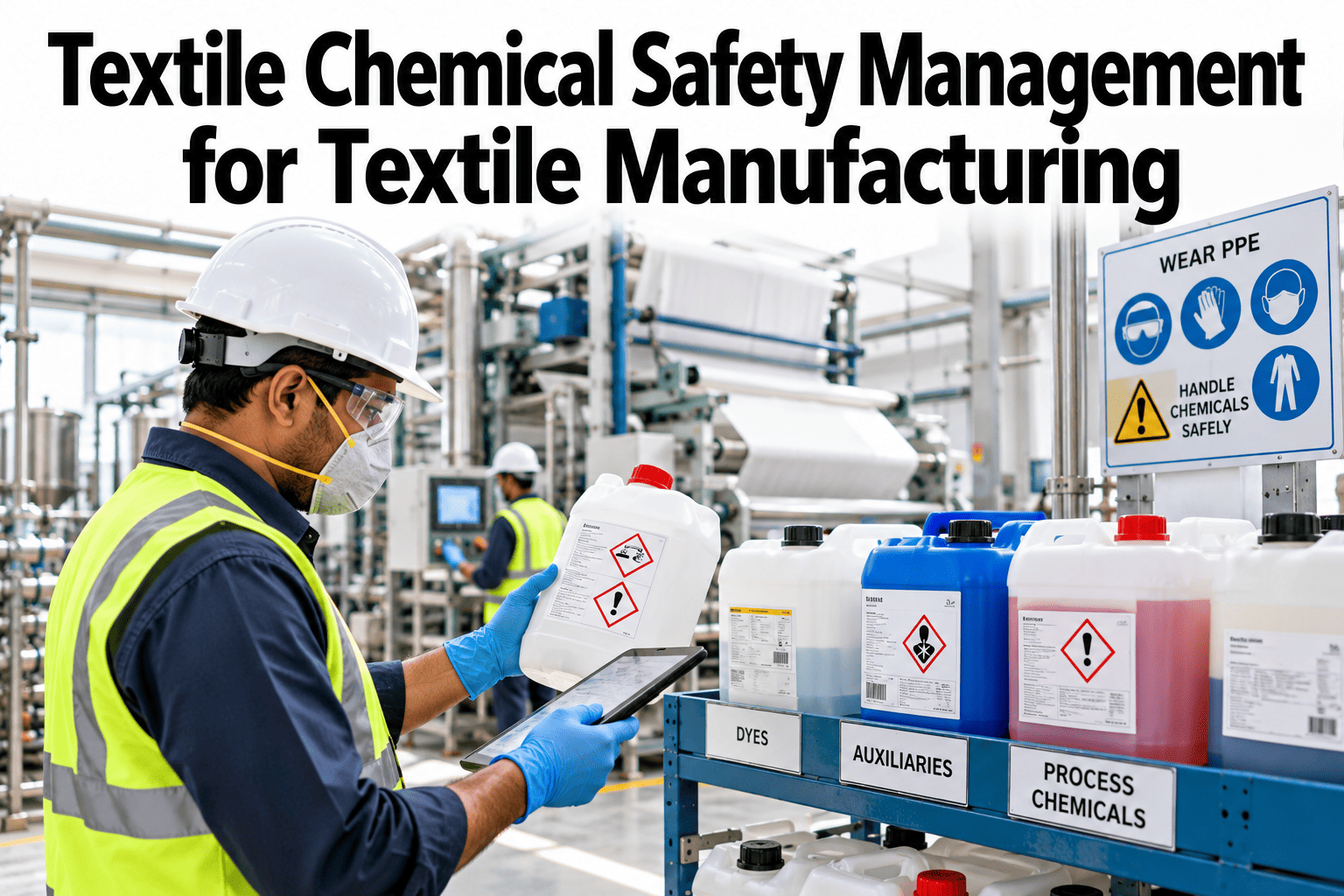
Auxiliary, dye, and finishing chemical purchase records mapped to batches, matched against restricted substance lists before they reach the shop floor rather than discovered during testing.
Wet Processing Traceability
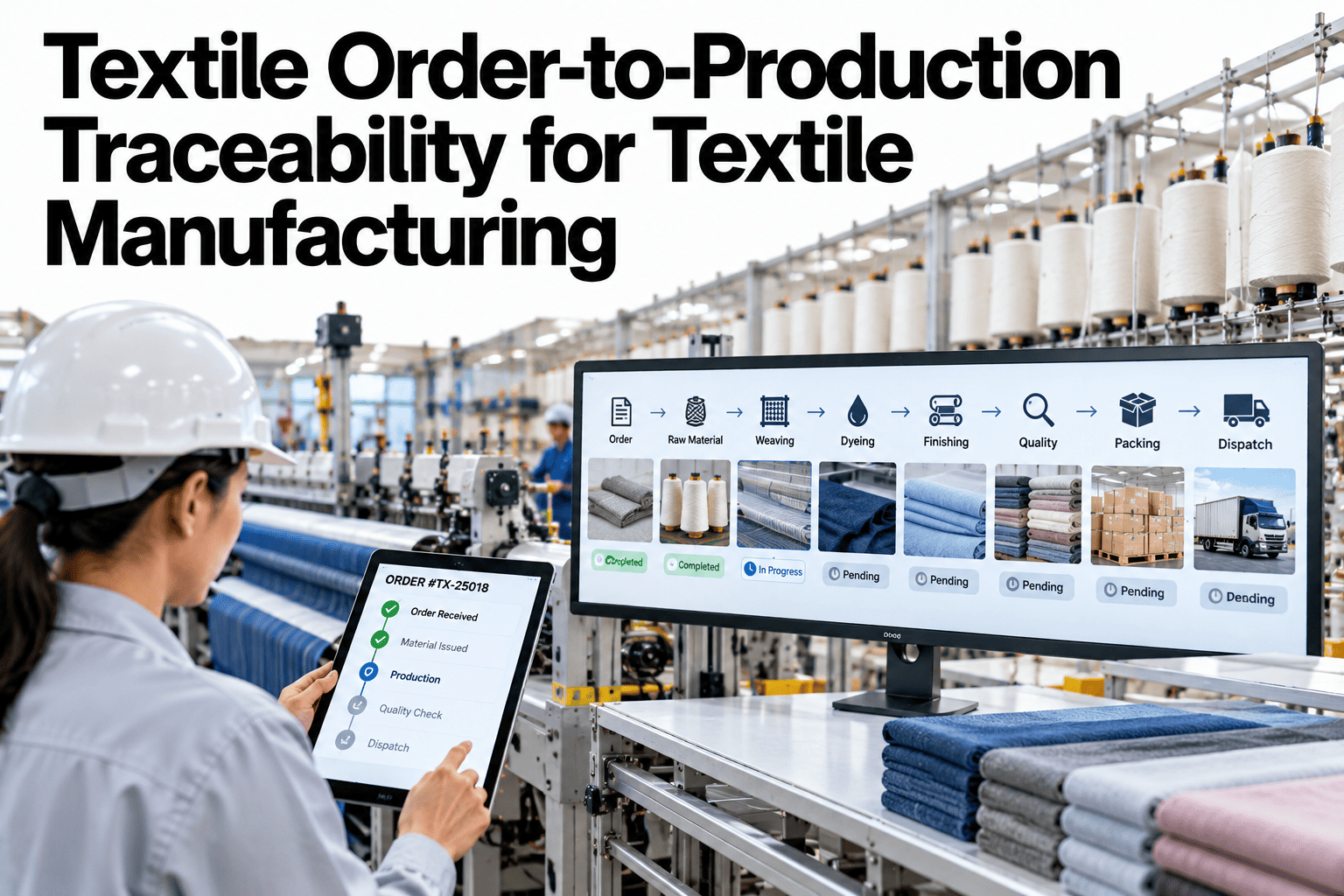
Dyeing, printing, and finishing steps logged by batch and facility, so the 2026 requirement for wet-processing certification at every supply chain point can be demonstrated without reconstructing records after the fact.
Supplier Certificate Chain
Direct supplier certificates tracked and refreshed ahead of renewal deadlines, avoiding the scramble to replace second-tier documentation once the transition period closes.
Certification renewal shouldn't depend on someone remembering where last year's chemical records are stored.
iFactory centralizes chemical inventory, wet-processing batch records, and supplier certificate tracking in one system, flagging documentation gaps months before a Standard 100 or STeP renewal deadline instead of during the application itself.
Frequently Asked Questions
Do we need both Standard 100 and STeP, or just one?
It depends on what buyers are asking for and how the facility is structured. Standard 100 is the one most retail buyers reference first because it certifies the finished product directly, so if a purchase order requires proof the fabric itself is free of harmful substances, that certificate is non-negotiable. STeP becomes relevant when buyers or brand partners want facility-level assurance — proof that the dyeing, finishing, or spinning operation itself runs clean chemical management and safe working conditions, not just that one product batch passed a lab test. Many facilities that supply brand-name retail programs end up holding both, since STeP audits at a certified facility also cover any Standard 100 or Leather Standard products made there within the same audit cycle. Book a demo to review which certification matches your current buyer requirements.
How long does the Standard 100 testing process actually take from application to certificate?
Timing depends heavily on how complete the application package is at submission. A facility that submits clean supplier certificates, accurate sample documentation, and a clear description of production steps typically moves through clarification and testing plan creation quickly. Facilities that submit incomplete applications lose time to back-and-forth questions from the testing institute before laboratory testing can even begin, which is the single biggest controllable variable in the timeline. Testing itself runs against a defined plan once samples are received, and a certificate valid for one year is issued once the product passes. Building the documentation package correctly the first time is consistently faster than rushing an incomplete one through and fixing it mid-process.
What happens if our facility fails one of the six STeP modules?
A failed exclusion criterion in any single module disqualifies the facility from certification for that cycle, regardless of how strongly it performs in the other five modules, because the six modules are weighted equally rather than averaged together. This is intentionally strict — a facility with excellent environmental management but unresolved health and safety gaps should not receive the same certification as one meeting the bar everywhere. The self-assessment phase exists precisely to surface these gaps before the formal on-site audit, giving a facility the chance to close them ahead of time rather than discovering them during a live audit. Facilities that treat the self-assessment as a genuine internal audit rather than a formality consistently pass their first on-site audit.
Our second-tier supplier certificates are about to become invalid for renewal — what should we do now?
Start building direct relationships with first-tier suppliers' certification documentation now rather than waiting for the transition period to close in June 2027. Facilities that rely on second-tier certificates for their current Standard 100 chain should map exactly which suppliers in their chain are first-tier versus second-tier, then work with direct suppliers to obtain the required documentation ahead of the next renewal cycle. Waiting until the transition period ends compresses this into a scramble across an entire supply chain simultaneously, which is far harder to manage than addressing it supplier by supplier over the next year. Contact iFactory Support to map your current supplier certificate chain against the 2026 requirement changes.
Can a small or mid-size mill realistically pursue STeP certification, or is it built for large facilities only?
STeP's three-level scoring system was specifically designed so facilities of different sizes and maturity levels can pursue certification honestly rather than being locked out by a single pass-fail bar. Level 1 entry certification requires 70% of mandatory question points plus meeting every module's exclusion criteria — a meaningful but achievable bar for a mid-size facility with reasonably organized documentation. The real barrier for smaller mills is usually not facility size but documentation maturity: whether chemical purchases, wet-processing batches, and safety records are tracked consistently enough to produce during an audit. Facilities that invest in that documentation discipline before applying tend to clear Level 1 without major surprises, then work toward Level 2 or 3 on subsequent renewal cycles.
Chemical records, wet-processing logs, and supplier certificates — one system instead of a folder per audit cycle.
iFactory keeps certification documentation continuously current so Standard 100 renewals and STeP audits draw from live production data instead of a reconstruction exercise every renewal cycle.