A textile manufacturer chasing three certifications at once — BRCGS, SQF, and ISO 9001, say — often discovers halfway through that each audit body wants overlapping but not identical documentation, and without a coordinated roadmap, quality teams end up preparing for the same underlying capability three separate times instead of once. Understanding which certifications share requirements, which are genuinely distinct, and in what order to pursue them saves months of duplicated audit prep work, which is exactly the planning discipline behind how iFactory supports textile manufacturers building a certification program.
CERTIFICATION ROADMAP
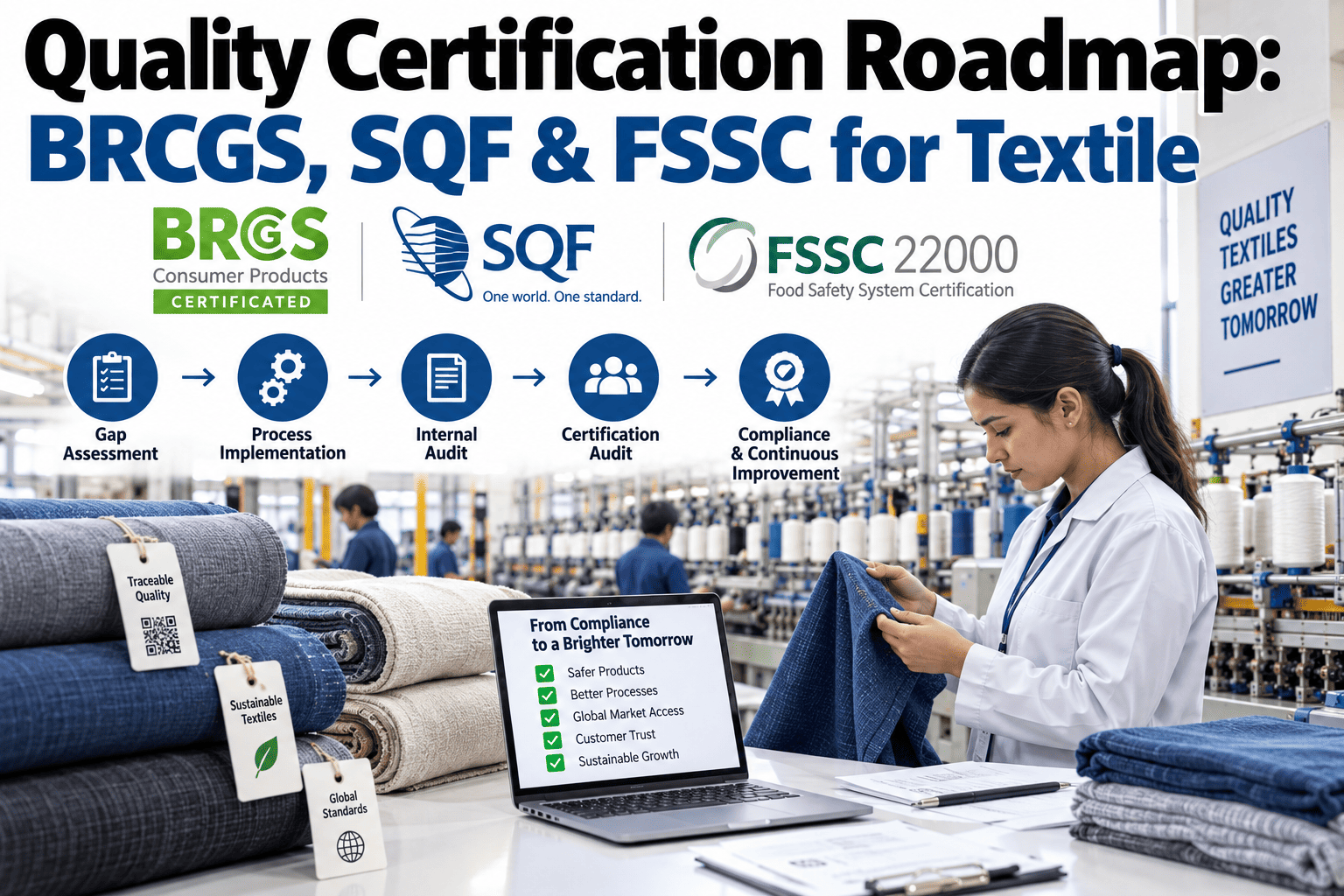
Quality Certification Roadmap: BRCGS, SQF & FSSC for Textile
Navigate ISO 9001, IATF 16949, and specialty certifications with a sequenced implementation roadmap that avoids preparing for the same audit requirement three separate times.
ISO 9001
BRCGS
SQF
FSSC 22000
IATF 16949
Why Certification Order Matters More Than Most Teams Assume
Every certification standard has its own scope and audience, but underneath the differences, a large share of the required infrastructure — document control, corrective action processes, internal audit programs — genuinely overlaps. Pursuing certifications in the right sequence means each subsequent audit builds on documentation and process maturity already established, rather than treating every certification as an isolated project starting from zero.
What Each Certification Actually Covers
Before building a roadmap, it helps to understand what distinguishes these standards from each other, since the differences determine both sequencing and which ones are genuinely relevant to a given textile operation's customer base.
ISO 9001
The foundational quality management system standard, covering document control, corrective action, and management review — the base most other certifications build upon.
BRCGS
Widely required by UK and European retailers, with a strong emphasis on traceability, supplier approval, and product safety documentation specific to textiles.
SQF
Common in North American retail relationships, structured around a food-safety-derived framework adapted for broader product safety and quality management.
FSSC 22000 / IATF 16949
Specialty certifications relevant when serving customers in food-adjacent textile applications or automotive textile supply chains specifically.
A Sequenced Roadmap for Pursuing Multiple Certifications
The table below reflects a typical sequencing approach for a textile manufacturer pursuing more than one certification, structured to maximize the reuse of documentation and process infrastructure built at each stage.
| Stage | Certification Focus | Why This Order |
|---|
| Stage 1 | ISO 9001 foundation | Establishes core QMS infrastructure that every other certification builds upon |
| Stage 2 | Primary customer-required certification (BRCGS or SQF) | Addresses the most immediate customer or market access requirement |
| Stage 3 | Secondary market certification, if needed | Extends existing documentation to a second retail or regional requirement |
| Stage 4 | Specialty certification (FSSC, IATF) if customer base requires it | Adds narrow, sector-specific requirements on top of an already mature QMS |
Build a Certification Roadmap for Your Specific Customer Requirements
iFactory helps textile manufacturers map their customer and market certification requirements into a sequenced roadmap that avoids duplicated audit preparation.
Audit Preparation Fundamentals That Carry Across Every Standard
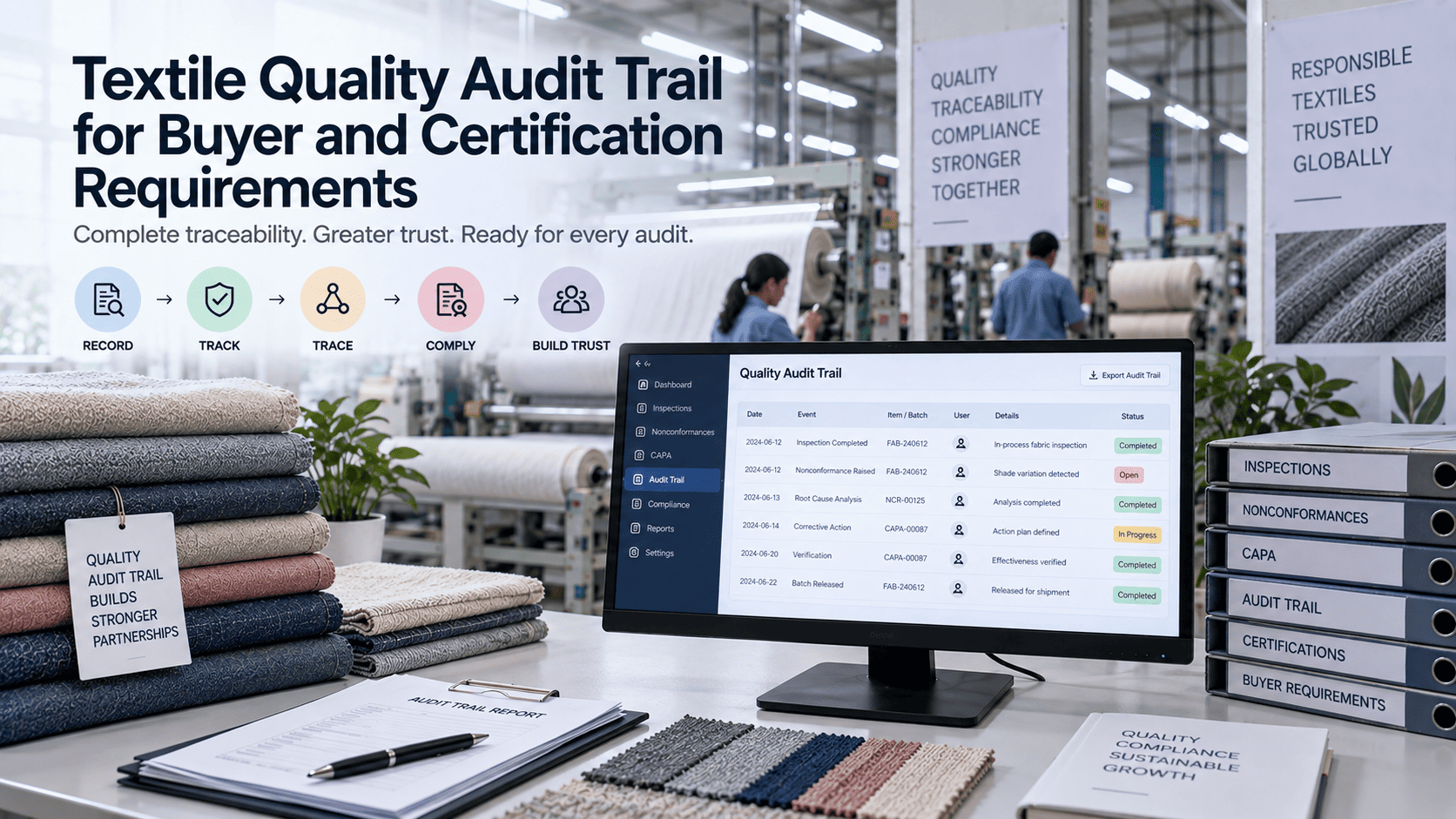
Regardless of which specific certification is being pursued, a small set of foundational practices consistently determines how smoothly an audit goes, and building these well during the first certification pays off directly during every subsequent one.
✓
Document control systems that make it fast to locate and demonstrate the current version of any procedure an auditor asks about.
✓
A functioning internal audit program that catches gaps before an external auditor does, run on a consistent recurring schedule.
✓
Corrective action records that show a clear trail from issue identification through root cause and verified resolution.
✓
Staff who can speak confidently to their own role in the quality system, not just point to a binder when an auditor asks a question.
A Quality Director on Avoiding Redundant Audit Prep
"
We pursued BRCGS and SQF certification almost back to back because two different major customers required each one respectively, and going in, our instinct was to treat them as completely separate projects with separate preparation timelines. What we learned quickly was that a huge share of what BRCGS auditors wanted to see — our document control system, our corrective action process, our internal audit records — was functionally the same infrastructure SQF wanted, just packaged slightly differently in their specific checklist language. Once we recognized that overlap, our SQF preparation timeline shrank dramatically compared to what BRCGS had originally taken us, because we weren't rebuilding processes from scratch, we were mapping already-solid documentation against a different standard's specific requirements. If we had understood that overlap going in, we probably could have sequenced the two audits even closer together and saved real time, but even discovering it partway through the second certification saved us months compared to treating them as unrelated projects.
— Quality Director, Textile Manufacturing Group · Led Certification Across BRCGS, SQF, and ISO 9001
Frequently Asked Questions
Should we pursue ISO 9001 even if our customers only require BRCGS or SQF specifically?
In most cases, yes, even though ISO 9001 itself may not be a direct customer requirement — the foundational quality management system infrastructure it establishes (document control, management review, corrective action) is exactly what BRCGS and SQF auditors also expect to see, just described in their own standard-specific language. Building this foundation as ISO 9001 first, even informally without pursuing the certificate itself, tends to make subsequent customer-required certifications significantly faster to achieve than starting from an unstructured quality system.
How much of the audit preparation actually transfers between BRCGS and SQF?
A substantial portion transfers, particularly around document control, internal audit programs, corrective action processes, and general facility and product safety documentation, since both standards are ultimately assessing similar underlying quality management maturity. The parts that don't transfer directly tend to be standard-specific checklist language and certain traceability or reporting formats unique to each certification body, which typically require translation and mapping work rather than building entirely new processes from scratch.
How long does a typical first-time certification take from start to audit?
For a textile manufacturer building quality management infrastructure largely from scratch, a first certification typically takes six to twelve months from initial gap assessment through a successful external audit, depending heavily on how mature existing documentation and processes already are. Organizations with a reasonably functioning quality system already in place, even without formal certification, often move through this timeline considerably faster, since much of the preparation work involves formalizing and documenting practices that are already happening rather than creating them from nothing.
Do we need different quality management software for different certification standards?
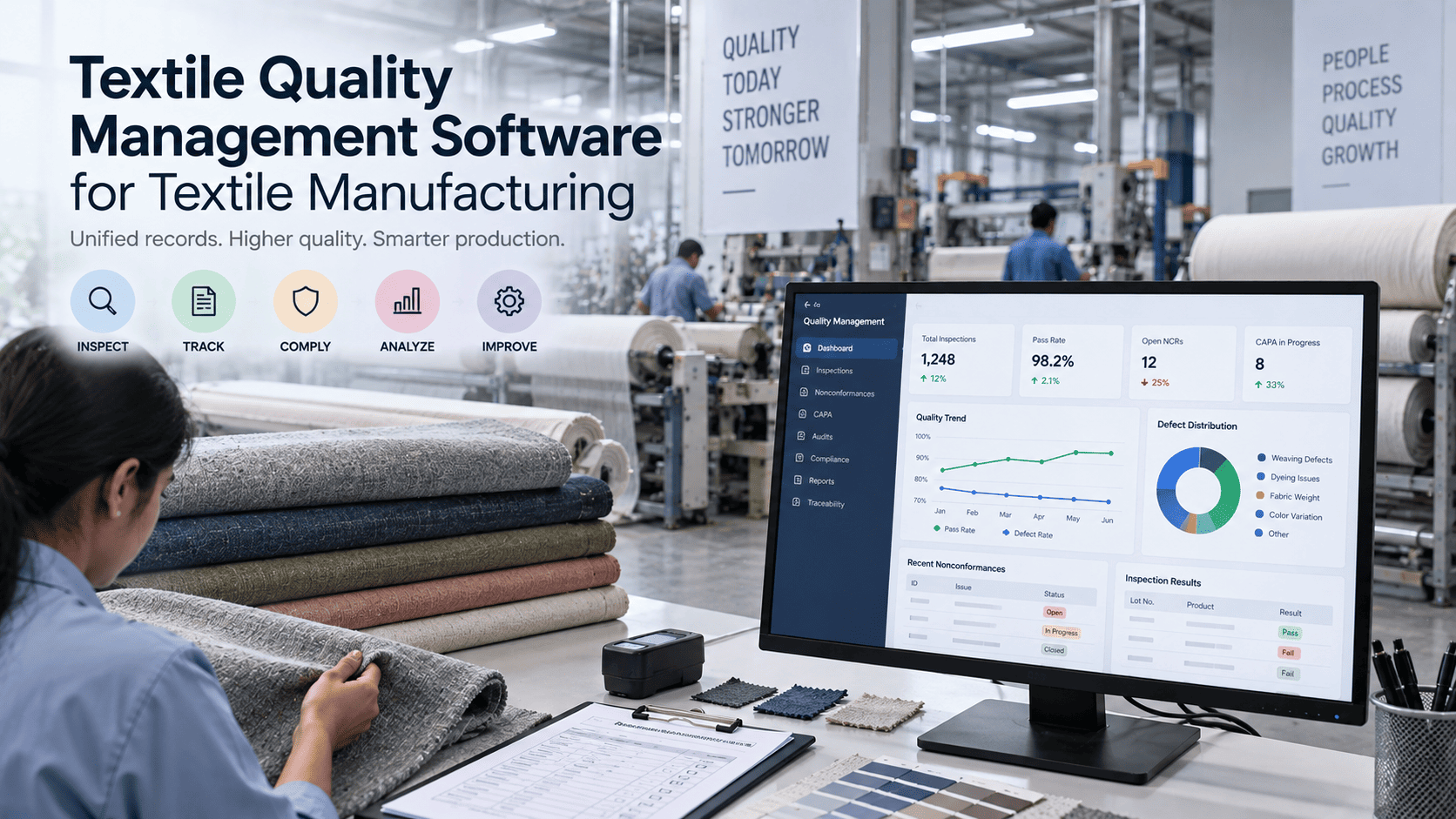
Generally no — a well-designed quality management platform should support the underlying documentation, audit, and corrective action infrastructure needed across multiple standards, since the core capability required is largely the same regardless of which specific certification checklist it's being mapped against. What matters more than having separate software per standard is ensuring the platform can flexibly organize and present the same underlying records in the format each specific auditor expects to review.
Can iFactory help map our existing quality processes against multiple certification requirements?
Yes — iFactory works with textile manufacturers to assess existing quality documentation and processes against the specific certifications relevant to their customer base, identifying genuine gaps and building a sequenced roadmap that reuses infrastructure across standards rather than duplicating preparation work for each one separately. To review your specific certification requirements and build a roadmap,
book a demo with our team.
Stop Preparing for the Same Audit Requirement Three Times
BRCGS, SQF, ISO 9001, and specialty certifications share more foundational infrastructure than most quality teams realize going in. iFactory builds the sequenced roadmap that turns overlapping requirements into shared preparation work.