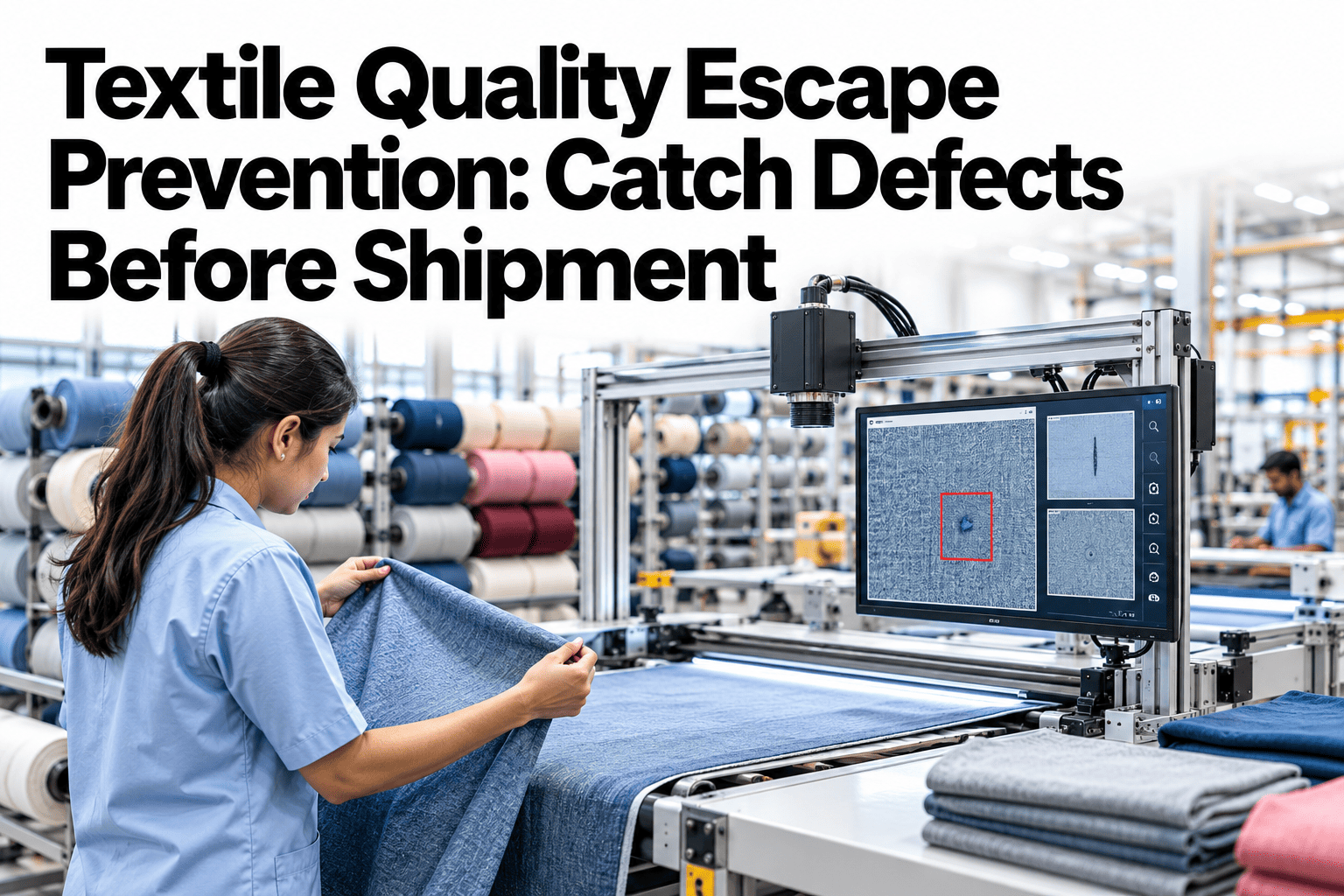
A quality escape is a defect that gets past every check and reaches the customer. It is rarely one big failure. It is usually a small gap, such as a sample that missed the bad section, a grade that was argued down or a rework roll shipped without a second look. Closing those gaps means treating every gate between the loom and the truck as one system. Quality teams can ask iFactory AI how defect data is linked across every gate before shipment.
Catch Defects Before They Leave the Gate
iFactory AI connects every quality gate from incoming material to final dispatch, so a defect that slips past one check is caught by the next, and the record shows why.
The Five Gates Between Loom and Customer
Each gate is a chance to catch what the previous one missed. A defect escapes only when every gate misses it.
How Defects Slip Through
Escapes follow patterns. The matrix, shown as an illustration, shows where each route tends to open.
| Escape Route | Inspection | Testing | Packing and Dispatch |
|---|---|---|---|
| Sampling misses the bad section | High | High | Low |
| Grading disagreement | High | Low | Low |
| Late test results | Low | High | Moderate |
| Mix-up or wrong labelling | Low | Low | High |
| Rework not rechecked | Moderate | Moderate | High |
Where Escapes Are Caught
The earlier an escape is caught, the cheaper it is. The bar shows an illustrative split of where defects are typically found.
Escape KPIs to Watch
A small set of measures shows whether the gates are working. Review them weekly.
Close the Gaps Before the Next Shipment Leaves
Book a 30-minute session and iFactory AI will review your inspection gates and past claims to show which escape routes are open.
Pre-Shipment Gate Checklist
Use this list on every lot before the truck is loaded. Each box should be answerable from data.
Why Escapes Happen: Root Causes in Order
Escapes have deeper causes than the defect itself. This ladder lists the root causes seen most often.
Sampling too thin
Too few checks to notice a short bad section.
Unclear standards
Teams disagree on what is acceptable.
Records not connected
A failure at one gate is invisible to the next.
Pressure to ship
Late lots are released with open questions.
The CAPA Loop That Stops Repeat Escapes
Fixing one escape is good. Stopping the next is better. This loop does both.
Isolate affected lots and notify the customer.
Trace the defect to the gate that missed it.
Fix the cause on the machine or process.
Change the check so the same gap cannot reopen.
Confirm on later lots that the escape has stopped.
A Composite Scenario: The Short Bad Section
This is a composite example, not a named mill. It shows how linked gates stop a thin-sampling escape.
A 30-Day Plan to Close Escape Gaps
A focused month is enough to find and close your biggest gap. Here is a realistic path.
What iFactory AI Adds to Escape Prevention
iFactory AI is smart manufacturing and industrial software for textile operations. Explore quality gates in a live product tour on realistic roll data.
Linked Gate Records
Every roll carries one record across all five gates.
Gap Detection
Rolls that passed a gate with unusual signs are flagged at the next one.
Fast Containment
Affected lots are traced and isolated in minutes, not days.
Claim Feedback
Customer claims are linked to the gate that missed the defect.
Review of Quality Escape Prevention
A practical review of what keeps defects from reaching customers, written as editorial guidance rather than a named expert quote.
Think in gates, not checks
A single check can miss a defect, but linked gates catch each other's misses.
Learn from every claim
Each customer claim shows which gate missed, so treat it as free data.
Contain fast, then fix
Isolating the lot comes first, and the permanent fix follows from the root cause.
Frequently Asked Questions
What is a quality escape in textile manufacturing?
It is a defect that passes every internal check and reaches the customer. Escapes usually come from small gaps, such as thin sampling or unclear grading. See how escapes are traced across gates in a live demo with your data. Tracing shows exactly which gate missed.
How can sampling gaps be reduced?
Spread sampling along the roll and combine it with in-process data, so a short bad section cannot hide between sample points. This costs little and often closes the biggest gap. Data from the line fills what samples cannot.
How do we speed up containment?
Link every roll to its lot and process history, so affected material can be found in minutes. Ask support how containment searches work across lots on your system. Speed here protects both the customer and your cost.
Can this reduce customer claims?
Yes, by catching more defects earlier and learning from each claim. Claims should fall over time as gaps are closed. Track claims per lot shipped to prove it.
Where should we start?
Start with last quarter's claims and ask which gate should have caught each one. Book time to scope a first escape prevention pilot on one product. The biggest gap usually becomes obvious very quickly.
Make Every Shipment Leave With a Clean Record
iFactory AI links every gate between the loom and the customer, so defects are caught before they ship. Book a walkthrough to see it on your own lots.