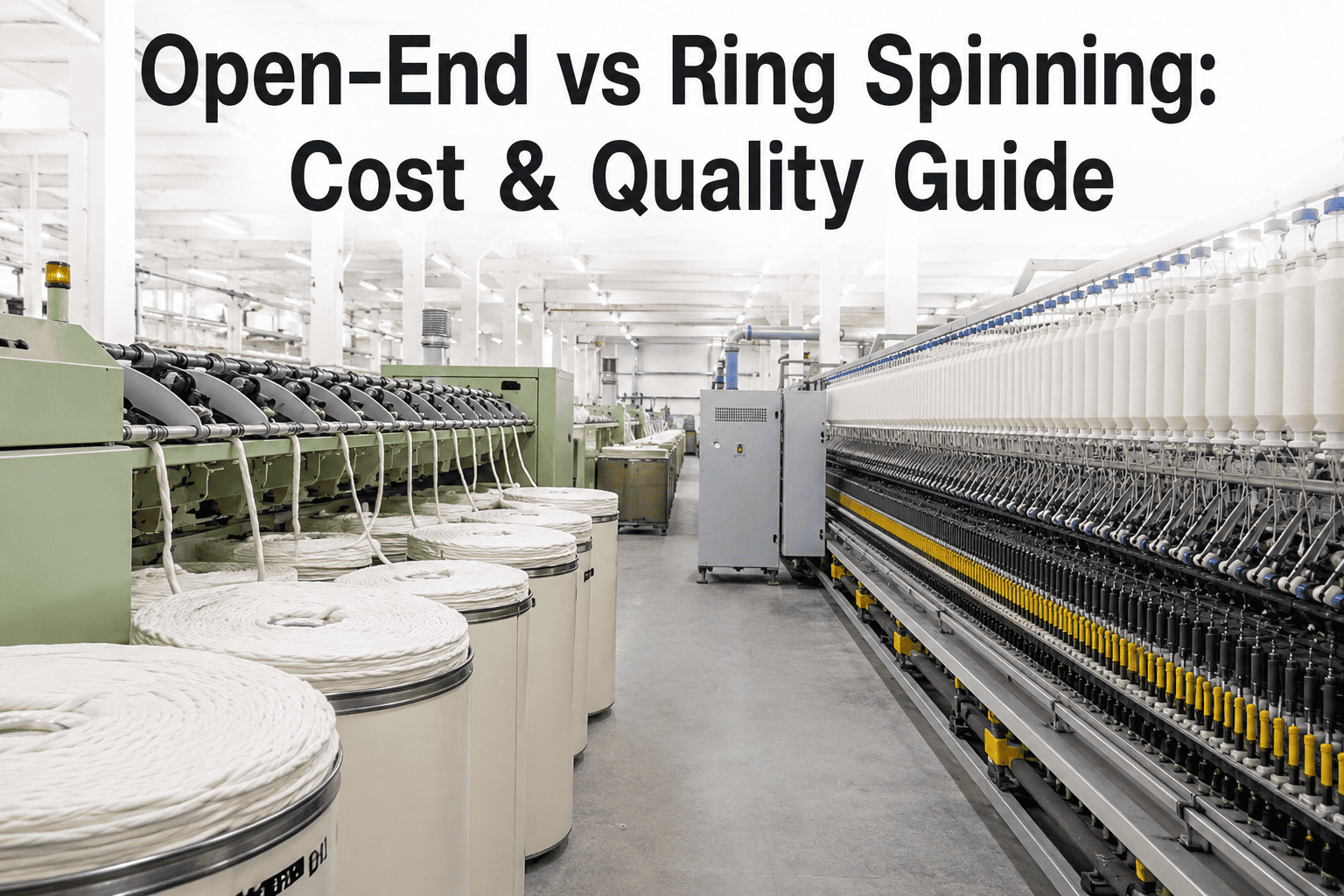
Choosing between open-end rotor spinning and ring spinning is one of the most consequential capital decisions a spinning mill makes, because the two systems produce structurally different yarn at different cost points for different markets. Rotor spinning eliminates roving entirely and tolerates lower grade fiber, while ring spinning still owns the segments where strength, fineness, and hand feel cannot be compromised. Picking the wrong system for a given order book quietly erodes margin for years, not months. This comparison walks through the real cost, quality, and productivity differences mills report once both systems run side by side, and closes with where our team can help you model the switch at ifactoryapp.com/support.
Spinning Technology Decision Guide
Open-End Rotor vs Ring Spinning: Cost and Quality
Two spinning systems, two very different cost structures. Here is how to match the right one to your count range, fiber grade, and target market.
Two Systems Built for Different Jobs
Before comparing numbers, it helps to see how differently these machines actually work. Rotor spinning twists fiber inside a rotating rotor cup fed directly from a sliver, while ring spinning draws roving through rollers and inserts twist via a traveller circling a ring at the spindle.
Open-End Rotor Spinning
Sliver feeds directly into a spinning rotor, skipping the roving stage entirely. Fiber is opened, individualized, and twisted onto the yarn tail inside the rotor at extremely high rotational speeds, producing a bulkier, more uniform yarn with fewer thin places but generally lower strength than an equivalent ring-spun count. The absence of a roving stage also means fewer opportunities for fiber damage between carding and final yarn formation, which partly offsets the strength disadvantage in practice.
One-stepprocess, no roving frame required
Ne 6–30typical practical count range
Ring Spinning
Roving is drafted through a three-roller zone and twisted onto the spindle by a traveller circling the ring. The process runs slower per spindle but produces finer, stronger, less bulky yarn with better fiber alignment, which is why it still dominates fine counts and premium end uses. The extra preparation stages give mills more control points to fine-tune quality, at the cost of more machinery, more handling, and more places for variation to enter the process.
Multi-stepprocess including roving preparation
Ne 5–150+practical count range including fine counts
Production Economics Side by Side
These figures reflect the general production economics mills report when comparing a modern rotor line against a modern ring frame line spinning a comparable coarse-to-medium count on cotton, gathered from operational benchmarking rather than a single machine builder's marketing claims.
Where Each System Wins on Yarn Quality
Quality is not a single number, and each system trades strengths for weaknesses across these core attributes that buyers and downstream processors actually test for before accepting a yarn shipment or approving a new supplier.
Strength and Tenacity
Ring favored
Evenness and Uniformity
Rotor favored
Hairiness Control
Rotor favored
Fineness Capability
Ring favored
Dye Uptake Consistency
Rotor favored
Capital Cost Is Only Half the Comparison
Rotor spinning machines carry a higher per-position capital cost than ring spindles, but because a rotor line replaces the roving frame entirely and runs far fewer positions to hit the same output, the total capital outlay per unit of installed capacity often lands closer than the sticker price on either machine suggests. The real comparison has to include the roving frame a ring line still needs, the building footprint each system consumes, and the utility infrastructure both draw on before floor space and energy costs are factored in. Mills that only compare machine quotes side by side without modeling total installed cost per kilogram of annual capacity consistently misjudge which system actually pays back faster for their specific volume and count mix, which is why a proper economic model needs the same fiber, labor, and energy assumptions run through both scenarios rather than a single machine-to-machine price comparison pulled from a vendor's quote sheet.
Which System Fits Your Order Book
Most mills running both systems side by side allocate orders based on end use rather than trying to force one machine to cover everything. These are the patterns that hold up across markets.
Choose Rotor Spinning For
Denim and workwear fabrics, home textiles, terry toweling, coarse knit yarns, and any order where raw material cost and throughput matter more than peak strength or fineness. Rotor spinning also makes sense when a mill needs to absorb waste fiber streams economically, since the system's tolerance for shorter staple and higher trash content turns what would otherwise be a disposal cost into usable yarn volume.
Choose Ring Spinning For
Fine count shirting fabrics, premium knitwear, hosiery, sewing thread, and any order where strength, low hairiness, and fiber fineness directly determine the price the fabric can command. Ring spinning remains the default for counts above roughly Ne 40, and buyers in these segments frequently specify ring-spun yarn explicitly regardless of what a rotor alternative might cost.
Consider Compact Ring For
Orders that need ring-level strength and fineness but with rotor-like reduced hairiness. Compact spinning attachments narrow the gap without abandoning the ring platform, at a higher capital cost than standard ring frames.
Run Both When
Order books span both coarse and fine segments. Many established mills keep both systems on the floor specifically so procurement, fiber grading, and sales teams can route orders to whichever line protects margin best.
What Actually Changes When You Migrate Volume Between Systems
Beyond the headline cost and quality numbers, mills that have moved production volume between rotor and ring lines report a handful of operational changes that rarely show up in a capital equipment pitch but materially affect how quickly the switch pays off in the first two years of operation.
Fiber Procurement Strategy Shifts
Moving volume to rotor spinning opens the door to blending in comber noil, waste fiber, and lower grade cotton that a ring frame's drafting rollers cannot handle without excessive end breakage. Procurement teams that plan for this ahead of time capture meaningfully better raw material margins than teams who discover the flexibility after the machines are already running, since fiber contracts and blending ratios often need renegotiating well before installation.
Labor Structure and Skill Requirements
Rotor lines need fewer operators per unit of output since doffing and piecing frequency drop sharply compared to ring spinning, but the technicians who maintain rotor grooves, navels, and opening rollers need different training than a ring frame maintenance crew, and this retraining cost is frequently underestimated in the initial business case built by finance rather than operations.
Downstream Processing Compatibility
Rotor yarn's bulkier structure and different dye uptake behavior can require adjustments in weaving preparation, sizing recipes, and dyeing parameters that a mill running only ring yarn for years may not have on file, so early trials with downstream partners save real time during ramp-up and prevent quality disputes on the first commercial shipments.
Floor Space and Utility Load
Because rotor spinning eliminates the roving frame entirely, floor space and utility requirements per unit of output typically drop, which matters most for mills constrained by building footprint rather than capital, and should be weighed alongside the pure cost-per-kilogram comparison when floor space itself carries a real opportunity cost.
Model Your Own Numbers
See the Cost Comparison Built Around Your Actual Order Book
We will walk through your current count mix, fiber grades, and target markets and show where a rotor line, a compact upgrade, or your existing ring frames deliver the best margin per kilogram produced.
How the Gap Between the Two Systems Has Narrowed
The quality gap that once made rotor yarn unsuitable for anything beyond coarse industrial fabric has closed considerably over recent machine generations, changing how mills should weigh the decision today.
Earlier Rotor Generations
Limited largely to coarse counts with visibly higher hairiness and lower strength than ring-spun equivalents, restricting use to industrial and heavy home textile fabrics where surface appearance and strength were secondary concerns.
Improved Rotor Design and Friction Elements
Refinements to rotor groove geometry, navel design, and friction spinning elements pushed achievable counts finer and tightened evenness, opening the door to lightweight woven fabrics that earlier rotor generations simply could not produce reliably.
Compact and Condensed Ring Spinning
Ring spinning answered back with compact attachments that reduce the spinning triangle and cut hairiness sharply, protecting ring's position at the premium end of the market against rotor's encroaching quality improvements.
Where the Two Systems Sit Today
Rotor now competes credibly into medium counts once considered ring-only territory, while ring retains a clear edge in fine counts and strength-critical applications, making the choice increasingly about order mix and fiber strategy rather than a hard technical limitation on either side.
Frequently Asked Questions
Is open-end rotor yarn always weaker than ring-spun yarn?
At an equivalent count, rotor yarn generally shows lower tenacity than ring-spun yarn because fiber alignment inside the rotor is less parallel than fiber drawn through a ring frame's drafting zone. The gap narrows at coarser counts and with well-maintained rotor grooves, but for strength-critical applications like sewing thread or fine shirting, ring spinning still holds a meaningful advantage.
Reach our team if you want help mapping strength requirements to the right system.
Can a rotor spinning line really use lower grade cotton?
Yes, this is one of rotor spinning's biggest structural advantages. Because the rotor individualizes fiber directly from sliver and tolerates shorter staple and higher trash content better than a ring frame's drafting rollers, mills can blend in waste fiber and lower grade cotton without the end breakage problems that the same material would cause on a ring frame. This is also why many mills route comber noil and card waste from their own ring lines directly into rotor production rather than selling it off.
How much faster is rotor spinning than ring spinning in practice?
Rotor spinning positions run at production speeds well beyond what a single ring spindle can achieve, and because the process skips the roving stage entirely, overall throughput per unit of floor space is typically several times higher for comparable coarse to medium counts, though the exact multiple depends heavily on count, fiber, and machine generation. Mills switching a coarse denim count from ring to rotor commonly report the clearest throughput gains, since that segment plays directly to rotor's strengths.
Does switching to rotor spinning mean giving up on premium fabric orders?
Not necessarily, but it does mean routing those orders to a ring line. Most mills that adopt rotor spinning keep ring frames running in parallel specifically for fine counts, premium knitwear, and hosiery yarns where fineness and low hairiness justify the higher per-unit cost of ring production, while shifting coarser, higher volume orders to rotor to free up ring capacity for the segments that actually need it.
What is the realistic payback period for adding a rotor line?
Payback depends heavily on current fiber cost, labor rates, and the count mix being displaced, but mills processing significant volumes of coarse to medium count yarn commonly report payback within two to four years once labor savings, fiber cost tolerance, and higher throughput are factored together.
Book a call to model this against your own numbers.
The Decision Rarely Comes Down to One Winner
Mills that treat this as a binary choice between one "better" spinning system usually end up leaving money on the table somewhere in their order book, because rotor and ring were never designed to compete for the same jobs in the first place. The mills getting the most out of their fiber and floor space are the ones that map their actual count mix, target markets, and fiber grades against both systems' real strengths, then route production accordingly rather than forcing every order down whichever line happens to have open capacity that week. That mapping exercise, done properly with real production data instead of assumptions, is usually what separates a rotor or ring investment that pays back on schedule from one that quietly underperforms its business case for years.
Make the Decision With Real Numbers, Not Guesswork
Compare Rotor and Ring Economics Against Your Actual Order Book
iFactory helps spinning mills model production cost, fiber tolerance, and quality trade-offs between rotor and ring spinning against their real count mix and fiber inventory, so capital decisions are based on evidence rather than machine brochures.