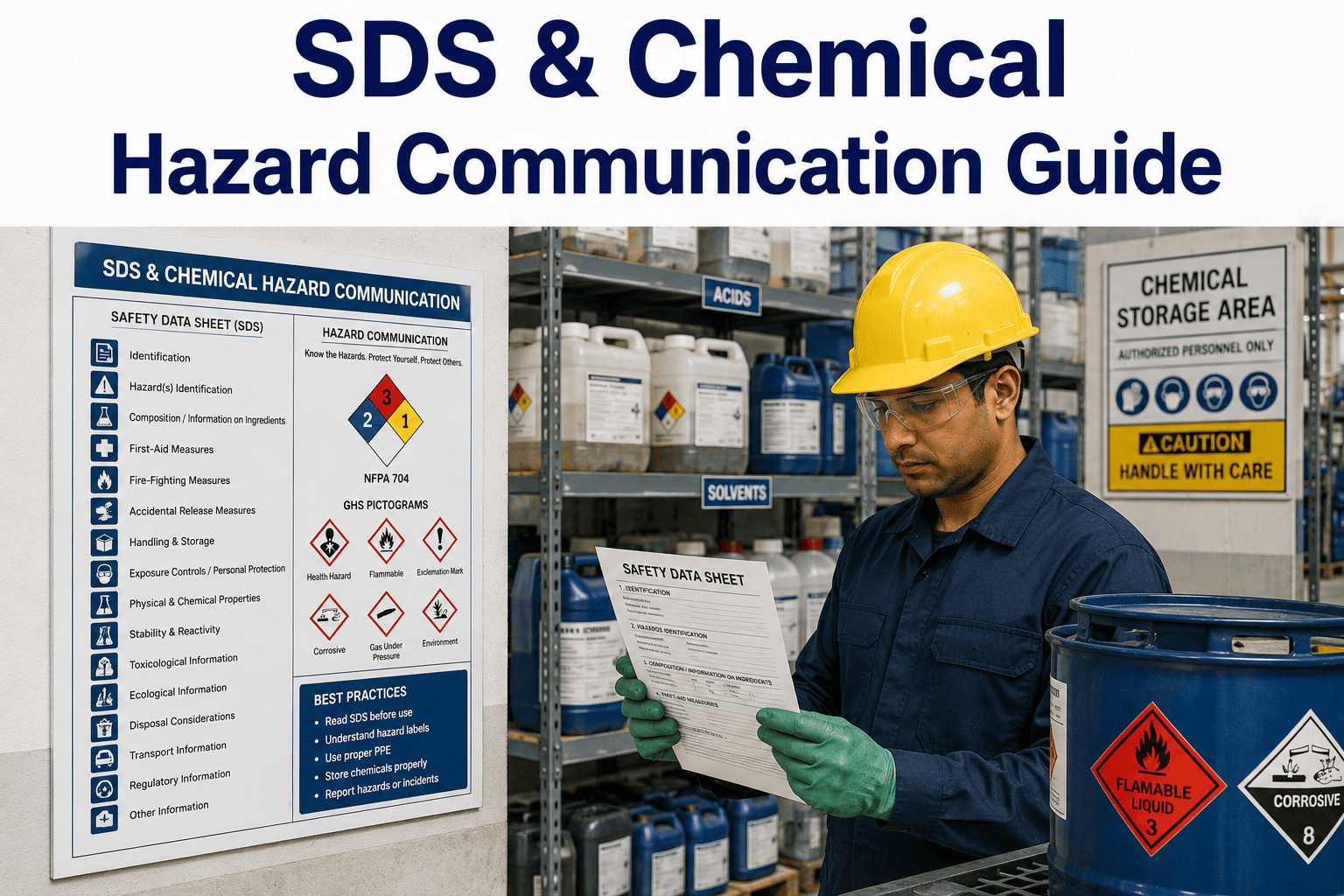
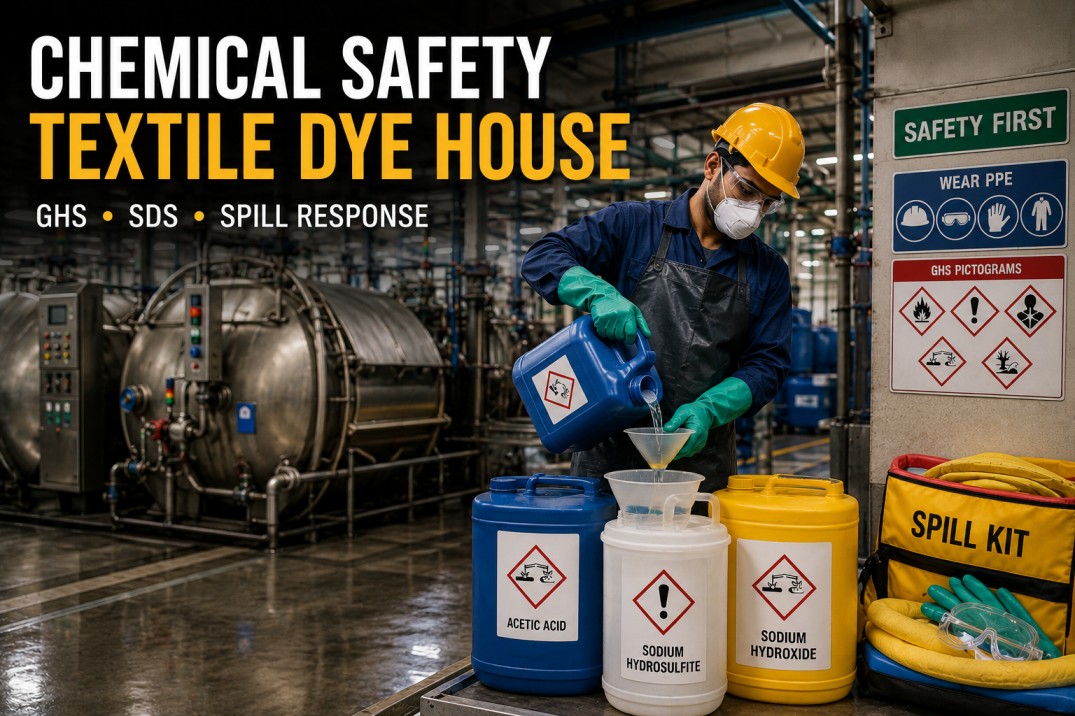
A wet processing department can easily have well over a hundred distinct chemicals in active use at any given time — dyes, fixing agents, softeners, bleaching compounds, and specialty auxiliaries — and in most mills, the Safety Data Sheet for any given one of them lives in a binder in a supervisor's office, current as of whenever someone last remembered to update it. When an operator needs to know how to handle a spill or what protective equipment a specific chemical requires, that binder is rarely close enough or current enough to actually help in the moment. iFactory centralizes SDS management and hazard communication across every wet processing department, keeping the right information reachable exactly where and when it's needed — see how through iFactory support.
Chemical Safety · Textile Wet Processing
The Right Safety Data Sheet Is Only Useful If Someone Can Actually Find It in Thirty Seconds
iFactory keeps SDS records, GHS classifications, and chemical inventory data centralized and current across every wet processing department, so hazard information is available at the point of use, not filed away in a binder nobody checks.
GHS Classification Basics
Three Broad Hazard Categories Every SDS Is Built Around
Physical Hazards
Flammability, reactivity, and corrosivity properties that determine safe storage conditions, compatible materials, and required fire safety measures around a given chemical.
Health Hazards
Acute and chronic exposure risks including skin and respiratory irritation, sensitization, and longer-term toxicity effects that determine required personal protective equipment.
Environmental Hazards
Aquatic toxicity and persistence characteristics that determine wastewater treatment requirements and spill containment procedures for a given chemical.
Keeping Records Current
The SDS Lifecycle Most Mills Struggle to Actually Manage
1
New Chemical Onboarding
Every new chemical entering the plant needs its SDS collected, reviewed, and logged before it's approved for use — a step that gets skipped more often than most safety managers would like to admit under production pressure.
2
Version Control
Suppliers periodically revise SDS documents as formulations or regulatory requirements change, and an outdated version left in circulation can give workers and emergency responders incorrect hazard information.
3
Point-of-Use Accessibility
The current SDS needs to be reachable by workers actually handling the chemical, in the language they read, not just archived centrally in a format nobody on the floor can easily access.
4
Periodic Audit
Regular reconciliation between the chemical inventory actually on-site and the SDS library catches gaps before an inspector or an incident does.
An Outdated SDS Is Worse Than No SDS at All, Because It Gives Someone Confidence in the Wrong Information.
iFactory tracks SDS version currency against your active chemical inventory automatically, flagging gaps before an audit does.
Storage Compatibility
Chemical Storage Segregation Rules Wet Processing Departments Commonly Get Wrong
Applied Example
Catching 40 Outdated SDS Records Before an Audit Found Them First
A wet processing facility running dyeing, bleaching, and finishing operations across three separate departments had been managing SDS records through a shared drive folder maintained inconsistently by different department safety coordinators. When the chemical inventory was reconciled against the SDS library through iFactory ahead of a routine internal review, roughly forty active chemicals were found to be either missing a current SDS entirely or still referencing a superseded version, several of which involved chemicals with revised hazard classifications the floor teams weren't aware of. The facility corrected the gaps and moved to a centralized, continuously reconciled system well ahead of the compliance audit that would otherwise have found the same issues under far less favorable circumstances.
40Missing or outdated SDS records found
3 departmentsAffected by inconsistent tracking
0Findings at the following compliance audit
Typical Outcomes
What Mills See After Centralizing SDS and Hazard Communication
100%
Chemical Inventory Reconciled to Current SDS
Under 30s
Typical Time to Locate a Specific SDS on the Floor
Fewer
Audit Findings Related to Hazard Communication Gaps
Frequently Asked Questions
SDS and Chemical Hazard Communication — Common Questions
How does iFactory keep SDS records current as suppliers issue revisions?
The platform tracks each SDS against its issue date and version identifier, and reconciles the active chemical inventory against the current library on a scheduled basis, flagging any chemical where the SDS on file has fallen out of date relative to what's known to be the latest supplier revision. This shifts version control from a manual, easily forgotten task to a continuously monitored one.
Book a Demo to see the reconciliation view against a sample chemical inventory.
Can floor workers access SDS information directly, or only safety managers?
Direct floor access is actually the core purpose — hazard communication regulations generally require that workers handling a chemical have ready access to its SDS, and a system only safety managers can navigate doesn't meet that bar in practice. iFactory is built so a worker can look up the specific chemical they're handling and get the current SDS quickly, without needing to route the request through a safety office first.
Does this help with GHS labeling on containers, not just the SDS documents themselves?
Yes — since container labeling and the SDS both derive from the same underlying hazard classification, keeping that classification centralized and current makes it straightforward to verify that physical container labels in use on the floor match the current classification, rather than treating labeling and documentation as two separate, occasionally inconsistent processes.
Contact support to review labeling verification as part of your rollout.
How does this handle chemicals used across multiple departments with different local regulations?
Where a facility operates under multiple regulatory frameworks — for instance, a domestic requirement alongside a buyer's international compliance standard — iFactory can track hazard classification and required documentation against each applicable framework separately, since a chemical's classification and labeling requirements can differ between jurisdictions even when the underlying hazard is the same.
How long does it take to get our full chemical inventory reconciled and centralized?
For a facility with a moderately organized existing chemical inventory list, initial reconciliation and centralization typically takes two to four weeks, depending on how many chemicals need SDS records sourced or updated from suppliers. Facilities without a clean existing inventory list generally need additional time upfront to establish that baseline before reconciliation can begin.
Book a Demo to scope a timeline for your specific facility.
Make Sure the Right Hazard Information Is Actually Reachable When Someone Needs It.
Centralize SDS records, GHS classifications, and chemical inventory across every wet processing department.