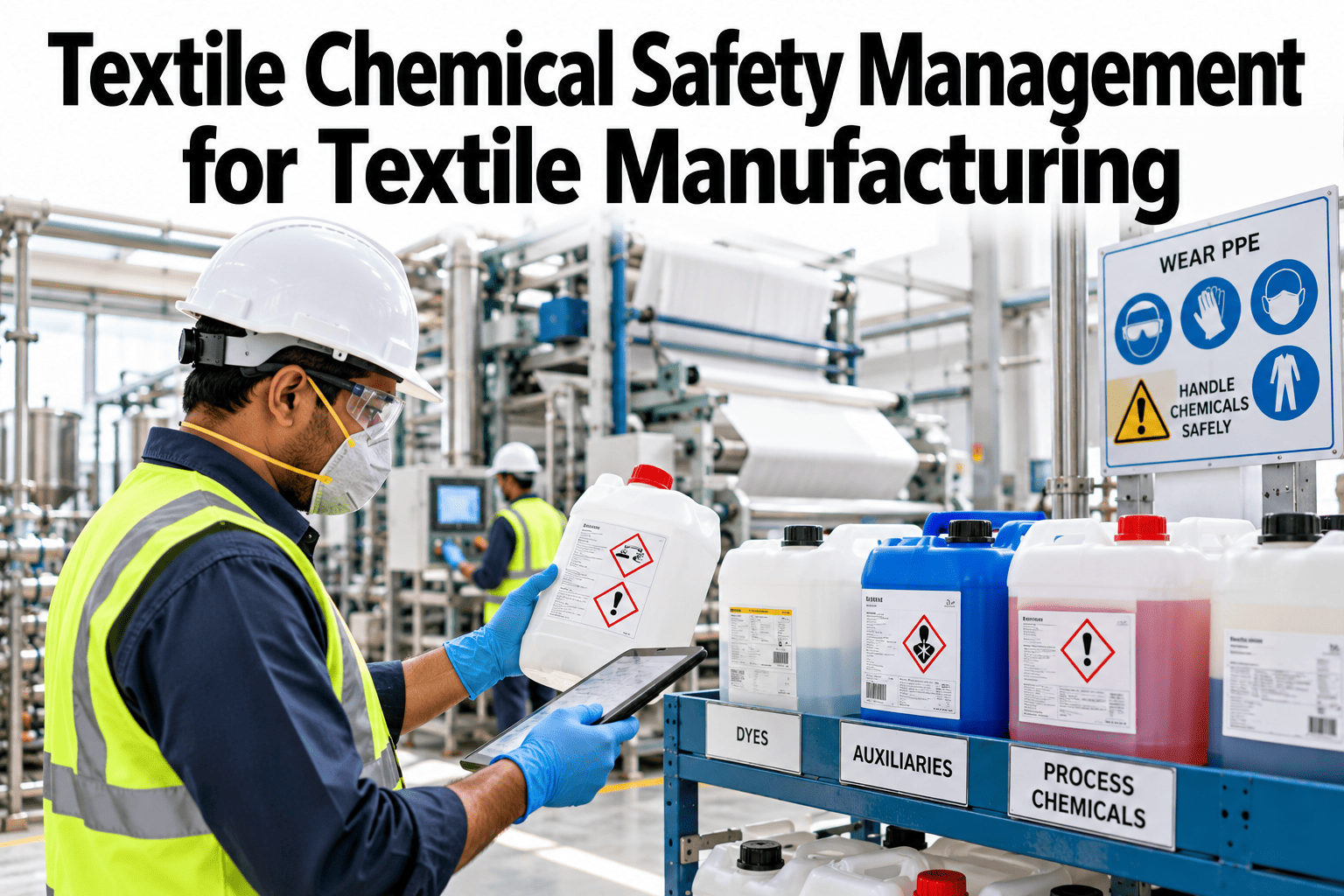
A dye house can run dozens of chemicals on any given day, from reactive dyes to caustic soda to acetic acid, and the safety of that operation depends on details that rarely get the attention they need: whether the SDS on file actually matches the drum on the shelf, whether two incompatible chemicals are stored four feet apart, and whether the person handling a spill that morning was trained on that specific chemical. Most of these gaps never surface until an inspection or an incident forces the question. See how iFactory AI keeps SDS records, storage, and training in sync across your dye house.
Keep Chemical Safety Current, Not Just Filed
iFactory AI connects SDS records, storage compatibility, and handler training so chemical safety stays accurate as your inventory changes, not just at the last audit.
Where Chemical Safety Programs Actually Break
It is rarely the written policy that fails. It is the gap between the policy and what is on the shelf.
A new drum arrives without its SDS attached, a supervisor stores it next to an incompatible chemical to save space, and the mismatch sits there until someone notices during a spill response or an audit walk-through.
Storage Compatibility at a Glance
Dye house chemicals fall into groups that must never share a storage area. The grid below shows common compatibility conflicts.
See Your Own Storage Map for Compatibility Gaps
Book a 30-minute session and iFactory AI will walk through a live compatibility check for your own chemical inventory.
Chemical Handling Risk by Category
Different chemical categories carry different handling risks and require different levels of PPE and ventilation.
| Category | Primary Risk | Required PPE | Storage Note |
|---|---|---|---|
| Acids (acetic, sulfuric) | Skin and eye burns | Face shield, apron, gloves | Away from caustics and metals |
| Caustic soda | Severe burns, fumes | Goggles, gauntlet gloves | Away from acids, dry storage |
| Reactive dyes | Respiratory sensitization | Respirator, gloves | Ventilated, sealed containers |
| Solvents | Flammability, vapor exposure | Gloves, ventilation | Away from heat and flame |
The SDS Lifecycle, Not Just a File
An SDS is only useful if it tracks the chemical through its actual life in the mill, from arrival to disposal.
New chemical arrives and its SDS is logged against that specific batch and supplier.
Storage location is checked against compatibility rules before placement is confirmed.
Handlers assigned to that chemical are checked against their training record.
Any SDS revision from the supplier updates the live record and flags affected handlers.
Disposal or depletion closes the record, keeping the active inventory accurate.
Training Coverage Across the Floor
A composite view of handler training coverage by chemical category shows where gaps typically remain.
What Connects to What
Four systems need to stay linked for chemical safety to hold up under scrutiny.
Inventory Tracking
Every chemical on site is logged by batch, location, and quantity, updated as it moves.
SDS Management
SDS records stay tied to the active batch rather than a static library.
Storage Compatibility
Placement is checked automatically against known incompatible groupings.
Handler Training Records
Training status is checked against the chemicals a person is assigned to handle.
Incident Response, Mapped in Advance
When a spill or exposure happens, the response is only as fast as the information behind it.
Rolling It Out in the Dye House
iFactory AI arrives turnkey, built to connect to your existing chemical inventory and EHS systems.
Expert Review
iFactory textile specialists reviewed the storage compatibility groupings and SDS lifecycle above against common dye house chemical inventories, confirming acid and caustic separation as the most frequent audit finding.
Frequently Asked Questions
Do we need to re-enter our entire chemical inventory?
No, existing inventory and SDS records are imported during rollout rather than re-entered from scratch. Support can walk through the import process for your current chemical list and storage layout.
How does the system know our storage layout is correct?
Storage zones are mapped during setup against your physical layout, and compatibility rules are checked whenever a new chemical is logged into a zone. A flagged conflict names the specific chemicals and the zone involved.
What happens when a supplier updates an SDS?
The revision updates the live record automatically and flags any handler trained on the previous version for a refresher. See how SDS revisions flow through to training in a walkthrough on your own chemical list.
Can this track training for contractor staff too?
Yes, contractor and vendor staff who handle chemicals on site can be added to the training record the same way employees are, so their status is checked the same way during assignment.
How does this help during a regulatory inspection?
Every chemical, its current SDS, storage location, and handler training status are available in one searchable view instead of cross-referencing separate binders and spreadsheets. Ask support how inspection reports are generated from the live record.
Keep SDS, Storage, and Training Permanently in Sync
iFactory AI connects your chemical inventory, SDS records, and handler training so nothing drifts out of date. Book a walkthrough to see it on your own dye house.