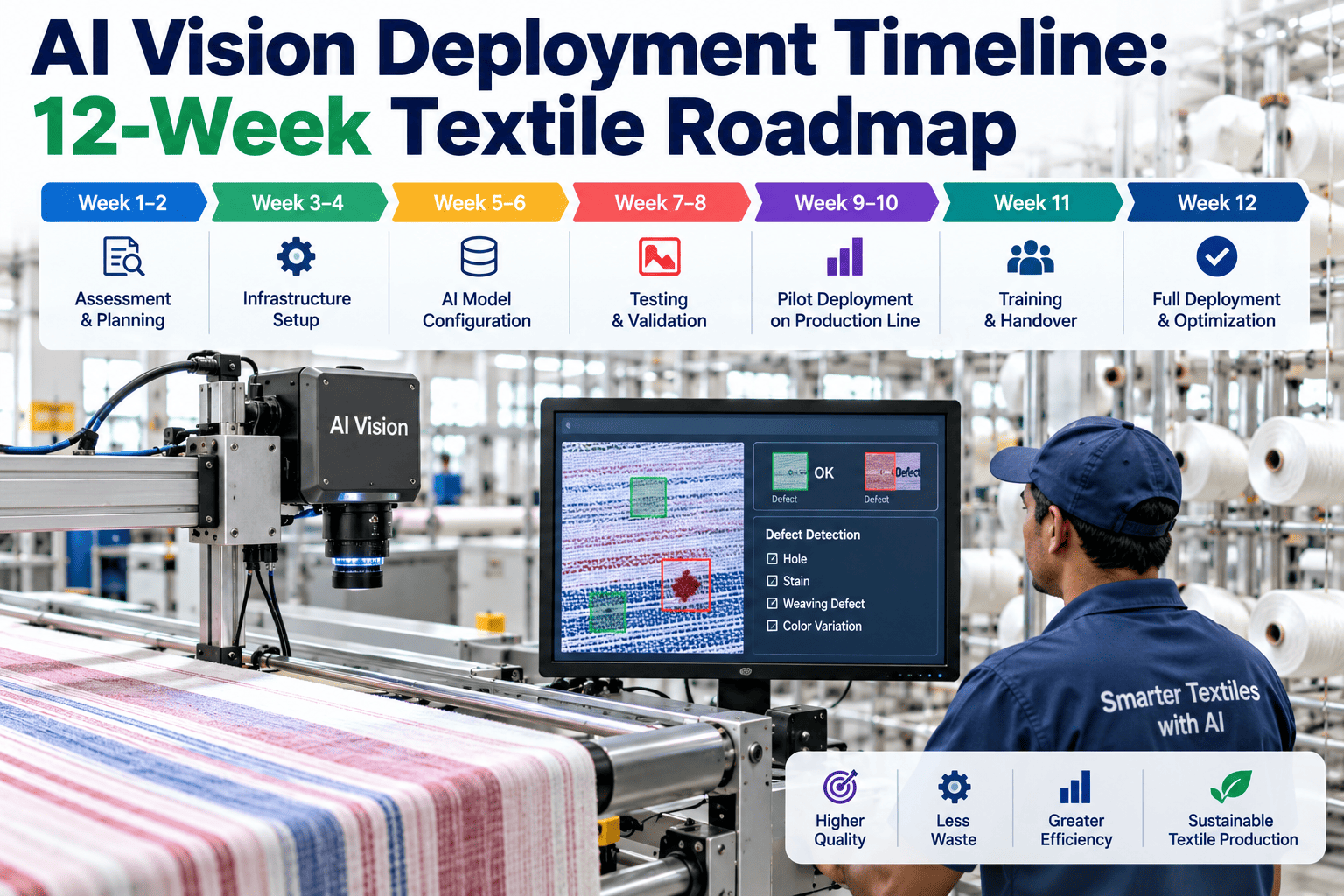
An AI vision camera installed above an inspection line without a genuine change management plan tends to trigger the same quiet anxiety in experienced grading staff every time: is this here to replace me. That anxiety, left unaddressed, shapes how the whole rollout goes far more than any technical specification does, since an operator who feels threatened will find ways, consciously or not, to distrust or work around a system rather than adopt it. Successful AI vision deployments treat operator acceptance as a deliberate program with its own timeline, moving people through a predictable emotional arc from skepticism to curiosity to trust to advocacy, rather than assuming acceptance will simply follow once the technology proves itself. Mills planning a rollout that want the people side handled as carefully as the technical side can start that conversation with iFactory's support team.
The Camera Doesn't Determine Adoption. How You Introduce It Does.
iFactory pairs every AI vision rollout with a structured operator acceptance plan, moving your grading team from skepticism to genuine advocacy instead of leaving trust to chance.
Why Technical Success Doesn't Guarantee Operator Acceptance
A system that performs flawlessly on paper can still fail on the floor if the people meant to work alongside it never genuinely trust it, and that trust gap has almost nothing to do with the model's actual accuracy.
The Rollout Gets Announced Without Context
A camera appearing above the line with no explanation of purpose invites the worst assumption by default, that it's there to eliminate jobs.
Operators Aren't Shown What the System Actually Catches
Without visibility into specific defects the system flags, operators have no concrete way to build confidence in its judgment over time.
Disagreements Between the System and the Operator Go Unresolved
When an operator's judgment conflicts with the system's flag and nobody follows up to explain who was right, trust erodes on both sides.
No One on the Floor Is Positioned as a Genuine Champion
Without a respected team member modeling trust in the system, skepticism tends to spread faster than confidence does.
The Four Stages Operators Move Through
Understanding this progression helps a rollout team recognize where their team actually stands and respond appropriately, rather than expecting trust to appear immediately after installation.
| Stage | What Operators Are Thinking | What Helps Move Them Forward |
|---|---|---|
| Skepticism | Is this here to replace me? | Clear, honest communication about purpose and role |
| Curiosity | What does it actually catch? | Visible, specific examples of the system's detections |
| Trust | It caught something I missed | Direct, personal experience with an accurate catch |
| Advocacy | Put it on my line next | Recognition and a voice in future rollout decisions |
Building a Structured Acceptance Plan Alongside the Technical Rollout
Change management for AI vision doesn't need to be elaborate, but it does need to be deliberate and sequenced alongside the technical deployment itself.
Communicate Purpose Before Installation
Explaining clearly, before the camera goes up, why the system is being deployed and what role operators will play alongside it.
Identify and Involve a Respected Floor Champion Early
A trusted team member who engages genuinely with the new system tends to shift the whole shift's perception faster than any management message.
Make Detections Visible and Explainable
Showing operators specifically what the system flagged and why builds the concrete evidence trust is actually based on.
Close the Loop on Every Disagreement
Following up on cases where the system and an operator disagreed, explaining the outcome either way, sustains trust in both directions.
Build Trust in AI Vision Before You Build the Rollout
iFactory pairs deployment with a structured operator acceptance plan, so your team moves from skepticism to genuine advocacy, not quiet resistance.
A Composite Scenario: The Skeptic Who Became the Champion
A composite fabric finishing mill's most experienced grading inspector, with over a decade on the floor, was openly skeptical when an AI vision system was first installed on her line, telling her supervisor directly that she doubted a camera could catch what her trained eye already caught after years of experience. Rather than dismissing the concern, the rollout team specifically invited her to review the system's flagged detections alongside her own inspection results for the first two weeks.
During that review, the system caught a subtle shade variation she had missed during a particularly long shift, a catch she acknowledged openly to her team once she saw the flagged image and understood exactly why it had been flagged. Within a month, she had become the most vocal advocate for the system on the floor, personally training two newer inspectors on how to work alongside it, and her early skepticism became one of the rollout's most persuasive testimonials precisely because it had been genuine.
Common Mistakes in AI Vision Change Management
Installing the System Without Explaining Why
A camera appearing with no context invites the worst assumption by default, undermining trust before the rollout even begins.
Treating Skepticism as Resistance to Be Overcome
Skepticism from an experienced operator is often a reasonable starting position, not an obstacle, and dismissing it tends to backfire.
Never Closing the Loop on a Disagreement
Letting a case where the system and operator disagreed go unresolved leaves both sides less confident in the other going forward.
Rushing the Rollout Without Time for Trust to Build
Expecting immediate full trust skips the genuine progression operators need to move through, risking quiet resistance later.
Is Your Team Ready for a Structured Acceptance Plan
Leadership can clearly articulate the system's actual purpose
A clear, honest message about why the system is being deployed is the foundation every later stage builds on.
You've identified a respected team member to involve early
A genuine floor champion tends to shift team perception faster than any top-down communication.
You have a way to make detections visible and explainable
Concrete evidence of what the system catches and why is what actually builds trust, not just an assurance that it works.
There's a process for following up on disagreements
Closing the loop, in either direction, sustains trust through the inevitable early disagreements a rollout produces.
Frequently Asked Questions
How long does it typically take for operators to genuinely trust an AI vision system?
Most rollouts see the early stages of trust building within the first two to four weeks, particularly once operators experience a specific instance of the system catching something they missed, but genuine, sustained advocacy usually takes a bit longer and depends heavily on how well disagreements are handled during that early window. Mills wanting help structuring this timeline around their own team can talk to iFactory support.
Should we frame the rollout as reducing inspection headcount?
Framing the rollout around headcount reduction from the outset tends to trigger exactly the defensive skepticism that undermines adoption, even when some role change is genuinely part of the plan. A more successful framing usually emphasizes catching what human inspection alone misses and freeing experienced staff for higher-value tasks like root cause investigation, which is both more accurate to how most deployments actually play out and less threatening to introduce.
What should happen when an operator disagrees with a system's flagged defect?
The disagreement should be investigated and the outcome shared clearly with the operator either way, since both possible outcomes actually build trust: if the system was right, the operator learns something concrete about what it catches, and if the operator was right, that feedback should genuinely improve the model rather than being dismissed. Never following up on these moments is one of the fastest ways to lose the trust a rollout depends on.
How important is having a floor champion compared to management communication?
A respected floor champion is often more persuasive than management messaging alone, since peer credibility carries weight that a top-down announcement simply can't replicate, especially among experienced operators who've seen technology initiatives come and go before. Book a demo to see how a champion-based rollout approach gets structured for your specific team.
Can change management for AI vision be rushed if there's schedule pressure?
Rushing the people side of a rollout to meet a technical deployment deadline tends to produce exactly the quiet resistance and workaround behavior that undermines the investment long after go-live, even when the technology itself performs well. A brief but genuine acceptance plan, even a compressed one, generally produces better long-term adoption than skipping the human element entirely to hit a date.
Give Your Rollout the People Plan It Needs to Actually Stick
iFactory pairs every AI vision deployment with a structured operator acceptance plan, moving your team from skepticism to genuine advocacy.