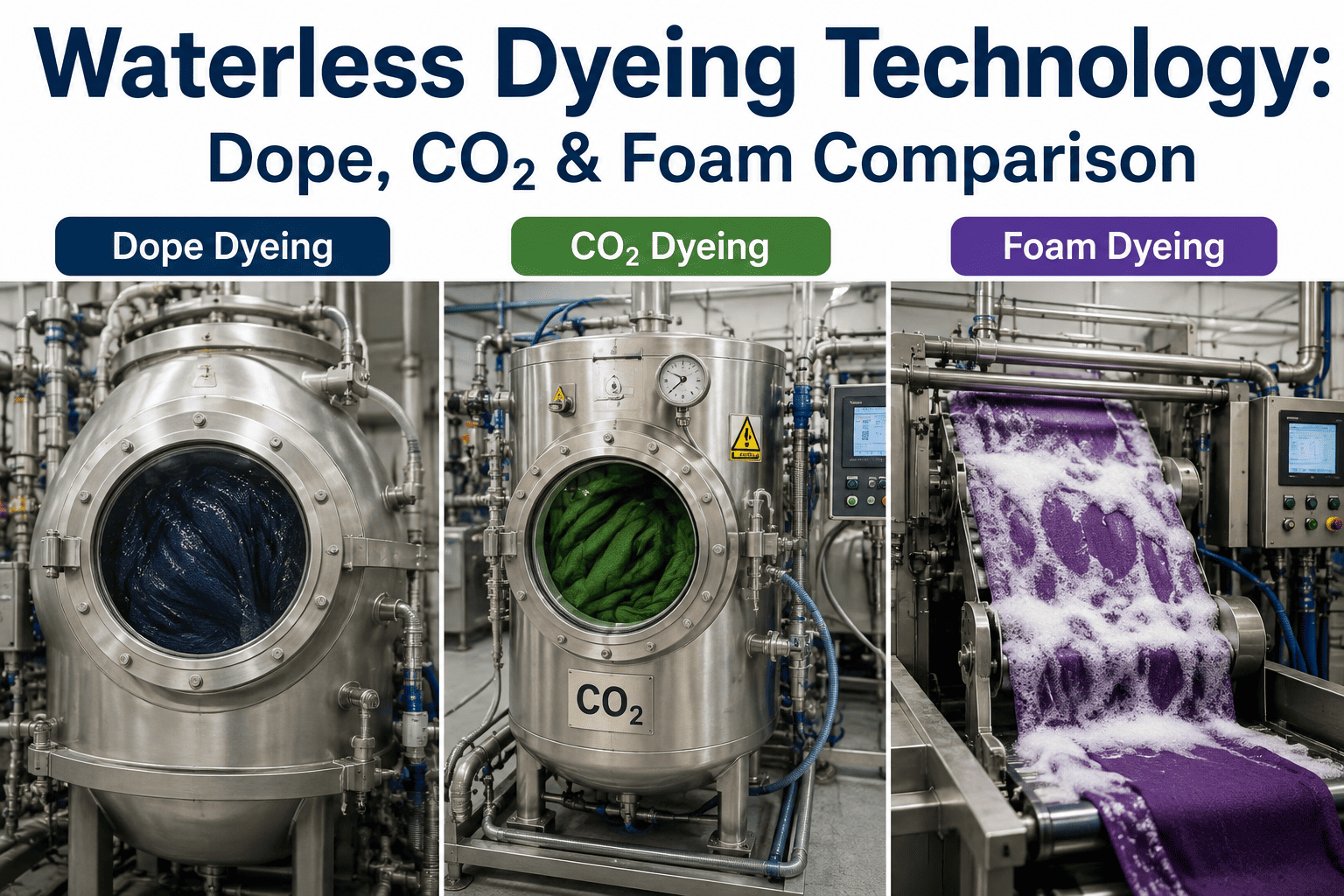
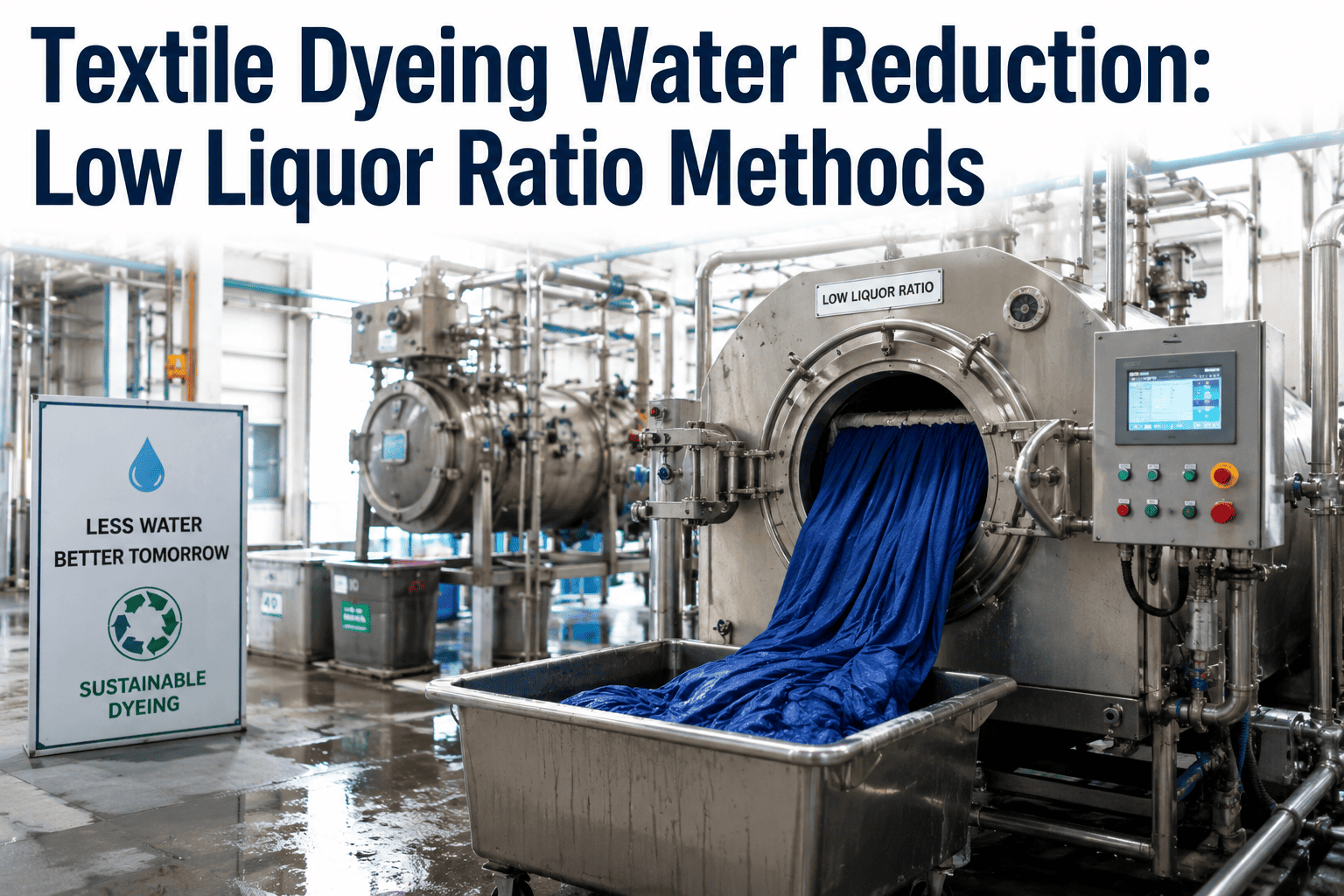
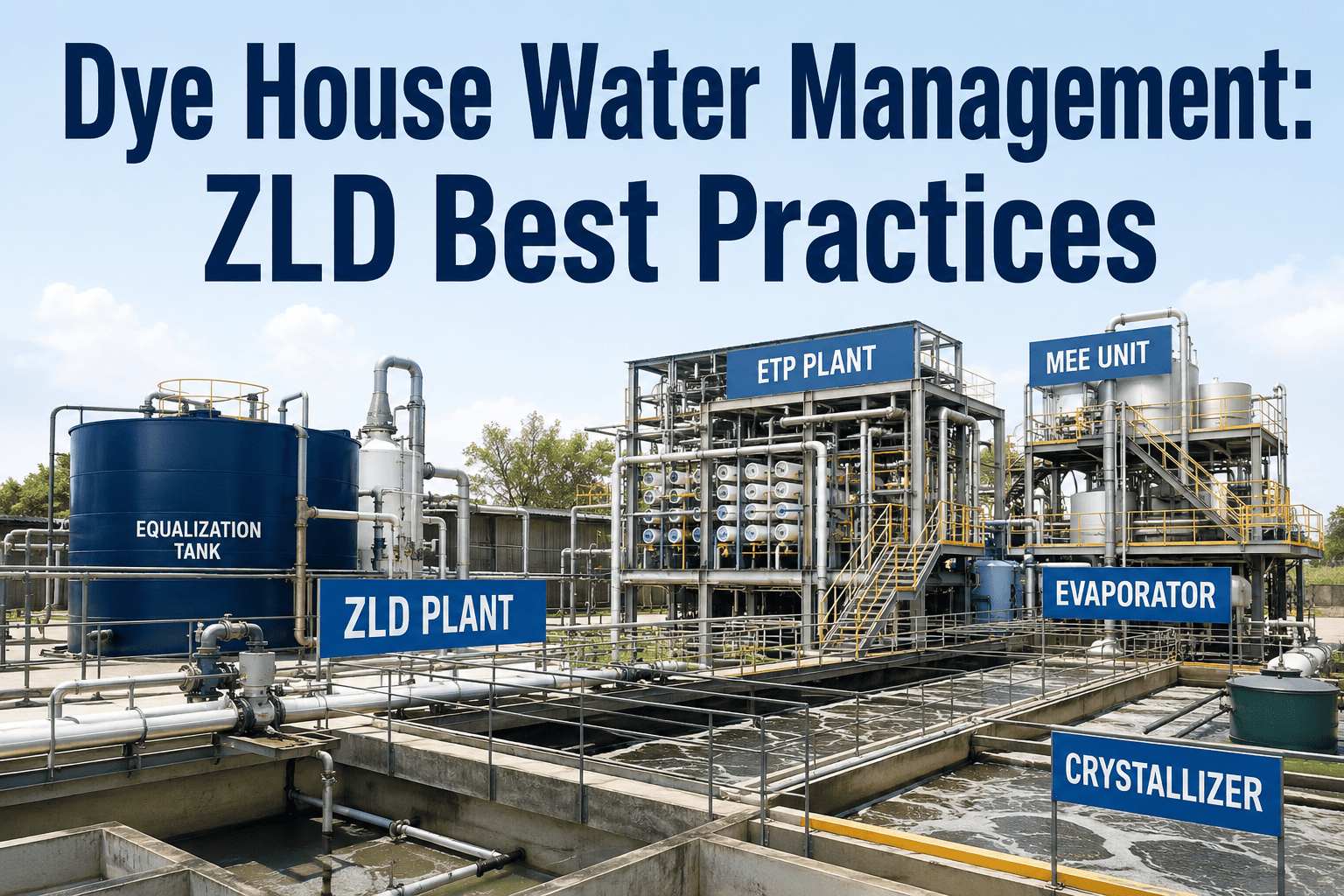
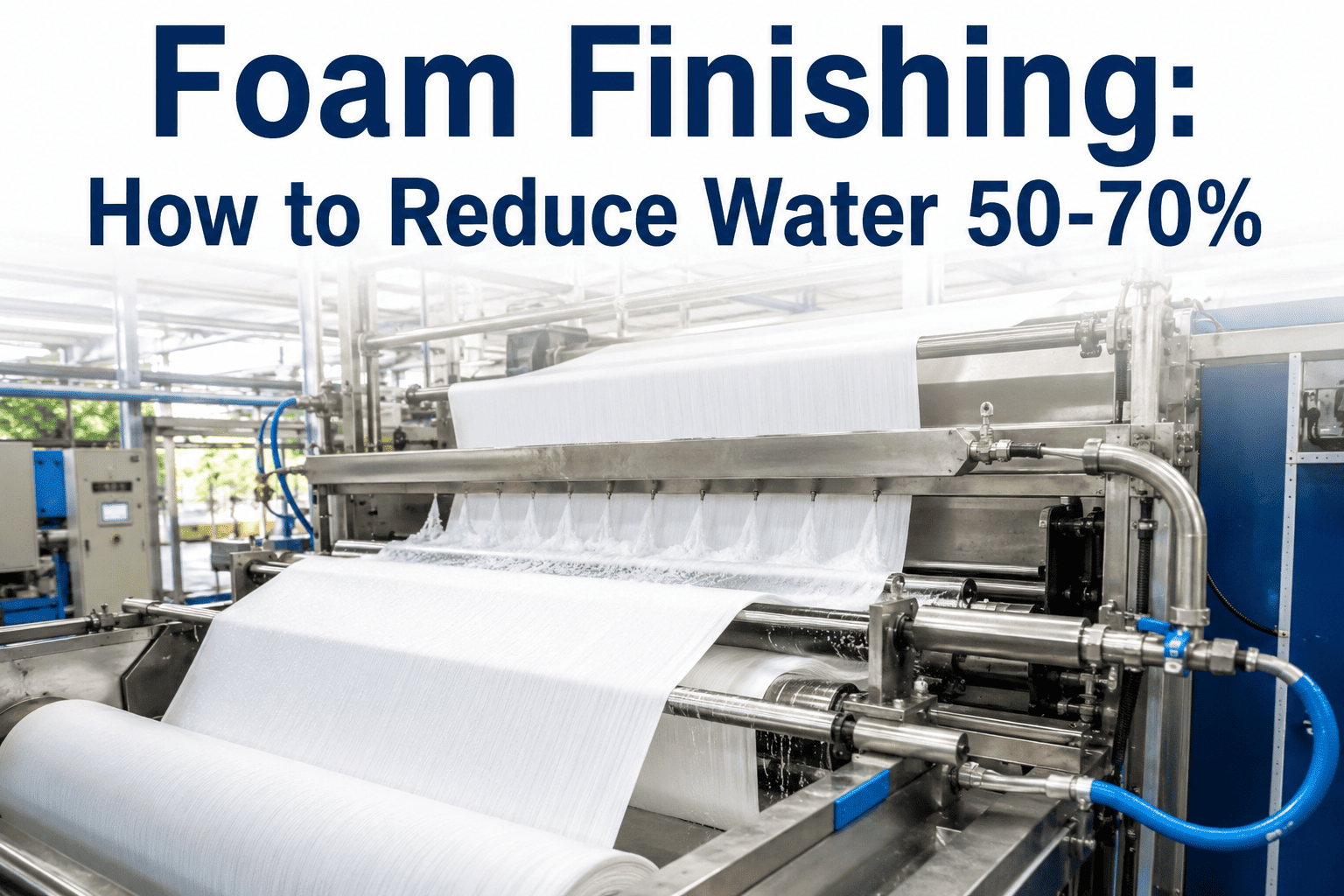
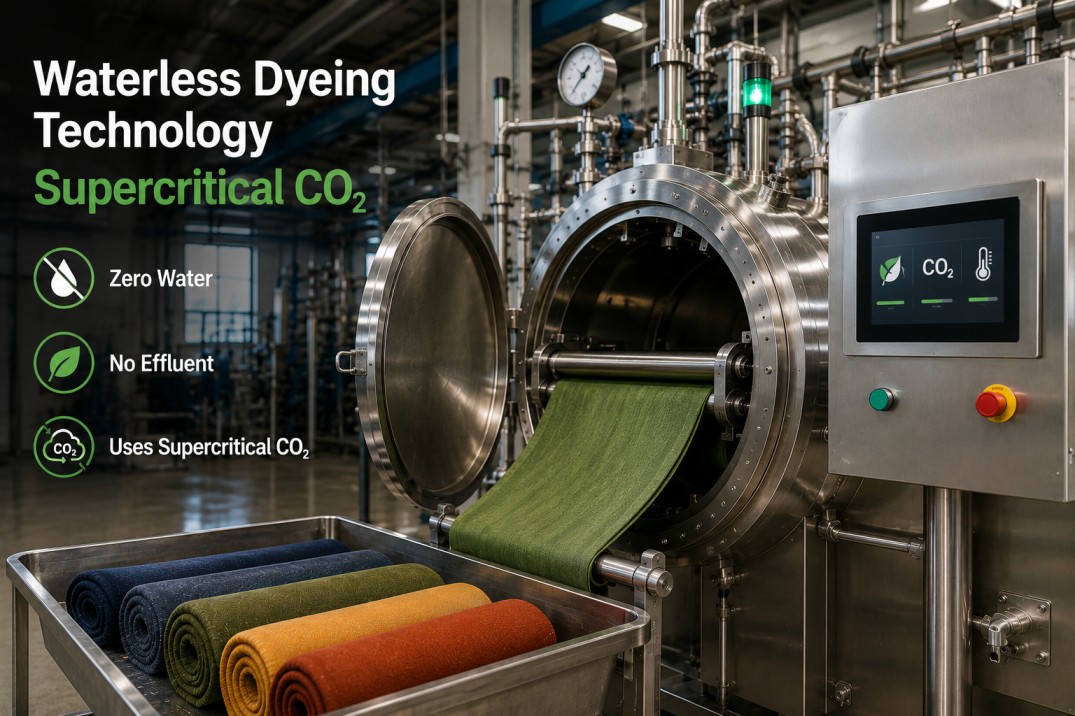
It takes roughly 200 liters of water to dye a single kilogram of fabric using conventional wet processing — water that emerges on the other end carrying dye residue, salts, and chemical auxiliaries that require treatment before discharge. Four technologies now offer a genuinely different path: dope dyeing, supercritical CO2, foam application, and air dyeing each eliminate water from the coloring step entirely, but none of them work for every fiber, every fabric weight, or every production volume. Book a demo to see how iFactory models the feasibility and payback of each technology against your specific fiber mix.
Water Use in Dyeing → Full Waterless Technology Comparison
Waterless Dyeing Isn't One Technology. It's Actually Four, and Each One Only Works for Part of Your Fiber Mix.
Dope dyeing eliminates water for synthetics and some cellulosics but only at the fiber stage, months before a garment reaches the cutting table. Supercritical CO2 dyes finished polyester beautifully but still struggles with cotton and other natural fibers. Foam and air dyeing sit in between, each with their own fiber and volume sweet spot. Choosing the wrong one for your product mix wastes the capital investment entirely, regardless of how promising the technology looks in a vendor demonstration.
200 L
Water typically required to dye just 1 kg of fabric using conventional wet processing
80-95%
Environmental impact reduction claimed across waterless techniques, various categories
80-100
Production-scale scCO2 dyeing machines currently in commercial operation worldwide
The Feasibility Comparison Matrix
Four Distinct Technologies, Four Very Different Fiber and Volume Profiles
Before evaluating cost or environmental impact, the first filter is simple: does the technology even work for the fiber you actually produce. Getting this wrong is the single most common reason a waterless dyeing pilot fails to scale — a mill can run a flawless small-batch trial and still discover the technology cannot handle their dominant fiber type at production volume.
| Technology |
Best Fiber Fit |
Water Use |
Commercial Readiness |
| Dope Dyeing |
Polyester, nylon, acrylic, and cellulosics like viscose and lyocell — fiber stage only |
Zero water in the coloring step itself |
Mature and widely commercialized |
| Supercritical CO2 |
Polyester and polyamide primarily; cotton and natural fibers still largely experimental |
Zero in the dye bath; some water in pre/post-treatment |
Commercial, concentrated in a handful of regions |
| Foam Dyeing |
Broad fiber compatibility, strong fit for denim and pigment-based coloration |
Roughly 90% water reduction vs. conventional dye baths |
Commercial, growing adoption in denim |
| Air Dyeing |
Primarily developed for cotton and natural fiber applications |
Near-zero water; pressurized air and heat replace the dye bath |
Limited commercial scale, higher equipment barrier |
Technology 1 — Fiber-Stage Solution Mass Coloration Method
Dope Dyeing: Coloring the Polymer Before It's Even Formed Into a Fiber
Dope dyeing — also called solution dyeing or mass coloration — adds pigment directly into the molten polymer or cellulose solution before it is extruded through a spinneret. The color becomes part of the fiber's internal structure rather than a surface treatment applied afterward, which is the fundamental mechanical difference from every other dyeing method covered here.
Water & Chemical Savings
No dye bath, no auxiliary chemicals, and no wastewater at the coloring step. Water use reductions of roughly 62% and chemical savings of roughly 63% are commonly documented versus conventional piece dyeing of the same fiber, along with meaningful reductions in greenhouse gas emissions from the eliminated processing steps.
Color Performance
Because pigment is trapped inside the fiber rather than sitting on the surface, dope-dyed material shows superior resistance to crocking, UV fading, and wash-out compared to conventionally dyed equivalents, making it a strong fit for outdoor and heavy-use applications.
The Real Practical Constraint
Color decisions must be locked in at the fiber production stage, months before a garment is cut. This works well for programmed, high-volume colors and poorly for fast-turning fashion trends decided close to season, when the fiber has already been spun and committed.
Technology 2 — Pressurized Supercritical Fluid Extraction Method
Supercritical CO2: A Fluid That Behaves Like Both a Liquid and a Gas at Once
Supercritical CO2 dyeing pressurizes carbon dioxide into a state where it exhibits liquid-like solvent power and gas-like diffusivity simultaneously, allowing disperse dyes to dissolve and penetrate synthetic fiber without water as the carrier medium — a distinct physical mechanism from the fiber-stage approach dope dyeing relies on.
Quality Advantage
The high diffusivity of the supercritical fluid produces more uniform dye penetration and better levelness on heavy-weight fabrics, while the complete absence of water eliminates drying-related defects like crack marks, drying stains, and tension-induced dimensional variation entirely.
Fastness Performance
scCO2-dyed polyester and polyamide achieve fastness ratings identical to aqueous-dyed equivalents across standard wash, light, and crocking tests, with the added benefit that no water means no disperse-dye hydrolysis and no associated shade drift between batches.
The Real Practical Constraint
High initial equipment cost concentrates adoption among larger polyester-focused operations. Natural and cellulosic fibers remain a harder technical problem, with commercial color coverage still narrower — roughly 85% of the shade range achievable with conventional disperse dyeing.
See Which Waterless Technology Actually Fits Your Current Fiber Mix Today
iFactory models feasibility, water savings, and payback across all four waterless technologies against your specific product portfolio — not a generic industry average that assumes a fiber mix unlike your own.
Technology 3 — Low-Liquor Foam Application Method
Foam Dyeing: Replacing the Full Bath With a Carefully Controlled Foam Carrier
Foam dyeing applies pigment through a foamed carrier rather than a full liquid dye bath, drastically reducing the liquor ratio while still achieving controlled, even color application — particularly effective in denim and pigment-based coloration where deep-bath saturation is not the primary quality requirement.
Where Foam Fits Well
Denim and indigo application, where roll-to-roll foam systems are already gaining commercial traction and proving out at production scale
Pigment-based coloration that does not require deep dye-bath penetration into the fiber core to achieve acceptable color depth
Retrofits onto existing continuous dyeing lines with moderate capital investment, avoiding a full line replacement
Where Foam Struggles
Deep, saturated shades requiring full dye-bath-level penetration into the fiber core rather than surface-level pigment deposit
Reactive dye chemistry on cellulosics, where foam uniformity is harder to control at scale across a wide production run
Extremely tight shade-matching tolerances across large production runs where batch-to-batch consistency is critical
Technology 4 — Pressurized Gas Carrier Application Method
Air Dyeing: Using Pressurized Air and Controlled Heat Instead of Water
Air dyeing replaces the aqueous dye bath with pressurized air and controlled heat to carry and fix pigment onto fabric, developed primarily with cotton and other natural fiber applications in mind — the fiber category where dope dyeing and scCO2 both face their steepest limitations and where a genuine waterless gap has existed until relatively recently.
Fiber Fit
Targets the natural-fiber gap left by dope dyeing and scCO2, offering a near-zero-water path for cotton without requiring a fiber-stage color decision months in advance, which matters for brands that need to react to trend cycles closer to season.
Adoption Stage
Commercial deployment remains more limited than dope dyeing or scCO2, with fewer production-scale installations and a higher equipment learning curve for operators transitioning from wet processing to a pressurized-air-based system.
Strategic Fit
Best suited to mills with a cotton-heavy portfolio actively seeking a waterless path, willing to accept a less mature vendor and service ecosystem than the more established alternatives currently offer.
Choosing the Correct One Between Them
A Decision Framework Based on Fiber Mix and Product Type
Most mills do not need to choose a single waterless technology — they need to match each technology to the segment of their portfolio it actually fits, and continue conventional or reduced-water processing for the rest of the range that does not suit any of the four options well yet. This mapping exercise is worth doing explicitly, in writing, before any equipment conversation begins.
Programmed, High-Volume Synthetic Colors
Dope dyeing is the strongest fit — color is locked early, volumes are predictable, and the fiber-stage constraint is not a practical limitation for products planned well in advance across a stable seasonal calendar.
Finished-Goods Polyester With Fastness-Critical End Uses
Supercritical CO2 delivers aqueous-equivalent fastness with superior levelness, making it well suited to technical or performance textiles where quality consistency matters more than the higher upfront equipment cost.
Denim and Pigment-Driven Product Lines
Foam dyeing offers the most direct retrofit path onto existing continuous lines, particularly for indigo and pigment applications that do not demand deep-bath penetration into the fiber structure itself.
Cotton-Heavy Portfolios Seeking a Waterless Path
Air dyeing is the only option among the four purpose-built for natural fibers, though mills should weigh its earlier adoption stage against the urgency of the water-reduction goal and the maturity of available vendor support.
The Real Cost Picture Explained
What the Real Capital and Operating Cost Picture Actually Looks Like
Every waterless technology trades a different mix of capital expense, operating savings, and transition friction. None of them are simply "more expensive" or "cheaper" than conventional dyeing in isolation — the comparison only makes sense against a specific fiber, volume, and existing equipment base already in place at a given mill, which is exactly why a generic industry cost figure rarely predicts what any single facility will actually experience.
Dope Dyeing
Lower marginal cost per kilogram once integrated into fiber production, since the dyeing step itself is eliminated rather than replaced with new equipment. The capital sits upstream in masterbatch and extrusion capability rather than a dedicated dyeing line, which changes where the investment shows up on a balance sheet.
Supercritical CO2
The highest upfront equipment investment of the four, reflected in pressure-vessel engineering and CO2 recovery systems that require specialized fabrication. Operating costs drop over time as CO2 is recycled machine-to-machine rather than discharged, but payback depends heavily on running the equipment near full capacity consistently.
Foam Dyeing
Generally the most accessible retrofit cost of the four, since foam application systems can often be added onto existing continuous dyeing lines rather than requiring an entirely new production line to be built from scratch, keeping the capital outlay comparatively contained.
Air Dyeing
Cost data remains less standardized given the technology's earlier commercial stage, with equipment and vendor pricing varying more widely than the three more established alternatives currently offer, making a precise apples-to-apples comparison harder to build with confidence today.
Across all four, the operating-cost case strengthens considerably once wastewater treatment, chemical procurement, and energy for heating large volumes of process water are counted as ongoing costs avoided — expenses that rarely appear on a simple dye-cost-per-kilogram comparison but materially affect the real payback timeline over several years of operation.
Beyond the Water Reduction Line Itself
Water Is the Headline Number, But It Isn't the Only Impact That Actually Changes
Water reduction gets the most attention because it is the easiest number to communicate on a sustainability slide, but the case for waterless dyeing rests on a broader set of impacts that shift together once the aqueous dye bath is removed from the process entirely — impacts that compound rather than simply adding up independently of each other.
Energy for Heating Water
Conventional dyeing requires heating large volumes of water to processing temperature, often multiple times per batch as fresh water is introduced for rinsing and washing cycles. Eliminating the bath removes this energy load, though some waterless technologies substitute their own energy demand — pressurizing CO2 or generating foam both require power that needs to be weighed against the conventional baseline.
Chemical Auxiliary Load
Conventional dye baths require leveling agents, dispersants, and fixing chemicals in addition to the dye itself, each adding procurement cost and downstream treatment complexity. Waterless processes eliminate most of this auxiliary chemistry, reducing both direct cost and the complexity of the wastewater stream that ultimately needs treatment.
Effluent Treatment Capacity
Every liter of dye bath eventually becomes wastewater requiring treatment before discharge, whether on-site or through a municipal system. Reducing the volume at the source reduces pressure on treatment infrastructure that many mills are already operating near capacity, potentially deferring costly capacity expansion.
These secondary effects compound the water savings rather than existing separately from them — a mill evaluating waterless technology purely on liters saved is likely underestimating the full financial and operational case by a meaningful margin, since energy and chemical savings often run alongside the headline water figure rather than trailing behind it.
Common Mistakes to Avoid
Where Waterless Dyeing Investments Commonly Go Wrong
01
Choosing a technology before mapping the fiber mix.
Investing in scCO2 capacity for a portfolio that is 60% cotton wastes the majority of the equipment's capability from day one. The fiber and product mix should drive the technology choice, not the other way around — and this mapping exercise should happen before any vendor conversation begins, not during one where enthusiasm can cloud judgment.
02
Assuming "waterless" means zero water anywhere in the entire process.
Most waterless dyeing technologies still involve water in pre-treatment or post-treatment stages, such as scouring or rinsing steps that remain aqueous even when the coloring step itself is not. The claim applies specifically to the coloring step, and overselling the total water reduction internally sets up an unrealistic sustainability report later that someone else has to walk back.
03
Underestimating the color-decision timeline shift for dope dyeing.
Locking color at the fiber stage requires forecasting demand months earlier than piece dyeing allows. Mills that adopt dope dyeing without adjusting their planning calendar end up carrying excess inventory in colors that missed the trend, defeating the cost advantage the technology was supposed to deliver.
04
Treating equipment cost as the only barrier worth evaluating.
Operator training, dye and chemistry sourcing specific to the new process, and a narrower initial color palette are all real transition costs that a pure capital-expenditure comparison misses entirely, and underestimating them tends to produce a payback timeline that looks better on paper than it turns out to be in practice.
Common Questions and Answers
Waterless Dyeing Technology Comparison — Frequently Asked Questions
Which waterless dyeing technology has the lowest barrier to adoption right now?
Dope dyeing is generally the most mature and widely commercialized of the four, with well-established supply chains for masterbatch colorants and broad fiber compatibility across polyester, nylon, acrylic, and several cellulosics including viscose and lyocell. Its main barrier is not technical maturity but planning — color must be decided at the fiber stage, which requires a longer forecasting horizon than mills accustomed to piece dyeing are typically set up for, and adopting it well means adjusting the planning calendar, not just the production line.
Book a demo to see which technology fits your current planning cycle with the least disruption.
Can supercritical CO2 dyeing work for cotton and other natural fibers?
Research into scCO2 dyeing of natural fibers is active and ongoing, but the technology remains substantially more mature and commercially proven for polyester and polyamide than for cotton, linen, or silk. The structural differences between synthetic and natural fiber chemistry mean the dyeing mechanisms that work well for polyester do not transfer directly, and commercial-scale natural-fiber scCO2 installations remain limited compared to the roughly 80-100 machines now running in production globally for synthetics, concentrated mainly in Taiwan, China, South Korea, and the Netherlands. Mills with a significant natural-fiber portfolio should treat scCO2 as a synthetic-fiber solution today rather than a near-term answer for their full product range.
iFactory tracks current commercial readiness across all four technologies as the landscape evolves.
Does foam dyeing achieve the same color depth and consistency as traditional dye baths?
Foam dyeing performs well for pigment-based coloration and applications like denim and indigo that do not require deep, saturated penetration into the fiber core, but it is generally less suited to reactive dye chemistry demanding very tight shade-matching tolerances across large production runs. Mills adopting foam dyeing typically start with product lines where the technology's strengths align naturally — denim being the clearest current example — rather than attempting to replace dye-bath processing across an entire diverse portfolio at once, since expanding too broadly too quickly risks quality inconsistency the technology is not yet ready to solve at scale.
Is air dyeing a realistic option for a mill just starting to explore waterless technology?
Air dyeing fills a genuine gap — it is one of the few waterless options purpose-built for cotton and natural fibers — but it currently sits at an earlier commercial adoption stage than dope dyeing or scCO2, with a smaller installed base and less mature vendor support across regions. Mills with a cotton-heavy portfolio and a strong strategic reason to move away from water-intensive processing should evaluate it seriously, while accepting a steeper learning curve than the more established alternatives and budgeting extra time for operator training and process troubleshooting during the first production cycles.
Book a demo to model where air dyeing fits realistically within a broader waterless strategy.
How should a mill decide which waterless technology to invest in first?
Start by mapping the current fiber and product mix against the four feasibility profiles rather than picking whichever technology has the most marketing visibility at the moment. A portfolio dominated by programmed synthetic colors points toward dope dyeing first; a fastness-critical finished-goods polyester line points toward scCO2; a denim-heavy line points toward foam; and a cotton-dominant portfolio without an immediate synthetic alternative points toward air dyeing despite its earlier adoption stage. Most mills ultimately end up running more than one technology in parallel, each matched to the segment of the portfolio it fits best, rather than converting the entire operation to a single waterless method.
Match the Right Waterless Technology to Your Actual Current Fiber Mix
iFactory models feasibility, water and chemical savings, and realistic payback across dope dyeing, supercritical CO2, foam, and air dyeing — grounded in your specific production data, not an industry average that may not reflect your actual fiber mix or volume.