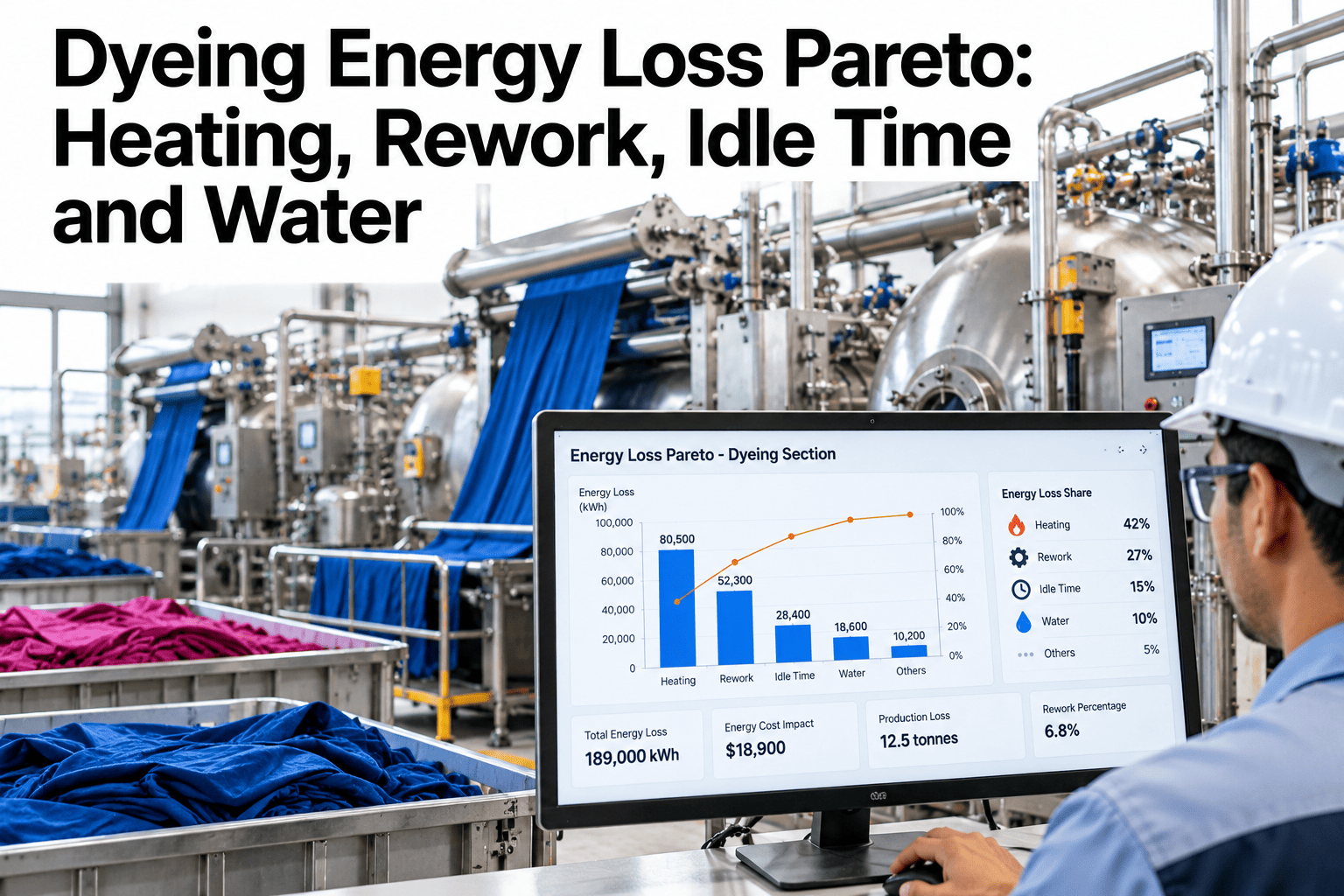
A dye house loses energy in more places than the heating curve alone. Reprocessing a batch that missed shade burns through steam a second time, idle machines between loads draw power for nothing, and water heated once rarely gets reused before it drains away. Without ranking these losses against each other, a mill tends to chase whichever one is most visible rather than whichever one actually costs the most. This guide covers how to build a loss Pareto across heating, rework, idle time and water, so the biggest opportunity gets addressed first. Dye houses ready to see their own losses ranked can book a demo with the iFactory AI team.
Dyeing Energy Loss Pareto: Heating, Rework, Idle Time and Water
Rank dye-house energy losses to prioritize the largest cost-saving opportunity first, not the most visible one.
Why the Loudest Problem Is Rarely the Biggest
An idle machine is easy to notice walking the floor, while a slightly inefficient heating curve across dozens of batches a week is invisible without the data lined up.
A Pareto ranking puts every loss category on the same scale, so effort goes toward the categories that actually move the energy bill, not just the ones easiest to see.
Four Loss Categories
Each category has its own signature in the data, and each needs its own source to measure accurately.
| Category | Typical Cause | Data Source |
|---|---|---|
| Heating | Fouled exchangers, slow ramp profiles | Steam and temperature logs |
| Rework | Shade miss requiring a second dye cycle | Quality and batch records |
| Idle time | Equipment running or heated between loads | Machine status logs |
| Water | Heated water drained without reuse | Water meter and drain records |
Building the Ranking
The Pareto is built in a short sequence that converts each category into a comparable cost figure.
Chase the Biggest Loss, Not the Loudest One
Book a 30-minute walkthrough and see your own dye house losses ranked from heating to water reuse.
A Sample Ranking, Illustrative
The figures below are invented to show the shape of a Pareto, not to benchmark your dye house.
Common Pareto Mistakes
The same errors repeat across mills building their first loss ranking.
What Happens After the Top Category Is Fixed
Once the leading loss category is addressed, the ranking naturally shifts, and the next category moves up to take its place.
This is expected and useful. A Pareto is not a one-time exercise but a rotating priority list that keeps pointing toward the next most valuable fix as earlier ones are resolved.
Frequently Asked Questions
How is rework energy actually measured?
A re-dyed batch is matched against its original batch record, and the second cycle's full energy use, steam, electricity and water, is attributed as rework loss rather than normal production cost. Book a demo to see rework cost isolated on your data.
What counts as idle time versus necessary standby?
Idle time refers to periods a machine draws energy with no batch in process and no planned maintenance underway, distinguishing it from necessary warm-standby periods built into the production schedule.
Can water reuse losses include both energy and water cost?
Yes, both the energy spent heating the water and the water cost itself can be included, giving a complete picture of what unreused hot water actually costs the dye house. Ask support how water cost is factored in.
Does this connect to our existing quality and batch systems?
In most cases, yes. iFactory AI reads batch, quality and meter data from existing systems to build the ranking without requiring a separate data entry process.
Fix the Loss That Actually Costs the Most
iFactory AI ranks heating, rework, idle time and water losses so your team knows exactly where to start. Book a walkthrough built around your dye house.