A loom running unattended for even a short stretch can turn out metres of fabric carrying the same broken pick or misweave over and over, because nothing on the machine itself knows the difference between good fabric and bad fabric — it just keeps weaving at the settings it was given. The operator walking the aisle catches some of this, eventually, on their next pass by that particular loom. Camera-based fabric monitoring systems watch continuously instead, evaluating the fabric surface as it forms on every single pick, and stopping the loom or alerting the operator the moment a defect appears rather than whenever someone happens to walk past. Book a demo of camera-based weaving inspection to see how continuous monitoring changes loom-side quality control.
Fabric Monitoring Cameras During Weaving: See Every Defect the Moment It Forms, Not on Your Next Walk-Past
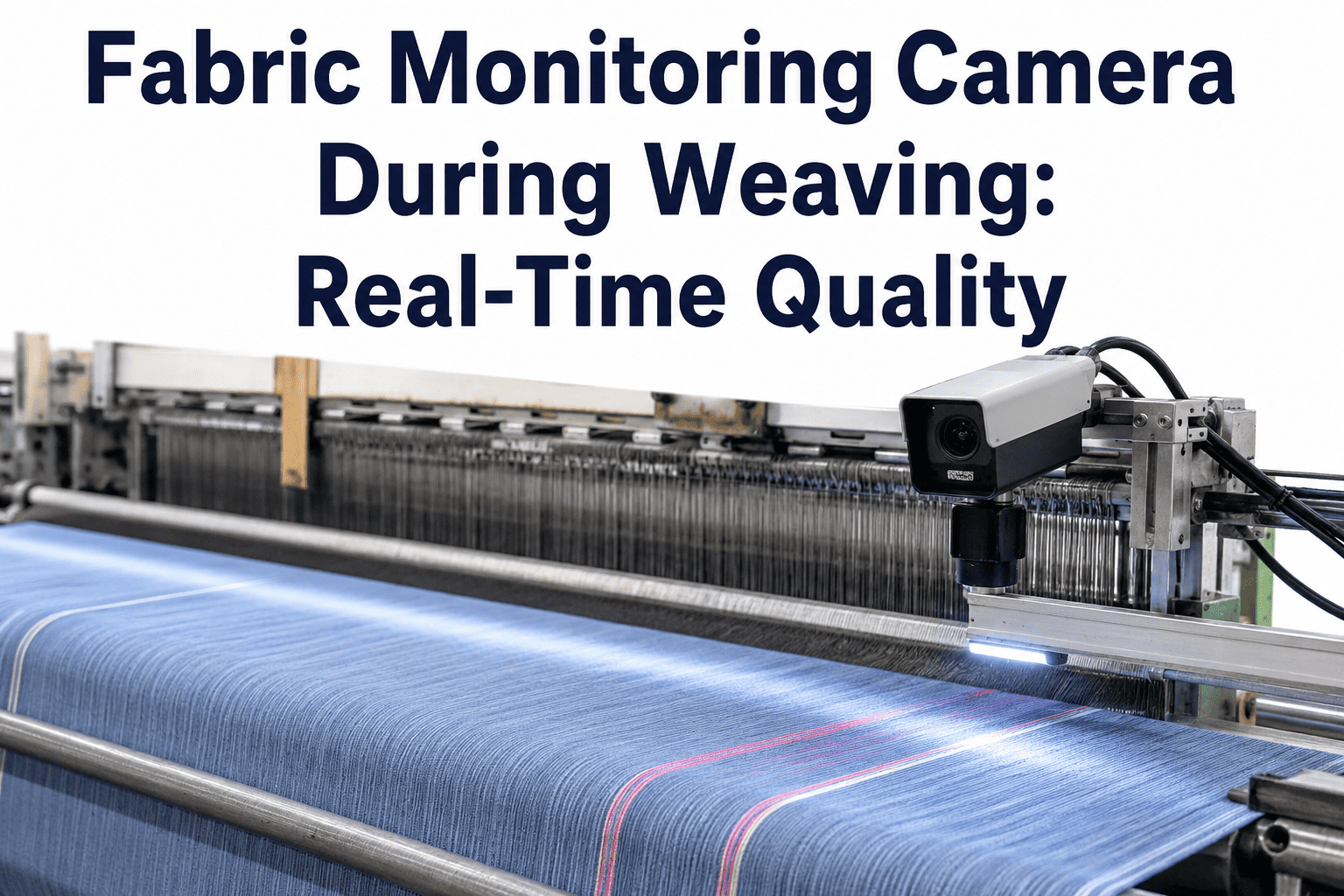
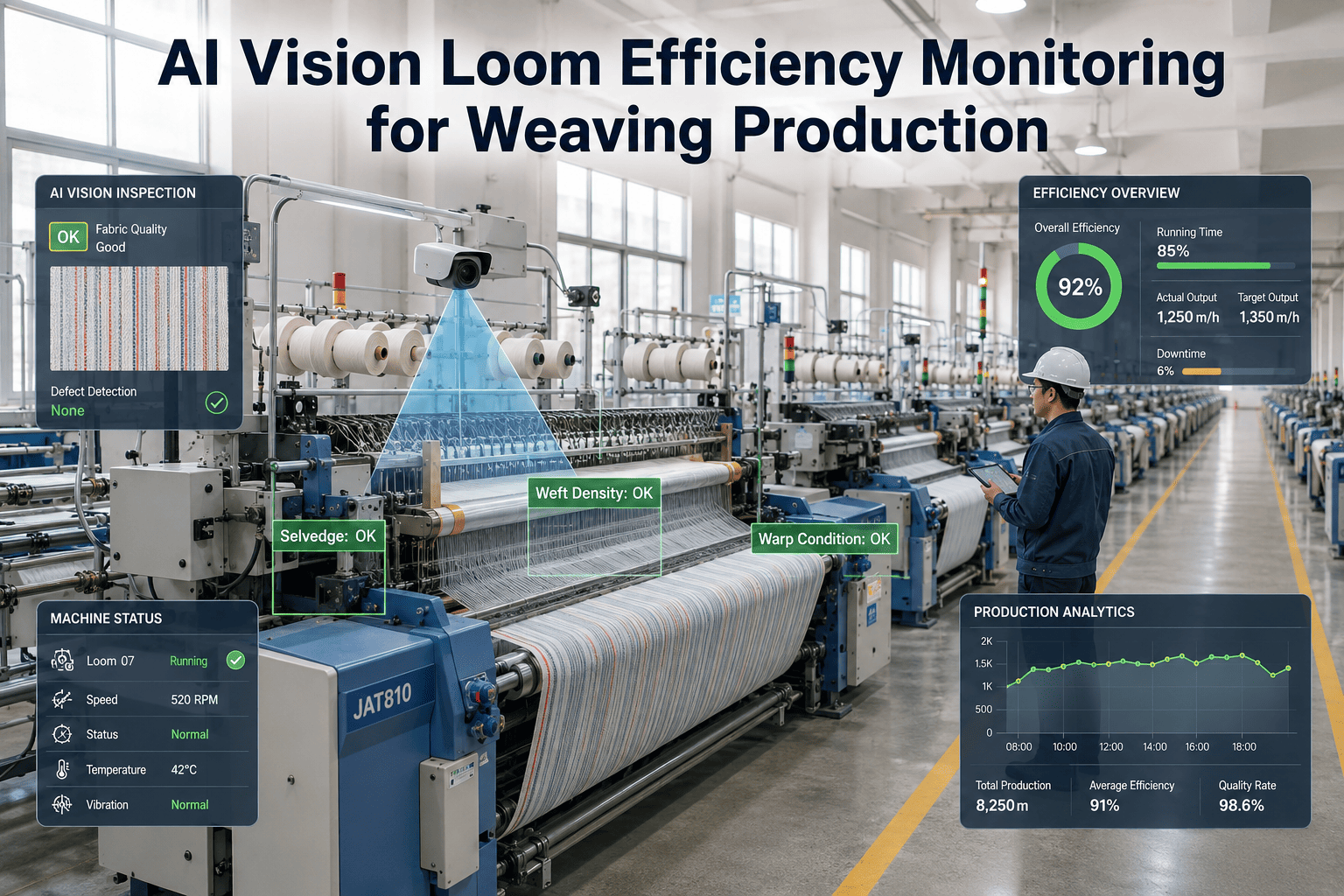
Real-time camera inspection mounted directly on the loom, watching fabric as it is woven and triggering immediate stop or alert before a single defect becomes metres of defective fabric.
What the Camera Catches
Common Weaving Defects Detected in Real Time
Broken Pick / Missing Pick
A weft yarn that breaks or fails to insert correctly, leaving a visible gap or thin line running across the fabric width — one of the most common and most visible weaving defects.
Misweave / Float
Warp or weft yarns interlacing incorrectly, creating a visible structural irregularity in the weave pattern that camera systems detect through pattern deviation analysis.
Oil Stains and Contamination
Lubricant, grease, or foreign material contacting the fabric surface during weaving, appearing as a visible mark that camera systems flag through colour and texture deviation detection.
Reed Marks and Tension Lines
Fine lines caused by uneven reed spacing or inconsistent warp tension, often subtle enough that a walking inspector can miss them entirely under normal factory lighting.
These four categories represent the most frequent weaving defects across most fabric types, but the underlying detection approach — continuous frame-by-frame comparison against an expected pattern — generalises to other defect types specific to particular fabric constructions as well, meaning the system's coverage typically expands in accuracy and defect-type range as more production data accumulates and the baseline pattern model is refined for your specific product mix.
How It Works
From Camera Frame to Loom Stop in Under a Second
Continuous Frame Capture
A high-speed camera mounted over the fell of the cloth captures the fabric surface continuously as it forms, synchronised to the loom's actual weaving speed.
Real-Time Pattern Comparison
Each captured frame is compared against the expected weave pattern and prior frames, flagging deviations in structure, colour, or texture as they appear.
Defect Classification
Detected deviations are classified by defect type and severity, distinguishing a genuine structural fault requiring an immediate stop from a minor cosmetic variation that can be logged for later review.
Immediate Stop or Operator Alert
High-severity defects trigger an immediate loom stop before further defective fabric is produced, while lower-severity findings generate an operator alert for review at the next available moment.
The entire sequence from frame capture to stop decision happens fast enough that the fabric length affected by a genuine defect is limited to a small span rather than an extended run, which is the core operational difference between this approach and any inspection method that depends on a human being physically present at the right loom at the right moment. Over a full production shift across many looms running simultaneously, this difference in detection speed accumulates into a substantial reduction in total defective fabric produced.
Watch Your Own Loom Feed in Real Time
iFactory Connects Every Camera-Monitored Loom to One Central Quality View
Individual loom cameras are valuable on their own, but their real power comes from being connected into a single view your quality team can monitor across the whole weaving shed — comparing defect rates across looms, identifying which machines need maintenance attention, and tracing recurring patterns back to root cause.
The Practical Difference
Walking Inspection vs. Continuous Camera Monitoring
| Factor | Manual Walking Inspection | Continuous Camera Monitoring |
|---|
| Coverage per loom | Periodic, during walk-past only | Every pick, continuously |
| Defect discovery delay | Minutes to hours, depending on route | Sub-second, at the point of formation |
| Fabric length affected per fault | Can extend to the next walk-past | Limited to a few centimetres before stop |
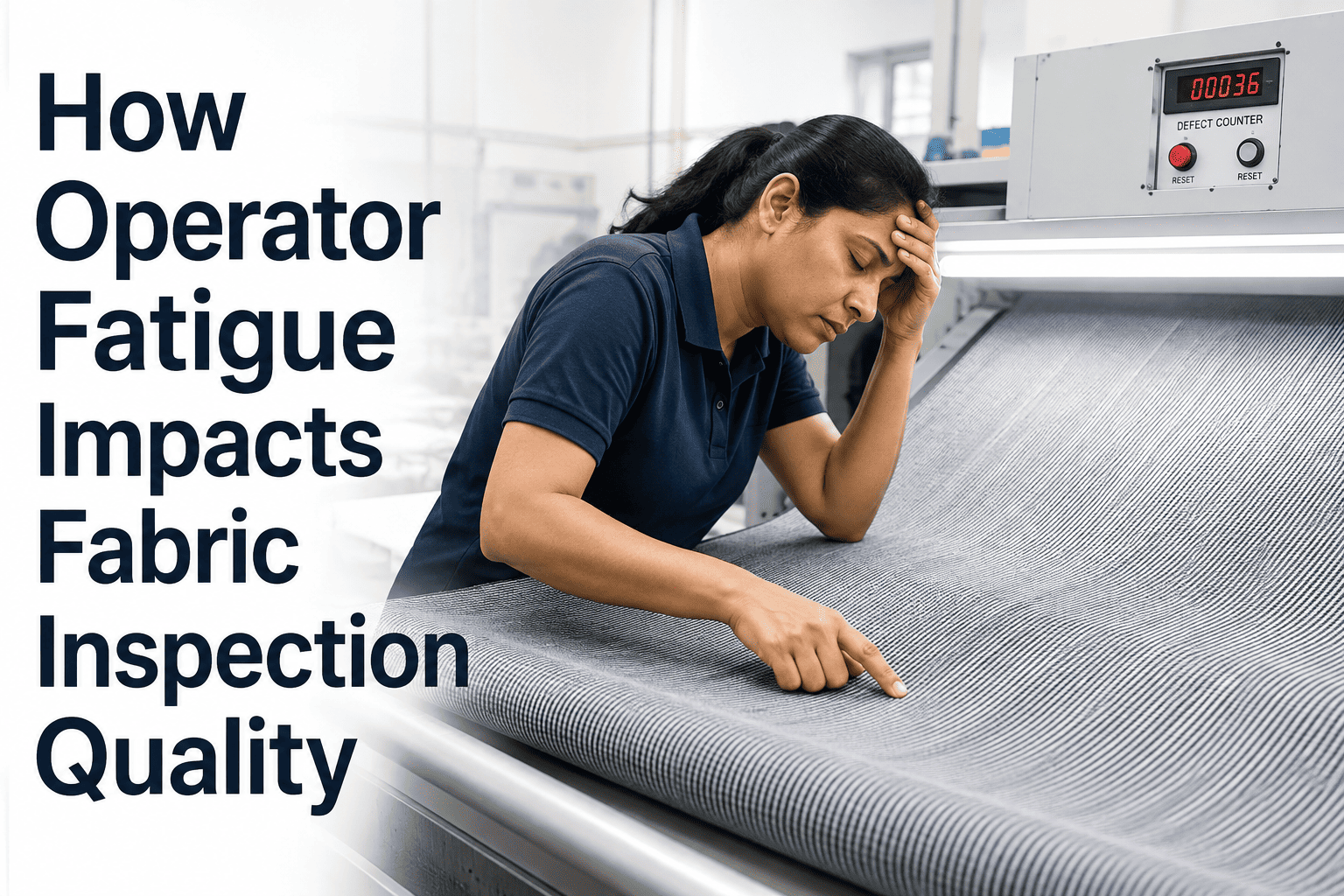
| Consistency across shifts | Varies with inspector attentiveness and fatigue | Consistent across all shifts and looms |
| Night shift coverage | Often reduced staffing and slower rounds | Unchanged — the camera does not tire |
Deployment Considerations
Getting Camera Monitoring Running Without Disrupting the Weaving Shed
Lighting Consistency
Camera systems depend on consistent lighting at the fell of the cloth — deployment typically includes assessing and, where needed, supplementing existing shed lighting to ensure reliable detection accuracy regardless of ambient conditions or time of day.
Fabric Type Calibration
Different fabric constructions and colours require calibration so the system's baseline pattern comparison correctly reflects what "normal" looks like for that specific fabric, rather than flagging expected pattern variation as a defect.
Stop Threshold Tuning
Deciding which defect severities trigger an immediate stop versus a logged alert requires input from your quality team, balancing defect prevention against unnecessary loom stoppage for minor, correctable variations.
Phased Rollout by Loom Priority
Most plants instrument their highest-value or highest-defect-rate looms first, validating the system's accuracy and operational workflow before expanding coverage across the full weaving shed.
A realistic deployment timeline typically allows two to three weeks per loom cluster for calibration and tuning before moving to full production reliance on the automated stop function, with the system initially running in alert-only mode so your team can review its accuracy against manual inspection findings before trusting it to trigger automatic stops. This transition period matters more than it might first appear — a system that starts stopping looms automatically before its calibration is fully validated against your specific fabric and lighting conditions risks generating enough false stops in the first days to undermine operator confidence in the technology, even if its underlying accuracy is ultimately very high once properly tuned.
Measuring Impact
Five Metrics That Show Camera Monitoring Is Working
Defective Metres Per Fault
Target: reduced to a few centimetres
The length of fabric produced between a fault beginning and the loom stopping. This is the single clearest before-and-after metric, since manual inspection intervals typically allow much longer defective runs than an automated stop.
Second-Quality Rate
Target: measurable reduction quarter over quarter
The percentage of woven fabric downgraded to second quality due to defects. A sustained reduction here directly reflects the value of catching faults earlier in the weaving process itself.
Mean Time to Detection
Target: sub-second per defect
Average time between a defect forming and the system flagging it. This metric captures the core value proposition of continuous monitoring versus periodic manual walk-past inspection.
False Stop Rate
Target: declining toward near-zero after tuning
The frequency of loom stops triggered by something other than a genuine defect. Tracking this closely during the first weeks of deployment is essential for building operator trust in the system.
Root Cause Traceability Rate
Target: 100% of flagged defects traced
The percentage of flagged defects that can be traced to a specific likely cause — reed wear, tension drift, yarn quality — using the accumulated camera data and maintenance records together.
Weaving Shed Perspective
Weavers who have worked the floor for years sometimes worry that a camera system is being installed to replace their judgement, but what I have actually seen happen is closer to the opposite — the camera catches the defects that happen between walk-past rounds, which no human coverage schedule was ever going to fully close, and that frees the operator's attention for the things a camera genuinely cannot do, like noticing an unusual sound from the loom or a subtle change in yarn behaviour that precedes a mechanical issue. The best deployments treat the camera as an extra set of eyes that never blinks, not a replacement for the operator's own expertise.
Marisol Andreou-Whitfield
Weaving Shed Manager · 16 years in fabric production and quality systems · Former technical trainer for automated loom inspection deployment across multiple weaving facilities
Weaving Camera Questions
Frequently Asked Questions
Will the camera system generate false stops on fabric patterns that are intentionally irregular, like jacquard or novelty weaves?
Complex or intentionally irregular weave patterns require careful calibration during commissioning so the system's baseline understanding of "normal" accurately reflects the intended pattern rather than treating deliberate design variation as a defect. This calibration step is more involved for jacquard and novelty weaves than for simple plain or twill constructions, and typically involves running representative fabric samples through the system before full deployment to establish an accurate pattern baseline.
Book a session to discuss calibration requirements for your specific fabric constructions.
How does the system handle different fabric colours, especially very dark or very light fabrics where defects can be harder to see visually?
Camera-based detection uses more than simple visual colour contrast — texture and structural pattern analysis remain effective across the colour range, and lighting calibration specific to darker or lighter fabrics helps maintain consistent detection accuracy where pure visual inspection by a human eye would genuinely struggle. That said, extremely dark fabrics can present a harder detection challenge than mid-tone fabrics, and this is worth discussing specifically for your product mix during the evaluation process so expectations are set accurately before deployment.
Contact support for a fabric-specific detection accuracy assessment.
Does installing cameras on every loom require significant downtime or modification to the machines themselves?
Camera mounting is typically designed to attach to the loom frame without requiring significant mechanical modification, and installation for a single loom usually takes a matter of hours rather than days, meaning a phased rollout across a weaving shed can proceed loom by loom without requiring an extended full-shed shutdown. Initial calibration for each loom does require a short period of monitored operation to establish accurate baselines for that specific loom and fabric combination before the system is considered fully operational.
What happens to the fabric footage and defect data the camera system captures — can it be used for anything beyond real-time stopping?
Beyond the real-time stop and alert function, the accumulated defect data becomes a valuable ongoing resource for identifying patterns — which looms have elevated defect rates, which shifts show different defect profiles, and which defect types correlate with specific maintenance conditions such as reed wear or tension calibration drift. This historical view supports both maintenance prioritisation and operator training, since specific recorded defect examples can be used to illustrate exactly what a particular fault looks like and how it was correctly resolved.
Book a session to see how this historical data is presented in the iFactory dashboard.
How do we decide which defects should trigger an automatic loom stop versus just an alert for later review?
This threshold decision should be made collaboratively between your quality and production teams, weighing the cost of continuing to weave with a given defect type against the cost of an unnecessary stop for something that turns out to be minor or self-correcting. Structural defects like broken picks or major misweaves that would render fabric unsellable are typically set to trigger an immediate stop, while more cosmetic or borderline variations are often set to alert-only initially, with thresholds refined over the first weeks of operation as your team reviews actual flagged instances and adjusts sensitivity accordingly. This threshold table is not fixed permanently once set — most plants revisit it periodically as they gain confidence in the system and as fabric styles running through a given loom change, since a threshold appropriate for one fabric construction may need adjustment for a different one.
Stop Discovering Defects on Your Next Walk Past the Loom
Give Every Loom Continuous, Real-Time Fabric Quality Coverage
iFactory's camera-based weaving inspection watches fabric continuously as it forms, catching broken picks, misweaves, and contamination the moment they appear — connected into one central quality view across your entire weaving shed.