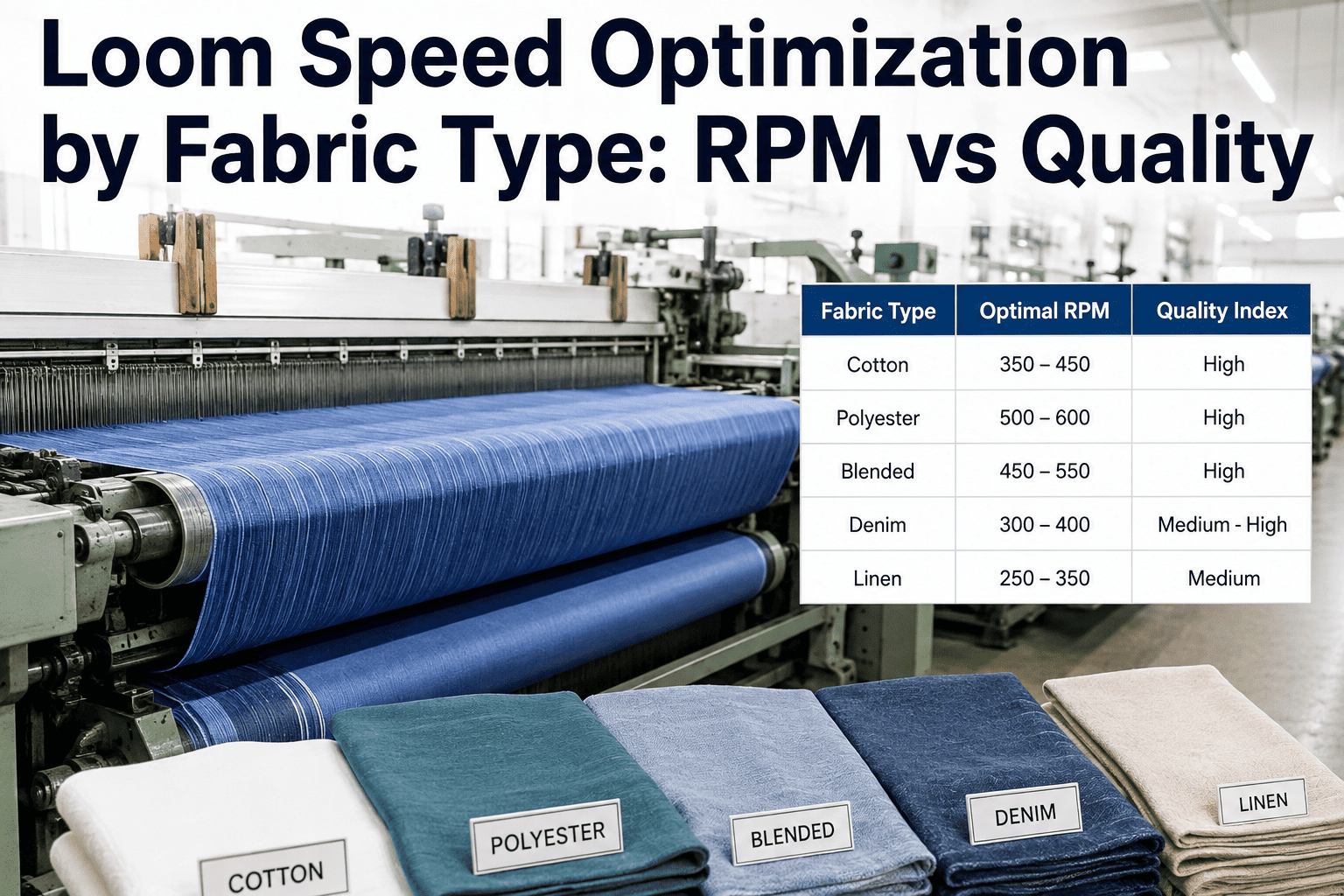
Running every loom at the same RPM regardless of what fabric is on it leaves output on the table in one direction or quality at risk in the other, because the actual speed ceiling for acceptable quality varies significantly by fabric construction, yarn count, and weave density. A coarse, open-weave fabric can often run meaningfully faster than a fine, dense construction on the same machine before defect rates start climbing, yet many plants set a single house speed and apply it uniformly regardless of what is actually being woven. Determining the real maximum speed for each fabric type, rather than assuming one number fits all, is where a meaningful throughput gain is usually hiding. Book a demo to see speed-quality correlation for each fabric type you run.
Why One House Speed Rarely Fits Every Fabric
Speed interacts with fabric-specific variables in ways that make a single uniform setting either too conservative for some styles or too aggressive for others.
Weave Density
Denser constructions require more beat-up force and precision per pick, and running them at the same speed as an open-weave fabric increases the risk of beat-up-related defects and yarn stress.
Yarn Count
Finer count yarns have less tensile margin at higher insertion speeds, meaning a speed that is comfortably safe for coarse yarn can push fine count yarn toward its break threshold.
Weave Pattern Complexity
Complex weave patterns with more frequent shed changes place additional mechanical demand on the loom per unit time, which can lower the practical speed ceiling compared to a simple plain weave.
Sett and Fabric Width
Wider fabrics and tighter setts increase the insertion distance and force required per pick, both of which factor into where defect rates begin climbing as speed increases.
Find the Real Speed Ceiling for Each Fabric Style
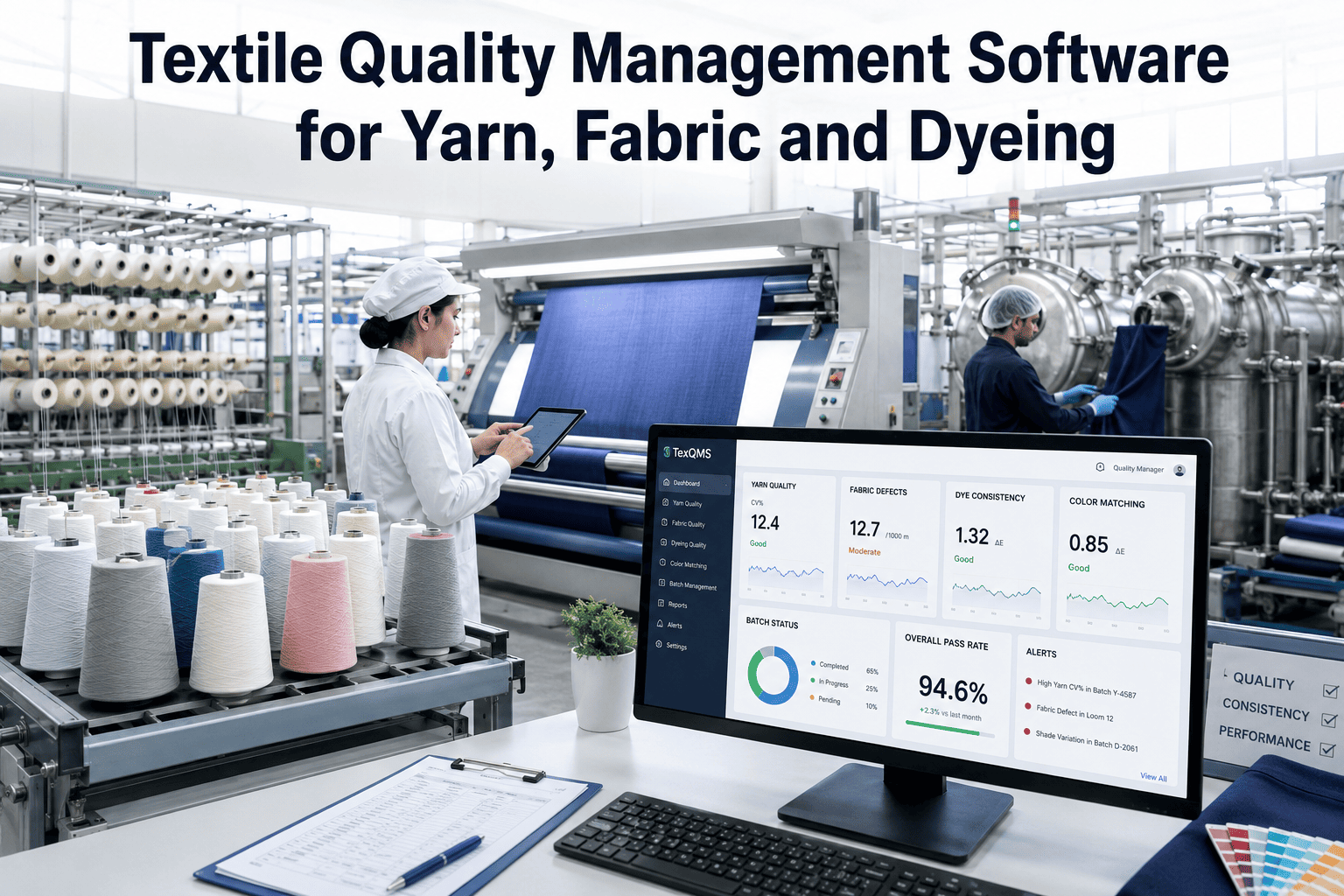
iFactory correlates loom RPM against defect rate by fabric style automatically, showing exactly where speed can be raised safely and where it already runs too hot.
A Method for Determining Maximum Speed Per Fabric Type
1
Run controlled speed increments on a test batchStarting from the current house speed, run short controlled batches at incremental speed steps for a specific fabric style, recording defect rate at each increment rather than jumping directly to a target speed.
2
Plot defect rate against RPM for that stylePlotting the relationship reveals the point where defect rate begins climbing sharply rather than gradually, which is the practical ceiling for that specific fabric rather than an arbitrary safety margin below the machine's mechanical maximum.
3
Set the production speed just below the inflection pointRunning just below where defect rate begins its sharp rise gives most of the available throughput gain while keeping a reasonable margin against day-to-day process variation.
4
Repeat for each distinct fabric style in the production mixSince the ceiling genuinely differs by construction, count, and pattern, the process needs to be repeated for each meaningfully distinct fabric style rather than assuming one style's result applies broadly.
5
Monitor and revisit as yarn source or lot changesA change in yarn supplier or lot can shift the speed-defect relationship for a given fabric style, so the determined ceiling benefits from periodic revalidation rather than being treated as permanently fixed.
Illustrative Speed-Defect Relationship by Fabric Type
| Fabric Type | Relative Speed Ceiling | Limiting Factor |
|---|
| Coarse, Open-Weave | Higher | Yarn strength rarely limiting at this range |
| Medium Density, Plain Weave | Moderate | Beat-up force and shed timing |
| Fine Count, Dense Construction | Lower | Yarn tensile margin at insertion |
| Complex Pattern, Frequent Shed Change | Lower | Mechanical demand per shed cycle |
Stop Setting One Speed for Every Fabric on the Floor
iFactory identifies the defect-rate inflection point for each fabric style automatically, so speed settings reflect what each construction can actually sustain.
What Fabric-Specific Speed Optimization Delivers
Per Style
Speed Ceiling Determined Individually
Inflection Point
Not Guesswork, Sets the Limit
Revalidated
When Yarn Source Changes
We ran one house speed across every style for years because setting individual speeds felt like too much manual work to maintain. Once we tested our coarser fabric styles specifically, we found we had been leaving real throughput on the table on those constructions the entire time, while our finest count style was actually running slightly too fast and contributing more to our defect rate than we realized.
Loom Shed In-Charge
Multi-Fabric Weaving Unit — Bhilwara
Frequently Asked Questions
QHow many speed increments should a controlled test cover to find the real ceiling?
A useful test typically covers at least four to five speed steps spanning from current running speed up toward the machine's mechanical maximum, with enough production volume at each step to generate a statistically meaningful defect rate rather than a handful of picks that could be noise. Too few increments risks missing the actual inflection point and either understating or overstating the safe ceiling.
QDoes raising speed on one fabric style affect maintenance needs differently than others?
Yes, fabric styles that require higher beat-up force or more frequent shed changes place correspondingly higher mechanical stress on the loom at a given speed increase, which can mean maintenance intervals need to be tightened for those specific styles even if a coarser, lower-stress style handles the same speed increase without any added wear.
QHow often should the speed ceiling for a given fabric style be revalidated?
Revalidation is most important whenever the yarn supplier, yarn lot, or a component of the fabric construction changes, since any of these can shift the underlying yarn strength or weave dynamics that originally determined the ceiling. Absent a change in inputs, periodic revalidation on a fixed schedule, such as quarterly, provides a reasonable check against gradual machine wear affecting the relationship.
Talk to an expert about a revalidation schedule for your styles.QIs it worth doing fabric-specific speed optimization for a style that only runs occasionally?
The value depends on production volume for that style, since the time invested in a controlled speed test is only worthwhile if the resulting throughput gain over the style's production run justifies it. For high-volume, frequently repeated styles the payoff is usually clear, while a one-off or rarely run style may not justify a dedicated optimization test.
QCan fabric-specific speed data be built into the loom's own control settings automatically?
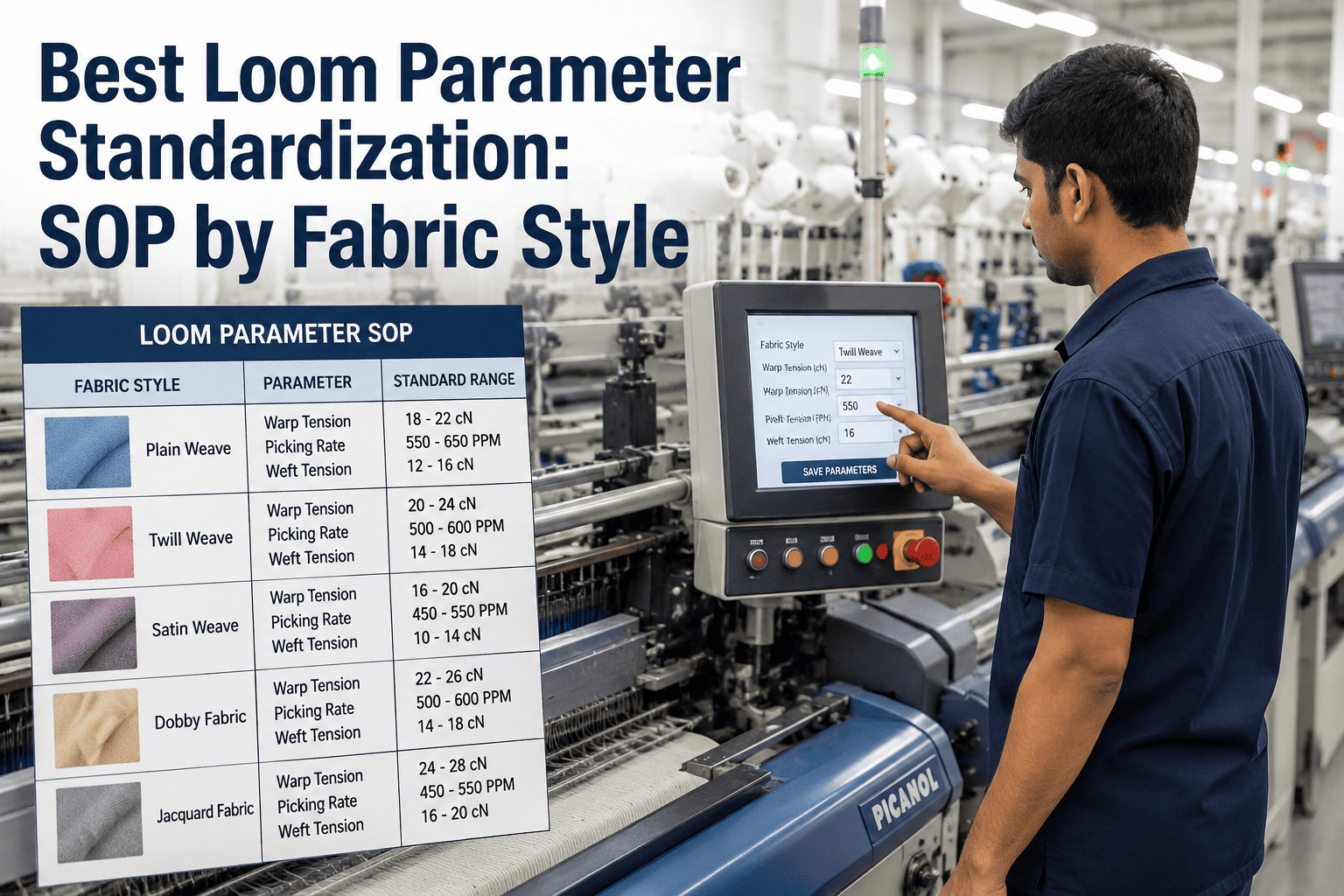
Once a speed ceiling is determined for a given fabric style, it can be documented as a standard setting tied to that style's recipe, so operators or automated recipe loading apply the correct speed whenever that style comes up in the production schedule, rather than relying on manual adjustment or memory each time.
Book a demo to see style-linked speed settings in practice.
Give Every Fabric Style Its Own Real Speed Ceiling
iFactory correlates RPM against defect rate for each fabric style automatically, unlocking throughput on styles running too conservatively while protecting quality on styles running too fast.