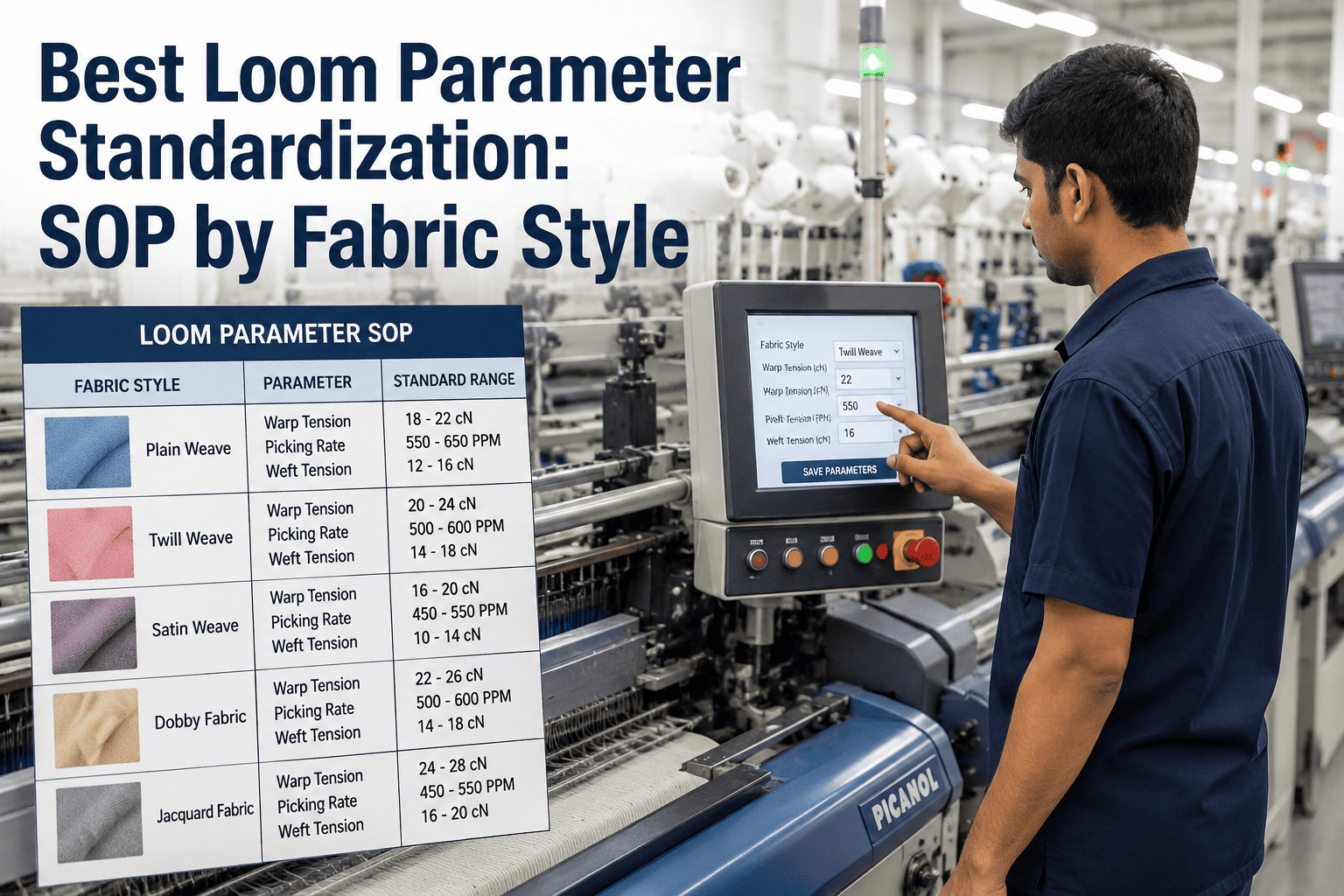
Ask five different weavers on the same floor what tension setting a particular fabric style should run at, and it is common to get five different answers, each defended by personal experience rather than a documented standard. This kind of informal, memory-based parameter setting works reasonably well until a shift changes, an experienced weaver takes leave, or a style that hasn't run in months comes back into the schedule, at which point quality variation creeps in from nothing more than inconsistent settings. Standardizing tension, speed, and insertion parameters into a documented SOP per fabric style closes that gap and makes consistent quality independent of which specific operator is running the machine that day. Book a demo to see parameter standardization tracked against your fabric styles.
What Belongs in a Loom Parameter SOP
A useful SOP is specific enough that any qualified operator can set up the loom correctly without relying on personal memory or guesswork.
Warp Tension Setting
The specific tension value and any tension profile adjustment appropriate to the fabric's yarn count and sett, documented as a number rather than a general instruction like "medium tension."
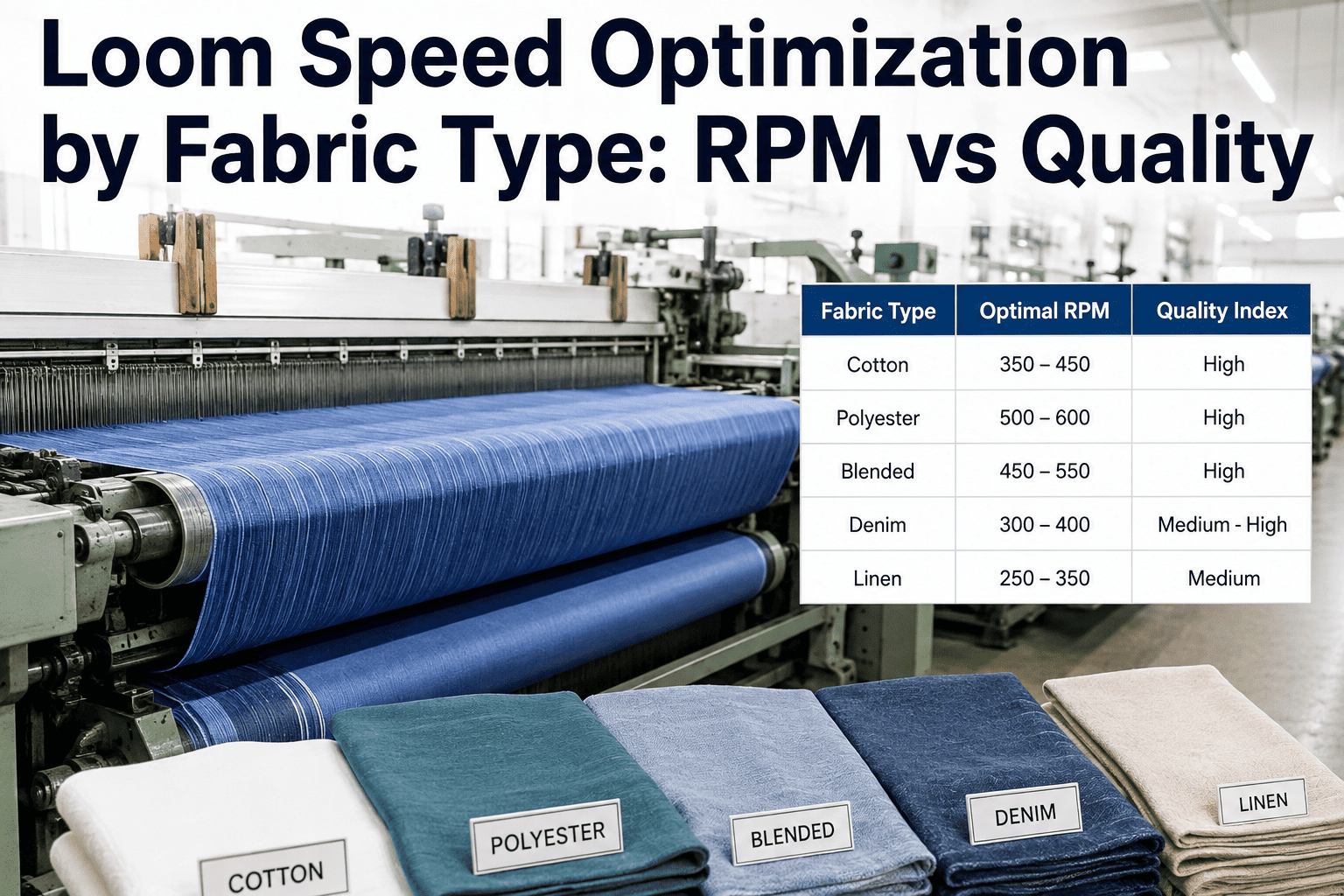
Loom Speed
The determined maximum sustainable RPM for that specific fabric style, ideally set from actual speed-defect testing rather than a default house speed applied uniformly.
Insertion Parameters
Nozzle timing, gripper tension, or projectile release timing depending on loom type, documented at the specific values validated for that fabric style rather than left at whatever the previous style used.
Shed Timing and Pattern Settings
Shed timing adjustments relevant to the specific weave pattern being run, since a pattern change without a corresponding shed timing update is a common and avoidable source of defects.
Turn Operator Memory Into a Documented, Repeatable Standard
iFactory stores validated tension, speed, and insertion parameters per fabric style, so the correct setup loads consistently regardless of which operator or shift is running it.
Building the SOP: A Five-Stage Process
1
Document current settings actually in useBefore standardizing, record what each operator is actually setting for each fabric style currently, since this reveals the real scope of variation across shifts and machines rather than an assumed baseline.
2
Identify the best-performing setting combination for each styleComparing quality and efficiency outcomes across the range of settings currently in informal use identifies which combination is actually producing the best results, rather than assuming the most senior operator's approach is automatically correct.
3
Validate the chosen settings with controlled trial runsBefore finalizing the SOP, running the proposed standard settings under controlled conditions confirms the combination performs as expected before it is rolled out as the required standard across all shifts.
4
Document and distribute the SOP per fabric styleEach fabric style gets its own documented parameter sheet with specific values, made accessible to every operator and shift rather than relying on verbal handoff or memory between shift changes.
5
Audit compliance and update as conditions changePeriodically verifying that actual loom settings match the documented SOP catches drift back toward informal practice, and the SOP itself gets revisited whenever yarn source or machine condition changes meaningfully.
Before and After Standardization
| Aspect | Before Standardization | After Standardization |
| Setting Source |
Individual operator memory or estimate |
Documented SOP per fabric style |
| Shift-to-Shift Consistency |
Varies by who is on shift |
Consistent regardless of operator |
| New Operator Onboarding |
Relies on informal mentoring |
Follows documented reference sheet |
| Style Restart After Gap |
Re-estimated from memory |
Loaded directly from SOP record |
Make Quality Independent of Which Operator Is on Shift
iFactory keeps validated fabric-style parameter sheets accessible and auditable, closing the gap between documented standard and what actually runs on the floor.
What Standardization Delivers Over Time
4
Core Parameter Groups Documented
Per Style
Not a Single Plant-Wide Default
Auditable
Compliance Checked, Not Assumed
We had one style that only ran once every few months, and every time it came back into rotation quality would dip for the first day or two while whoever was on shift tried to remember the old settings. Once we wrote the actual tension and speed values down as a proper SOP, that dip disappeared completely, because it was never a skill problem, it was simply a documentation gap.
Weaving Floor Manager
Multi-Style Weaving Unit — Panipat
Frequently Asked Questions
QHow detailed does a loom parameter SOP need to be to actually work?
An effective SOP specifies exact numeric values for tension, speed, and insertion parameters rather than general descriptive language, since a phrase like "moderate tension" leaves room for the same operator-to-operator variation the SOP is meant to eliminate. Specific numbers, ideally validated through controlled trial runs rather than estimated, are what make the standard actually enforceable and auditable.
QHow do we choose which operator's current settings to standardize around when several are already running the same style differently?
Rather than defaulting to seniority, comparing the actual quality and efficiency outcomes each operator's settings have been producing on that style identifies the best-performing combination objectively, which sometimes turns out to differ from what the most experienced operator assumed was correct. This comparison is exactly why documenting current settings before standardizing matters, since it surfaces the real variation and its actual outcomes.
Talk to an expert about running this comparison on your floor.
QHow often should a fabric style's SOP be revisited once it is established?
A documented SOP should be revisited whenever the yarn source, yarn lot, or a component of the fabric construction changes meaningfully, since any of these can shift the parameters that were originally validated. Absent such a change, periodic audit on a fixed schedule catches gradual drift in machine condition that might warrant a parameter adjustment even without an input change.
QDoes parameter standardization reduce the flexibility operators have to respond to real-time conditions?
A well-built SOP documents the validated starting point rather than eliminating operator judgment entirely, since conditions like humidity or a specific yarn lot variation can still call for a documented, bounded adjustment range rather than an unlimited departure from standard. The goal is removing unnecessary, undocumented variation, not removing legitimate operator response to real conditions.
QHow is SOP compliance actually audited on a busy production floor?
Comparing actual loom settings in use against the documented SOP for the style currently running, rather than relying on a manual walk-through audit alone, is the most reliable way to catch drift without adding significant overhead to floor supervision. Automated comparison against the documented standard flags a mismatch as soon as it occurs rather than at the next scheduled audit.
Book a demo to see automated SOP compliance tracking.
Make the Right Setting the Default, Not the Exception
iFactory documents and audits validated tension, speed, and insertion parameters per fabric style, so quality stops depending on which operator happens to be on shift.