Ask a weaver what ruins a good warp and tension comes up almost every time. Too tight and ends snap, too loose and the shed turns untidy, and uneven tension leaves streaks that only appear once the cloth is off the loom. The trouble is that tension changes slowly, so by the time a defect shows, hundreds of metres are already woven. Watching it continuously changes that story, and weaving teams can ask iFactory AI how warp tension is tracked across looms.
Why Warp Tension Decides Quality and Loom Stability
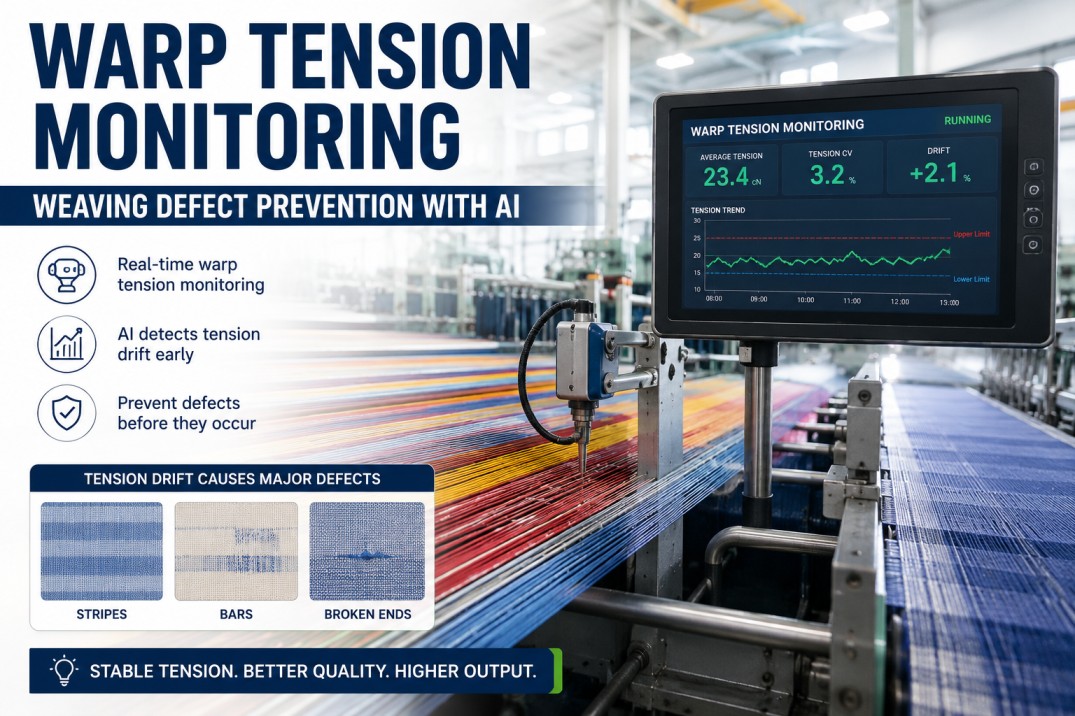
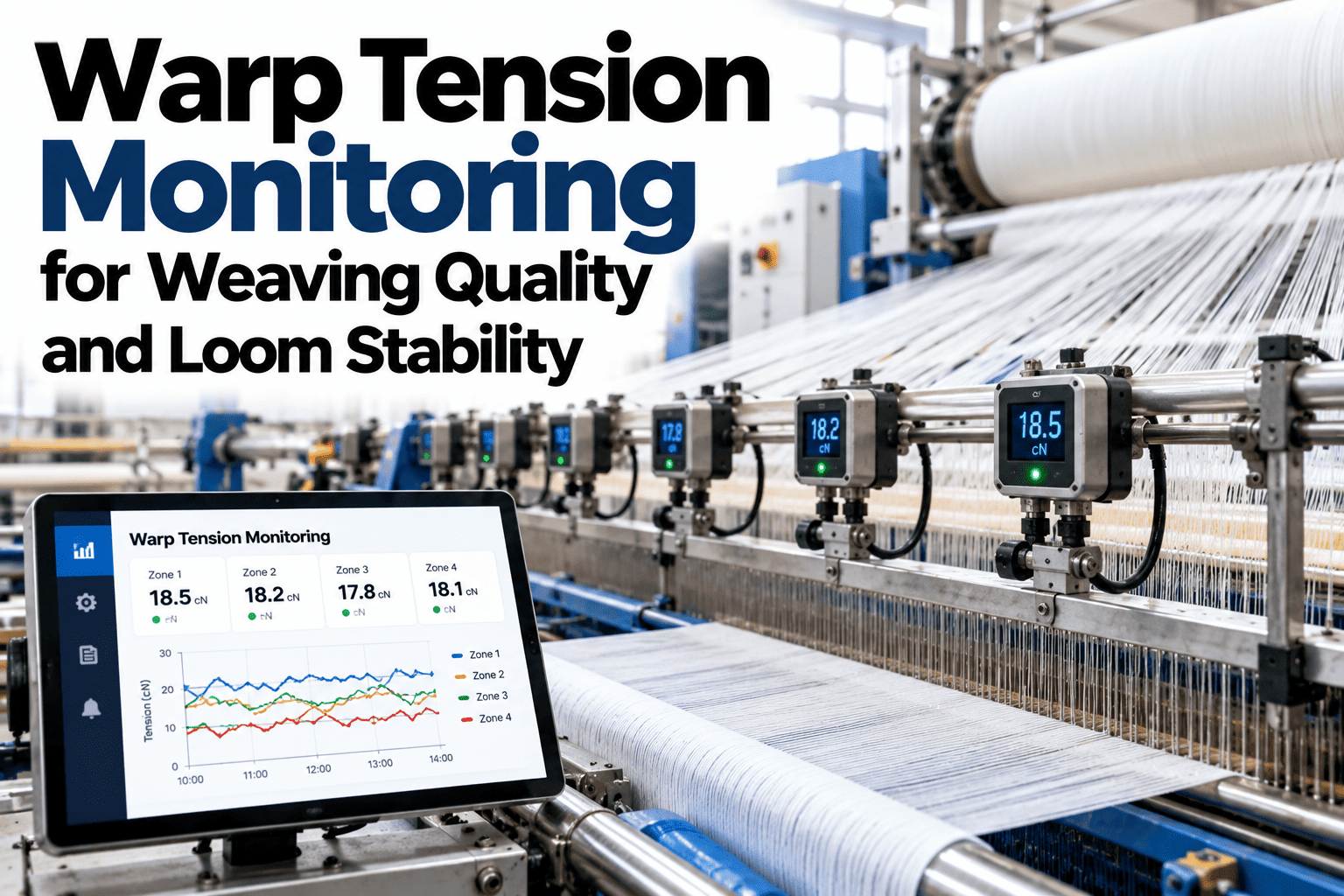
Steady tension keeps the shed clean and the cloth even. iFactory AI trends tension by loom and beam so a drift is corrected before it becomes a defect.
Follow the Warp From Beam to Cloth
Tension is shaped at every point the warp touches. A problem anywhere along this path shows up at the fell of the cloth.
What Uneven Tension Looks Like Across the Width
A healthy warp is flat across its width. The chart shows an illustrative uneven beam, with the edges pulling harder than the centre.
Reading the Defects Back to Their Causes
Fabric defects are symptoms. This table links the most common ones to likely tension causes, so inspection starts in the right place.
| Defect | Likely Tension Cause | First Check |
|---|---|---|
| Starting marks | Tension change on restart | Let-off and take-up settings at restart |
| Tight or slack ends | Uneven beam or yarn variation | Beam build and sizing consistency |
| Streaks and bars | Cyclic tension fluctuation | Let-off mechanism and back rest movement |
| Frequent warp breaks | Overall tension too high | Back rest position and warp stop motion |
How Yarn, Sizing and Beam Quality Feed Tension
Tension problems often start before the warp reaches the loom. Preparation quality sets the ceiling for what the loom can do.
Yarn variation
Count and strength differences between ends mean some ends carry more load than others at the same nominal tension.
Sizing quality
Uneven size pick-up changes how ends behave under tension and how easily they abrade at the heald and reed.
Beam build
A beam wound with uneven density or tension unwinds unevenly, creating drift as the warp runs down.
Handling and storage
Dented flanges, damp storage or rough handling introduce faults that appear only once the beam is on the loom.
Which Causes Create Which Symptoms
Not every tension cause produces the same symptom. This matrix, shown as an illustration, helps narrow the search.
| Cause | Tight Ends | Slack Ends | Streaks |
|---|---|---|---|
| Uneven beam build | Moderate | High | Moderate |
| Worn let-off mechanism | Moderate | Moderate | High |
| Back rest position | High | Moderate | Moderate |
| Yarn count or strength variation | High | Moderate | High |
| Uneven sizing | Moderate | Moderate | High |
Spot Tension Drift Before the Cloth Shows It
Book a 30-minute session and iFactory AI will review your looms, styles and defect history to show where tension monitoring prevents the most rework.
A Simple Five-Step Tension Routine
Good tension control is a habit more than a gadget. These steps work whether you monitor by hand or by data.
Agree the target tension for each style and record it.
Read tension at the same points on every loom.
Judge each loom against its neighbours on the style.
Correct drift at the let-off or back rest.
Log what changed so patterns appear over time.
A Composite Scenario: The Style That Kept Streaking
This is a composite example, not a named weaving unit. It shows how tension data shortens a long search.
What iFactory AI Adds
iFactory AI is smart manufacturing and industrial software for weaving and other textile operations. Explore tension monitoring in a live product tour on realistic loom data.
Tension Trends by Loom
Every loom and beam gets a continuous tension view against its target.
Style Comparison
Looms on the same style are compared so outliers stand out.
Defect Linking
Fabric defects are tied back to the tension events that preceded them.
Restart Tracking
Tension changes at restarts are tracked to reduce starting marks.
A Loom-Side Tension Checklist
Use this list at every warp start and whenever a defect appears. It takes a few minutes and catches most common issues.
Warp Types and Tension Habits
Different yarns tolerate tension differently. Matching practice to yarn type avoids both breaks and slack ends.
| Warp Type | Tension Behaviour | Practical Habit |
|---|---|---|
| Cotton and spun yarns | Hairiness and size matter for abrasion | Monitor breaks and sizing consistency closely |
| Polyester and filament yarns | Sensitive to peaks and static | Keep tension steady and avoid sudden changes |
| Blended yarns | Behaviour depends on the blend and finish | Use style-specific targets, not a shared value |
| Fine count warps | Low strength per end | Hold lower tension and watch the let-off closely |
Mistakes That Hide Tension Problems
Some habits make tension problems harder to see. Avoiding them speeds up diagnosis.
Using one target for every style
A shared value hides style-specific issues.
Adjusting without recording
Unrecorded changes make causes impossible to trace later.
Ignoring restart behaviour
Many marks trace back to the first picks after a stop.
Judging only by warp breaks
Breaks are late evidence, while tension trends are early evidence.
Rolling Out Tension Monitoring in Four Weeks
A short, focused rollout keeps attention on results. This sequence works for a first group of looms.
Review of Tension Monitoring Practice
A practical review of what helps weaving teams control tension, written as editorial guidance rather than a named expert quote.
Compare, do not just measure
A loom is judged best against its neighbours on the same style, not against a fixed number alone.
Watch the restarts
Many starting marks trace back to tension changes at restart, so these moments deserve attention.
Link defects to events
Tying each defect to a tension event teaches the team where to look next time.
Frequently Asked Questions
Why does tension drift during a warp?
The effective diameter of the beam changes as yarn unwinds, and let-off mechanisms must compensate. Wear, yarn variation and restarts add further movement. See how drift appears on a live warp in a short walkthrough. Tension is rarely constant, so the goal is to keep it inside a narrow band rather than at one fixed value.
Can tension be monitored on older looms?
Often yes, using added sensors or existing controller signals, though older looms may offer fewer points. A quick audit shows what is practical and what would need extra hardware. Even a few sensors on the worst looms can show whether tension is the real cause before a larger investment is made.
How does tension relate to warp breaks?
Higher overall tension and sharp tension peaks raise the load on weaker ends, so breaks rise. The support team can explain how breaks are linked to tension data on your looms. Watching tension and break counts together shows whether adjustments at the let-off or back rest are working.
Is the same target right for every style?
No. Yarn type, density and construction change the target, so each style needs its own recorded value. Reusing one number for everything hides problems. Recording the target on the style card gives every shift the same reference when a loom needs adjusting.
Where should a weaving unit begin?
Start with a style that has recurring defects and a handful of looms. Book a call to plan a tension pilot and agree what improvement would count as success. A quick win is often a repeating defect that finally has a visible cause in the tension trend.
Give Every Warp the Tension It Deserves
iFactory AI makes tension drift visible loom by loom, so quality is protected before cloth is lost. Book a walkthrough to see it against your own warps and styles.