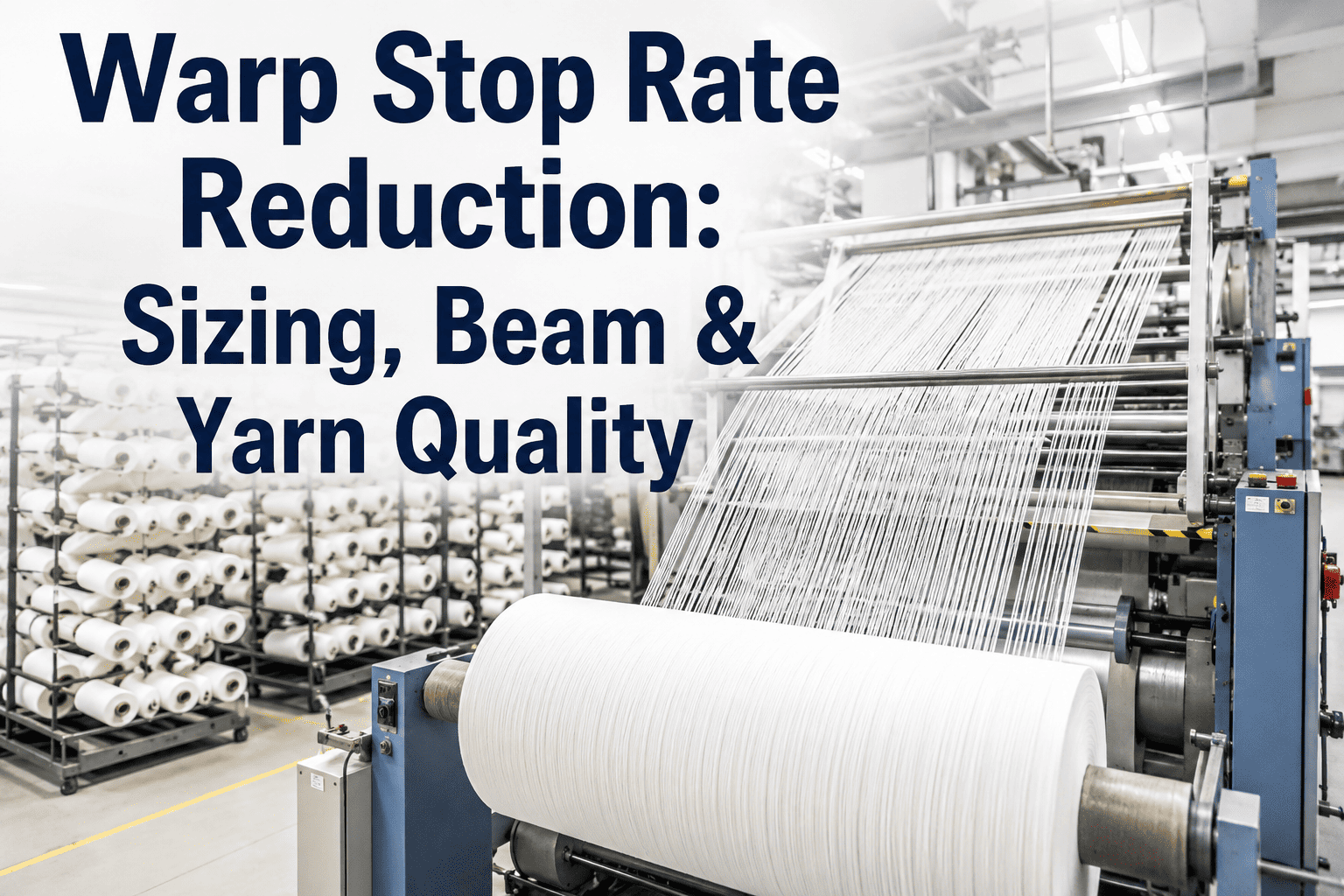
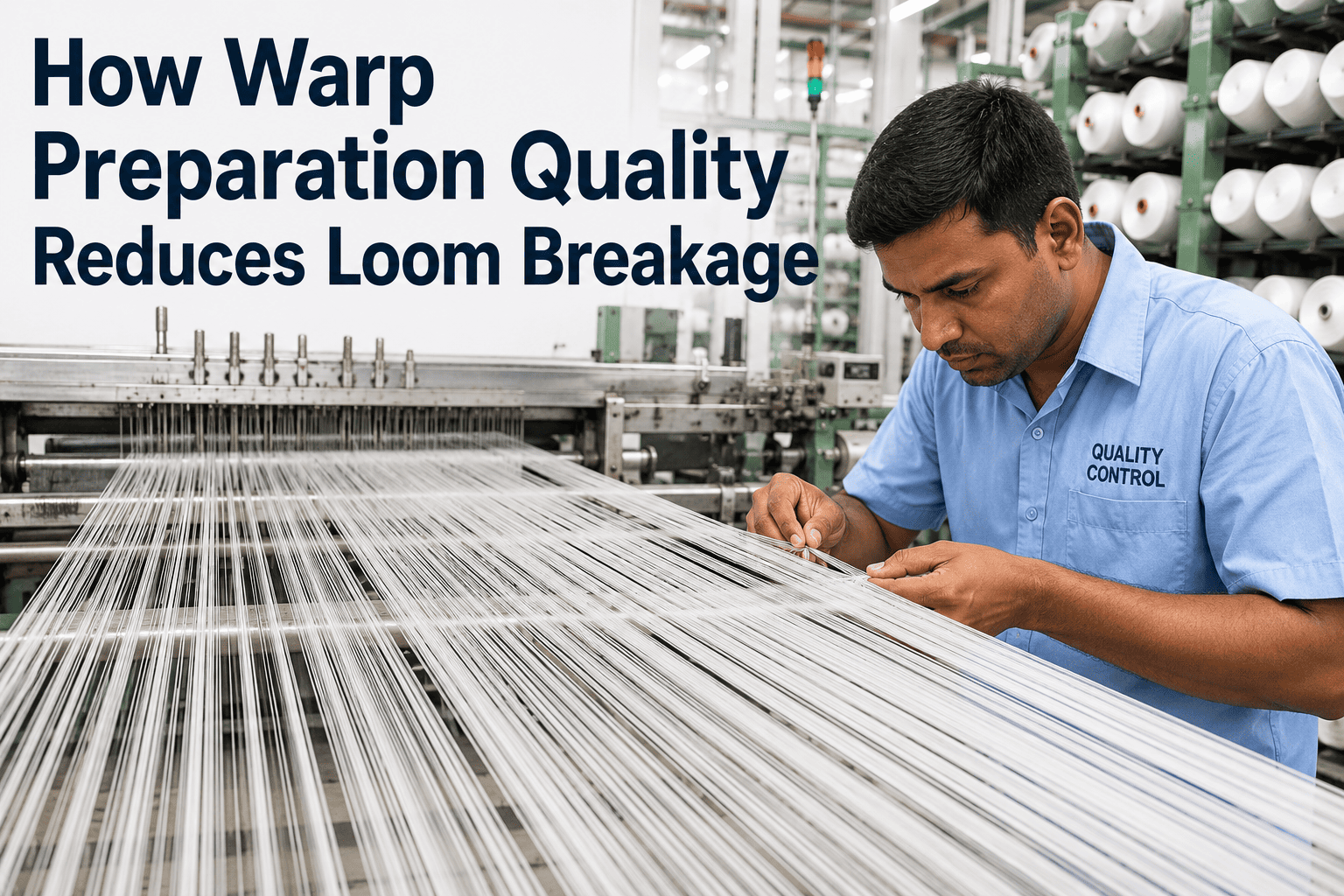
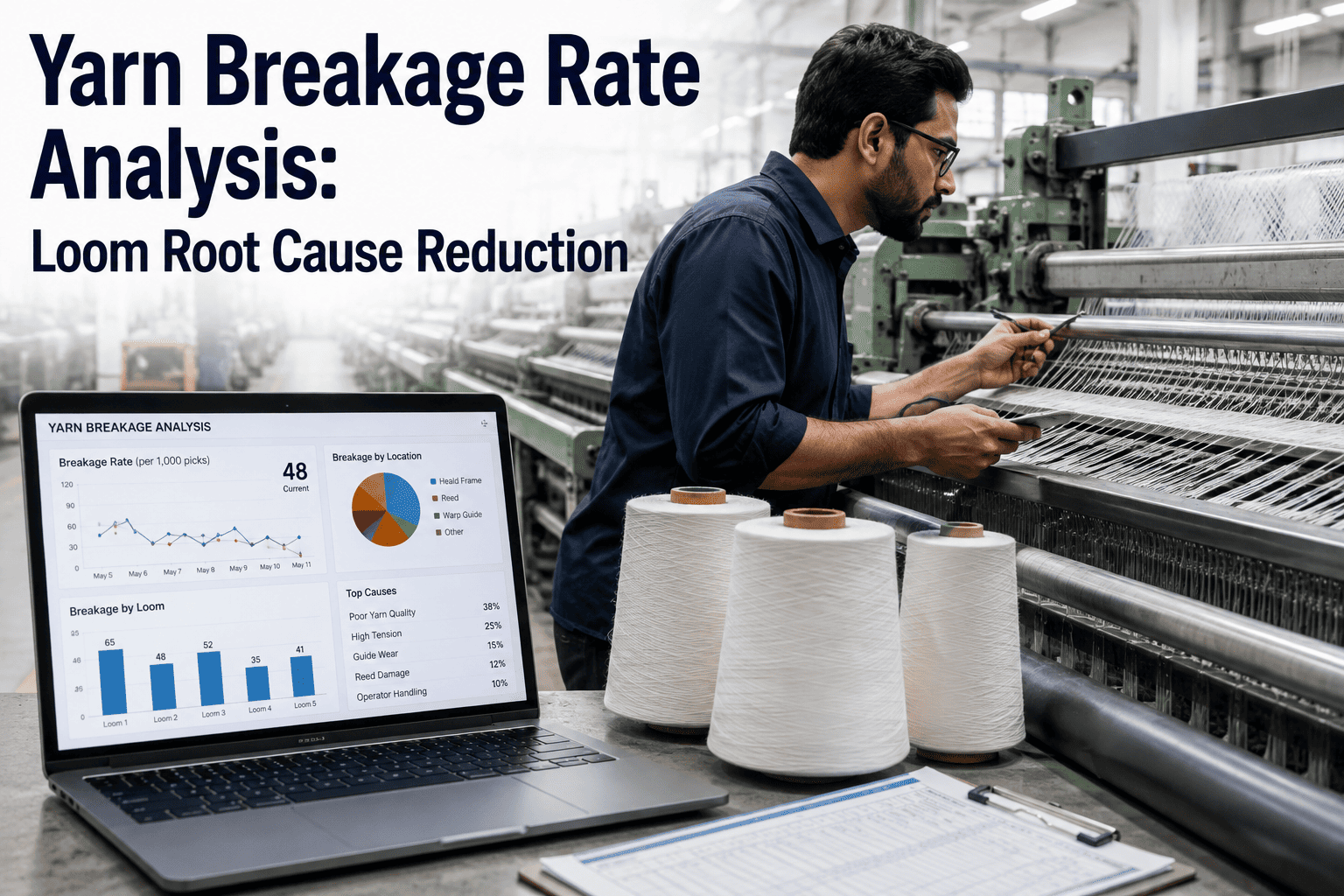
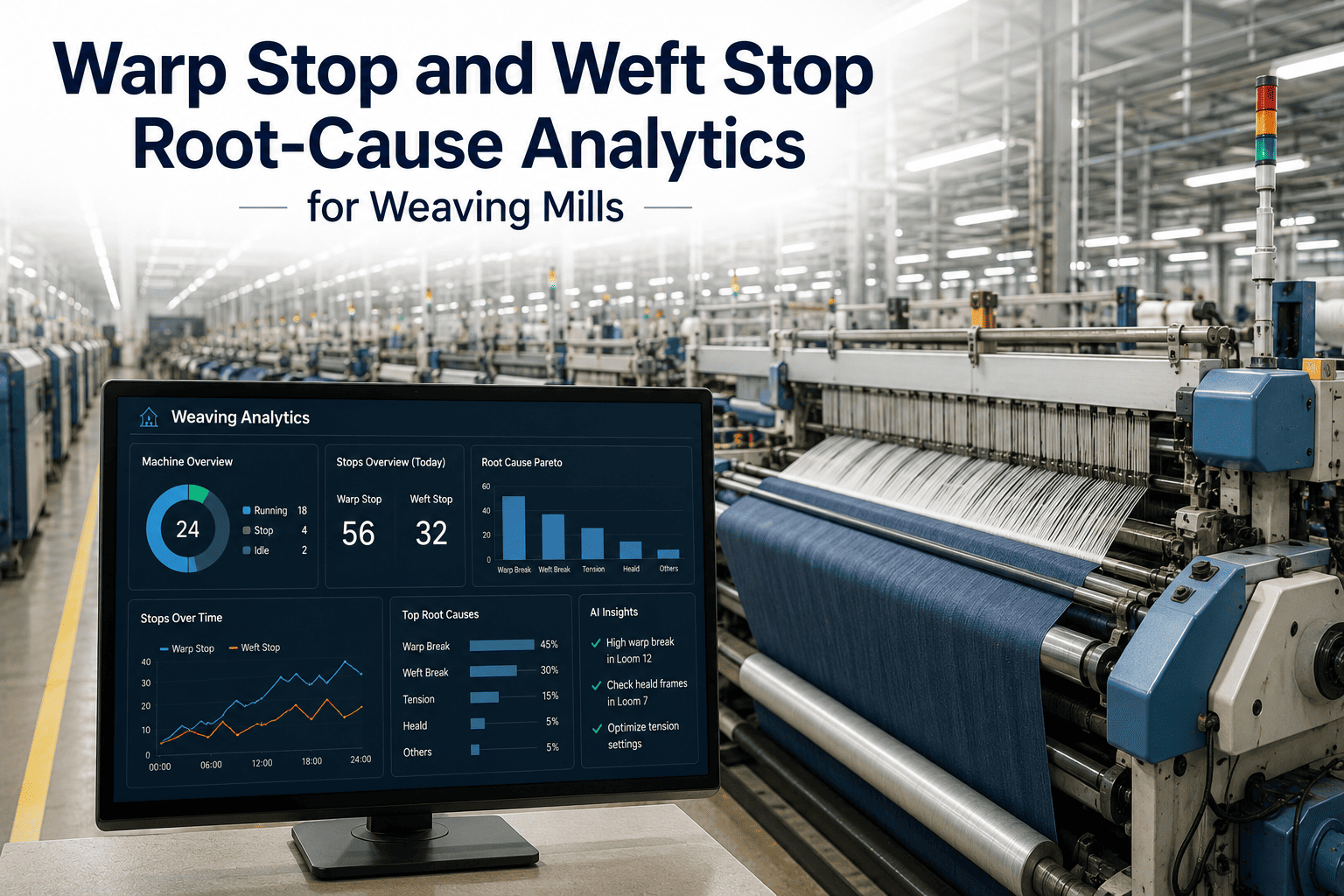
Warp stops are the single largest efficiency drain on most weaving floors, and yet the three factors that drive them, sizing quality, beam quality, and raw yarn quality, are usually managed by three separate departments that rarely compare notes against the actual stop data. A weaver watching the same end break repeatedly at the same loom position often has no easy way to trace that pattern back to a specific beam or a specific sizing batch, so the fix stays local and temporary instead of addressing the actual source. Root cause analysis that connects stop location, beam identity, and sizing batch together is what turns a recurring nuisance into a solved problem. Book a demo to see warp stops traced back to sizing and beam source.
Three Upstream Sources of Warp Breaks
Each source contributes to warp breaks through a distinct mechanism, and distinguishing between them is the first step in targeted reduction.
Sizing Quality
Inadequate size add-on or uneven size film leaves yarn insufficiently protected against the abrasion and tension it experiences during weaving, directly increasing break frequency, particularly on staple yarns.
Beam Quality
Uneven tension across a warp beam, caused by inconsistent winding, creates localized high-tension zones where breaks cluster, often visible as a pattern concentrated at specific positions across the beam width.
Yarn Quality
Inherent yarn strength variation, thin places, and count irregularity from the spinning stage set a baseline break propensity that no amount of downstream sizing or beaming correction can fully compensate for.
Trace Every Warp Break Back to Its Actual Source
iFactory correlates warp stop location and frequency with sizing batch and beam identity, showing exactly which upstream source is driving your break rate.
Diagnostic Signs by Source
| Break Pattern Observed | Likely Source | Verification Step |
|---|
| Breaks concentrated at specific beam positions | Beam winding tension unevenness | Check beam tension profile across width |
| Breaks spike after a specific sizing batch | Size add-on or recipe variation | Test size add-on percentage on that batch |
| Breaks distributed evenly, no clear pattern | Underlying yarn strength variation | Yarn strength and evenness testing |
| Breaks rise with loom speed increase | Marginal sizing or yarn quality exposed at higher tension | Compare break rate at current vs prior speed |
A Root-Cause Reduction Sequence
1
Map break location against beam and sizing batchRecording which specific beam and sizing batch each broken end came from, rather than logging breaks as an undifferentiated count, is what makes the pattern in the table above visible in the first place.
2
Verify sizing add-on and film uniformityTesting size pickup percentage and film consistency against the target recipe on batches associated with elevated break rates confirms or rules out sizing as the source before further investigation.
3
Check beam tension profile across the full widthA tension profile check across the beam width identifies whether specific zones are running tighter or looser than the rest, which directly explains position-clustered break patterns.
4
Test raw yarn strength and evenness on suspect lotsWhen breaks are evenly distributed with no beam or sizing correlation, testing yarn strength, evenness, and thin-place frequency on the specific lot in use isolates a raw material contribution.
5
Feed findings back into sizing and beaming SOPsOnce a source is confirmed, updating the relevant standard operating procedure, whether a sizing recipe adjustment or a beaming tension correction, prevents the same pattern from recurring on future lots.
See Which Beams and Sizing Batches Correlate With Elevated Breaks
iFactory connects warp stop data with beam and sizing batch identity automatically, turning root cause analysis from a manual investigation into a direct lookup.
What a Targeted Reduction Program Delivers
3
Upstream Sources Distinguished
Per Beam
Break Data Traced, Not Aggregated
SOP-Fed
Findings Written Back Into Process
We treated warp breaks as a weaving department problem for years and kept tightening loom tension to compensate. When we finally traced the break log back to specific beams, one particular beaming operator's batches were consistently worse than the others. It was never a loom setting problem at all — it was a beaming tension issue we had been compensating for downstream the whole time.
Production Head, Weaving
Cotton Fabric Mill — Bhilwara
Frequently Asked Questions
QHow do we tell whether a warp stop problem is sizing-related or yarn-related?
Sizing-related breaks tend to correlate with a specific sizing batch or machine and can often be confirmed by testing size add-on percentage on the affected batch against target, while yarn-related breaks tend to be more evenly distributed across sizing batches and beams and require yarn strength and evenness testing to confirm. Comparing break rate against both sizing batch identity and yarn lot identity side by side is the most reliable way to separate the two.
QCan adjusting loom tension settings compensate for a beam quality problem?
Loom tension adjustments can partially mask a beam tension unevenness problem in the short term, but this typically trades one issue for another, such as increased shedding stress or fabric quality variation, and does not address the underlying beaming process that caused the unevenness in the first place. Correcting the beam winding process is more durable than compensating at the loom.
QHow much of a reduction in warp stops is realistic from a targeted root-cause program?
The achievable reduction depends heavily on how far the current break rate is from what the yarn and machine are mechanically capable of, but plants that successfully isolate and correct a single dominant source, such as an underperforming sizing recipe, commonly see a substantial drop in warp-related stoppage time within the first few weeks of the correction taking effect.
Talk to an expert about a realistic target for your floor.QDoes warp stop rate vary significantly by fabric construction or yarn count?
Yes, finer counts and denser constructions generally show a higher baseline break rate for the same sizing and beaming quality simply because thinner yarns have less margin for tension and abrasion stress, which is why comparing break rate against a single plant-wide target rather than a construction-specific target can be misleading when assessing whether a specific fabric style is performing acceptably.
QHow often should beam tension profiles be checked as a preventive measure?
Rather than relying solely on periodic scheduled checks, continuously correlating break location data with beam identity as production runs catches an emerging tension unevenness issue as soon as it starts showing up in the stop pattern, which is generally faster than waiting for the next scheduled beam inspection to catch the same problem.
Book a demo to see continuous beam correlation tracking.
Stop Compensating at the Loom for a Problem That Started Upstream
iFactory traces warp stop patterns back to sizing batch and beam identity, so root cause analysis becomes a direct lookup instead of a manual investigation.