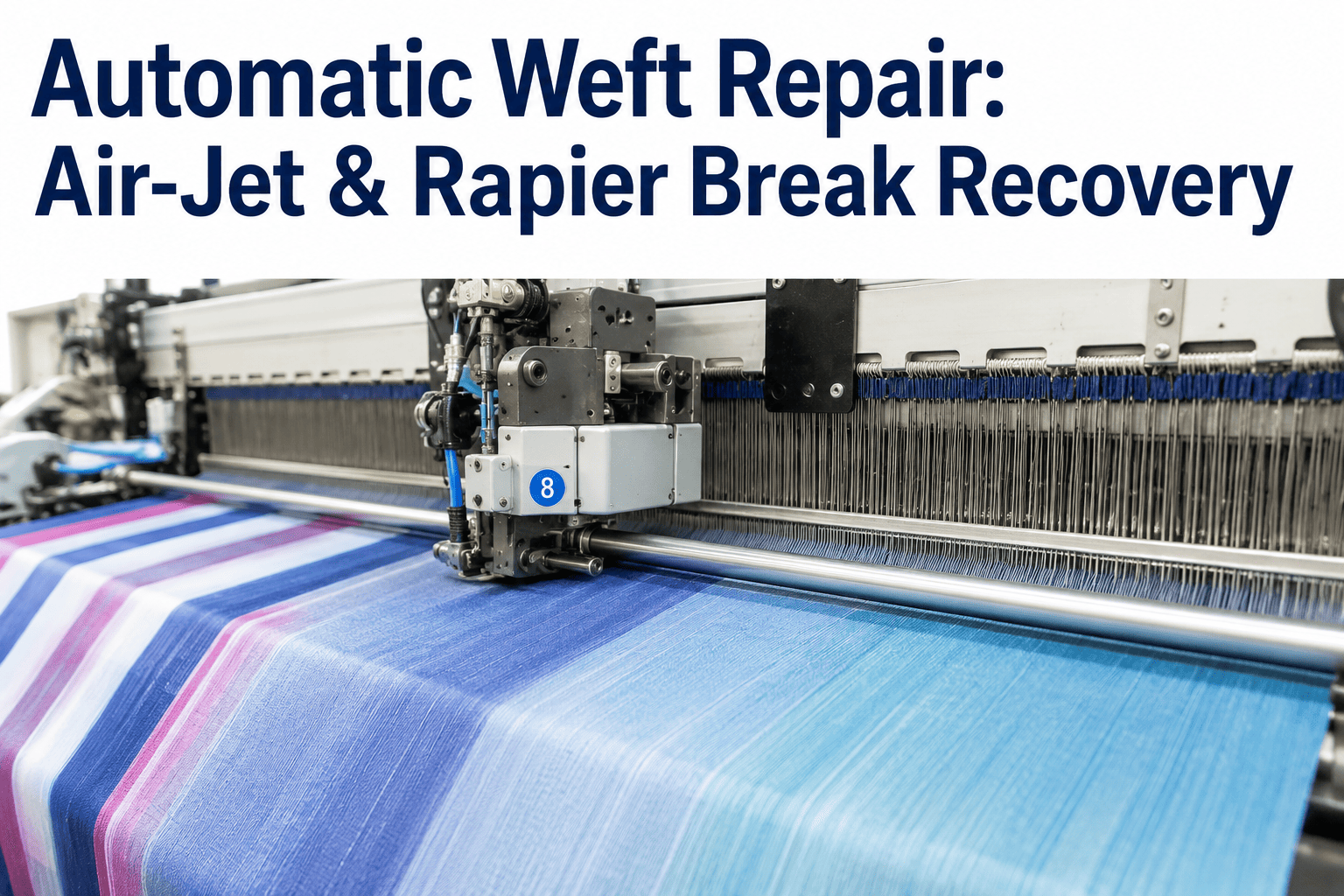
Weft stop rate tells a different diagnostic story depending on whether the loom is a rapier, an air-jet, or a projectile machine, because the insertion mechanism itself is often the deciding factor in why the yarn fails to insert cleanly. A tension setting that works perfectly on one insertion technology can be the direct cause of elevated breaks on another, which is why generic weft troubleshooting advice frequently misses the machine-specific adjustment that would actually fix the problem. Reducing weft stops starts with recognizing that yarn quality, tension, and insertion timing interact differently depending on how the weft is actually being carried across the shed. Book a demo to see weft stop analysis by insertion technology.
Three Insertion Technologies, Three Different Failure Modes
The physical mechanism carrying the weft yarn across the shed determines which specific factors are most likely to cause a stop.
Air-Jet Looms
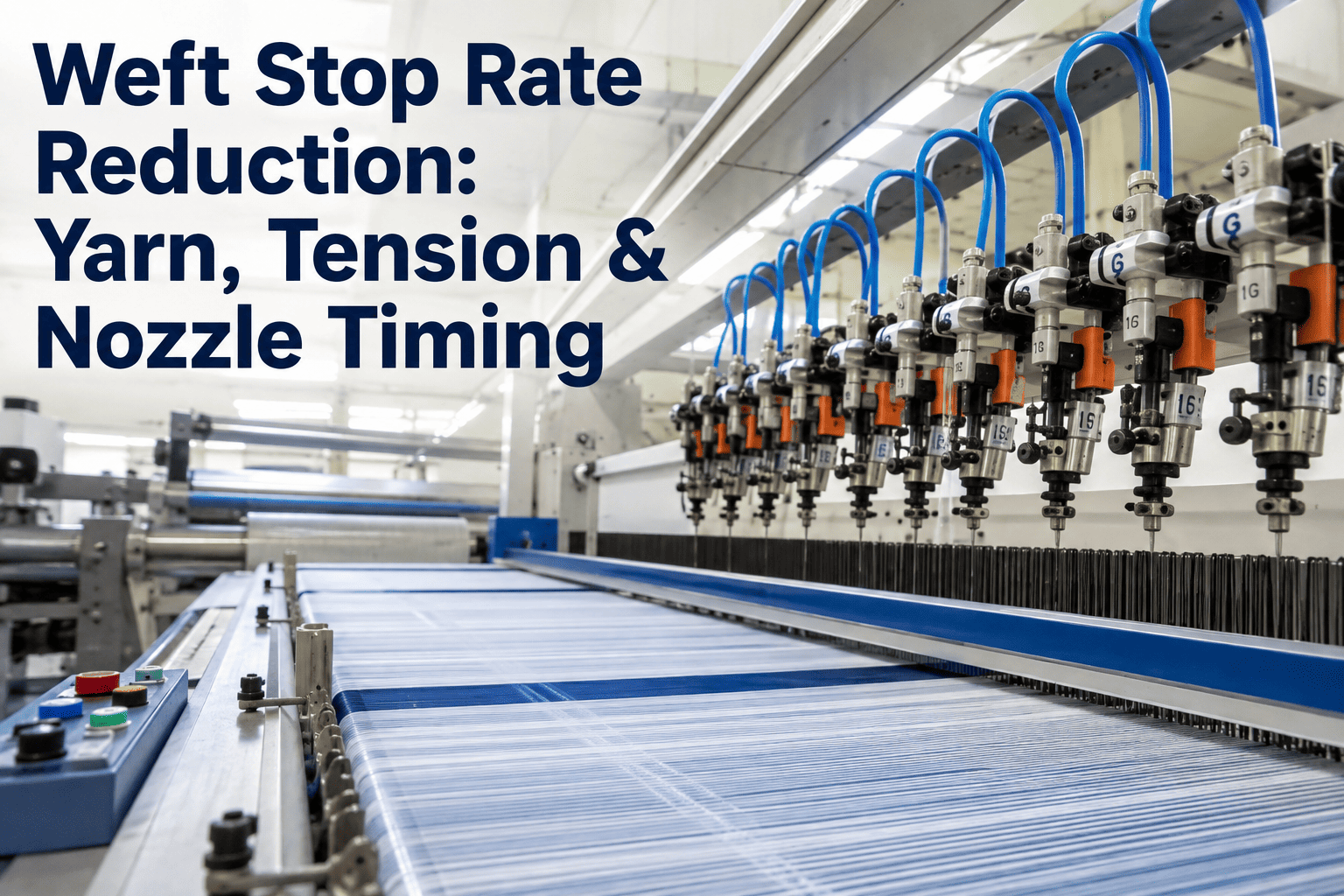
Weft stops are most commonly driven by nozzle timing misalignment or insufficient air pressure profile across the insertion cycle, both of which allow the yarn to lag or fail to reach the far selvedge cleanly.
Rapier Looms
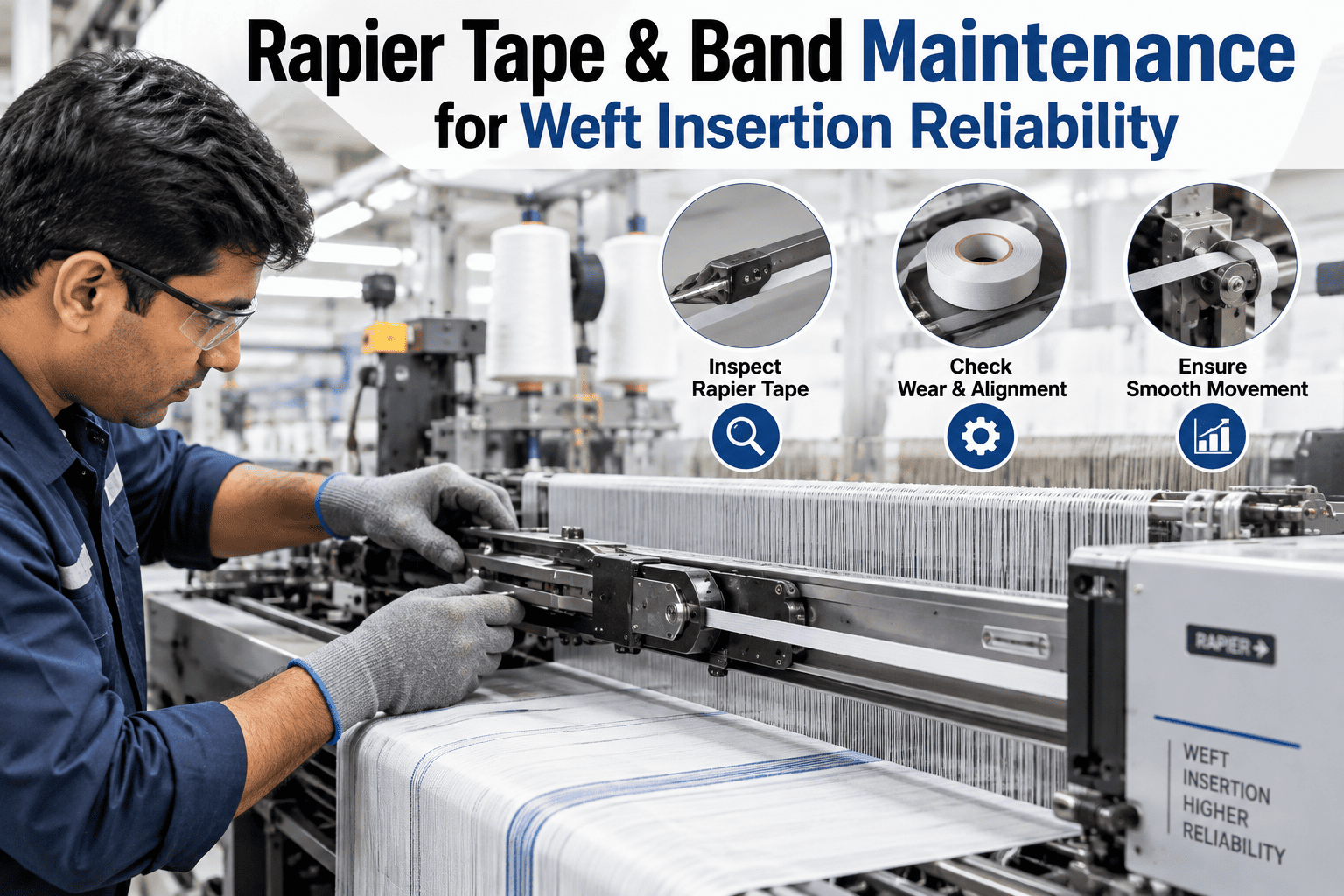
Gripper tension setting and yarn path alignment through the guide system are the primary contributors, since a misaligned path or incorrect gripper tension causes the yarn to slip or break during transfer between rapiers.
Projectile Looms
Yarn tension release timing at the point of projectile launch is critical, since a mistimed release either creates excess slack that tangles or excess tension that snaps the yarn during acceleration.
Get Weft Stop Analysis Specific to Your Insertion Technology
iFactory analyzes weft stop patterns against the specific parameters relevant to rapier, air-jet, or projectile insertion, rather than a one-size-fits-all diagnostic.
Yarn Quality Factors That Cut Across All Three
Regardless of insertion technology, certain yarn characteristics raise weft stop risk universally, making them worth checking before assuming the issue is purely mechanical.
01
Yarn strength and evennessWeak spots or count irregularity in the weft yarn increase break probability during the high-acceleration insertion phase regardless of which technology is carrying the yarn across the shed.
02
Package winding qualityUneven winding tension on the weft package causes inconsistent unwinding tension during insertion, which shows up as intermittent, hard-to-diagnose stops that seem unrelated to any single machine setting.
03
Moisture and static conditionsYarn that is too dry or carrying excess static resists smooth unwinding and insertion, an effect that becomes more pronounced in low-humidity conditions and is often overlooked as a contributing factor.
Machine-Specific Optimization Checklist
| Technology | Primary Setting to Verify | Secondary Check |
|---|
| Air-Jet | Nozzle timing against insertion cycle | Air pressure profile consistency |
| Rapier | Gripper tension setting | Yarn guide path alignment |
| Projectile | Tension release timing at launch | Projectile return path condition |
Match the Fix to the Actual Insertion Mechanism
iFactory tracks weft stop frequency against nozzle timing, gripper tension, or projectile release depending on your machine type, showing which specific parameter needs adjustment.
What Machine-Specific Optimization Delivers
3
Insertion Technologies Covered
Machine-Specific
Not Generic, Diagnostics
3
Universal Yarn Factors Checked
We moved from projectile to air-jet looms and kept applying the same tension troubleshooting checklist that worked on the old machines. It took us far too long to realize nozzle timing, not yarn tension, was the actual issue on the new looms. Once we started diagnosing by machine type instead of using one generic checklist, our weft stop rate on the air-jet line dropped within the first month.
Weaving Shift In-Charge
Air-Jet Loom Unit — Erode
Frequently Asked Questions
QWhy does the same yarn perform differently on rapier versus air-jet looms?
The insertion mechanism applies force to the yarn in fundamentally different ways, gripper transfer for rapier versus air drag for air-jet, so a yarn characteristic that is inconsequential on one technology can be a limiting factor on another. Yarn that unwinds smoothly under gripper tension may still struggle under the aerodynamic drag profile of air-jet insertion, which is why machine-specific testing matters more than assuming yarn performance transfers directly between technologies.
QHow do we diagnose whether a weft stop is a nozzle timing issue versus an air pressure issue on air-jet looms?
Nozzle timing issues tend to produce breaks or misses concentrated near a specific point in the insertion cycle, often near the far selvedge if the yarn is lagging, while an air pressure profile issue tends to produce more variable, less positionally consistent failures across the shed width. Reviewing stop data against the specific point of failure in the insertion cycle, not just the total count, helps distinguish the two.
Talk to an expert about diagnosing your specific pattern.QCan humidity control alone meaningfully reduce weft stops?
Humidity and static control can meaningfully reduce weft stops in plants operating in dry climates or seasons, since excess static resists smooth unwinding regardless of how well-tuned the mechanical settings are, but it is rarely the sole factor and should be checked alongside, not instead of, the machine-specific parameters relevant to the insertion technology in use.
QDoes weft package winding quality vary enough between suppliers to matter?
Yes, winding tension consistency can vary meaningfully between suppliers and even between machines at the same supplier, and this variation often shows up as an intermittent stop pattern that seems to have no clear mechanical cause on the loom side. Tracking weft stop rate against supplier and package batch identity, similar to how warp stops are traced to beam identity, often reveals a supplier-specific pattern worth addressing directly with the vendor.
QHow quickly can a machine-specific tension or timing adjustment show results?
Once the correct parameter is identified and adjusted, whether nozzle timing, gripper tension, or projectile release timing, the effect on stop rate is typically visible within the same shift or the next, since the adjustment applies immediately to every subsequent pick rather than requiring a gradual transition. The larger time investment is usually in correctly diagnosing which parameter is actually the cause.
Book a demo to see diagnostic turnaround for your loom type.
Diagnose Weft Stops by Machine Type, Not by Generic Checklist
iFactory tracks weft stop patterns against the parameters that actually matter for your insertion technology, whether rapier, air-jet, or projectile.