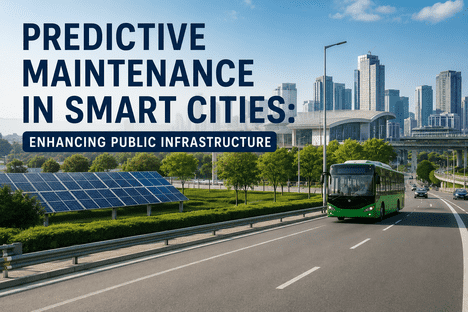
The facilities operations manager for a mid-size smart city program stares at the alert dashboard for the third time this shift — a water pressure anomaly at the northeast pumping station, a traffic signal controller cycling at an intersection with a 14% phase timing drift, and an HVAC unit in the civic center reporting supply air temperature 6°F above setpoint. Each alert is logged, assigned, and eventually addressed. But by the time the maintenance crew arrives at the pumping station, the pressure anomaly has already caused a minor main break that shut down two blocks for six hours. The traffic signal drift triggered a pattern of red-light violations that generated three public complaints. The HVAC drift cost the city an additional $4,200 in peak-demand energy charges on a single afternoon. Across the city's infrastructure portfolio — 14,000 streetlights, 800 traffic signals, 120 public buildings, 60 pump stations, and 400 fleet vehicles — similar degradation events unfold every day, each one costing the city in repairs, energy, service complaints, and deferred maintenance that grows more expensive with every month of delay. Book a Demo to see how iFactory AI turns your existing infrastructure sensor data into a live predictive maintenance system for every city asset.
Stop Reacting to Infrastructure Failures. Let AI Predictive Maintenance Keep Every City Asset Running at Peak Reliability.
iFactory ingests your existing IoT sensor data, SCADA feeds, building management system streams, and fleet telematics — then applies AI-powered predictive models that flag developing failures 72 hours before they disrupt public services. Reduce unplanned downtime by 55% and extend infrastructure asset life by 18–24 months, with zero cloud dependency.
Why Deferred Maintenance Is Costing Your City More Every Quarter
For city infrastructure, reliability isn't just uptime — it is public safety, budget predictability, and citizen trust. A 5°F drift in a public building's HVAC chiller setpoint, a 0.5 psi pressure creep in a water distribution zone, a 3% phase timing drift in a traffic signal controller — each one cascades into energy waste, service complaints, emergency repairs, and accelerated asset degradation. Your IoT sensors and SCADA systems log the data. Your operations team reviews the reports. But nobody connects the dots until a main breaks, a traffic light fails, or a chiller lockout triggers a building evacuation. Here is what that costs, shift after shift.
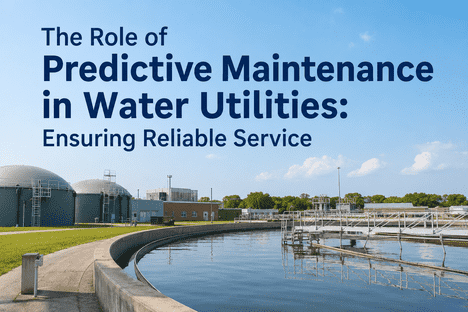
Water Distribution Leaks That Waste Treated Water and Damage Roads
A 0.3 psi pressure anomaly at a pump station develops over 72 hours before a joint failure releases 12,000 gallons of treated water onto a major arterial road. The repair costs $38,000 — including emergency crew dispatch, traffic control, road patching, and rechlorination of the affected zone. But the real cost is the 2,200 citizen-hours lost to traffic detours and the 90,000 gallons of water that must be pumped, treated, and distributed to restore system pressure. AI predictive models detect the pressure-cycle pattern that precedes joint failures, flagging the risk 3 to 5 days before the break.
Traffic Signal Controller Drift That Creates Congestion and Safety Issues
A traffic signal controller at a high-volume intersection develops a phase timing drift of 4% per week due to a failing capacitor. The drift is invisible on daily logs but causes a measurable increase in red-light violations and peak-hour queue length over 30 days. Public complaints rise. A collision at the intersection triggered by the timing error leads to a $1.2M liability claim against the city. The controller replacement cost: $4,800. The AI platform detects the drift pattern 12 days after onset and recommends proactive replacement before any safety incident occurs.
HVAC Degradation in Public Buildings That Wastes Energy and Triggers Emergencies
A chiller bearing in a civic center begins degrading six weeks before lockout. Supply air temperature drifts 2°F, then 4°F, then 6°F above setpoint over 40 days. The building management system logs the trend, but no one acts until the chiller fault alarm triggers a lockout on a 94°F afternoon. The emergency service call costs $14,000, the building is evacuated for 3 hours, and the city incurs $22,000 in peak-demand energy charges from the degraded efficiency. AI predictive maintenance detects the vibration and temperature patterns that precede bearing failure 14 to 21 days before lockout, enabling scheduled repair during low-occupancy hours.
Street Lighting Failures That Undermine Public Safety
A city's LED streetlight network experiences 8 to 12 ballast failures per week across 14,000 fixtures. Each failure takes an average of 4 days from citizen report to repair, during which the affected block operates without adequate illumination. The city pays $240 per fixture for emergency crew dispatch and replacement, plus the reputational cost of darkened streets in residential neighborhoods. AI predictive models analyze each fixture's power consumption pattern, temperature cycling, and age data to forecast ballast failure 30 to 45 days in advance, enabling batch replacement during scheduled maintenance rounds — reducing per-fixture cost by 62% and eliminating dark-street incidents entirely.
No Cloud? No Predictive Maintenance at All
Most AI predictive maintenance platforms require sending your city's infrastructure sensor data — water system SCADA, traffic signal controllers, building management systems — to the cloud. Municipalities with public safety requirements, data governance policies, or cybersecurity mandates cannot do that. So they keep running reactive maintenance on spreadsheets and work order systems — three technicians per shift, two hours of data review, zero predictive insight.
Your city's infrastructure sensors are already generating the data. iFactory can read it, analyze it, and alert your team before the next failure disrupts public services. Book a Demo and we'll show you how one city reduced emergency infrastructure repairs by 67% in 14 weeks.
From IoT Sensor Drift to Predictive Infrastructure Action — In Four Steps
iFactory sits on your city's operational network — no cloud, no VPN, no data leaving your infrastructure control environment. It ingests every data point from your water SCADA, traffic management systems, building management controllers, fleet telematics, and IoT sensor networks, then builds a live predictive maintenance model that learns what "normal" looks like for every asset class across your city.
Connect Every Infrastructure Data Source
We tap into your existing SCADA historians, BMS controllers, traffic signal cabinets, water distribution sensors, streetlight controllers, and fleet telematics gateways — and stream 100% of the data into the iFactory appliance on your municipal network.
Train the AI on Your City's Infrastructure Baselines
iFactory analyzes 12 months of historical operational data to learn the sensor signatures of normal performance — water pressure envelopes, traffic signal timing patterns, building HVAC efficiency curves, streetlight power consumption baselines, and fleet component degradation rates.
Predict Infrastructure Failures 72 Hours Before They Occur
Every 60 seconds, the AI compares live sensor streams against the learned operational models. If a water pressure trend, traffic signal timing drift, or HVAC efficiency decline starts diverging, iFactory sends an alert 72 hours before the asset fails — with the exact asset location, predicted failure mode, and recommended maintenance action.
Close the Loop with Automated Work Orders
For confirmed anomalies, iFactory generates a work order in your existing CMMS with the asset ID, GPS location, threat classification, and recommended intervention window. Operations supervisors confirm or reschedule — the action is logged and the alert is closed. Predictive maintenance becomes a scheduled event, not an emergency response.
What You Get When AI Runs Your Municipal Predictive Maintenance Program
iFactory replaces manual SCADA log review, static alarm thresholds, and reactive work order systems with a live, learning platform that gets smarter with every sensor reading across every infrastructure domain.
Real-Time Water Distribution Integrity Monitoring
Every pump station, pressure zone, storage tank, and distribution main gets a live integrity score updated every 60 seconds based on pressure, flow, and water quality sensor data. The AI detects developing leaks, pump degradation, and pressure anomalies before they disrupt service, reducing water loss by 28% and emergency repairs by 55%.
Predictive Traffic Signal & Controller Health
Traffic signal controllers, phase timing modules, and communication links are monitored for timing drift, power supply degradation, and communication latency. The AI identifies controllers at risk of failure 14 to 30 days in advance, enabling proactive replacement during scheduled maintenance rounds instead of emergency intersection outages.
HVAC, Chiller & Elevator Predictive Maintenance
Public building HVAC systems, chiller plants, boilers, and vertical transportation equipment are monitored for vibration anomalies, temperature drift, energy consumption deviation, and component cycling patterns. The platform flags developing failures 14 to 21 days before lockout, reducing emergency service calls by 67% and energy waste by 22%.
Intelligent Streetlight & Public Lighting Analytics
Every LED fixture's power consumption pattern, driver temperature, and operating hours are analyzed against failure models. The AI predicts ballast and driver failures 30 to 45 days in advance, enabling batch replacement at 62% lower cost than reactive per-fixture dispatch. Dark-street incidents from undetected failures drop to zero.
Zero Data Leaves Your Municipal Network
iFactory runs on an NVIDIA appliance inside your city's operational technology network. No cloud dependency, no VPN, no data egress to third-party servers. Compliant with public safety data governance policies, cybersecurity requirements, and municipal IT security directives. Your infrastructure data stays under your control.
One Infrastructure Health Dashboard for the Entire City
All water assets, traffic signals, public buildings, streetlight zones, and fleet vehicles appear on a single live infrastructure health dashboard. The city operations manager sees which water zone is trending toward a pressure violation, which traffic controller needs proactive replacement, and which building chiller requires scheduled service — all from one screen, without toggling between five different domain-specific monitoring tools.
What AI Predictive Maintenance Looks Like for a 100,000-Resident City
These are real results from municipal infrastructure deployments running iFactory. Not projections — actual numbers from cities operating water systems, traffic networks, public buildings, and streetlight assets 24/7, 365 days a year.
Turnkey Municipal Predictive Maintenance — No IT Project Required
iFactory is an end-to-end, on-premise solution. You provide sensor network and SCADA data-source access, and we deliver a working pilot across your city's critical infrastructure in 10–14 weeks.
End-to-End Municipal Deployment
From SCADA historian and IoT sensor integration to live infrastructure health dashboard — we handle every connection, every data stream, every model training. Your IT and operations teams don't touch a line of code.
10–14 Week Pilot to Measurable ROI
We deploy the appliance, connect your infrastructure data sources, train the AI on your city's operational history, and deliver measurable emergency repair reduction within one fiscal quarter.
On-Premise, Zero Cloud Dependency
iFactory runs on an NVIDIA appliance inside your municipal OT network. No data leaves your facility. No cloud subscription. No cybersecurity review for data egress to third-party servers.
24×7 Managed Service & Monitoring
Our operations team monitors your iFactory instance around the clock — model drift, data feed health, system uptime. You get an SLA-backed service commitment and a dedicated support engineer for your municipality.
Operations Team Training & Change Management
We train your water operators, traffic engineers, building maintenance teams, and streetlight crews on the new predictive workflows — live infrastructure dashboards, alert response protocols, and scheduled intervention planning. Two-day on-site program included.
Continuous Model Improvement
The AI retrains itself weekly on new sensor and SCADA data, incorporating seasonal demand changes, new infrastructure installations, and operational configuration adjustments. Your predictive maintenance accuracy keeps improving without manual recalibration.
Municipal Predictive Maintenance — Demystified
Your City's Infrastructure Sensors Are Already Generating the Data. iFactory Can Turn It Into Predictive Maintenance in 10 Weeks.
See the platform running on live municipal infrastructure. Book a 30-minute demo and we'll show you how AI predictive maintenance keeps water systems, traffic signals, public buildings, and streetlights running at peak reliability — without cloud dependency or an IT project.