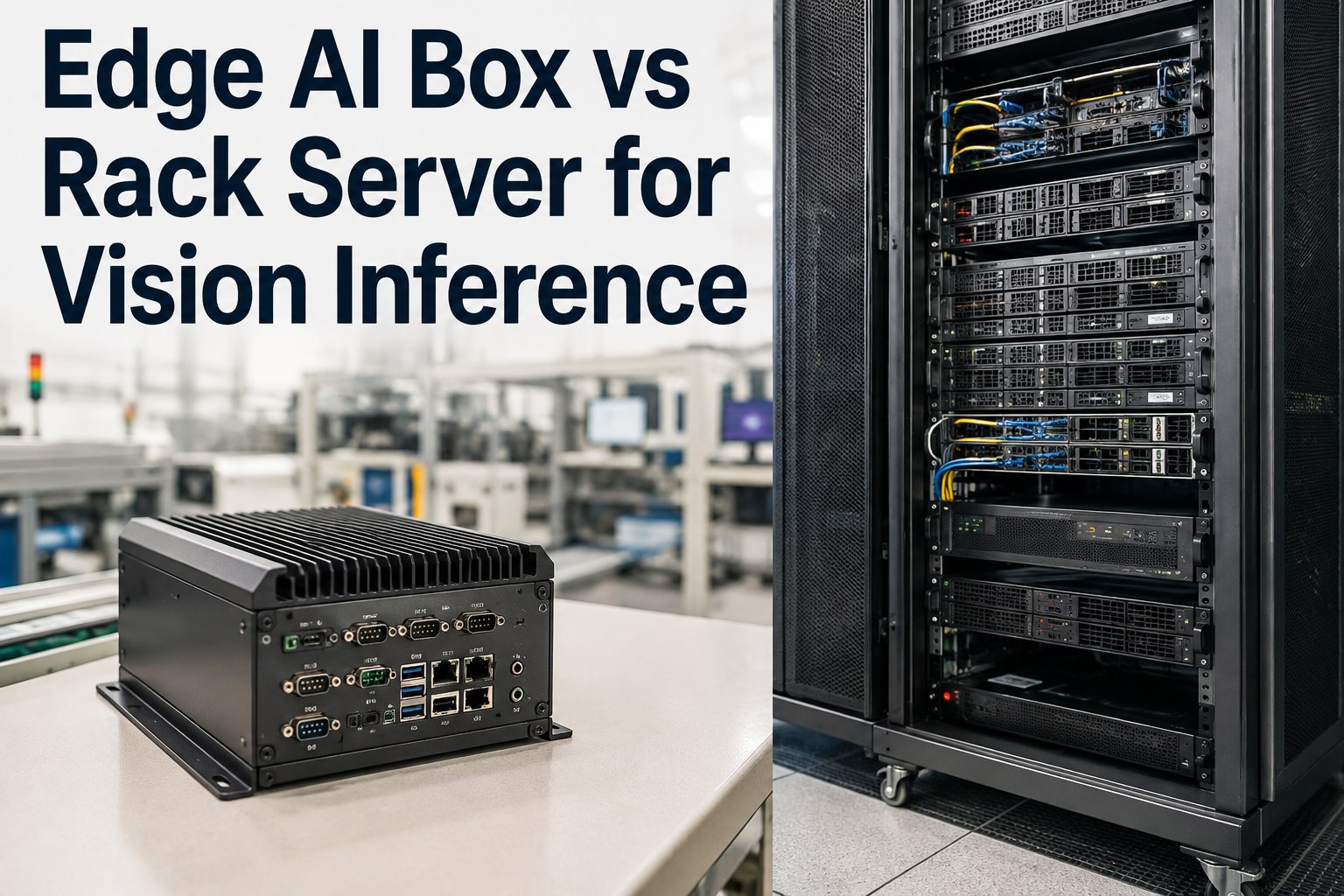
Put a GPU server on a plant floor and the cabinet around it matters as much as the hardware inside. That cabinet is rated by a two-digit IP code — IP54, IP65, and so on — that tells you exactly what dust and water it will keep out, defined by the IEC 60529 standard rather than vague words like "rugged" or "dustproof." Read the code correctly and you match the cabinet to your floor's real conditions; read it wrong, or over-spec it, and you either let contamination reach the GPUs or seal the server into a box that can't cool itself. Choosing an industrial GPU server cabinet is really two decisions in balance: enough ingress protection for the environment, and enough cooling and airflow to keep a hot GPU alive inside it. This guide explains industrial GPU server cabinets and IP ratings — how to read the code, which rating fits which floor, and how cooling, airflow, and vibration isolation factor in — and how iFactory delivers a correctly-rated on-premise appliance or a managed cloud alternative.
Industrial GPU Server Cabinets and IP Ratings
The IP rating on a GPU cabinet is a precise, testable promise of what dust and water it keeps out — not marketing. But a sealed cabinet also has to cool a hot GPU inside it, so the right choice balances ingress protection against airflow and cooling, with vibration isolation for the floor. iFactory matches the cabinet to your environment and ships it floor-ready, or runs the same vision engine in the cloud.
How to Read an IP Rating
An IP code is two digits, and once you know what each one means you can read any rating instantly without a datasheet. The first digit is about solids and dust; the second is about liquids and water. Higher numbers passed a tougher test — but the two digits are independent categories, so a cabinet needs the right number in each position for your floor.
Dust-tight (0 to 6)
Water jets (0 to 9)
The Ratings That Matter for GPU Cabinets
You don't need to memorize all of them — a handful of ratings cover almost every plant-floor GPU deployment. Here's what each means in practice and where it fits.
Not sure which IP rating your floor actually needs? Book a 30-minute demo — iFactory will assess your dust, moisture, and washdown conditions and specify the right cabinet rating — enough protection without over-sealing. Sessions available this week.
The Catch — Sealing Fights Cooling
Here's what a bare IP number won't tell you: the more sealed a cabinet is, the harder it is to cool the GPU inside. A dust-tight IP65 or IP66 cabinet can't just pull in floor air to cool itself, because that would defeat the seal. So a higher rating isn't automatically better — it has to be paired with a cooling strategy that doesn't break the seal.
Lower IP, breathes filtered air
The cabinet draws floor air through multi-stage filters to cool the GPU. Simpler and cheaper, suitable where dust and moisture are moderate — filters serviced on schedule.
High IP, never breathes floor air
A dust-tight cabinet with an internal cooling loop and heat exchanger — the GPU is cooled without floor air ever entering. The right answer for heavy dust, oil mist, or washdown.
Beyond IP — What Else a GPU Cabinet Needs
The IP rating covers ingress, but a floor-ready GPU cabinet has to get a few more things right. These are the factors that turn a rated box into a reliable inspection server.
Want the cabinet, cooling, and vibration isolation specified together for your line? Ask iFactory Support with your floor conditions, camera count, and mounting location, and the team will spec a complete floor-ready enclosure — typically a response within 3 business days, no obligation.
How iFactory Delivers a Floor-Ready Cabinet
Rather than leave you to match a cabinet, a cooling system, and a server yourself, iFactory ships the on-prem appliance in an enclosure already rated and cooled for your environment — the ingress protection, airflow, and vibration isolation engineered together as one floor-ready unit.
On-Premise or Cloud — Enclosure Is One Reason to Choose
Specifying and maintaining a rated, cooled cabinet is exactly the kind of on-site work that leads some sites to prefer cloud, and iFactory offers both. Where images must stay in-fence and latency matters, the on-prem appliance comes in an enclosure rated for your floor. Where a site would rather not own a floor cabinet at all, the same vision engine runs as a managed cloud service. Many manufacturers mix the two across plants.
iFactory On-Premise Rated cabinet, images in-fence
- Enclosure matched to your floor — IP rating, cooling, and isolation specified for you.
- Images never leave — full data residency behind your firewall.
- Runs where the cameras are — floor-ready, no server room needed.
- Line-latency inference — local, no round-trip, outage-independent.
iFactory Cloud No floor cabinet to own or maintain
- Fully managed — no on-site cabinet, cooling, or filters to service.
- Same vision engine — identical models, SPC, and analytics.
- Cross-site consistency — one model version everywhere.
- Elastic scale — add cameras and sites without local enclosures.
Match the cabinet to the floor — protection and cooling in balance.
An industrial GPU server cabinet is an IP rating and a cooling strategy working together: enough dust and water protection for the environment, enough airflow or closed-loop cooling to keep the GPU alive inside it, plus vibration isolation and sealed entries. iFactory specifies and ships the whole enclosure floor-ready — or runs the same vision engine as a managed cloud service when you'd rather not own a floor cabinet. ROI proven on one line first.
Frequently Asked Questions
What does an IP rating actually tell me?
It's a two-digit code from the IEC 60529 standard that precisely states how well an enclosure keeps out solids and liquids — replacing vague terms like "dustproof." The first digit (0 to 6) covers solid objects and dust; the second (0 to 9) covers water. So IP65 means fully dust-tight and protected against water jets. Each digit is a separate, tested category, so you read them independently and match both to your environment.
What IP rating does a plant-floor GPU cabinet need?
It depends on the floor. Lightly-controlled indoor lines may be fine with IP54 (dust-protected, splash-resistant). Dusty floors that see hose-down cleaning typically want IP65 (dust-tight, jet-resistant) — the industrial workhorse. Heavy washdown or the harshest environments call for IP66. The rule is to match the rating to your real dust and water exposure rather than defaulting to the highest number, which brings cooling trade-offs.
Is a higher IP rating always better?
No — and this is the key subtlety. A more sealed cabinet is harder to cool, because a dust-tight IP65 or IP66 enclosure can't pull in floor air without breaking its seal. Over-specifying the rating without a matching cooling strategy can leave the GPU running hot inside a sealed box. The right choice pairs the ingress rating your floor needs with cooling — filtered airflow for lower ratings, or a closed-loop system for sealed cabinets.
How is a sealed cabinet cooled if it can't breathe floor air?
With a closed-loop system. A sealed, dust-tight cabinet uses an internal cooling loop and a heat exchanger that moves heat out without letting floor air in — the GPU is cooled while the electronics never touch contaminated air. Lower-rated cabinets can instead draw floor air through multi-stage filters. iFactory selects the approach based on your floor: filtered for moderate environments, closed-loop for heavy dust, oil mist, or washdown.
What about vibration and cable entry?
Both matter beyond the IP rating. Shop-floor and machinery vibration stresses drives, connectors, and seals, so a floor-ready cabinet uses isolation mounts to absorb it. And every cable entry — cameras, PLC wiring — must pass through sealed glands that preserve the IP rating, not open holes that would defeat it. A cabinet is only as protected as its weakest entry point, so these details are part of hitting the rating in practice.
Can I avoid the cabinet decision with cloud instead?
Yes — that's one reason iFactory offers both. If a site would rather not specify, buy, and maintain a rated floor cabinet with its cooling and filters, the same vision engine runs as a managed cloud service with no on-site enclosure. On-premise stays the default where images must stay in-fence and reject decisions need line latency, delivered in an enclosure rated for your floor. Many manufacturers mix the two. Contact iFactory Support to choose the right deployment.
The right rating, cooled correctly, ready for the floor.
Choosing an industrial GPU server cabinet means reading the IP code for real dust and water protection, then balancing it against cooling, vibration isolation, and sealed cable entries. iFactory specifies and ships the complete enclosure matched to your floor, or runs the same vision engine in the cloud when you'd rather skip the cabinet entirely. ROI proven on one line first. The next step is a 30-minute demo and an enclosure assessment of your environment. Sessions available this week.