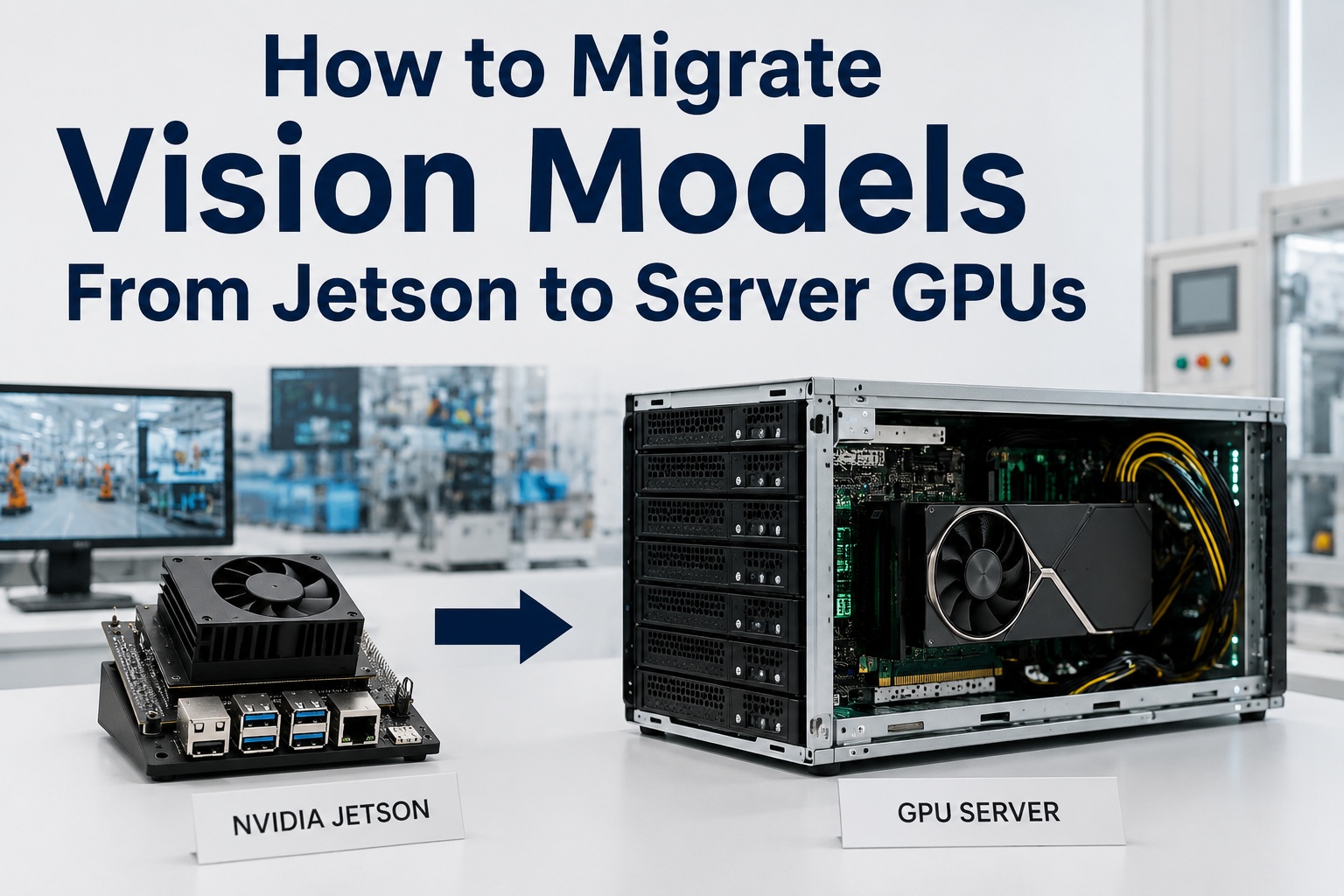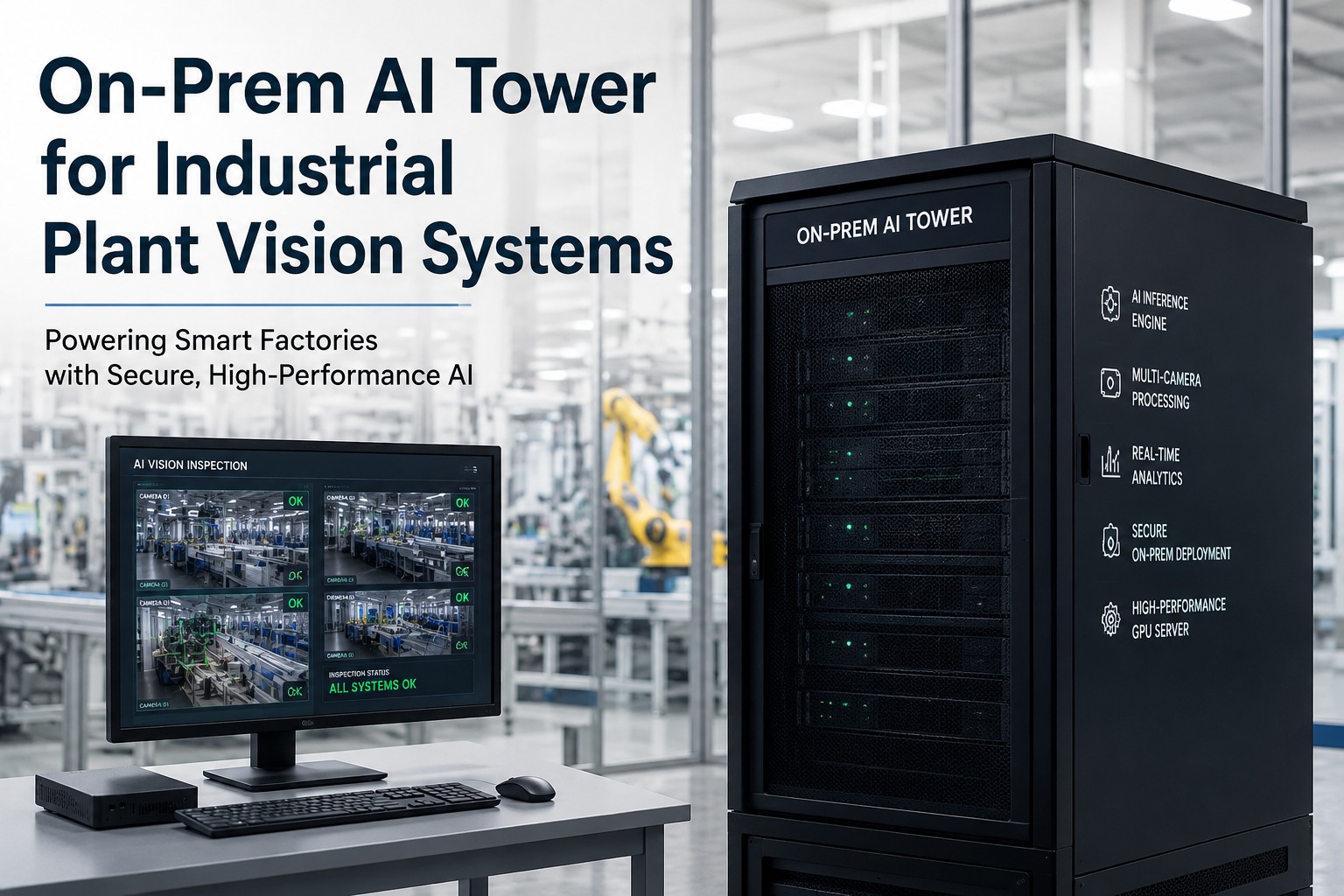
When you deploy vision inference on-premise, one decision shapes everything that follows: does the GPU sit in a rugged edge box out on the line, or in a rack server back in a climate-controlled room? It sounds like an IT detail, but it drives camera cable runs, thermal headroom, how you service the unit, whether vibration is a risk, and how far the system can scale. Neither is universally right. An edge AI box wins on proximity to cameras and shop-floor toughness; a rack server wins on raw GPU density, cooling, and serviceability. The best answer often uses both, matched to each area of the plant. This guide compares an edge AI box vs a rack server for vision inference across the factors that actually decide it — and shows how iFactory delivers either form factor on-premise, or the same vision engine as a managed cloud service.
Edge AI Box vs Rack Server for Vision Inference
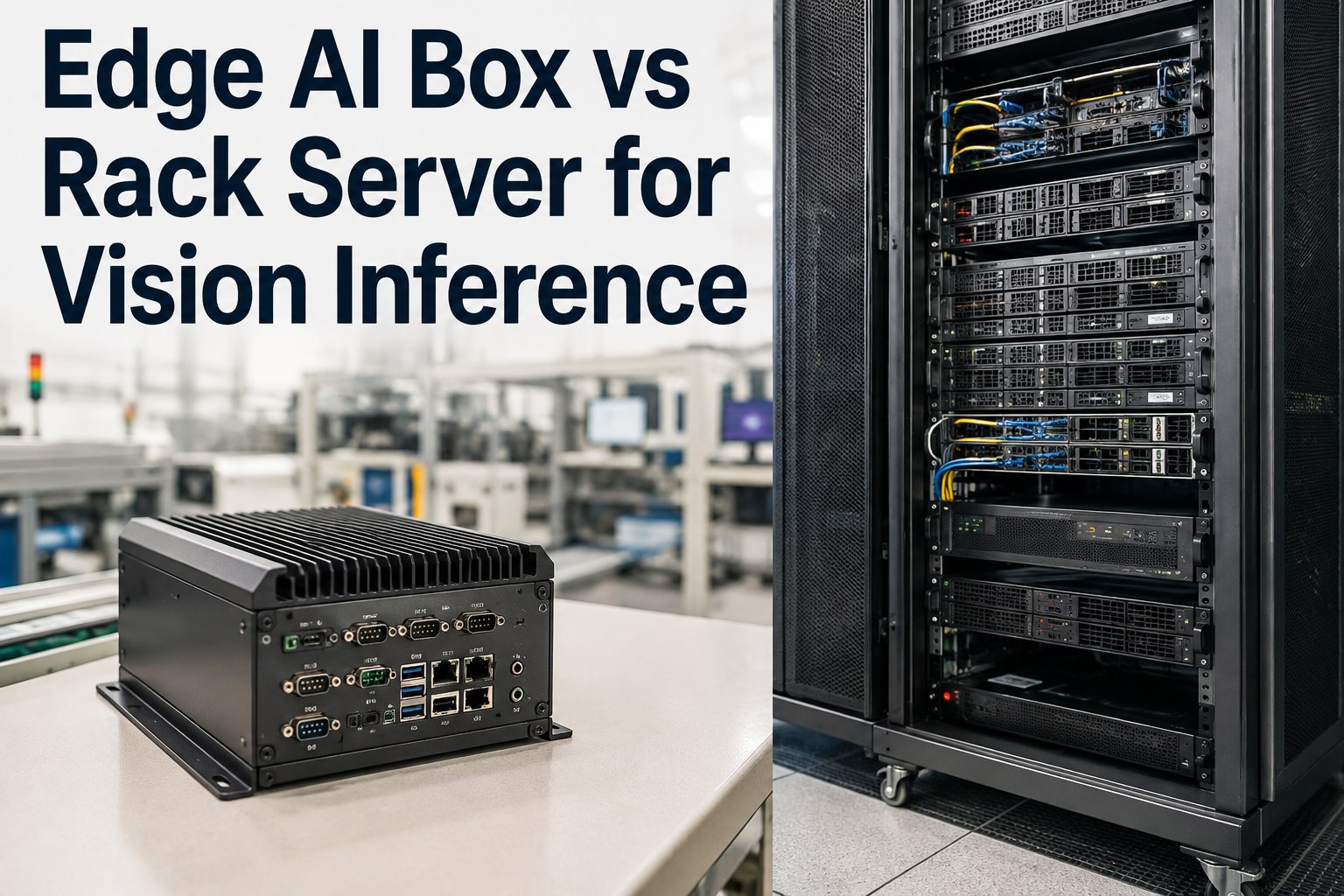
Two ways to run vision inference on the floor: a rugged edge box beside the cameras, or a GPU-dense rack server in the server room. Each wins on different factors — cable distance and vibration tolerance versus thermal capacity, GPU density, and serviceability. Compare them across what matters, then deploy either on-premise, or run the same engine in the cloud.
Two Form Factors, Two Philosophies
The split comes down to where the compute lives relative to the cameras. An edge AI box is built to survive on the floor and sit close to the action. A rack server is built to concentrate serious GPU power in a protected environment and reach cameras over the network. Everything else follows from that.
Compute at the line
A compact, ruggedized unit mounted near the cameras — short cable runs, tolerant of heat, dust, and vibration, sized for one line or cell.
Compute in the room
A GPU-dense server in a climate-controlled rack — maximum compute and cooling, easy to service, reaching cameras over the plant network.
The Comparison — Six Factors That Decide It
These are the practical factors that push a given line toward one form factor or the other. Read down the column that matches your constraint and the answer usually becomes obvious.
Want a form-factor call for each of your lines? Book a 30-minute demo — iFactory will map your camera locations, cable runs, and environment and recommend edge box, rack server, or a mix per area. Sessions available this week.
When the Edge AI Box Wins
The edge box earns its place wherever getting compute close to the cameras — and surviving the environment — matters more than raw density.
Short cable runs
High-resolution camera links degrade over distance. A box at the line keeps runs short and signal clean.
Harsh environments
Built to tolerate the heat, dust, and vibration of the floor where a rack server couldn't safely sit.
Lowest latency
Inference right at the source, with no network hop — ideal for the fastest reject decisions.
Distributed lines
Spread-out or remote cells each get their own unit, with no single room to route every camera to.
When the Rack Server Wins
The rack server takes over when the priority is concentrating GPU power, cooling it properly, and serving many cameras from one place.
Maximum GPU density
Multiple GPUs in one chassis for the heaviest models and the most simultaneous camera streams.
Thermal headroom
Full active cooling in a controlled room sustains high GPU loads that would throttle a compact box.
Serviceability
Hot-swappable components and easy rack access mean maintenance without pulling a unit off the line.
Central scalability
Grow by adding GPUs or partitioning one server across many lines, all managed in one place.
Not sure whether to centralize on a rack or distribute edge boxes? Ask iFactory Support with your plant layout, camera count, and environment, and the team will recommend the mix and size each unit — typically a response within 3 business days, no obligation.
Often the Answer Is Both
Most real plants aren't uniform. A harsh, spread-out area with a few cameras each suits edge boxes; a dense inspection hall with many cameras suits a rack server. iFactory sizes a mixed deployment — the right form factor per area — all running the same vision engine and managed together, so "edge vs rack" becomes "edge and rack, where each fits."
On-Premise or Cloud — Same Vision Engine
Both the edge box and the rack server are on-premise answers — and iFactory delivers the same vision engine as a managed cloud service too. On-premise is the default where inspection images carry batch genealogy or process IP and reject decisions need line latency. Cloud suits multi-site programs that want the compute managed centrally with no on-site hardware. Many manufacturers run edge and rack on the floor for some plants and cloud for others.
iFactory On-Premise Edge box, rack server, or both — in-fence
- Pre-configured hardware — edge box or rack server, sized and racked.
- Images never leave — full data residency behind your firewall.
- Line-latency inference — local, no round-trip, outage-independent.
- Direct camera & PLC wiring — on the plant network.
iFactory Cloud For multi-site, centrally managed vision
- Fully managed — no on-site GPU hardware to maintain.
- Same vision engine — identical models, SPC, and analytics.
- Cross-site consistency — one model version everywhere.
- Elastic scale — add cameras and sites without new local hardware.
Edge box or rack server? Often both — and iFactory sizes each.
The edge AI box wins on camera proximity, ruggedness, and latency; the rack server wins on GPU density, cooling, and serviceability. Most plants use both, matched per area, running one vision engine. iFactory sizes and delivers the right form factor for every line — on-premise inside your fence, or as a managed cloud service when that fits a site better. ROI proven on one line first.
Frequently Asked Questions
What's the core difference between an edge AI box and a rack server?
Location and priorities. An edge AI box is a compact, ruggedized unit that sits near the cameras on the floor — short cable runs, tolerant of heat, dust, and vibration, sized for one line. A rack server concentrates multiple GPUs in a climate-controlled room with full cooling and easy serviceability, reaching cameras over the network. The box optimizes for proximity and ruggedness; the server for density and cooling.
Which is better for camera cable distance?
The edge box, clearly. High-resolution camera links degrade over long distances, so putting the compute right at the line keeps runs short and signal clean. A rack server in a distant room means longer cable runs or moving to network-based camera connectivity, which can add latency and complexity — fine for many setups, but a real consideration for high-bandwidth, low-latency inspection.
What about vibration and harsh environments?
Edge boxes are built for it — ruggedized to tolerate the vibration, heat, and dust of the shop floor where a standard rack server shouldn't sit. A rack server needs a stable, isolated, climate-controlled room to protect its components and cooling. If your cameras are in a harsh or high-vibration area, an edge box at the line is usually the safer choice.
Which scales better?
They scale differently. Edge boxes scale horizontally — add a unit per line or cell, ideal for distributed layouts. A rack server scales vertically and centrally — add GPUs or partition one powerful server across many camera streams, ideal when many cameras converge in one area. For a large multi-area plant, a mix of both often scales best, which iFactory sizes for you.
Can I use both in one plant?
Yes, and most larger plants do. Harsh or spread-out areas with a few cameras each get edge boxes; dense inspection halls with many cameras get a rack server. iFactory sizes a mixed deployment with the right form factor per area, all running the same vision engine and managed together — so it's not edge versus rack but edge and rack, each where it fits best.
Can I run this on-premise, in the cloud, or both?
Both — iFactory offers on-premise (edge box or rack server) and a managed cloud service, with the same vision engine. On-premise is the default where inspection images carry genealogy or process IP and reject decisions need line latency. Cloud suits multi-site programs wanting central management with no on-site hardware. Many manufacturers mix them across sites. Contact iFactory Support to choose the right deployment.
Right form factor, right place — on-premise or in the cloud.
Edge AI box for proximity, ruggedness, and latency; rack server for GPU density, cooling, and serviceability; often both across one plant, running a single vision engine. iFactory sizes and delivers each on-premise inside your fence, or runs the same engine as a managed cloud service. ROI proven on one line first. The next step is a 30-minute demo mapped to your plant layout. Sessions available this week.