If your AI vision system still runs on a Jetson TX2, the clock has already run out on part of the family. The TX2 4GB and 8GB modules reached end-of-life in January 2025; the TX2 NX runs through February 2028 and the TX2i through April 2028. Just as important, the software has moved on: the TX2 is capped on JetPack 4, which NVIDIA declared end-of-life in November 2024, and there's no shared baseline with the current Orin generation — so a replacement is a genuine platform transition, not a drop-in swap. That's not a reason to panic, but it is a reason to plan now rather than during an unplanned outage. This guide covers when to replace a Jetson TX2 vision system and how to evaluate the modern AI vision hardware options — from the Orin edge tiers that succeed it to a consolidated on-premise GPU for multi-camera lines.
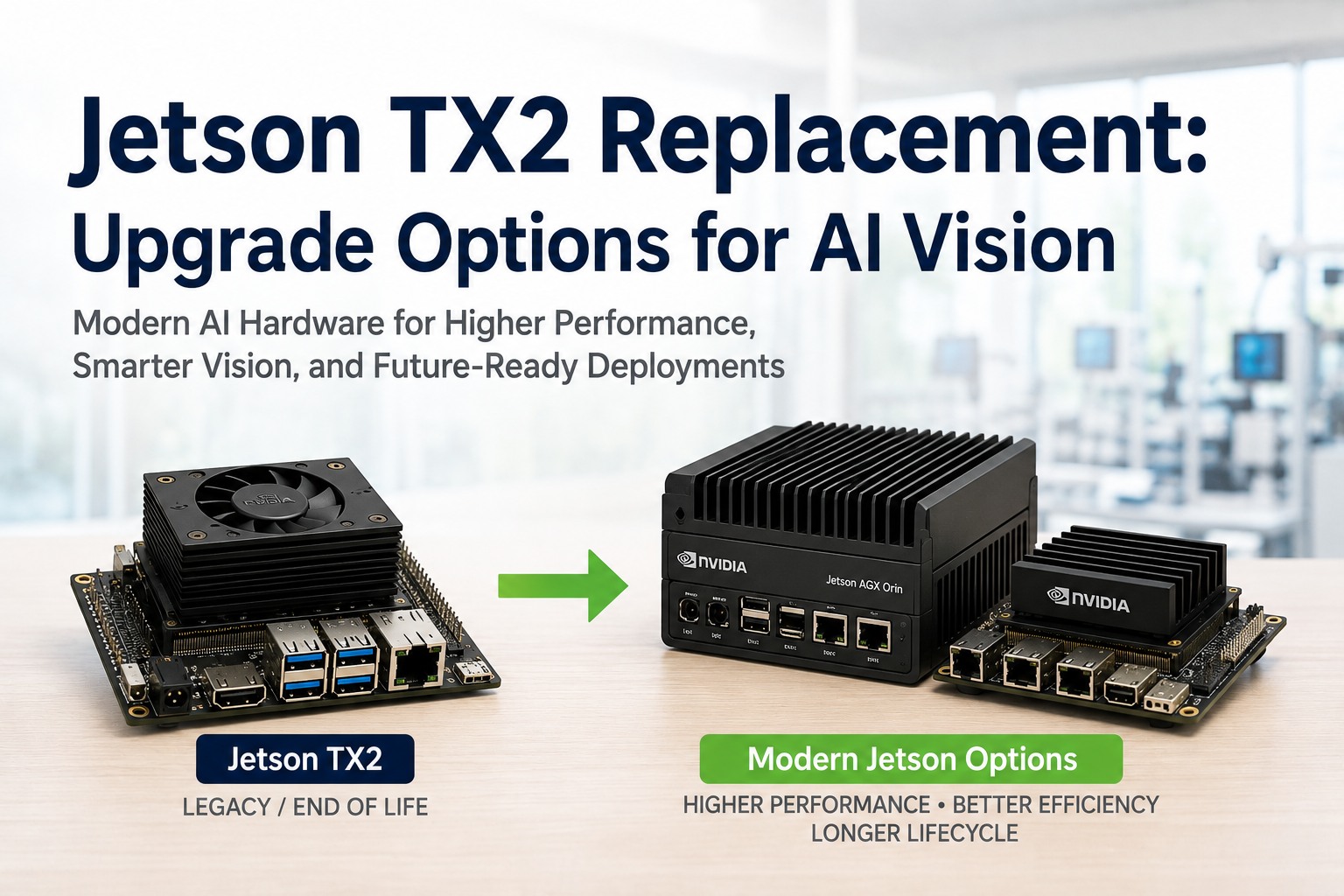
Jetson TX2 Replacement: Upgrade Options for AI Vision
The TX2 is aging out — modules retiring and JetPack 4 end-of-life. Replace it with the right modern target for your workload: an Orin edge module for like-for-like embedded vision, or a consolidated RTX PRO 6000 appliance when many cameras and bigger models outgrow the edge. Plan the platform transition once, keep it on-premise, and gain AI SPC in the process.
Why the TX2 Has to Move — Two Deadlines at Once
The TX2 replacement pressure isn't one clock, it's two running together: hardware availability and software support. Even where a TX2 module is still buyable for another year or two, the JetPack 4 software line underneath it is already end-of-life, which means no new features, no security maintenance, and a growing gap from every modern AI framework and model.
- TX2 4GB / 8GB — EOL January 2025
- TX2 NX — available through Feb 2028
- TX2i — available through April 2028
- Last-buy dates already passing for carriers
- Capped at JetPack 4 (L4T 32.x, Ubuntu 18.04)
- JetPack 4 declared EOL November 2024
- No shared baseline with Orin platforms
- Modern models & frameworks moving past it
Because the TX2 shares no software baseline with the Orin generation, replacing it means a full stack transition — new JetPack, re-validated models, updated pipelines. That's the honest headline. The upside is that you make the move once, onto a platform supported into 2032 and beyond, and pick up a decade of AI-hardware progress in a single step.
The Leap Since the TX2
The TX2 launched in 2017 with roughly 1.3 TOPS of AI performance. The modules that replace it are on a different plane entirely — the entry Orin already dwarfs it, and the top edge module delivers server-class throughput in the same palm-sized footprint.
Want your current TX2 workload benchmarked against these targets? Book a 30-minute demo — iFactory will profile your models, resolution, and camera count and show which replacement tier fits, with headroom for growth. Sessions available this week.
Your Replacement Options — Pick by Workload
There's no single right answer; it depends on whether you're replacing an embedded module one-for-one or rethinking a multi-camera line. Here are the four targets that cover almost every TX2 vision case.
Not sure whether to stay on an edge module or consolidate to a GPU? Ask iFactory Support with your camera count, models, and line layout, and the team will recommend the right tier and a migration approach for the software-stack transition — typically within 3 business days, no obligation.
Edge Module or Consolidated GPU?
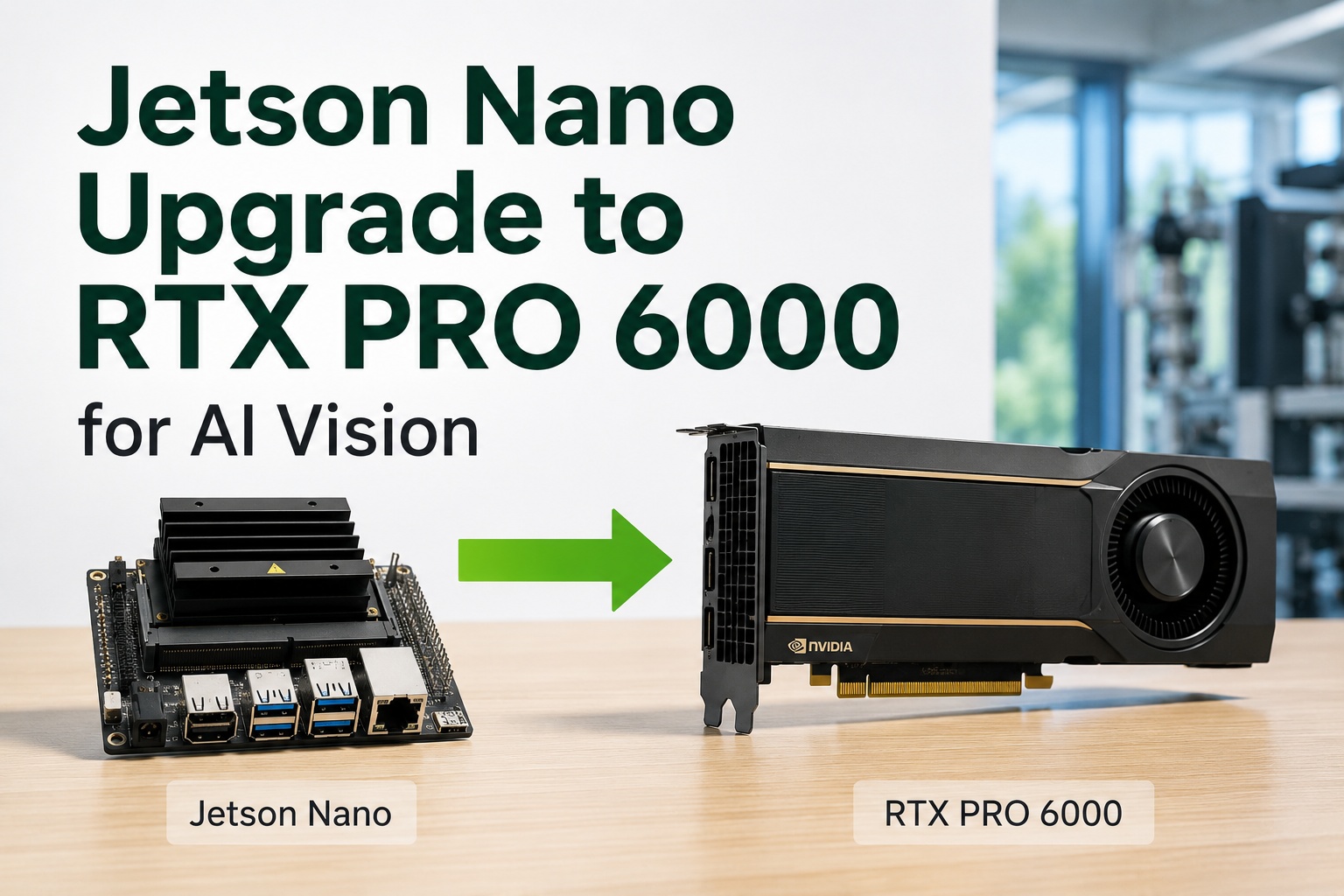
The fork in the road is really about how many streams you're feeding. Replace like-for-like with an Orin module when vision stays embedded and per-device; step up to a consolidated on-prem GPU when a growing camera count makes a fleet of modules harder to manage than one card.
Stay embedded — Orin module
One module per device or line, minimal footprint, low power. The natural path when the TX2 was doing a self-contained embedded job and you're modernizing it in place.
Consolidate — RTX PRO 6000
One GPU, many streams via Multi-Instance GPU, centrally managed. The natural path when a per-camera module fleet has become the thing you spend time maintaining.
Replace It Right — On-Prem, With AI SPC
Whichever tier you land on, iFactory handles the platform transition the TX2's EOL forces — and turns a forced hardware refresh into a capability upgrade. Everything stays on-premise, and the same appliance that runs your vision models adds statistical process control the TX2 era never delivered.
The TX2 clock already started. Replace it once, on the right tier.
With TX2 modules retiring and JetPack 4 end-of-life, the question isn't whether to replace it but what to replace it with. iFactory maps your workload to the right target — Orin Nano Super, Orin NX, AGX Orin, or a consolidated RTX PRO 6000 appliance — handles the software-stack transition, keeps everything on-premise, and adds AI SPC. One planned move onto a platform supported into 2032, ROI proven on one line first.
Frequently Asked Questions
Is the Jetson TX2 actually end-of-life?
Partly, and the rest is close. The TX2 4GB and 8GB modules reached end-of-life in January 2025. The TX2 NX is available through February 2028 and the TX2i through April 2028. But the software is the more urgent clock: the TX2 is capped on JetPack 4, which NVIDIA declared end-of-life in November 2024 — so even a still-available module runs an unsupported software line with no shared baseline to the current Orin generation.
Can I just swap the module and keep my software?
No — that's the key thing to plan for. Because the TX2 shares no JetPack baseline with Orin, replacing it is a full platform transition: a new JetPack, re-validated models, and updated pipelines. It's real engineering work, not a drop-in. The upside is you do it once, land on a platform supported into 2032, and gain years of AI-hardware and framework progress in a single step.
Which Orin module replaces a TX2?
It depends on the workload. The Orin Nano Super (around 67 TOPS) is the entry value leader for single-camera or light inspection. The Orin NX is the production sweet spot for embedded vision with moderate processing and a full hardware encoder. The AGX Orin delivers up to 275 TOPS for multi-sensor or heavy models. All are roughly one-to-two orders of magnitude beyond the TX2's ~1.3 TOPS.
When should I consolidate to a GPU instead of an edge module?
When the camera count has grown to the point that a fleet of per-device modules is harder to manage than a single card. An RTX PRO 6000 with 96GB and Multi-Instance GPU can host many camera streams at once, each isolated, replacing a rack of modules with one centrally-managed unit. If your TX2 was doing a self-contained embedded job, an Orin module is usually the cleaner like-for-like path.
Does the replacement stay on-premise?
Yes. Whether you land on an Orin module or an RTX PRO 6000 appliance, iFactory keeps inference on-premise — inspection images carry batch genealogy and process IP, and reject decisions need line latency, so cloud round-trips aren't appropriate. Images never leave the plant. Contact iFactory Support for appliance and module options.
How do I book a demo or get a replacement plan?
Two routes. For a live walkthrough, schedule a 30-minute demo — it covers the replacement tiers, the software-stack transition, edge-vs-GPU consolidation, and the AI SPC you gain. For a written replacement plan against your TX2 estate, contact iFactory Support with your module count, models, camera specs, and line layout and expect a response within about 3 business days. No obligation either way.
From a 2017 module to a 2032-supported platform — in one planned move.
The TX2 replacement path runs from an aging, JetPack-4-capped module to the right modern target for your line: an Orin edge module for embedded vision, or a consolidated RTX PRO 6000 appliance for many cameras and bigger models. iFactory handles the transition, keeps it on-premise, and adds AI SPC — one planned move instead of a forced scramble. The next step is a 30-minute demo mapped to your TX2 systems. Sessions available this week.