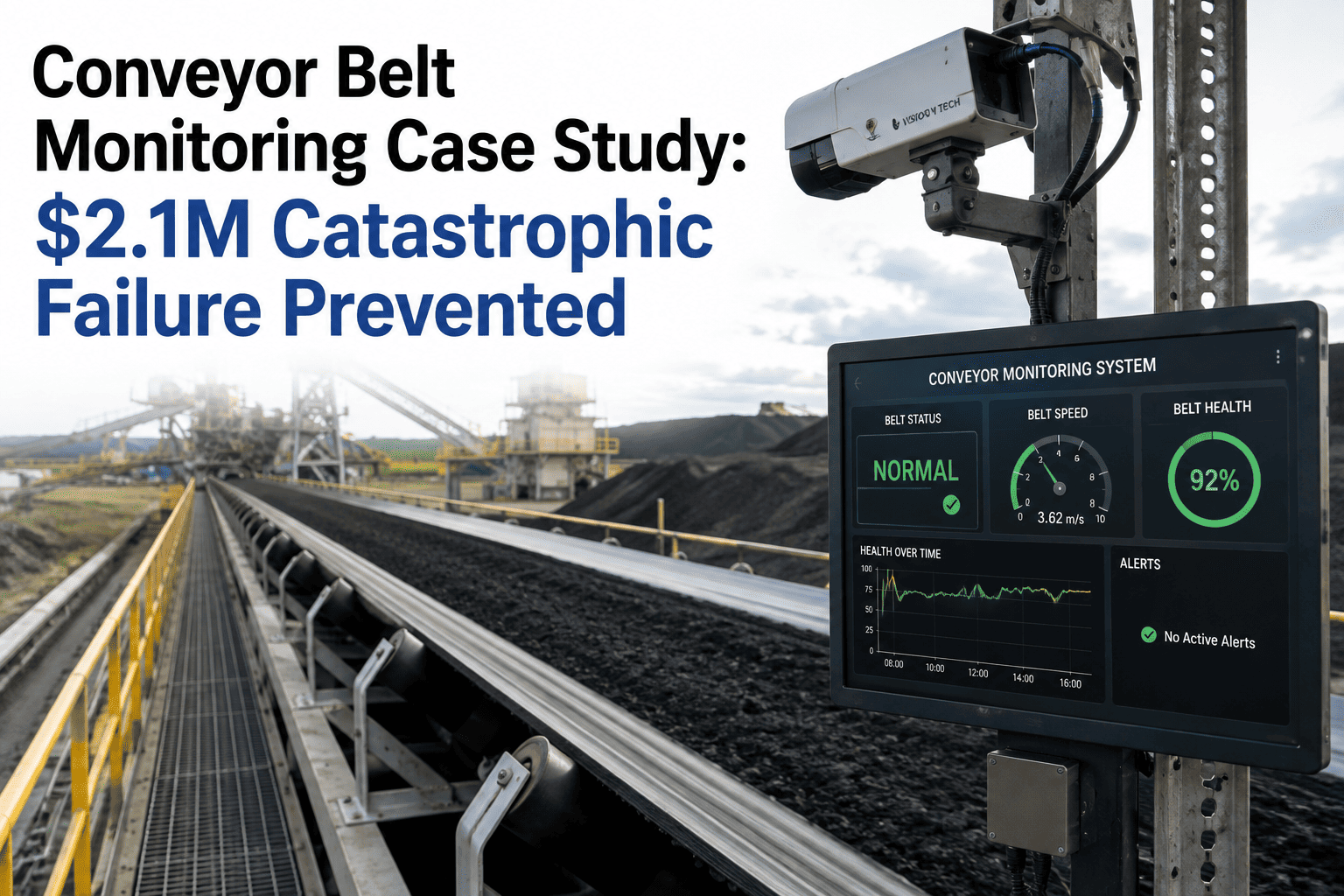
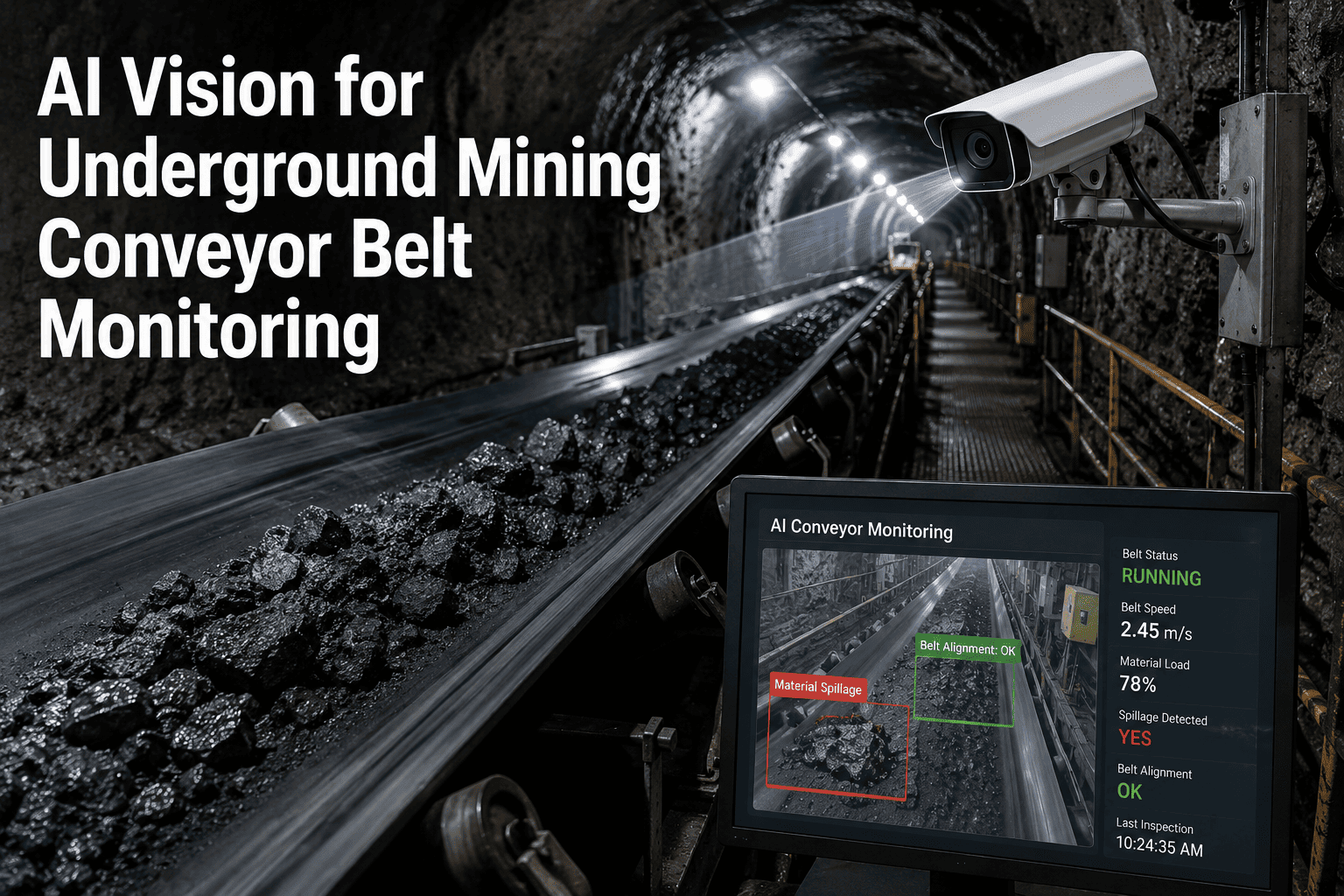
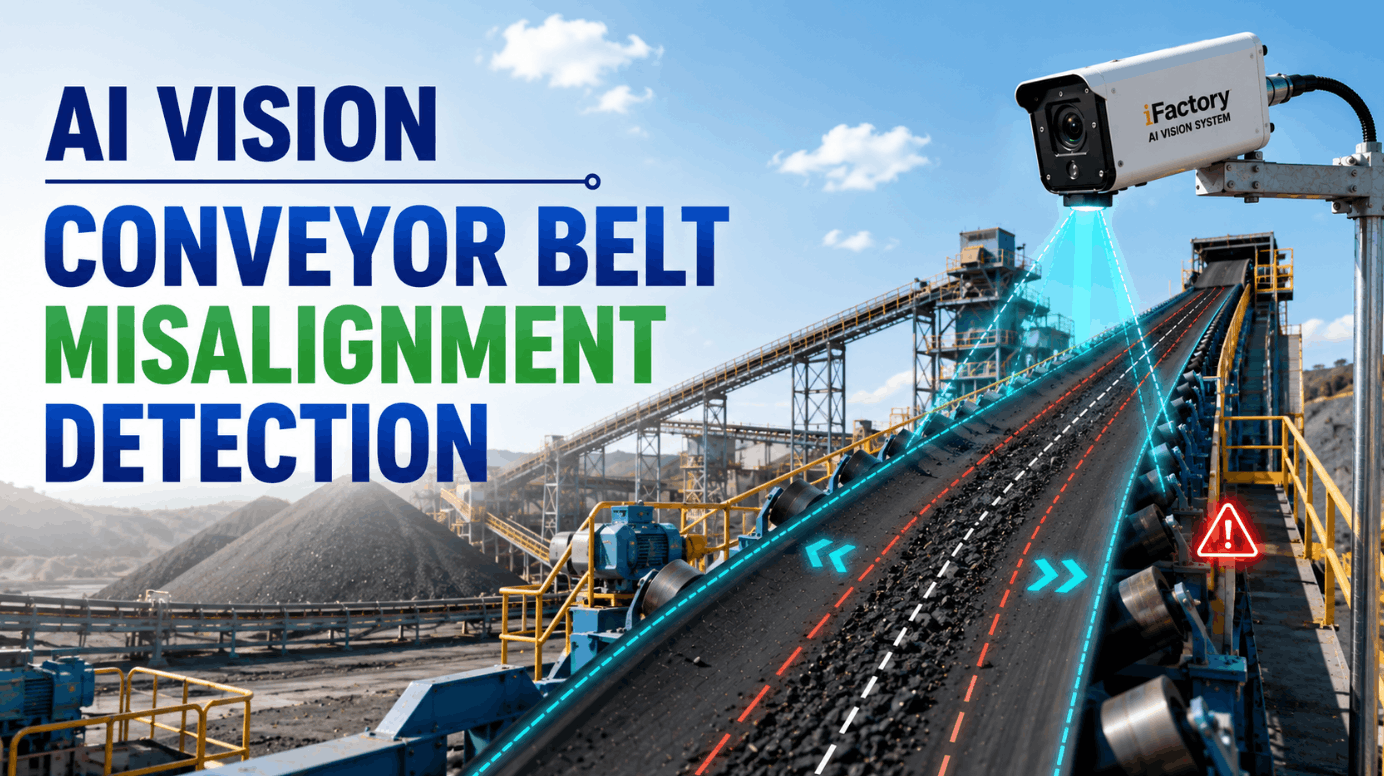
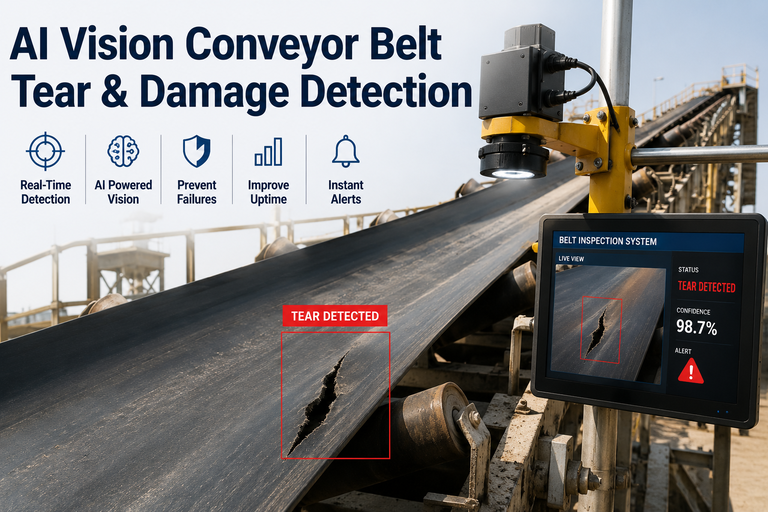
A scheduled conveyor inspection catches whatever's wrong at the moment the inspector walks past. The problem is that a belt runs twenty-four hours a day, and everything that goes wrong between one inspection and the next accumulates in the blind window — the tear that started at hour three of a shift and reaches critical propagation by hour eighteen, the tracking drift that developed after Monday's walk-around and destroyed the belt edge by Wednesday, the splice that started separating on Friday night and let go before the Monday morning check. Continuous AI monitoring closes the blind window. Every meter of belt, every second, every failure signature analyzed in real time, with the alert routed to a work order before the developing condition becomes a catastrophic failure. iFactory's conveyor monitoring engineering team maps the sensor coverage, failure mode library, and CMMS integration to each plant's specific belt routes and material types.
Continuous Monitoring · Failure Prevention
24/7 Conveyor Monitoring vs Scheduled Inspection: Why Continuous AI Wins
Scheduled inspections catch what's visible during the walk-around. Everything that develops in the twenty-two hours between walks accumulates unseen — until it becomes a torn belt, a fire, or an unplanned shutdown that costs six figures per hour. Continuous AI monitoring closes that blind window.
Scheduled Inspection
1–2
walks per shift
Point-in-time snapshot. Blind between visits.
VS
Continuous AI
86,400
observations per day
Every second, every meter, every belt.
The Blind Window Problem
What Happens Between Scheduled Inspections
Every scheduled inspection routine is really an assumption about how fast things go wrong. If an inspector walks a conveyor line twice a shift, the plant is implicitly assuming that any developing failure will still be catchable four to six hours later. For some slow-moving conditions — housekeeping issues, general dirt accumulation, cosmetic wear — that assumption holds up. For the failure modes that actually cause catastrophic conveyor shutdowns, it doesn't. A longitudinal tear can propagate from initiation to complete belt separation in under an hour once the carcass is compromised. A hot clinker fragment can ignite belt cover material in minutes. A splice can shift from stable to fully separated within a single production shift if tension conditions drift.
The plants that have moved to continuous monitoring didn't do it because scheduled inspections were bad at what they were designed for. They did it because scheduled inspections are structurally unable to close the blind window between visits, and the failures that happen in that window are the expensive ones. When a belt tear that could have been caught at initiation is instead caught after full propagation, the difference between the two catch points is often the difference between a two-hour repair and a fourteen-hour emergency shutdown. That's not a small delta on a plant running at production tonnage — that's the difference between hitting the month's cost target and blowing it entirely.
Continuous AI monitoring doesn't replace scheduled physical inspection — it changes what scheduled inspection is for. Instead of using human walk-arounds to hunt for developing failures, the walks focus on close-contact checks that cameras and sensors genuinely can't do: hand-torque verification on tension bolts, greasing intervals, and visual inspection of enclosed structural members. The AI handles the continuous surveillance layer that human eyes physically cannot provide, and the human inspection layer handles the tactile and confined-space checks that AI cameras genuinely cannot cover. The two are complementary, not competing.
Head-to-Head Comparison
Scheduled Inspection vs Continuous AI: What Actually Changes
The difference between the two approaches isn't just detection speed — it's every dimension of how a plant relates to its conveyor infrastructure, from what maintenance planners see to what work orders get generated to what the reliability team spends its time doing. The table below is a side-by-side of the operating characteristics that matter for capacity planning, cost budgeting, and reliability engineering.
| Dimension |
Scheduled Inspection |
Continuous AI Monitoring |
| Coverage Frequency |
1–2 walks per shift, per belt |
Every second, every belt, continuously |
| Failure Detection Lead Time |
Hours to days late — depending on inspection cadence |
Sub-second on active failures, days to weeks on wear trends |
| Belt Length Coverage |
Portions visible from walkway only |
Full belt length, both carry and return sides |
| Detection Consistency |
Inspector-dependent, fatigues over shift |
Constant sensitivity, no fatigue drift |
| Data Output |
Paper log, occasional photo |
Timestamped video frame, severity classification, work order |
| Response Path |
Inspector reports to supervisor, supervisor decides |
Automatic work order to CMMS with priority and location |
| Wear Trend Tracking |
Qualitative — "belt looks worn" |
Quantitative — millimeters lost per week per zone |
| Cost Structure |
Labor-intensive, scales with belt count |
Capital + software, scales through central platform |
The transformation isn't just faster detection — it's a fundamentally different relationship between the plant and the belt. Scheduled inspection produces qualitative snapshots that decay in information value between visits. Continuous AI produces a quantitative time-series that supports actual trending, actual root-cause correlation, and actual capacity planning. That's the shift that turns conveyor monitoring from a compliance activity into a reliability engineering discipline.
Detection Timeline by Failure Mode
How Much Earlier Continuous AI Catches Each Failure Type
Not every conveyor failure develops at the same speed, and the lead time advantage of continuous AI varies by failure mode. The six modes below cover the overwhelming majority of conveyor stoppages in bulk-material handling, cement, steel, and mining applications — each with its own signature, its own detection method, and its own lead time advantage over scheduled inspection.
M1
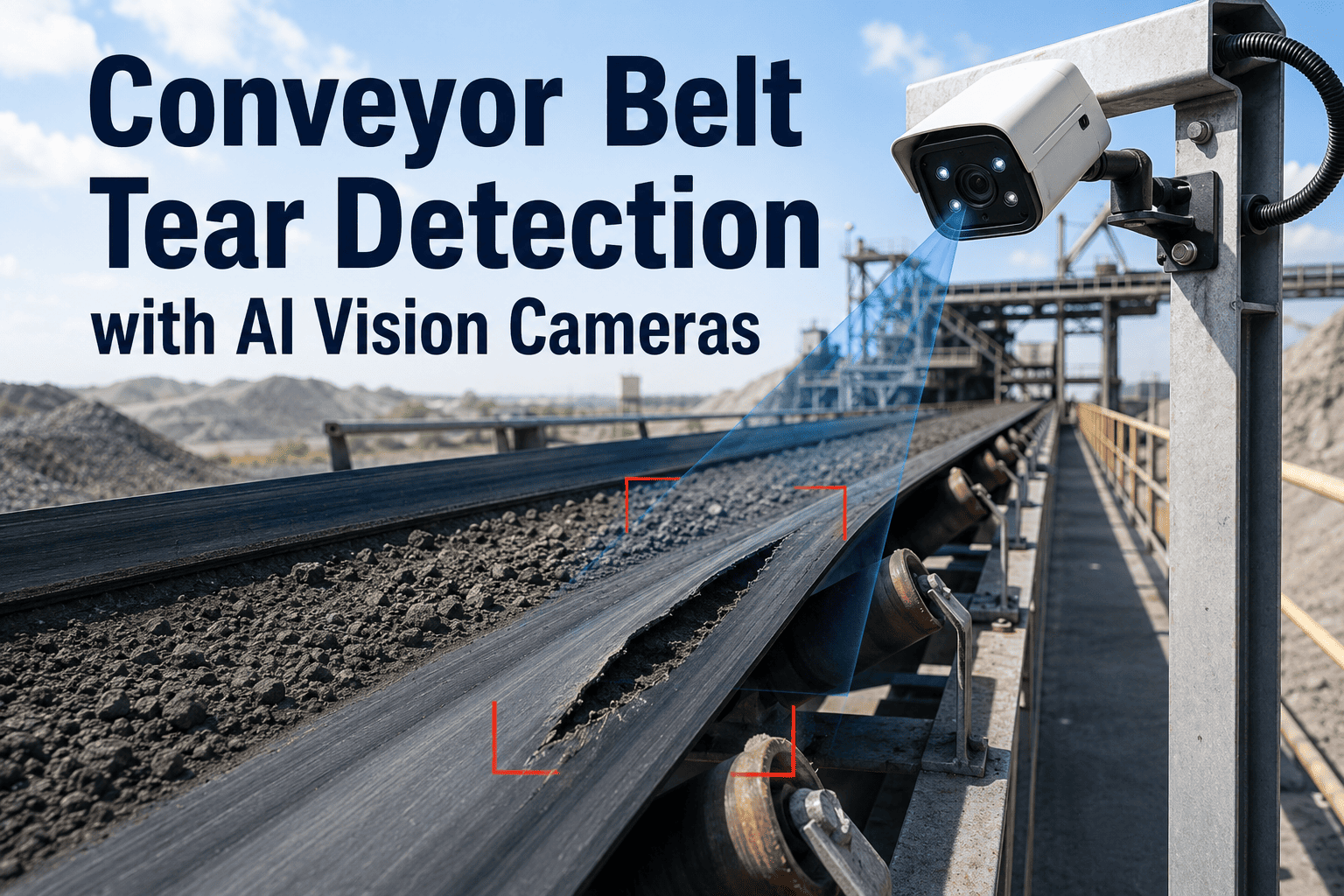
Longitudinal Belt Tear
Scheduled: caught post-propagation
AI: caught at initiation, sub-second
Tears propagate rapidly once the carcass is compromised — a small cut can extend meters within minutes. Vision AI detects the initiation point immediately and triggers belt stop before propagation reaches the transfer point.
M2
Belt Mistracking / Misalignment
Scheduled: caught after edge damage
AI: caught within minutes of drift
Belt edge position tracked continuously against structural reference. Alerts trigger before the edge touches the frame. Work order routes to the tracking roller or idler frame for adjustment within the current shift.
M3
Splice Degradation
Scheduled: found at inspection window
AI: 2–8 weeks trend visibility
Splice recognition model tracks each joint pass — surface separation, fastener protrusion, and belt lift at the joint. Trending data enables planned re-splicing at the next maintenance window before joint separation.
M4
Cover Wear / Thickness Loss
Scheduled: qualitative visual only
AI: quantitative mm-per-week trending
Belt thickness estimation via texture analysis and calibrated reference. Wear rate projected per zone, remaining useful life calculated, replacement work order generated ninety days before minimum acceptable cover depth.
M5
Hot Material / Fire Risk
Scheduled: caught after ignition
AI: caught before ignition, thermal
Thermal imaging identifies hot clinker or embers on the belt before cover material ignites. Automatic belt stop and diversion prevents belt fires that regularly cause multi-day shutdowns and structural damage in cement and steel applications.
M6
Foreign Object / Impact Damage
Scheduled: caught after belt cut
AI: caught before transfer point
Object detection classifies foreign material on the belt surface before it reaches transfer chutes or crushers. Metal fragments, oversized rocks, and unauthorized objects trigger diversion or belt stop rather than reaching downstream equipment.
See Continuous Monitoring Live
Watch AI Catch a Tear, Mistrack, and Splice Drift on Real Belt Footage
Book a walkthrough with iFactory's conveyor engineering team and see live failure detection running against real belt video — tear initiation, edge drift, splice trending, and automatic work order generation into your CMMS.
The 24/7 Sensing Stack
What Actually Runs When "Continuous AI" Runs
Continuous AI monitoring isn't a single sensor — it's a coordinated stack of sensing technologies, each covering a specific failure signature, integrated into a single alert and work order pipeline. Understanding the stack is how reliability leaders evaluate whether a specific vendor claim of "24/7 monitoring" actually delivers coverage or just checkbox marketing.
01
Visual Cameras on Carry and Return Sides
High-frame-rate cameras cover the full belt length on both sides. Carry side inspects load, surface, and foreign objects. Return side detects material accumulation, cover damage on the underside, and splice condition on the return path.
02
Thermal Imaging for Fire Prevention
Thermal cameras at critical zones — near kilns, crushers, and hot material sources — detect elevated surface temperatures before they cause belt cover ignition. Automatic belt stop triggers before combustion, not after.
03
Acoustic and Vibration Sensors on Idlers
Wireless vibration sensors on critical idler sets detect bearing degradation through characteristic BPFO and BPFI frequency signatures. Acoustic emission catches cord breakage and internal carcass damage that visual sensors cannot see.
04
Edge Deep Learning Models
Trained on plant-specific belt conditions, material types, and lighting. Models run at the edge with sub-second latency — no cloud round-trip between anomaly and alert. Continuous learning improves classification accuracy as more plant-specific data accumulates.
05
Automatic CMMS Work Order Generation
Detected faults classified by type and severity, then routed to CMMS as structured work orders. Fault type, location, belt segment, camera frame image, and recommended action all attached — technicians receive the full picture before leaving the control room.
06
Trending and Predictive Analytics Layer
Long-term trend analysis on wear rate, splice condition, and idler health projects remaining useful life for each belt zone. Planned replacement work orders generated with sufficient lead time for procurement and shutdown scheduling.
The Cost Delta
Where the ROI on Continuous Monitoring Actually Comes From
The business case for continuous AI monitoring doesn't come from replacing inspection labor — it comes from cost avoidance on the failures that scheduled inspection structurally cannot prevent. The four categories below are where mature deployments consistently show measurable payback, typically inside six to eight months for plants running heavy conveyor duty cycles.
$1
Unplanned Downtime Avoidance
The single largest ROI category. Plants report up to seventy percent fewer belt-related stoppages after continuous monitoring deployment, and each avoided catastrophic tear or splice failure typically saves six figures in emergency repair, lost production, and expedited belt sourcing costs.
$2
Extended Belt Life
Catching mistracking within minutes of drift onset prevents the belt edge destruction that shortens belt life by months. Catching wear trends quantitatively enables replacement on the optimum wear schedule — not premature, not on failure. Belt life extensions of fifteen to thirty percent are common.
$3
Fire and Safety Cost Avoidance
Thermal detection catches hot material before belt ignition. A single prevented belt fire typically saves multi-day production, structural damage, insurance premium impact, and the incident reporting cost that follows any conveyor safety event.
$4
Planned vs Unplanned Repair Ratio
Repairs scheduled at planned windows cost a fraction of the same repair done as an emergency. Continuous monitoring shifts the plant's planned-to-unplanned ratio structurally, and that ratio shift compounds across every belt in the plant year after year.
Objection Handling
The Five Objections to Continuous AI — Answered
Any reliability leader evaluating continuous monitoring has heard the same objections from stakeholders. The honest answer to each is that some contain valid concerns, and some are legacy assumptions that no longer hold with modern edge AI platforms. The answers below address both.
01
"Our inspection routine already catches everything."
If it did, there would be no unplanned belt failures on the site. Every plant running scheduled-only inspection has data showing catastrophic failures between inspection visits — the question isn't whether they happen, but whether they're being counted honestly against the inspection routine's true catch rate.
02
"AI cameras will produce too many false alerts."
Legacy vision systems did. Modern edge deep learning models trained on plant-specific conditions typically run false positive rates below one percent within the first months of operation, and the rate drops further as more plant-specific data accumulates and edge cases are labeled back into the training set.
03
"We don't have the network infrastructure for continuous video."
Edge processing means most video never leaves the sensor. Only structured alerts and periodic summary data flow back to the central platform — bandwidth requirements are typically a fraction of what plants assume they'll be, and edge deployment works reliably even in remote plant locations with limited connectivity.
04
"This is a rip-and-replace of our current inspection program."
It isn't. Human inspection still handles close-contact checks — hand-torque verification, greasing, confined-space structural inspection — that cameras genuinely cannot do. Continuous AI adds the surveillance layer that scheduled inspection structurally cannot cover, and the two run as complementary layers of a single reliability program.
05
"The payback horizon is too long to justify capital."
Plants running heavy conveyor duty cycles typically hit payback inside six to eight months, driven primarily by unplanned downtime avoidance. Payback horizons stretch when duty cycles are light or when the plant already has strong reliability numbers — but for high-consequence conveyor operations, the case is faster than most stakeholders assume.
Field Perspective
"
The mental model I try to give plant leadership is this: scheduled inspection is a photograph, and continuous AI monitoring is a movie. A photograph is useful — it tells you what's true at the moment it was taken — but everything that happens between photographs is invisible. If you're relying on photographs to prevent catastrophic failures, you're implicitly betting that failures develop slowly enough to be caught in the next photograph. On slow-moving stuff like general wear, that bet pays off. On fast-moving stuff like tears, mistracking, and hot material events, it doesn't, and every plant I've worked in has the failure history to prove it. The move to continuous monitoring isn't about doing away with human inspection — the walkarounds are still doing important work that cameras can't replace. It's about closing the blind window that no scheduled routine can close, because that's where the expensive failures actually happen. Once plants see the trend data on their own belts — the wear rate per zone, the splice degradation per pass — the argument for continuous monitoring stops being about technology and starts being about basic reliability engineering.
Fenella Okafor-Whitfield
Bulk Material Handling Reliability Lead · 22 years in conveyor engineering, AI monitoring deployment, and reliability program transformation
Common Questions
Frequently Asked Questions
Does continuous AI monitoring eliminate the need for scheduled physical inspection?
No, and any vendor claiming it does is overselling. Scheduled physical inspection still covers close-contact checks that cameras genuinely cannot perform — hand-torque verification on tension bolts, bearing greasing, and structural inspection of enclosed members. What continuous AI does eliminate is the reliance on walk-around inspection to catch fast-moving failure modes like tears, mistracking, and hot material events, which walk-arounds are structurally too slow to catch reliably. Modern reliability programs run both layers together, with the AI handling continuous surveillance and human inspection handling tactile and confined-space checks.
Talk to conveyor engineering about the right layering for your plant.
How many cameras and sensors does a typical conveyor need?
Camera density depends on belt length, curvature, and the specific failure modes prioritized for the belt. A short flat belt with only tear and mistracking coverage may need just a few cameras at key positions. A long belt with elevation changes, transfer points, and hot material exposure typically needs more cameras plus thermal imaging at critical zones and vibration sensors on high-consequence idler sets. The sensor layout is designed against the specific belt geometry and risk profile during the engineering phase of deployment, not from a generic template. Plants usually find the sensor count is lower than they initially assume.
What is the typical false positive rate on modern edge AI conveyor monitoring?
Well-tuned modern systems typically run false positive rates below one percent within the first several months of operation. The rate drops further as more plant-specific edge cases are labeled back into the training set — a mature deployment often runs at fractions of a percent. Early false positives are usually driven by unusual material types, lighting conditions, or belt geometries the base model hasn't seen before, and they get resolved through targeted retraining rather than by loosening detection thresholds. Any deployment claiming zero false positives out of the box should be treated with skepticism.
Can continuous AI monitoring work on belts in remote locations without strong network connectivity?
Yes. Edge processing is specifically designed to handle this scenario — the deep learning models run locally at the sensor, and only structured alerts and periodic summary data flow back to the central platform. Bandwidth requirements are far lower than raw video streaming would suggest, typically in the range that even limited industrial connectivity can support reliably. For very remote sites, local storage and batch upload of trend data works as a backup path when connectivity is intermittent, and edge alerts still trigger local belt stop actions regardless of upstream connectivity status.
Book a demo to walk through remote-site deployment options.
How does the CMMS integration actually work when a fault is detected?
When the edge model classifies a fault, it packages the fault type, severity classification, belt location, camera frame image at the moment of detection, and recommended maintenance action into a structured payload. That payload posts to the CMMS via API and generates a work order automatically, routed by priority to the appropriate maintenance planner or crew. The technician receives the full context — including the flagged image and past maintenance history for that specific belt segment — on their mobile device before they even leave the control room, which cuts diagnostic time and eliminates the ambiguity that verbal handoffs from inspectors introduce.
Close the Blind Window
Move From Scheduled Snapshots to 24/7 Belt Intelligence
iFactory's continuous AI conveyor monitoring platform is built for the specific realities of bulk material handling — heavy dust, hot material exposure, remote plant locations, and the tight economics of unplanned downtime avoidance. Edge processing, CMMS integration, and trend analytics come together into a single reliability platform that catches what walk-around inspections structurally cannot.