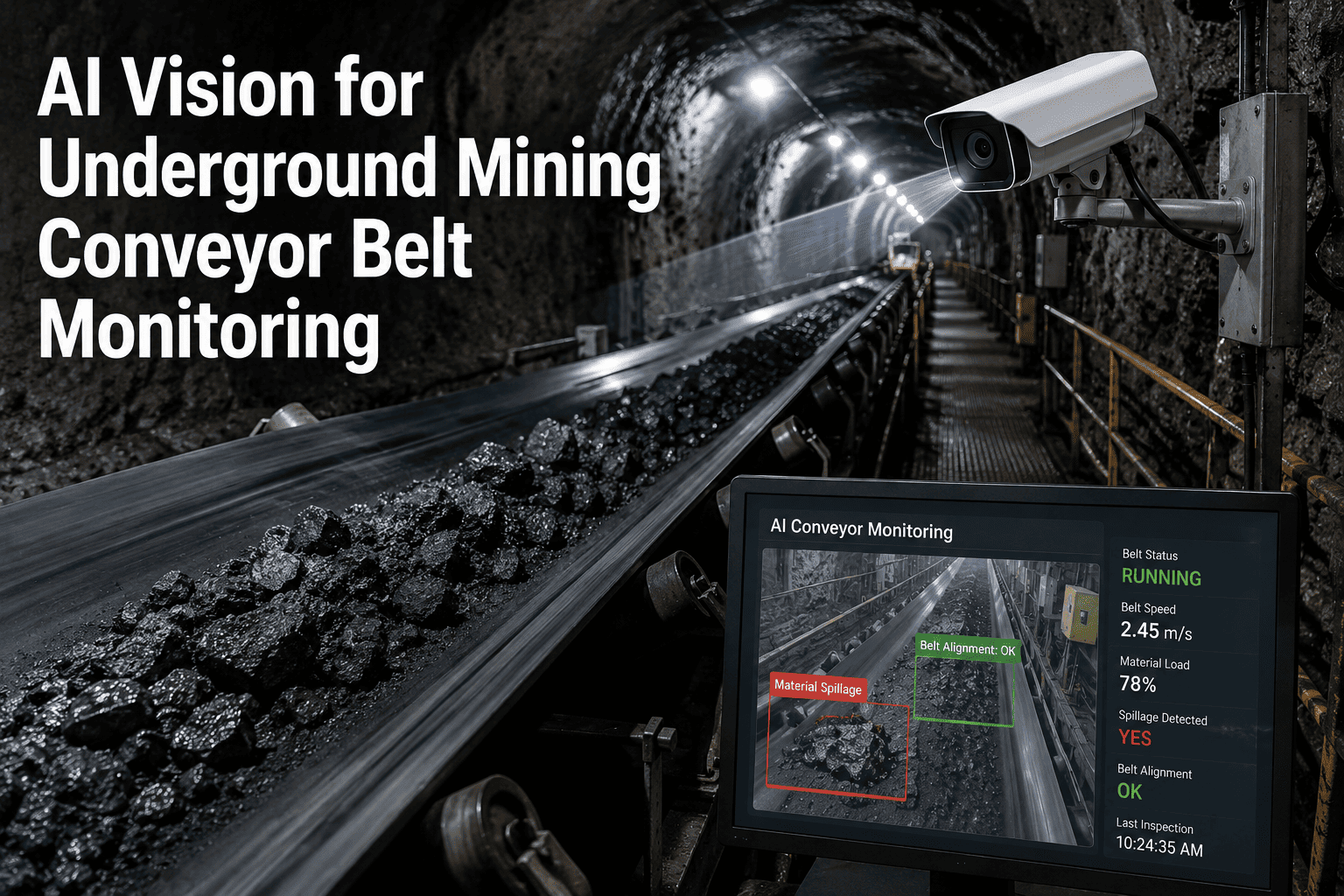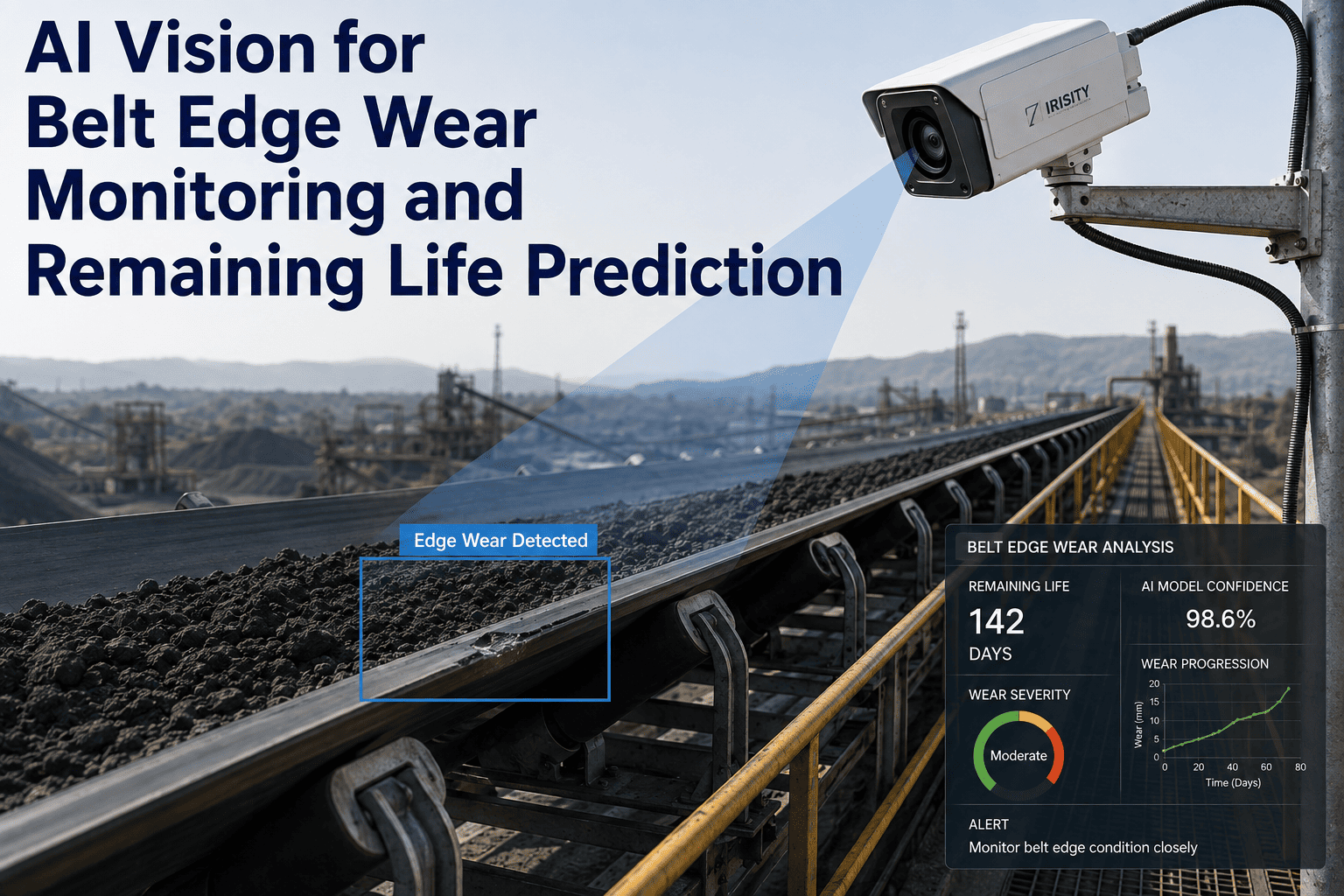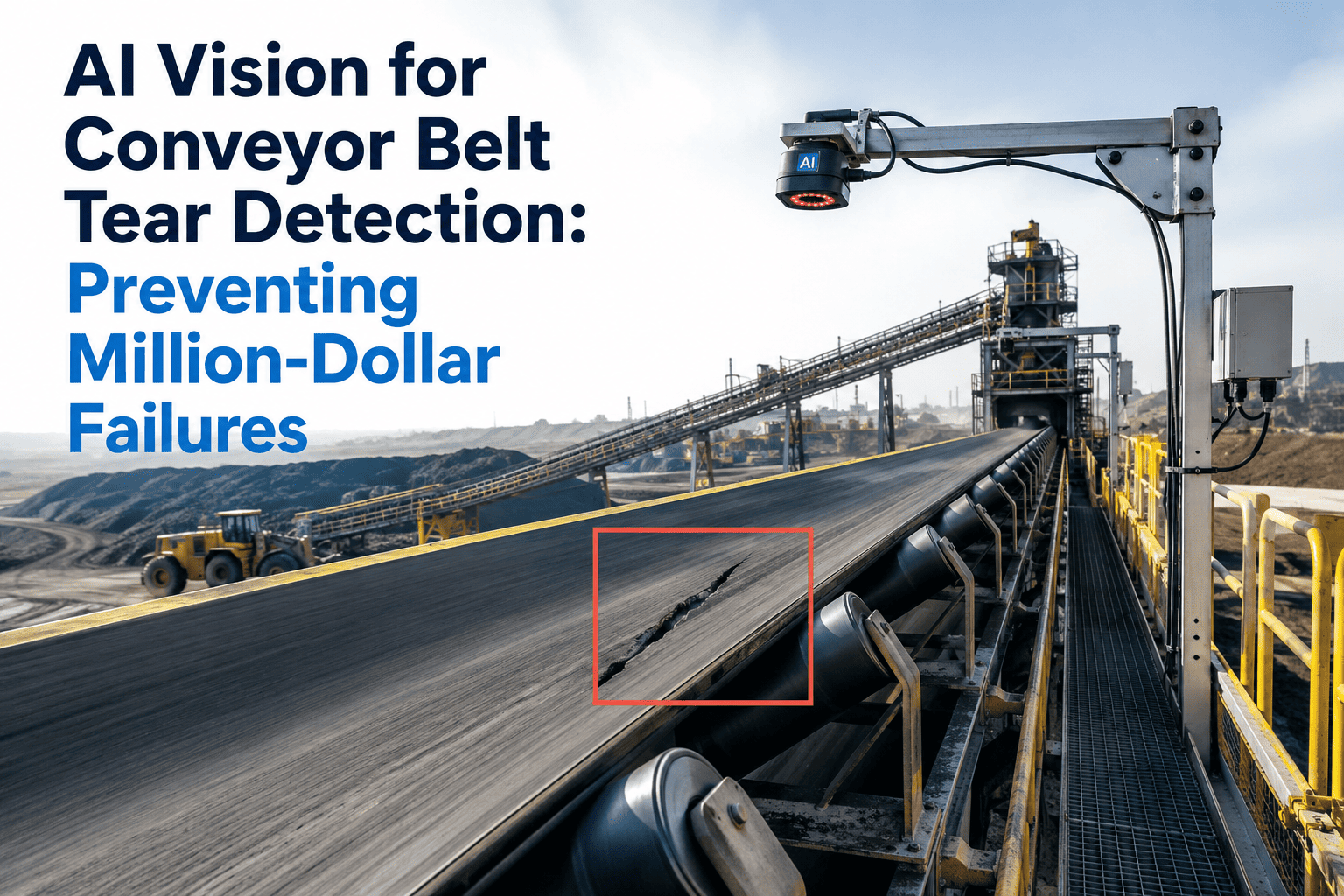
Conveyor belt misalignment and tracking issues are among the most common causes of unscheduled downtime in bulk material handling operations across mining, cement, ports, and manufacturing facilities. When a belt drifts from its intended path, the consequences cascade rapidly — edge damage accelerates belt wear, material spillage creates safety hazards and cleanup costs, and structural components such as idlers and frames suffer premature failure. Traditional detection methods rely on mechanical limit switches and manual inspections that catch damage only after it has occurred, leaving operations exposed to progressive belt deterioration that can lead to catastrophic belt tears and unplanned shutdowns. AI vision-based conveyor belt misalignment detection changes this paradigm by identifying belt drift, swaying, and edge damage at the earliest possible moment — before mechanical damage occurs — and automatically triggering maintenance responses that contain the issue before it escalates.
The True Cost of Conveyor Belt Mistracking
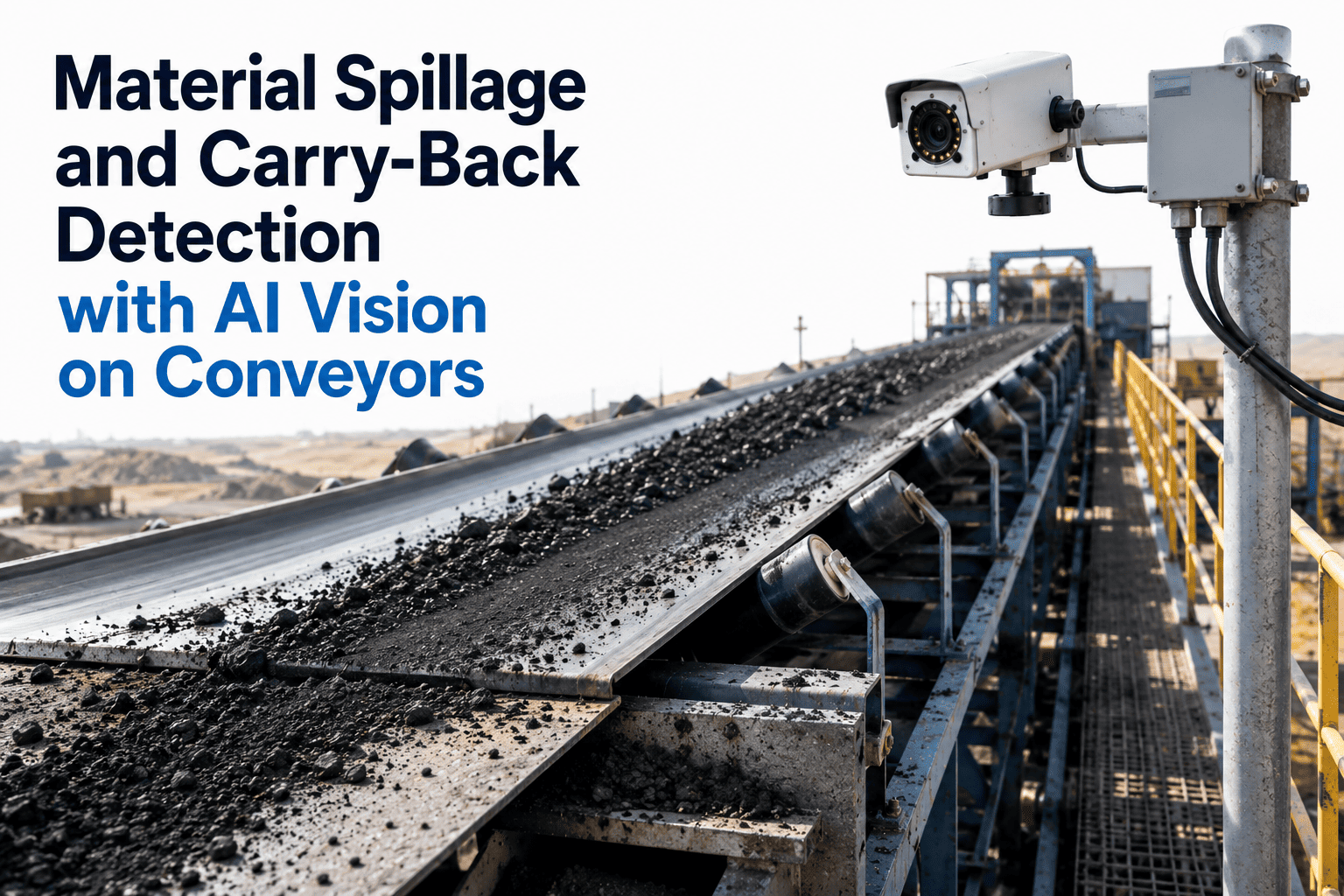
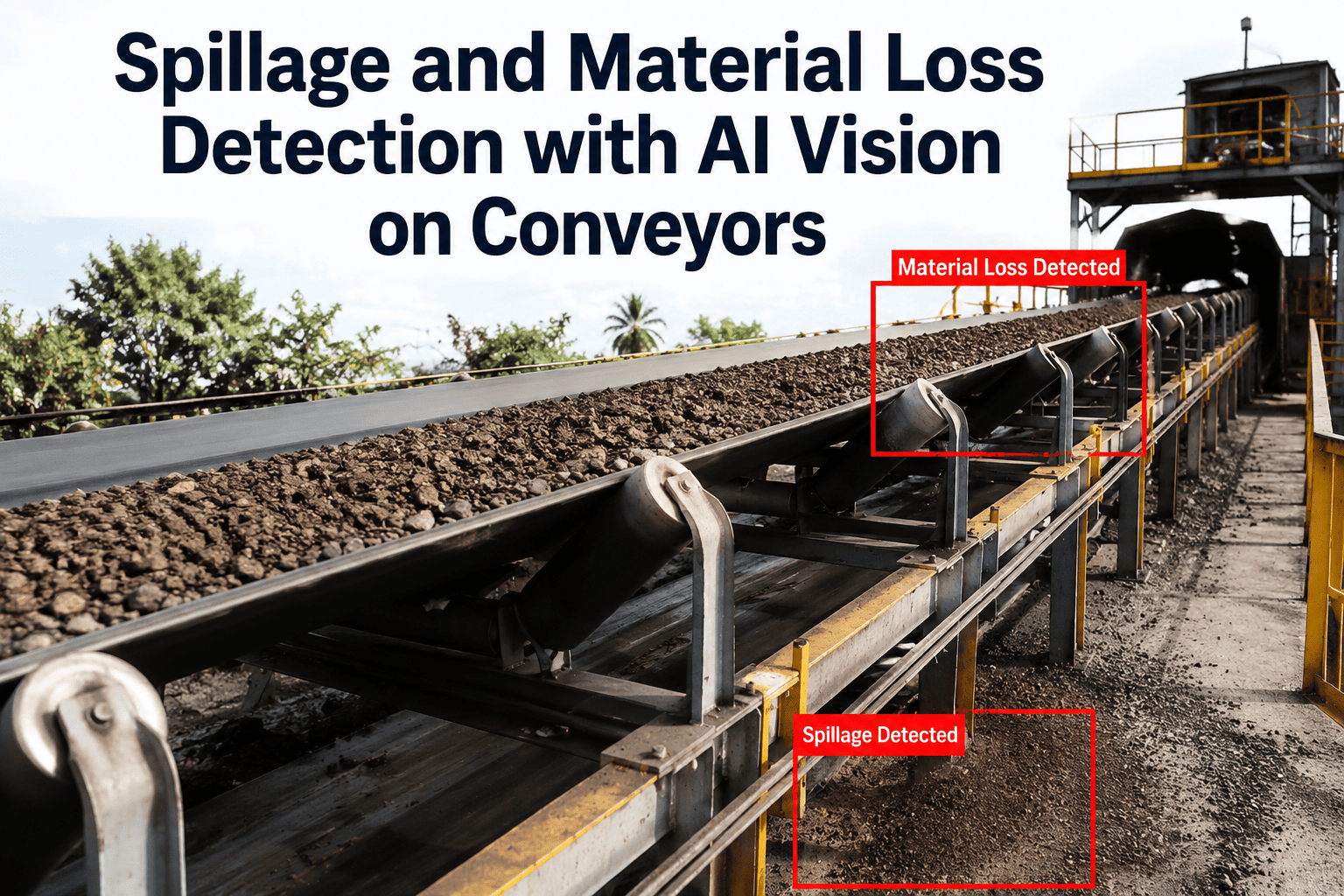
Conveyor belt mistracking is not merely a tracking problem — it is a systemic reliability issue that affects every downstream process in a material handling system. When a belt runs off-center by even a few millimeters, the edge makes contact with the structure, causing fraying, delamination, and eventual edge rip that shortens belt life by 40-60%. The material spillage generated by mistracking requires manual cleanup that diverts maintenance labor from value-added tasks, and in industries such as mining and cement, fugitive material creates environmental compliance risks and respiratory health hazards for workers. Spillage also accumulates on idlers and pulleys, causing additional tracking problems in a self-reinforcing cycle that accelerates component wear. The financial impact is measurable: a single belt replacement for a medium-length conveyor system costs between $50,000 and $200,000 in materials and labor, and the unscheduled downtime for replacement can exceed 24 hours. Traditional belt tracking solutions — training idlers, mechanical limit switches, and laser alignment systems — provide partial mitigation but cannot detect the early warning signs of edge damage or predict when mistracking will exceed acceptable thresholds. AI vision-based monitoring fundamentally changes the maintenance approach from reactive replacement to predictive intervention by detecting the earliest indicators of mistracking and enabling corrective action before damage occurs.
How AI Vision Detects Conveyor Belt Misalignment in Real Time
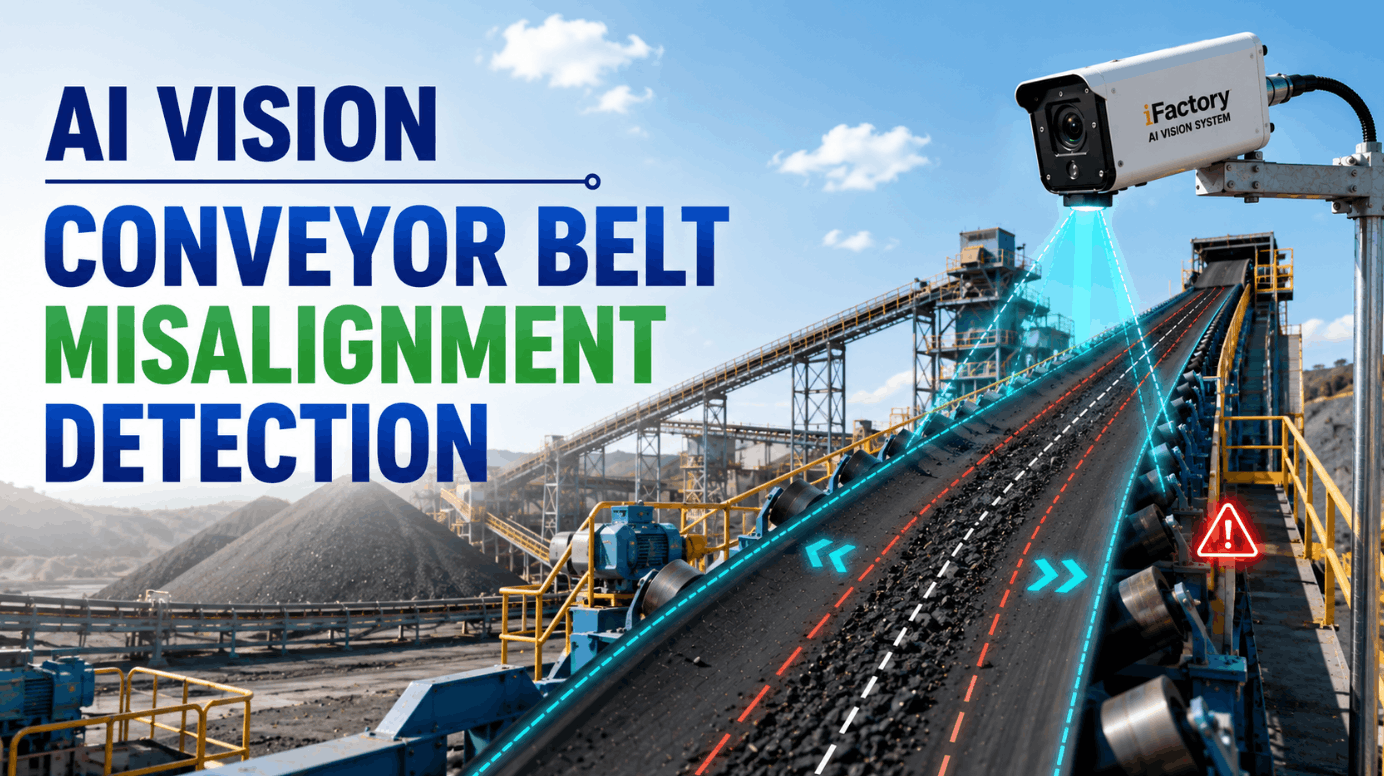
iFactory's AI vision camera platform uses deep learning models trained on thousands of hours of conveyor belt footage to detect and classify misalignment events with high precision. The cameras are positioned at strategic points along the conveyor — typically at the head pulley, tail pulley, transfer points, and along the belt path where mistracking is most likely to occur — and continuously analyze the belt edges in real time. The AI model distinguishes between normal belt wander during loading variations and problematic mistracking that exceeds configurable thresholds for displacement, angle, and duration. When the system detects belt swaying beyond the acceptable envelope, edge damage such as fraying or gouges, or belt drift indicating a structural issue, it generates an alert with the precise location, a time-series graph of the tracking deviation, and a snapshot of the belt condition at the moment of detection. The edge AI architecture processes all inference locally on the camera hardware, eliminating network latency and bandwidth constraints while achieving detection latencies under 200 milliseconds from image capture to alert generation. This enables maintenance teams to respond to developing issues while the conveyor is still running and schedule corrective action during planned maintenance windows. Book a Demo to see how iFactory's AI vision platform detects belt mistracking in your conveyor system.
Comprehensive Detection Capabilities for Conveyor Belt Health
The AI vision platform detects and classifies five primary categories of conveyor belt anomalies, each of which requires a distinct maintenance response. The table below summarizes the detection capabilities, their operational impact, and the recommended intervention workflow.
| Detection Category | Description | Operational Impact | Maintenance Response |
|---|---|---|---|
| Belt Mistracking | Lateral displacement of belt from centerline beyond configured threshold | Edge wear, spillage, structural damage to idlers and frames | Inspect and adjust tracking idlers; check pulley alignment |
| Belt Swaying | Oscillatory lateral movement indicating dynamic instability | Accelerated edge fatigue, material spillage at transfer points | Evaluate loading consistency; check belt tension and idler condition |
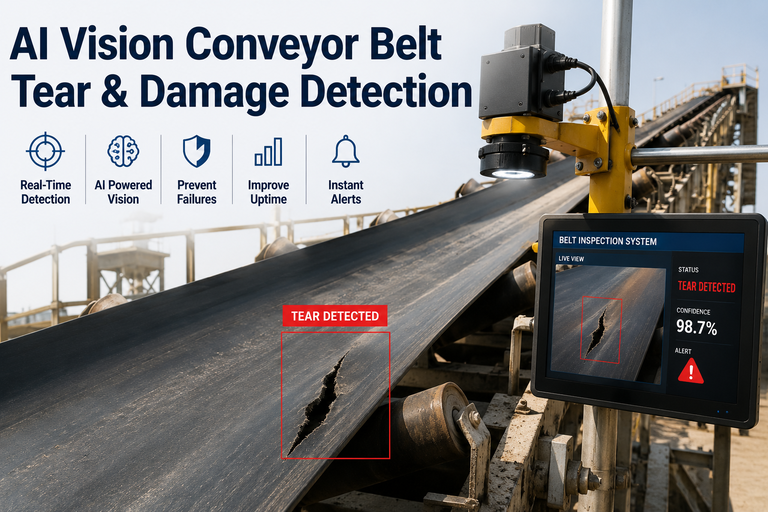
| Edge Damage | Fraying, gouges, delamination, or tears at belt edges | Rapid propagation to full-width belt failure; spillage | Schedule belt repair or section replacement; inspect for root cause |
| Belt Drift | Slow, progressive lateral movement in one direction over time | Structural wear on pulley lagging and skirt boards | Verify pulley alignment; check for uneven belt stretch or splice issues |
| Loading Impact | Off-center or inconsistent material loading causing tracking deviation | Recurring mistracking; accelerated belt and idler wear | Optimize chute and loading zone configuration; install belt centering devices |
Each detection event is automatically logged with timestamp, location, severity rating, and image evidence, providing the maintenance team with a complete audit trail for root cause analysis and compliance reporting. The machine learning models improve over time by incorporating feedback from maintenance outcomes, reducing false positive rates and increasing detection sensitivity for the specific mistracking patterns in each conveyor installation.
Closing the Loop Between Detection and Maintenance Action
The most significant advantage of AI vision-based conveyor monitoring is not the detection itself — it is the integration of detection data with maintenance execution systems. iFactory's platform connects to any major CMMS through OPC-UA and REST APIs, enabling automatic work order generation the moment a misalignment event exceeds the configured threshold. When the AI model detects belt mistracking at severity level 3 or above, the system creates a work order with the specific conveyor asset identifier, the GPS or zone location of the anomaly, a severity classification based on displacement and edge damage assessment, a snapshot image of the belt at the detection moment, and time-series data showing the tracking deviation over the preceding 30 seconds. This closed-loop workflow eliminates the manual steps that delay maintenance response — the inspector does not need to write a report, the planner does not need to interpret handwritten notes, and the technician does not need to search for the belt's maintenance history. Organizations using this detection-to-maintenance integration report 60-80% faster response times to conveyor belt anomalies and 40% reduction in belt-related unplanned downtime within six months. Book a Demo to see the integration in action.
Conveyor belt health monitoring delivers maximum value when detection data flows directly into maintenance planning and execution systems. iFactory's AI vision platform creates a complete closed loop: the camera detects belt mistracking at the pixel level, the AI model classifies the severity, the integration layer creates a structured work order in the CMMS, and the maintenance team executes the corrective action with full context. Teams that deploy AI vision monitoring with CMMS integration consistently achieve higher belt reliability metrics and lower maintenance costs than those using detection systems without automated maintenance workflow connectivity.
Best Practices for Deploying AI Vision Conveyor Monitoring
Successful deployment of AI vision for conveyor belt misalignment detection requires attention to camera placement, threshold configuration, and team training. Cameras should be positioned at locations where mistracking historically occurs and at key structural transition points such as head and tail pulleys, transfer chutes, and loading zones. A minimum of two camera views per conveyor — one from each side — is recommended to capture the full belt edge condition. Detection thresholds must be calibrated during an initial commissioning period in which the system learns the normal belt wander pattern for each conveyor and establishes the baseline for anomaly detection, typically requiring two to three weeks of operation under normal production conditions. Maintenance teams should be trained to interpret the detection alerts and distinguish between events requiring immediate shutdown and those that can be scheduled for the next maintenance window. iFactory provides role-based training programs for operators, maintenance technicians, and reliability engineers covering alert interpretation, severity assessment, and CMMS integration workflows. The most effective deployments pair the AI vision system with a structured maintenance response protocol that defines escalation paths, response time targets, and documentation requirements for each detection severity level.
Frequently Asked Questions About AI Vision Conveyor Belt Monitoring
AI vision systems for conveyor belt monitoring achieve detection accuracy rates above 95% when properly trained and calibrated. The deep learning models are trained on thousands of labeled images covering normal belt wander, edge damage patterns, and mistracking events under varying lighting and material conditions. False positive rates are typically below 3% after the initial calibration period, and the models continuously improve through feedback loops where maintenance teams confirm or reject detection events. The edge AI architecture ensures consistent performance regardless of network connectivity, with all inference processing occurring on the camera hardware.
When the system detects a misalignment event exceeding the configured threshold, it generates a structured alert containing the conveyor asset ID, precise location coordinates, severity classification, a snapshot image of the belt at detection, and a time-series graph of the tracking deviation. If integrated with a CMMS, the system automatically creates a work order with all this information pre-populated, eliminating manual data entry. The alert is simultaneously pushed to the maintenance team's dashboard and mobile devices, enabling immediate awareness and response prioritization based on severity.
Yes. The AI model is trained to recognize the difference between normal belt wander during loading variations — which is self-correcting — and problematic mistracking that requires intervention. The system uses configurable thresholds for lateral displacement, angle of deviation, and duration of the event. A brief displacement that returns to center within a few seconds is classified as normal wander. A sustained displacement beyond the configured threshold for a specified duration triggers a maintenance alert. This distinction prevents unnecessary alerts while ensuring genuine mistracking events are captured reliably.
Traditional mechanical sensors such as limit switches and pull cords detect only the endpoint of belt mistracking — the point at which physical contact triggers a shutdown. They provide no early warning, no diagnostic information, and no trend data. AI vision detects mistracking at the earliest stage, measures the exact displacement and angle, captures visual evidence of edge condition, and provides continuous trend data for predictive analytics. The combination of early detection, diagnostic richness, and trend analysis makes AI vision fundamentally more effective at preventing belt damage and unplanned downtime than any mechanical sensor system.
Most operations achieve full payback on their AI vision conveyor monitoring investment within four to eight months. The primary value drivers are reduced belt replacement frequency, reduced unplanned downtime, lower spillage cleanup labor costs, and extended idler and pulley life. Operations with multiple conveyors or high-value production lines typically see faster payback because the fixed cost of the AI platform is distributed across more assets and the downtime cost per hour is higher. The combination of maintenance cost savings and production throughput protection makes AI vision conveyor monitoring one of the highest-return investments in material handling reliability.