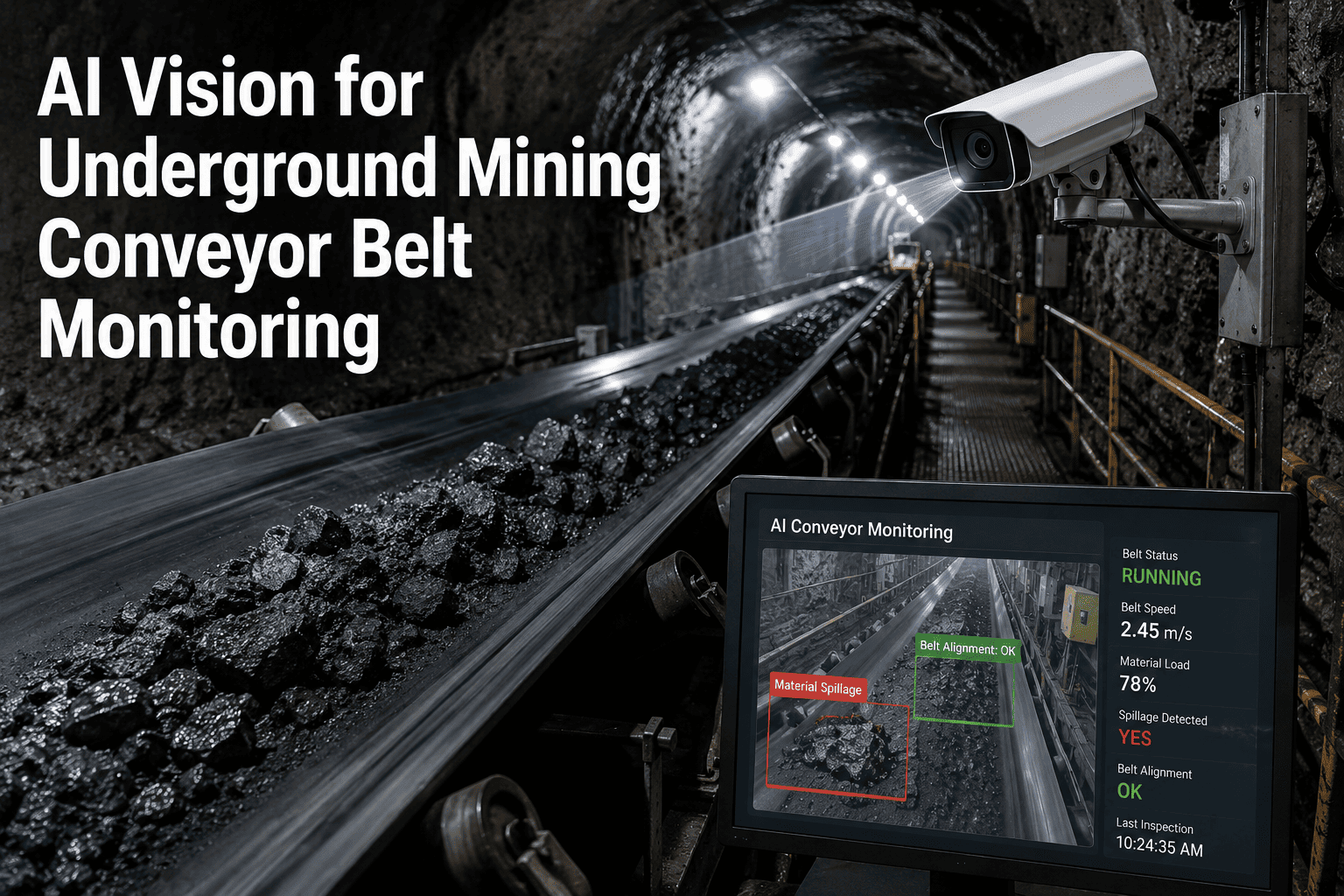
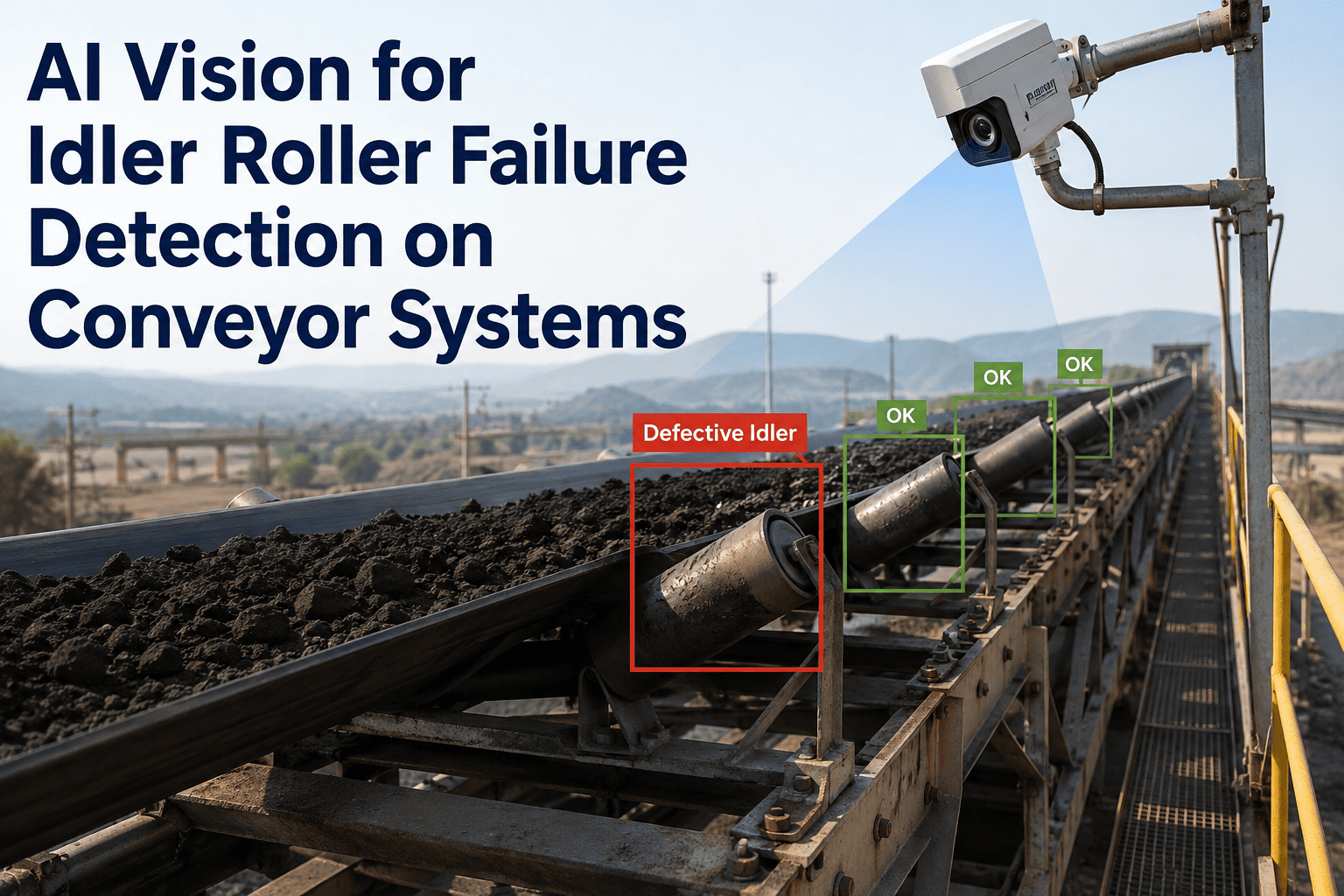
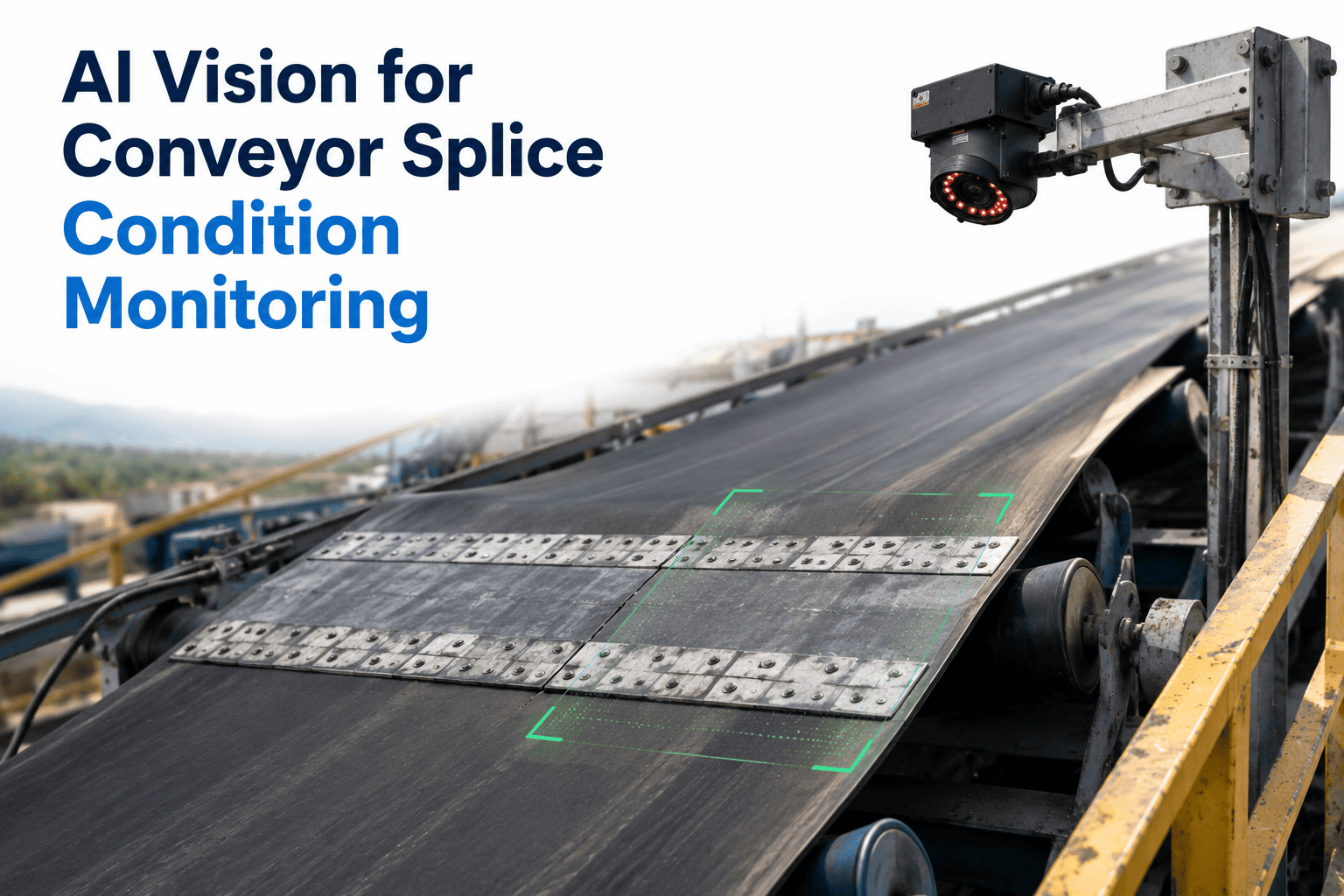
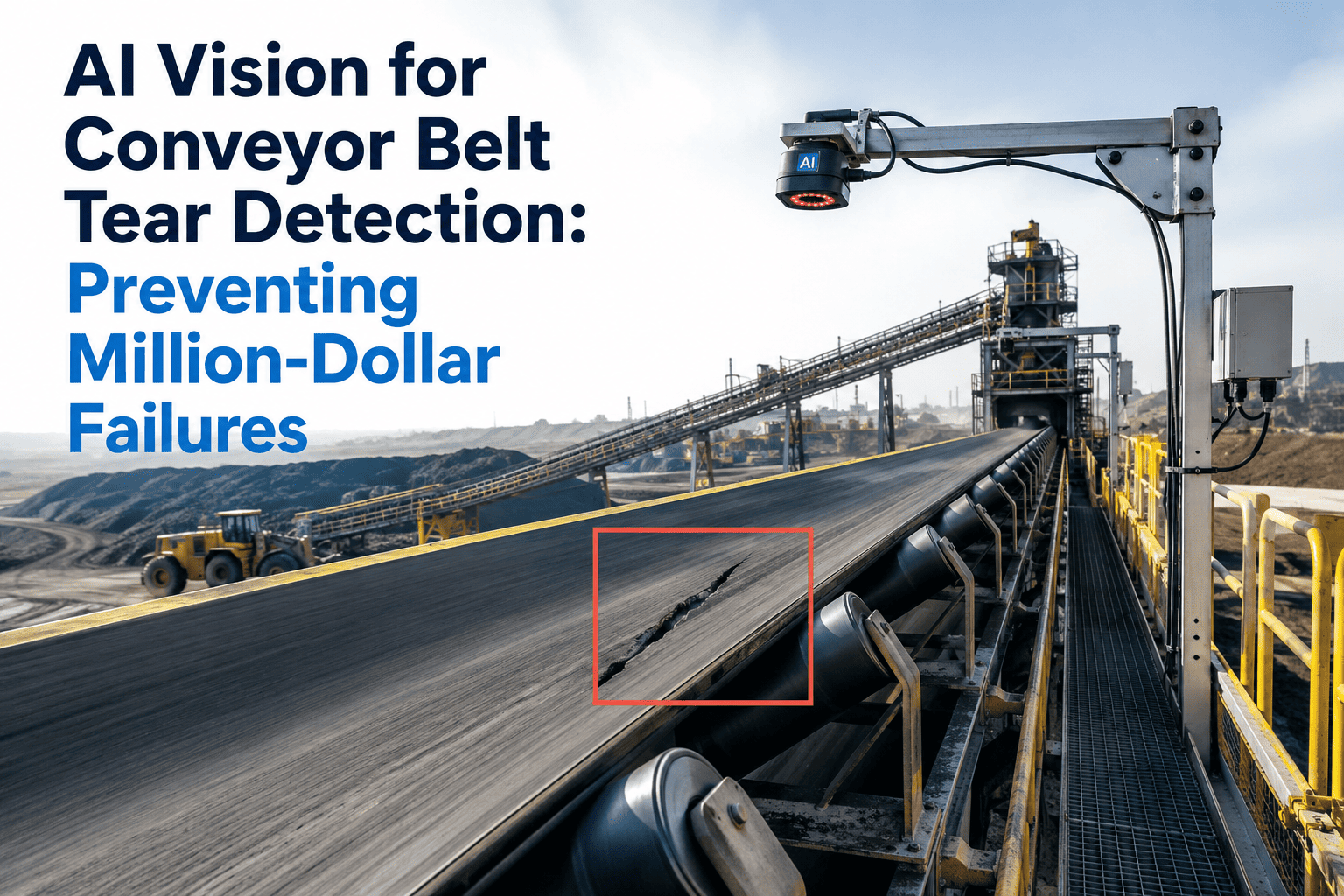
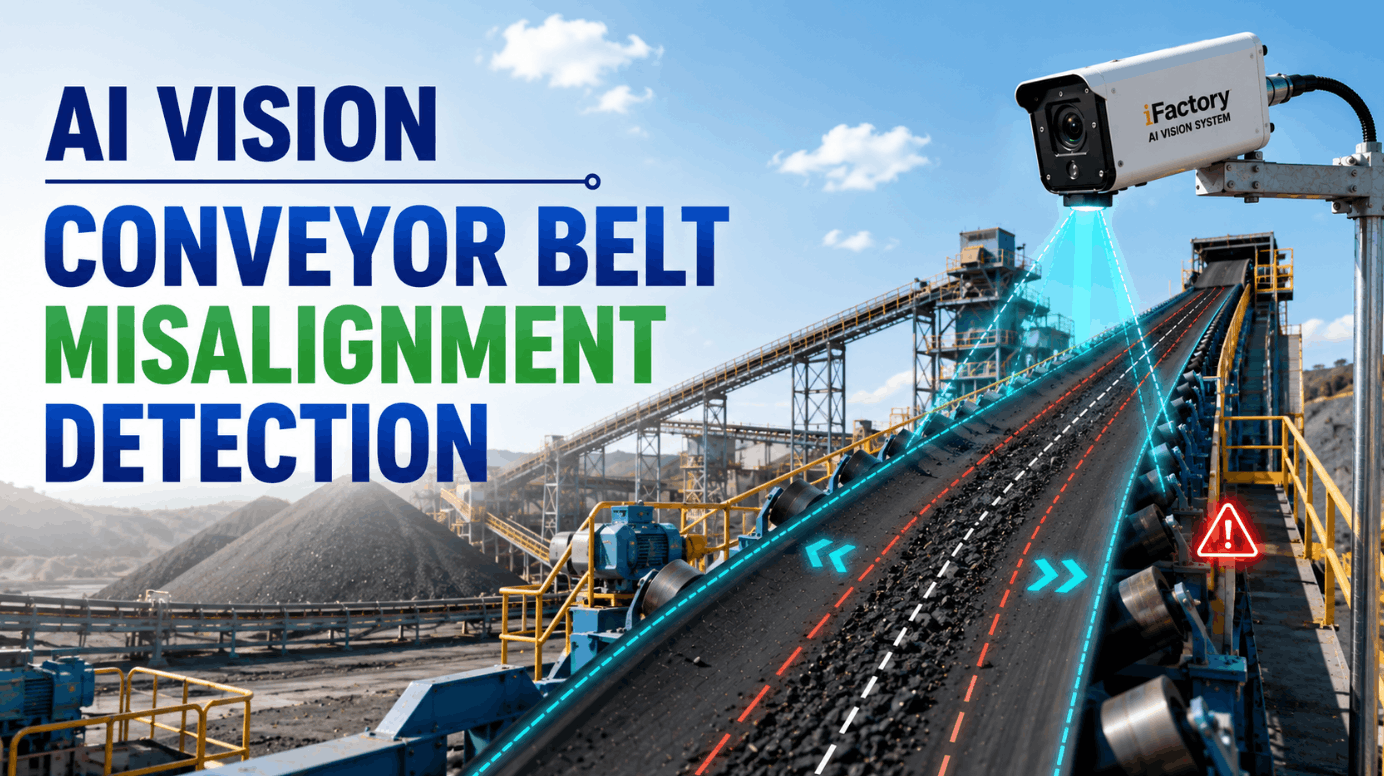
Belt misalignment is the single most common cause of unscheduled conveyor downtime across mining, cement, steel, and bulk material handling operations, yet it remains one of the hardest problems to catch before the damage is already done. A belt drifting just two centimeters off its centerline may not look like much during a quick walk-around check, but over the course of an eight-hour shift, that steady drift is grinding the belt edge against the conveyor frame, fraying the rubber cover, exposing internal plies, and generating material spillage that creates slip hazards on the ground below. The conventional fix — training idlers, mechanical limit switches, and quarterly pulley alignment checks — treats misalignment as a maintenance event to be corrected after it happens rather than a condition to be prevented before it causes damage. AI vision cameras change that equation by tracking belt edge position continuously against a defined centerline tolerance, detecting lateral drift as small as 15 millimeters, and triggering corrective alerts within seconds rather than waiting hours for the next manual inspection round. You can book a demo to see how this works on your specific conveyor layout.
Two Centimeters of Drift. Eight Hours Undetected. One Belt Destroyed.
iFactory's AI vision platform monitors belt edge position on every revolution, detects drift from centerline at the earliest measurable stage, and triggers maintenance action before misalignment becomes edge damage, spillage, or a shutdown.
What Starts as Drift Ends as Downtime — Every Time
Belt misalignment never stays as just a tracking problem. It triggers a predictable chain of damage that accelerates with every hour the belt runs off-center. Understanding this cascade is the key to understanding why early detection matters so much — and why manual inspection intervals are fundamentally too slow to prevent the damage.
Seven Root Causes That AI Vision Connects Back to the Source
Even 3mm of idler misalignment relative to the conveyor centerline creates a persistent steering force that pushes the belt off track over every revolution.
When material hits the belt unevenly at the loading zone, the heavier side pulls the belt laterally. This is the most common dynamic cause of mistracking on in-service conveyors.
Wet or sticky material accumulating on one side of an idler roller effectively increases its diameter, creating a crowned surface that steers the belt toward the buildup side.
A seized bearing locks the roller, creating a flat spot that acts as a brake on one side of the belt. The belt is pushed away from the seized roller with every revolution.
A splice that is not perfectly square to the belt edge introduces a camber effect that causes the belt to track off-center every time the splice passes over the idlers.
Foundation settlement, thermal expansion of the conveyor frame, or vibration-induced loosening of mounting bolts gradually shift the entire conveyor structure out of alignment.
Insufficient tension allows the belt to wander freely, while excessive tension on one side creates a directional pull that compounds every other alignment issue on the system.
See Which of Your Conveyors Are Drifting Right Now
iFactory connects to your existing camera infrastructure to show belt tracking status across every conveyor in your plant — in real time.
How Misalignment Costs Compound Across Every Category
Most operations track belt replacement costs but miss the broader financial damage that misalignment creates across energy, labor, environmental, and safety categories. The table below maps the full cost structure of uncorrected belt drift and shows where AI-based early detection intercepts each cost category before it accumulates.
| Cost Category | How Misalignment Creates the Cost | Typical Financial Impact | AI Detection Intercept Point |
|---|---|---|---|
| Belt Replacement | Edge wear shortens belt life by 40–60%, forcing early replacement | $50,000 – $200,000 per belt | Drift detected at 15mm, before edge contact begins |
| Production Downtime | Unplanned belt replacement shuts the conveyor for 12–72 hours | $30,000 – $150,000 per hour at high-throughput sites | Corrective action triggered before shutdown-level damage |
| Energy Waste | Persistent misalignment increases motor current draw by 15–20% | $10,000 – $50,000 annually per conveyor | Elevated friction patterns flagged within one shift cycle |
| Spillage Cleanup | Material falling off the narrowed edge requires manual labor to clear | 2–4 labor hours per shift diverted from planned maintenance | Spillage-zone detection triggers work order immediately |
| Component Damage | Idler bearings, stringer brackets, and pulleys fail from uneven loading | $10,000 – $50,000 per failure event in secondary damage | Root cause tracked to specific idler position for targeted repair |
| Safety Incidents | Belt edge cutting through steel creates razor-sharp hazards at walk height | Regulatory penalties, investigation costs, potential injury claims | Structural contact detected and escalated before hazard forms |
From Camera Feed to Corrective Action — Continuously
Cameras mounted at key points along the conveyor capture the belt edge position relative to the idler frame on every revolution. Deep learning models trained on belt geometry calculate the lateral deviation from centerline at sub-centimeter resolution. Any drift beyond a configurable threshold — typically 15 to 25mm — generates an instant alert.
Not all drift is the same. A belt that sways briefly during a surge load and returns to center is different from one that drifts progressively in one direction over hours. The AI classifies drift as transient, periodic, or progressive, and assigns severity accordingly. Progressive drift receives the highest priority because it indicates a structural or component root cause that will not self-correct.
Material accumulation beneath the conveyor is analyzed frame by frame to identify active spillage zones that correlate with belt tracking events. This dual detection — drift plus spillage — confirms the operational impact of the misalignment and escalates the alert priority from a tracking concern to an active production issue requiring immediate intervention.
Every confirmed misalignment event generates a structured work order in the connected CMMS with the camera frame, belt position measurement, drift classification, affected conveyor section, and recommended corrective action pre-populated. The maintenance team receives the alert with full context before the drift has time to progress to edge contact.
Why Legacy Tracking Systems Cannot Match AI Vision
Results Reported After Deploying AI Belt Tracking Monitoring
What It Takes to Start Monitoring Belt Alignment With AI Vision
AI vision-based misalignment detection is a non-contact, add-on system that works with any belt type currently in service. There is no requirement to replace belts, install embedded sensors, or modify the conveyor structure. Most deployments are fully operational within 6 to 12 weeks.
Site Survey and Camera Placement
Engineers map your conveyor network to identify the optimal camera positions — typically at transfer points, head and tail pulleys, curve sections, and any location with a history of tracking problems. Existing CCTV cameras can be leveraged where resolution and angle meet system requirements.
Edge Processing and Model Calibration
Ruggedized edge computing units are installed near the conveyor to process camera feeds locally with sub-200ms latency. Deep learning models are calibrated on your specific belt type, width, and operating environment over a 2 to 4 week training window that progressively improves detection accuracy.
CMMS and Control System Integration
Detection events are routed to your existing CMMS via API and to PLCs via MQTT or OPC-UA for automated responses. Alert thresholds, severity tiers, and escalation rules are configured to match your operational workflow and risk tolerance.
Live Monitoring and Continuous Learning
The system goes live with real-time dashboards showing belt position, drift trends, and active alerts for every monitored conveyor. The AI model continues learning from operational data, improving detection accuracy and reducing false positives over time.
Common Questions About AI Vision Belt Misalignment Detection
Every Hour Your Belt Drifts Uncorrected, the Repair Bill Grows
iFactory catches misalignment at the earliest detectable stage and turns every drift event into a trackable, correctable maintenance action — automatically.