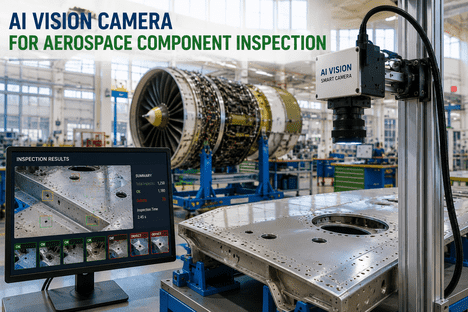
Aerospace component inspection has entered a new era in 2026. Turbine blades, composite airframe structures, and precision-machined flight-critical parts demand zero-defect verification at every stage of manufacturing and maintenance — a requirement that manual NDT methods and coordinate measuring machines are no longer able to meet at production scale. As aircraft order backlogs stretch beyond a decade and AS9100 quality requirements grow increasingly data-driven, aerospace manufacturers and MRO facilities are turning to AI Vision Camera technology to deliver objective, repeatable, and fully traceable inspection results across every component class. iFactory's AI Vision Camera integrates directly into aerospace quality workflows, detecting surface defects, foreign object debris, and dimensional deviations in real time — ensuring every part that ships or returns to service meets the exacting standards that flight safety demands. Quality engineers and NDT program managers evaluating AI-based inspection platforms are encouraged to Book a Demo with iFactory to see how AI Vision closes the gap between documentation and actual inspection compliance.
Detect Surface Defects, FOD, and Dimensional Deviations Across Every Aerospace Component
iFactory's AI Vision Camera delivers real-time, traceable inspection results for turbine blades, composite structures, and machined parts — directly within your existing quality workflow.
Why Aerospace Manufacturers Can No Longer Rely on Manual Inspection Alone
The aerospace industry operates under zero-defect expectations where a single missed surface crack on a turbine blade or an undetected void in a composite panel can lead to catastrophic in-service failure. Traditional inspection methods — manual visual checks, coordinate measuring machines, and periodic NDT sampling — introduce operator variability, throughput bottlenecks, and documentation gaps that are increasingly incompatible with AS9100 audit requirements. Human inspectors face fatigue and inconsistency when reviewing high volumes of geometrically complex components, while CMMs require laboratory conditions and consume significant cycle time. AI vision inspection systems process every part at production speed, apply consistent detection models trained on documented defect classes, and generate an objective digital record for every inspection event. As the aerospace NDT solutions market moves toward AI-driven real-time defect recognition with accuracy rates exceeding 95%, facilities that continue relying on manual review alone face rising rework costs, compliance exposure, and competitive disadvantage. iFactory's AI Vision Camera is purpose-built to address these gaps across the most demanding aerospace component types — from engine components and structural composites to precision machined hardware.
Operator Variability
Manual visual inspection results shift between technicians, shifts, and fatigue levels — producing inconsistent pass/fail decisions on identical defect conditions across complex aerospace geometries.
Throughput Limits
CMMs and manual NDT methods create inspection bottlenecks that slow production lines and MRO turnaround at a time when global aircraft backlog has reached over 17,000 units.
Audit Traceability Gaps
AS9100 requires comprehensive traceability for every inspection event. Paper-based or memory-reliant inspection records cannot satisfy modern audit documentation requirements or support failure investigation.
Subtle Defect Detection
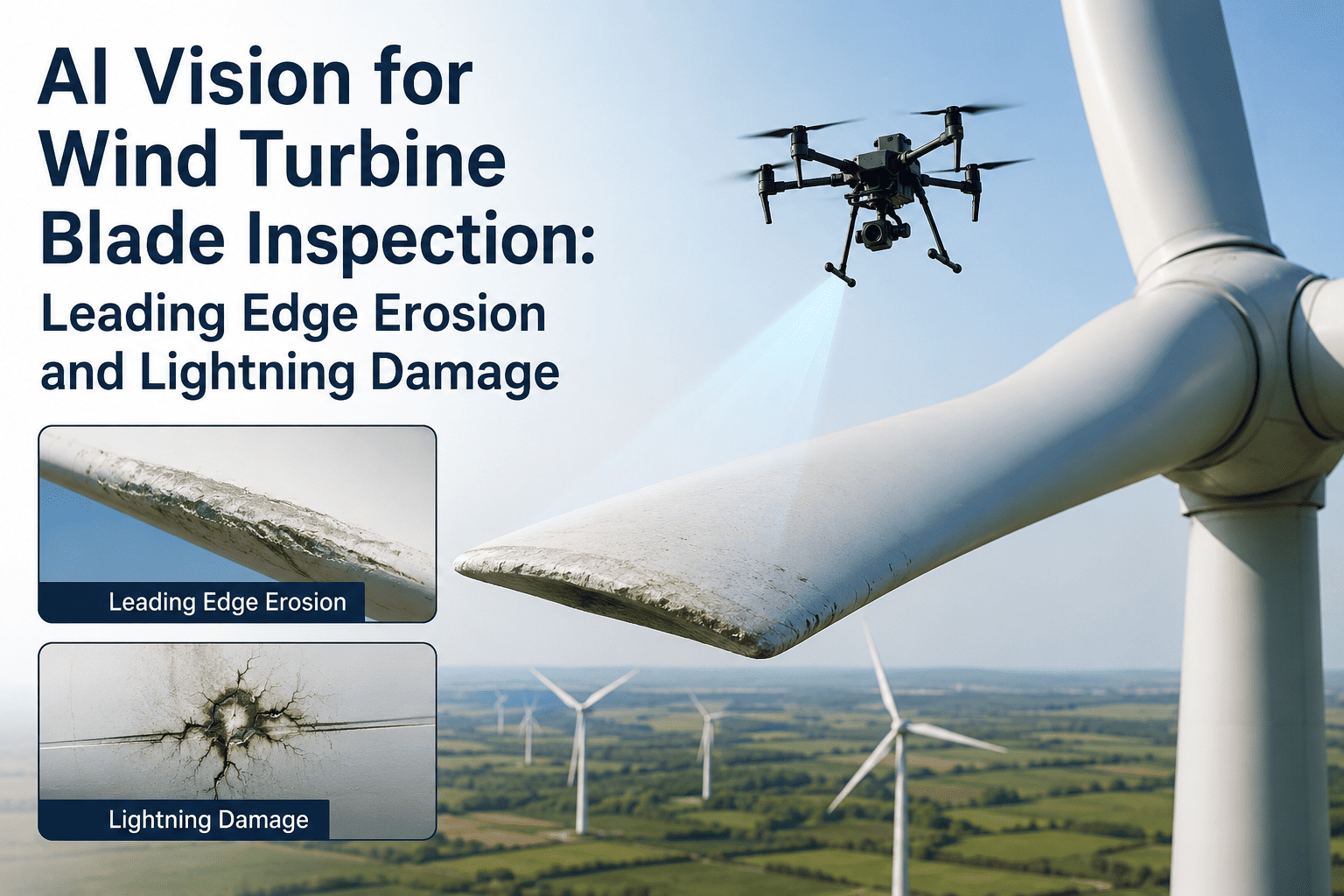
Microcracks, subsurface delamination in composites, and early-stage corrosion pitting fall below the reliable detection threshold of visual inspection, particularly on complex blade and airfoil geometries.
What iFactory AI Vision Camera Inspects Across Aerospace Component Classes
Aerospace inspection requirements vary significantly by component class. Turbine blades present high-temperature fatigue and erosion defects. Composite structures carry delamination and fiber alignment failure modes that are invisible to the naked eye. Precision-machined parts require dimensional verification and FOD clearance before assembly. iFactory's AI Vision Camera is configured at the defect-class level for each component type — applying detection models trained on documented aerospace failure signatures rather than generic anomaly detection. Quality engineers can Book a Demo to see how the platform is configured for their specific component portfolio.
| Component Type | Defect Classes Detected | Inspection Method | AS9100 / NDT Relevance |
|---|---|---|---|
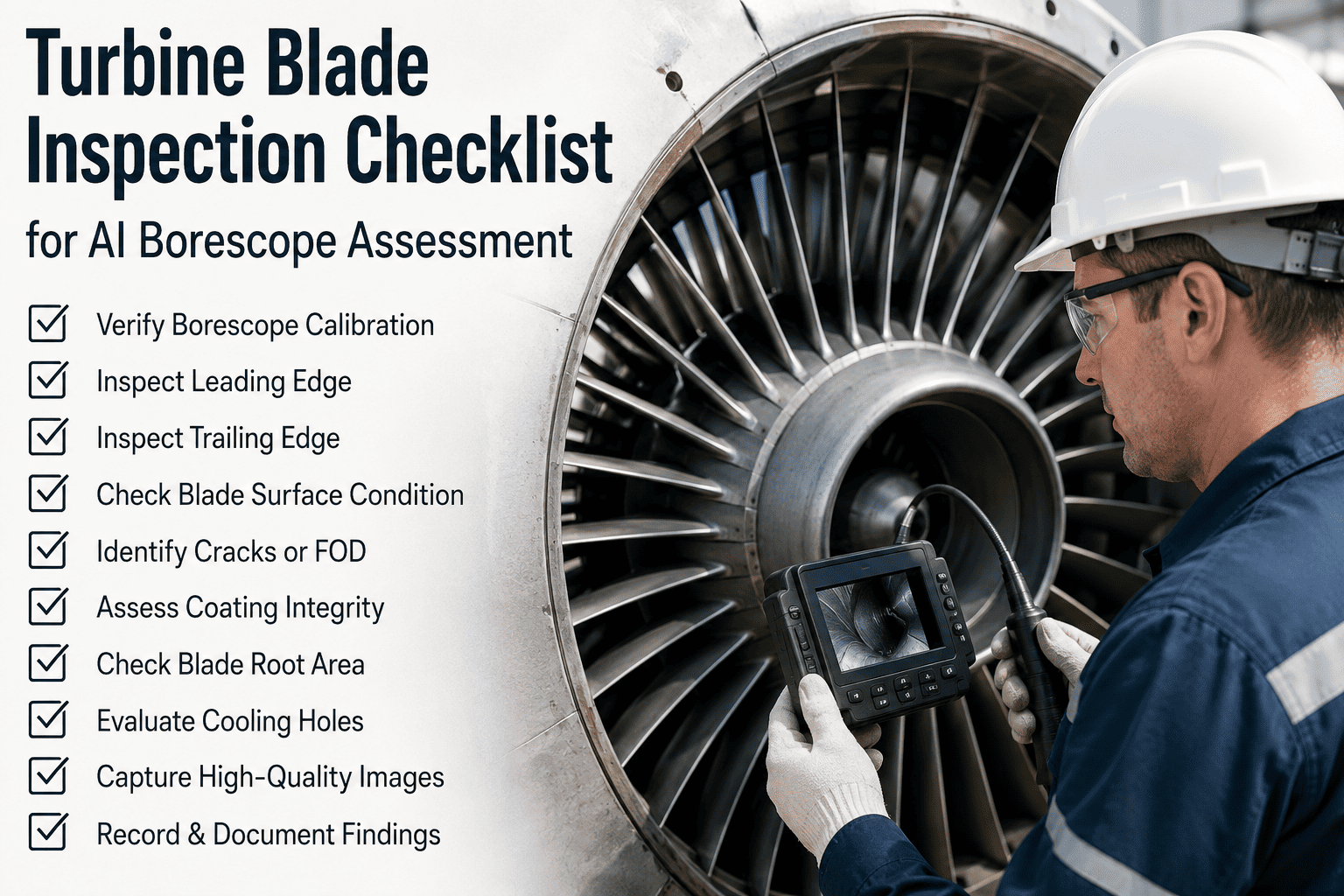
| Turbine Blades & Vanes | Microcracks, blade tip wear, pitting corrosion, leading-edge erosion, cooling hole deformation | High-resolution AI camera with borescope-compatible positioning; bench-top for individual blade inspection | Supports NADCAP-aligned inspection records; meets AS9100 traceability requirements per serial number |
| Composite Structures (CFRP / Fiberglass) | Delamination, fiber misalignment, surface voids, impact damage, protective coating breakdown | Optical and thermal imaging with AI defect classification trained on composite failure signatures | Satisfies layup verification and post-cure inspection documentation for structural airworthiness |
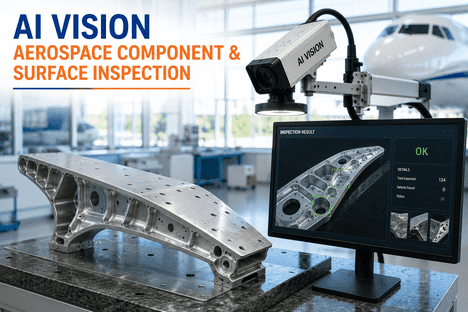
| Precision Machined Parts | Dimensional deviations, burr formation, surface finish anomalies, missing features, FOD presence | In-line dimensional verification with vision-guided measurement and first article inspection support | Generates traceable FAI data and dimensional records aligned with AS9100 configuration control |
| Weld Joints & Structural Bonds | Porosity, incomplete penetration, stress concentrations, sealant bead geometry deviations | High-contrast optical inspection with AI classification of weld anomaly types | Supports weld process control documentation and structural integrity verification for flight-critical assemblies |
| Combustion Chambers & Casings | Surface cracking, heat-stress damage, coating spallation, geometric distortion | Multi-angle AI camera with thermal band capability for subsurface heat damage detection | Provides objective inspection records for high-cycle fatigue components under AS9100 risk management requirements |
How AI Vision Inspection Supports AS9100 Quality Requirements in 2026
AS9100 — and its evolving successor IA9100 — requires aerospace manufacturers to demonstrate not just process compliance but data-driven, predictive quality control with comprehensive traceability for every inspection event tied to a serialized component. AI vision inspection directly addresses the most demanding AS9100 pain points: objective defect detection that eliminates operator subjectivity, per-part digital records that satisfy configuration control and audit requirements, and first article inspection data capture that is stored with long-term traceability. iFactory's AI Vision Camera generates an inspection record for every component that includes detection results, image evidence, revision-controlled inspection parameters, and operator acknowledgment — creating the audit trail that quality engineers need during AS9100 certification audits and customer source inspections. Aerospace manufacturers that have moved from manual inspection to AI vision-based quality systems report measurable improvements in early defect detection rates, audit performance, and scrap reduction. NDT program managers can evaluate how iFactory's platform maps to their specific AS9100 clause requirements through a Book a Demo session with the iFactory team.
Production & Service Control
AI Vision Camera integrates into production line inspection stations, providing documented, repeatable process control verification for every part number and serial number passing through quality gates.
Release of Products
Every inspection result is stored with image evidence, detection parameters, and technician sign-off — satisfying the documented conformity evidence required before product release to next operations or shipping.
Nonconformity & Corrective Action
Detected defects trigger structured nonconformance records with visual evidence, enabling quality teams to perform root cause analysis and close corrective actions with objective documentation for auditor review.
Foreign Object Debris Detection for Aerospace Assembly and MRO Environments
Foreign object debris is one of the most consequential and most preventable quality failures in aerospace manufacturing and MRO. A single tool, fastener, swarf fragment, or debris particle left inside an engine assembly, fuel system, or flight control actuator can cause catastrophic in-service failure. AS9100 quality programs require documented FOD prevention and verification procedures, yet traditional visual checks at close-out are prone to human error in high-complexity assemblies with restricted sightlines. iFactory's AI Vision Camera applies trained detection models to identify foreign objects, retained tooling, and debris within assembly cavities, machined bores, and inspection zones — generating a documented FOD clearance record for every unit before close-out. The system distinguishes between expected components and unintended materials, flagging anomalies for technician review and maintaining a visual evidence record for every cleared assembly. For MRO facilities, AI Vision FOD inspection is deployed at engine disassembly and reassembly stages, ensuring that maintenance-introduced debris is detected before return-to-service sign-off. Quality managers evaluating FOD reduction programs can see the AI Vision Camera in operation by booking a session with iFactory's aerospace inspection team.
AI Vision Camera for Aerospace Inspection — Frequently Asked Questions
What types of defects can iFactory's AI Vision Camera detect on turbine blades?
The AI Vision Camera detects microcracks, surface pitting, blade tip wear, leading-edge erosion, cooling hole deformation, and heat-stress damage on turbine blades — defect classes trained from annotated aerospace inspection data and applicable to both manufacturing and MRO inspection workflows.
How does AI vision inspection support AS9100 audit requirements?
iFactory generates a per-part inspection record that includes detection results, image evidence, revision-controlled inspection parameters, and technician acknowledgment — providing the traceable, documented conformity evidence required under AS9100 clauses covering production control, product release, and nonconformance management.
Can the AI Vision Camera inspect composite aerospace structures for internal defects?
The system detects surface-level and near-surface composite defects including delamination, fiber misalignment, surface voids, and impact damage using optical and thermal imaging. It is designed to complement ultrasonic NDT methods as a rapid pre-screening step that reduces full NDT throughput requirements.
Does the system support FOD detection in aerospace assembly environments?
Yes — iFactory's AI Vision Camera is configured for foreign object debris detection in assembly cavities, machined bores, and engine inspection zones, generating a documented FOD clearance record for every inspected unit before close-out or return-to-service authorization.
How does dimensional deviation detection work for precision machined aerospace parts?
The AI Vision Camera performs in-line dimensional verification for machined components, detecting deviations from nominal geometry, burr formation, surface finish anomalies, and missing features — with data stored as traceable first article inspection records that satisfy AS9100 configuration control requirements.
Deploy AI-Powered Inspection Across Every Aerospace Component in Your Facility
iFactory's AI Vision Camera detects surface defects, dimensional deviations, and foreign object debris across turbine blades, composite structures, and precision machined parts — with full AS9100-aligned traceability on every inspection record.