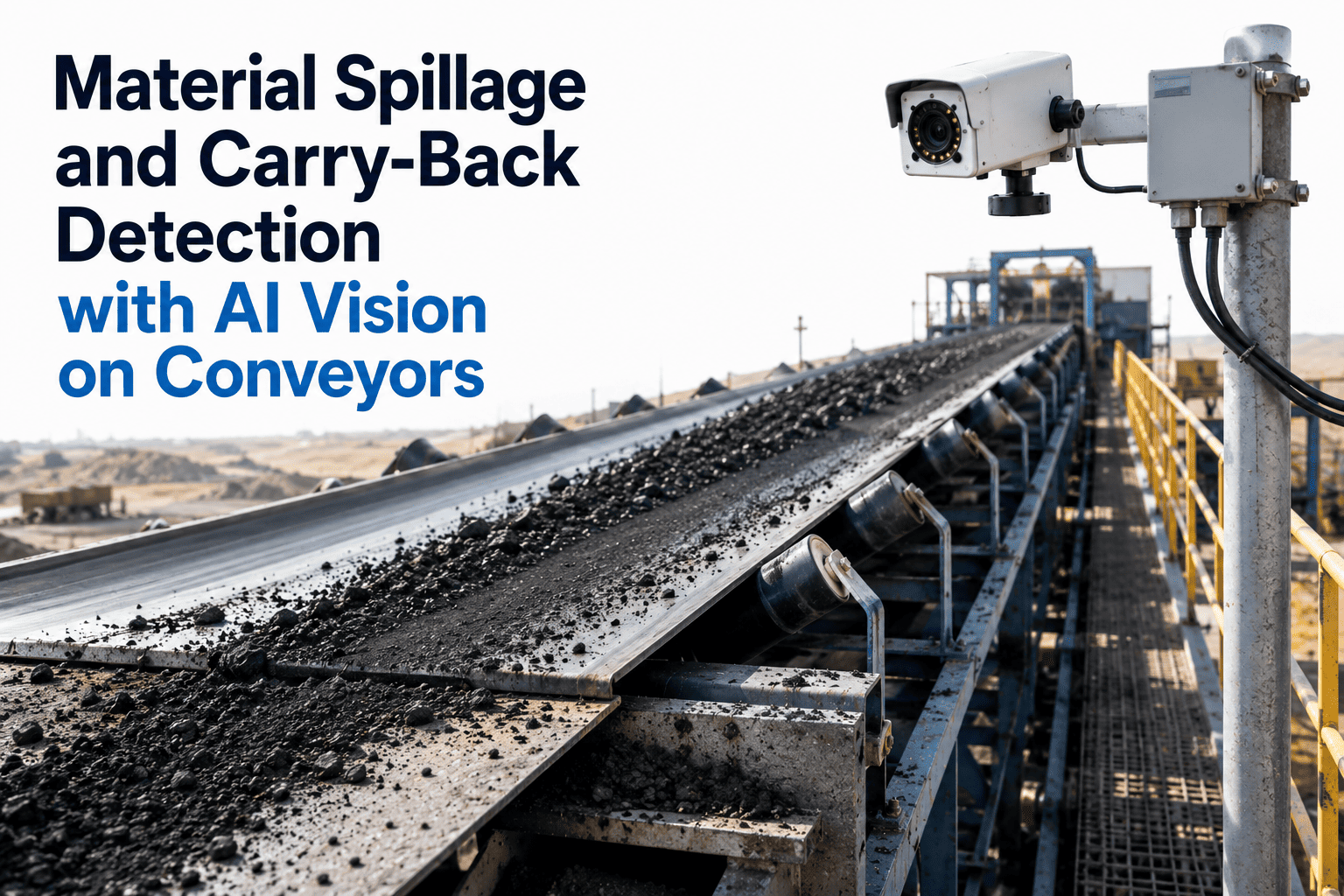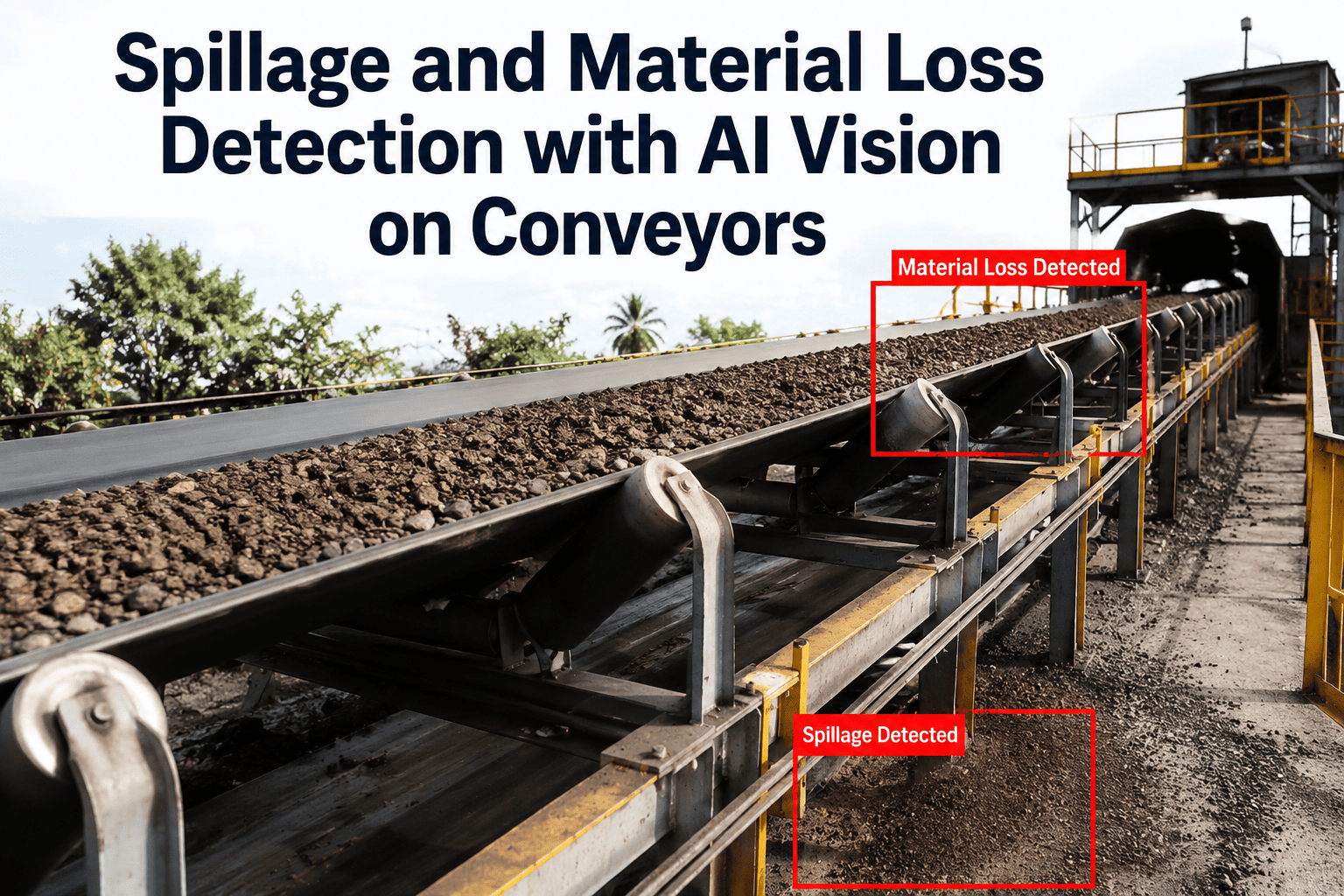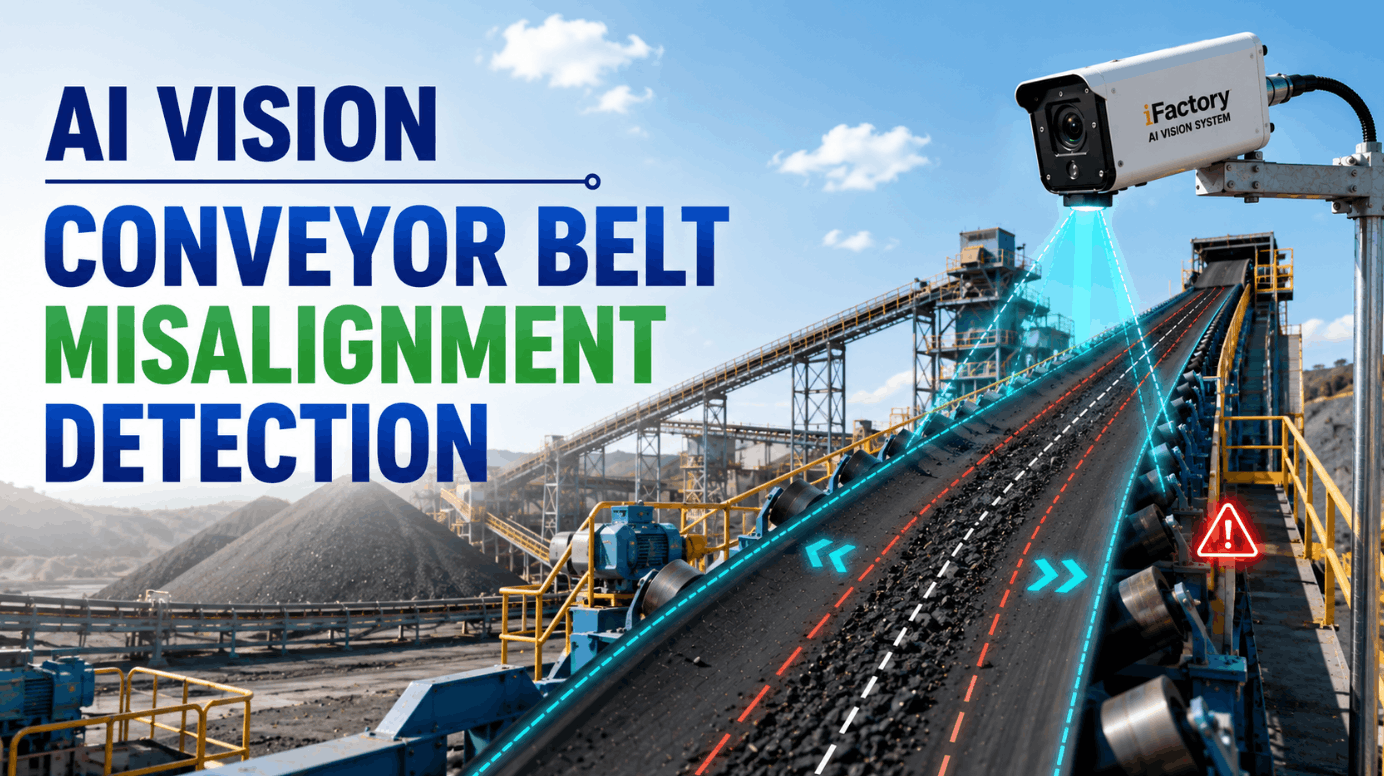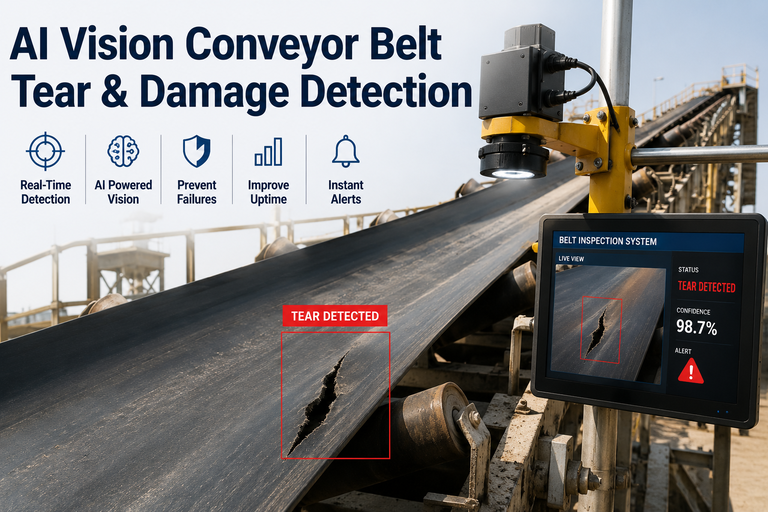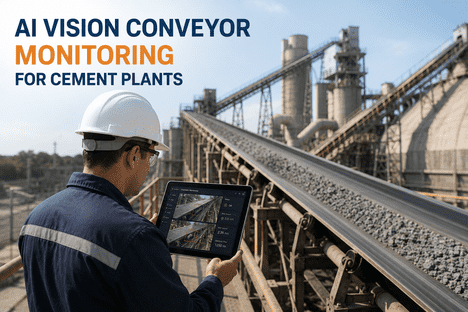
In cement manufacturing, conveyor systems represent the circulatory network that moves raw materials, clinker, and finished product across every stage of production. Traditional conveyor monitoring relies on manual belt walkdowns and periodic thermal scanning that cannot keep pace with the throughput demands of modern cement plants operating at 24/7 capacity. AI vision conveyor monitoring transforms how cement plants protect their most critical material handling infrastructure by deploying deep learning models directly on edge cameras that detect belt misalignment, hot clinker fragments, material spillage patterns, and surface wear indicators in real time — before any single condition escalates into a fire, a belt tear, or an unplanned production stoppage that costs the plant significant clinker output per hour of downtime. Cement plant reliability leaders can explore how iFactory's AI vision camera system deploys on their conveyor lines or Book a Demo for a live demonstration using production data from their facility.
Why Cement Conveyors Need AI Vision Monitoring
Cement conveyor systems operate under some of the harshest conditions in industrial manufacturing — extreme temperatures from hot clinker transport, abrasive dust environments that accelerate mechanical wear, and continuous operation schedules that leave minimal windows for manual inspection. The four primary failure modes that plague cement plant conveyors — belt misalignment that causes edge damage and material spillage, hot clinker fragments that ignite belt fires, progressive surface wear that leads to sudden belt tears, and undetected spillage that creates safety hazards and housekeeping costs — all share a common characteristic: they develop gradually and are detectable by AI vision hours or days before they cause catastrophic failure. Traditional monitoring approaches using manual thermal gun surveys and periodic visual walkdowns typically catch these conditions only after they have already produced operational impact, because inspection intervals cannot match the continuous nature of conveyor operation.
Deep learning vision models trained specifically on cement conveyor conditions address this gap by analyzing every frame of video from cameras mounted at strategic points along the conveyor network — detecting the characteristic visual and thermal signatures of each failure mode as they emerge and triggering maintenance alerts before failures materialize. Cement plants deploying iFactory's AI vision conveyor monitoring consistently report detection of developing conditions 8–24 hours before they would have been identified through scheduled manual inspection cycles, creating a preventive maintenance window that eliminates the fire risk and unplanned downtime that have historically defined conveyor reliability in cement production. Plant engineers and maintenance teams responsible for conveyor reliability can Book a Demo to see the detection accuracy and alert integration workflow demonstrated on real cement conveyor data.
Key Detection Capabilities for Cement Conveyor Systems
iFactory's AI vision platform delivers four integrated detection capabilities purpose-built for the specific failure modes that affect cement plant conveyors. Each detection model runs on edge AI hardware mounted directly at the conveyor line, eliminating network latency and ensuring continuous operation even during network interruptions.
Conveyor Monitoring Comparison: Manual Inspection vs AI Vision
The operational difference between traditional manual conveyor inspection and AI vision-based continuous monitoring is most visible in the detection timeline for each major failure mode. The table below summarizes the typical detection windows and outcomes for each approach across the four primary cement conveyor failure conditions.
| Failure Condition | Manual Inspection Detection | AI Vision Detection Window | Prevention Outcome |
|---|---|---|---|
| Belt Misalignment | Detected during scheduled walkdown — typically after edge damage has begun | 8–24 hours earlier via continuous edge tracking | Eliminates edge damage repair costs and spillage-related clean-up |
| Hot Clinker | Detected during thermal gun survey or after fire has started | Immediate detection at discharge point | Prevents belt fires and cooler system damage |
| Material Spillage | Detected when spillage becomes visible during walkdown or causes jam | Real-time detection at transfer points and return path | Reduces clean-up labor and eliminates dust hazard accumulation |
| Surface Wear | Detected during scheduled inspection or after belt tear occurs | Continuous wear progression tracking over weeks | Condition-based replacement eliminates emergency change-outs |
Deploying AI Vision on Cement Conveyors
The deployment of AI vision conveyor monitoring at a cement plant follows a structured integration pathway that minimizes production disruption while maximizing detection coverage. iFactory's deployment process begins with a conveyor network assessment that identifies optimal camera mounting locations based on conveyor length, belt speed, material type, and the specific failure modes most relevant to each conveyor segment — clinker conveyors prioritize hot fragment detection while raw material conveyors emphasize spillage and misalignment monitoring. Edge AI cameras are installed during scheduled maintenance windows, connected to the plant network, and configured with detection models that have been trained on cement conveyor conditions across multiple production environments. The system begins generating detection alerts within hours of installation, with model accuracy improving as additional production data accumulates in the facility-specific training pipeline.