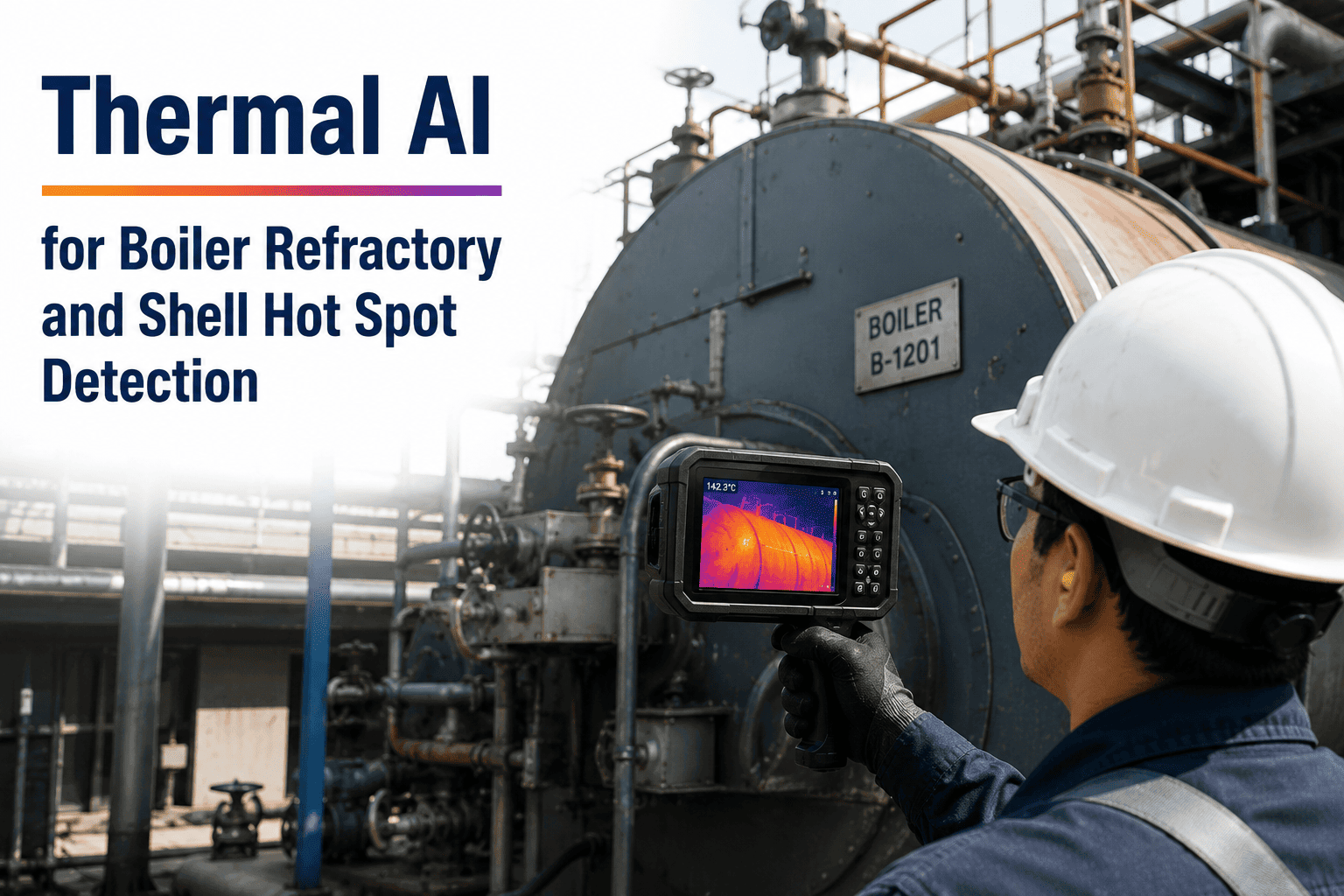
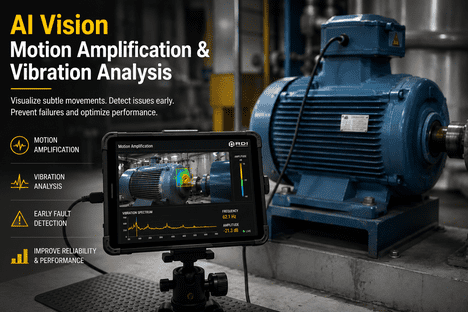
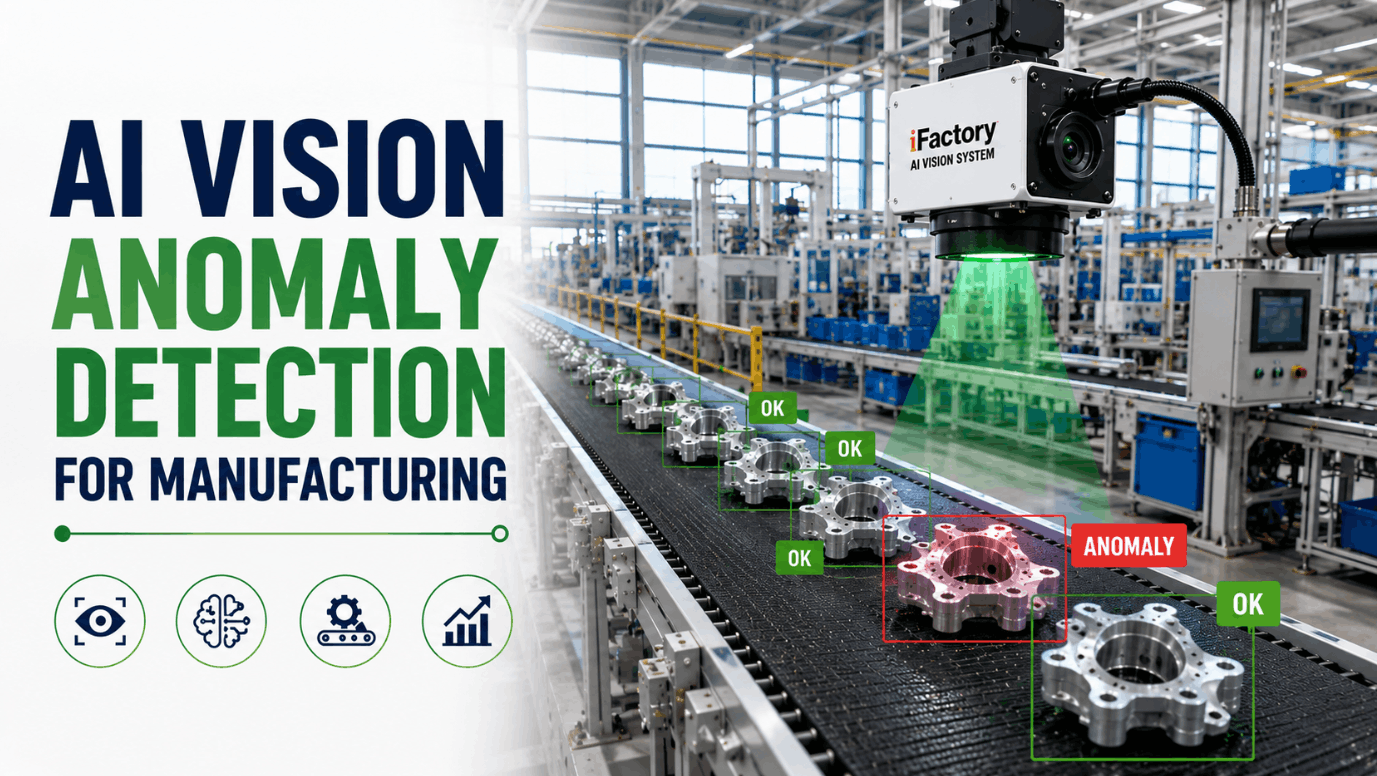
Cement kiln refractory monitoring has traditionally relied on periodic shell temperature scanning and thermocouple arrays that provide limited spatial coverage and late-stage warning of refractory degradation. A rotary cement kiln operating at 1400°C clinker temperature develops localized hot spots on the shell surface when refractory bricks thin, crack, or detach from the kiln shell. Without continuous, intelligent thermal monitoring, these hot spots progress to refractory burn-through events that force emergency kiln shutdowns lasting 7-14 days and costing upwards of $100,000 per day in lost production on a typical 5,000 ton-per-day line. iFactory's AI thermal vision platform transforms kiln refractory monitoring by deploying thermal cameras that continuously scan the full kiln shell circumference, feeding pixel-level temperature data through deep learning models trained to classify thermal patterns, detect anomalous heating rates, and predict remaining refractory life at each zone. The system identifies refractory brick loss and shell hot spots weeks before conventional threshold-based alarms would trigger, giving maintenance teams the lead time needed to plan interventions during scheduled outages instead of reacting to burn-through emergencies. Organizations deploying AI thermal vision on cement kilns consistently report 30% or greater extension of refractory campaign life and 40-60% reduction in unplanned downtime within the first year of operation.
How AI Thermal Vision Detects Refractory Degradation Before Failure
The physical mechanism of refractory failure follows a predictable thermal signature that AI computer vision models are uniquely suited to identify. As refractory bricks erode from the inner surface exposed to clinker melt, the remaining brick thickness decreases and the kiln shell temperature at that location rises proportionally. A healthy refractory section typically presents shell temperatures of 200-350°C. When brick thickness decreases by 30%, shell temperature rises to 350-400°C. At 50% brick loss, the shell reaches 400-450°C. Beyond 60% loss, temperatures exceed 450°C and the risk of shell burn-through becomes critical. Traditional monitoring approaches use fixed thermocouple arrays that measure temperature at discrete points — typically 6-12 points per kiln section — leaving large portions of the shell surface unmonitored. Pyrometer line scanners improve coverage but require relative motion between scanner and kiln that introduces alignment complexity and mechanical maintenance requirements. iFactory's AI thermal vision camera system provides full-field coverage of the entire kiln shell surface with a single fixed installation, capturing thermal data at every pixel and feeding the temperature matrix through convolutional neural network models trained on labeled datasets of normal operation, coating loss, refractory thinning, and critical hot spot patterns. The deep learning model detects not just absolute temperature exceedance but the rate of temperature change, spatial gradient patterns, and temporal evolution of thermal anomalies — enabling differentiation between benign coating fluctuations and progressive refractory wear. This pattern-based detection identifies refractory issues 5-7 days earlier than fixed-point thermocouple monitoring and 2-3 days earlier than line scanner approaches, providing the operational lead time needed to avoid emergency shutdowns and plan kiln maintenance during scheduled outages.
Measurable Impact on Kiln Operations and Refractory Life
Quantitative results from cement plants deploying AI thermal vision for refractory monitoring demonstrate that the technology's value extends across multiple operational dimensions. Refractory campaign life typically increases 25-35% because maintenance teams can target repair interventions to precisely the zones that need replacement rather than performing wholesale refractory change-outs based on worst-case assumptions. Emergency kiln shutdowns caused by burn-through events are reduced by 60-80%, eliminating the highest-cost failure mode in cement plant operations. Planned maintenance intervals become more predictable and more productive, with teams arriving at scheduled outages with confirmed knowledge of which refractory zones need attention, what materials to stage, and how much time each repair requires. The thermal data history accumulated over multiple campaigns also enables refractory installation quality benchmarking — identifying whether premature wear patterns correlate with specific installation contractors, brick formulations, or kiln operating conditions. Plants using iFactory's AI thermal vision platform integrate the thermal data directly with their CMMS through OPC-UA and REST API connectivity, automatically generating work orders when thermal anomaly thresholds are exceeded and attaching thermal images, zone location data, and trend analysis to each work record for technician reference during repair execution. This closed-loop workflow from detection to work order to repair verification ensures that no thermal anomaly escapes the maintenance planning process.
Architecture and Deployment of AI Thermal Vision on Cement Kilns
iFactory's AI vision camera platform for kiln refractory monitoring consists of a ruggedized thermal imaging camera module with a built-in edge AI processor, a protective enclosure rated for the kiln environment, and the iFactory vision software stack that runs the deep learning inference, data logging, and integration services. The camera is positioned at a fixed location providing an unobstructed view of the kiln shell, typically mounted on the plant structure 15-25 meters from the kiln surface at an elevation that captures the full burning zone and transition zone where refractory wear is most aggressive. Thermal data is captured at a configurable rate from continuous video to periodic still frames depending on the thermal dynamics of each kiln section, with the edge AI processor running the anomaly detection model locally and transmitting only alert events and trend data to the plant network — minimizing bandwidth requirements and ensuring that monitoring continues even during network interruptions. The system classifies thermal patterns into four categories: normal operation with stable temperature distribution, coating loss detected by asymmetric heating patterns, refractory thinning identified by gradual temperature rise at consistent spatial locations, and critical hot spot indicated by rapid temperature escalation above threshold with spatial propagation. Each classification triggers a configurable response path: data logging for trend analysis, dashboard alert for operator awareness, email or SMS notification to the maintenance team, or automatic work order creation in the connected CMMS. The thermal data history is retained and trended over multiple kiln campaigns, providing the data foundation for predictive models that forecast remaining refractory life at each monitored zone with accuracy sufficient to plan reline scope and schedule 6-12 months in advance. Book a Demo to see how iFactory's AI thermal vision deployment integrates with your existing kiln monitoring infrastructure and CMMS platform.