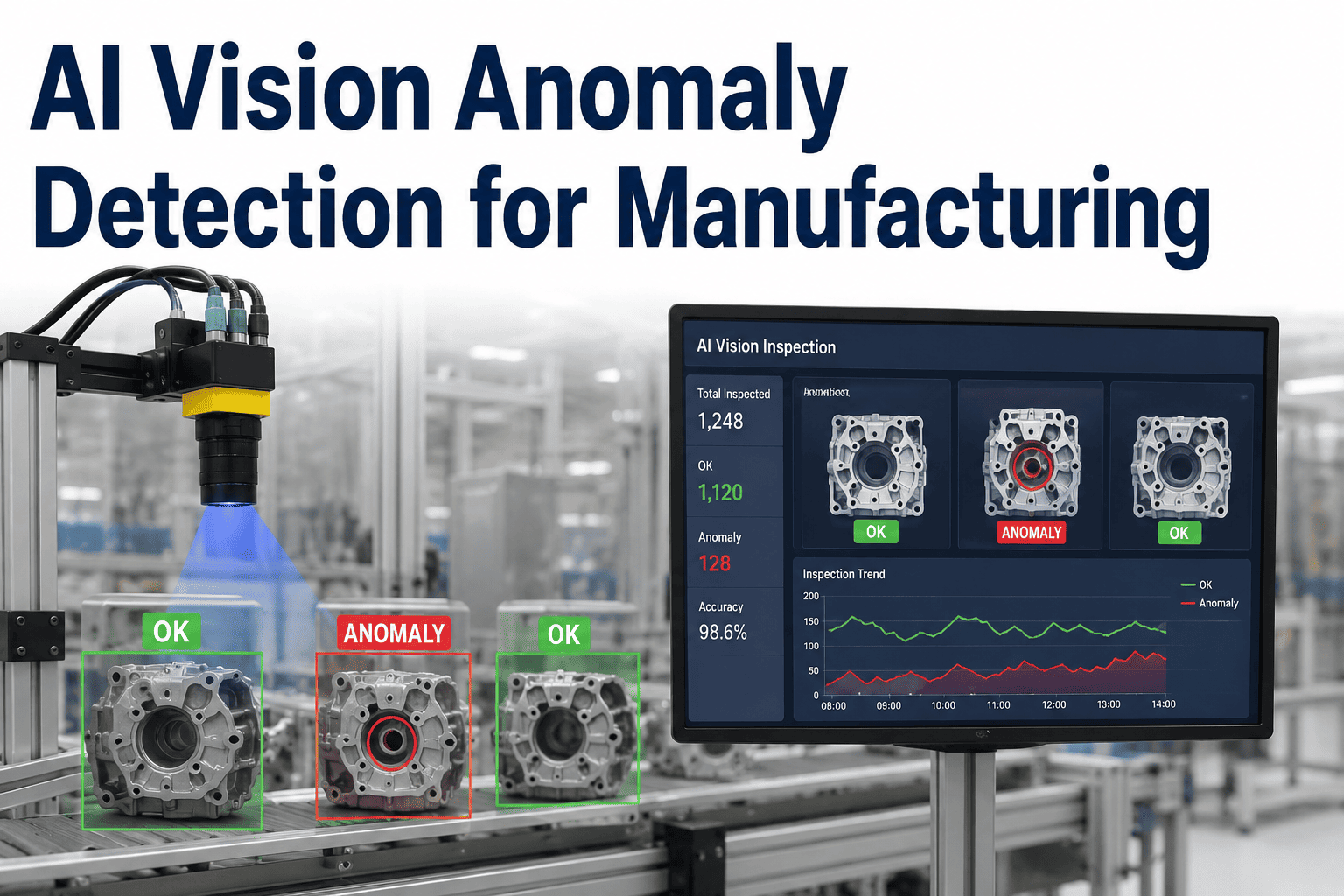
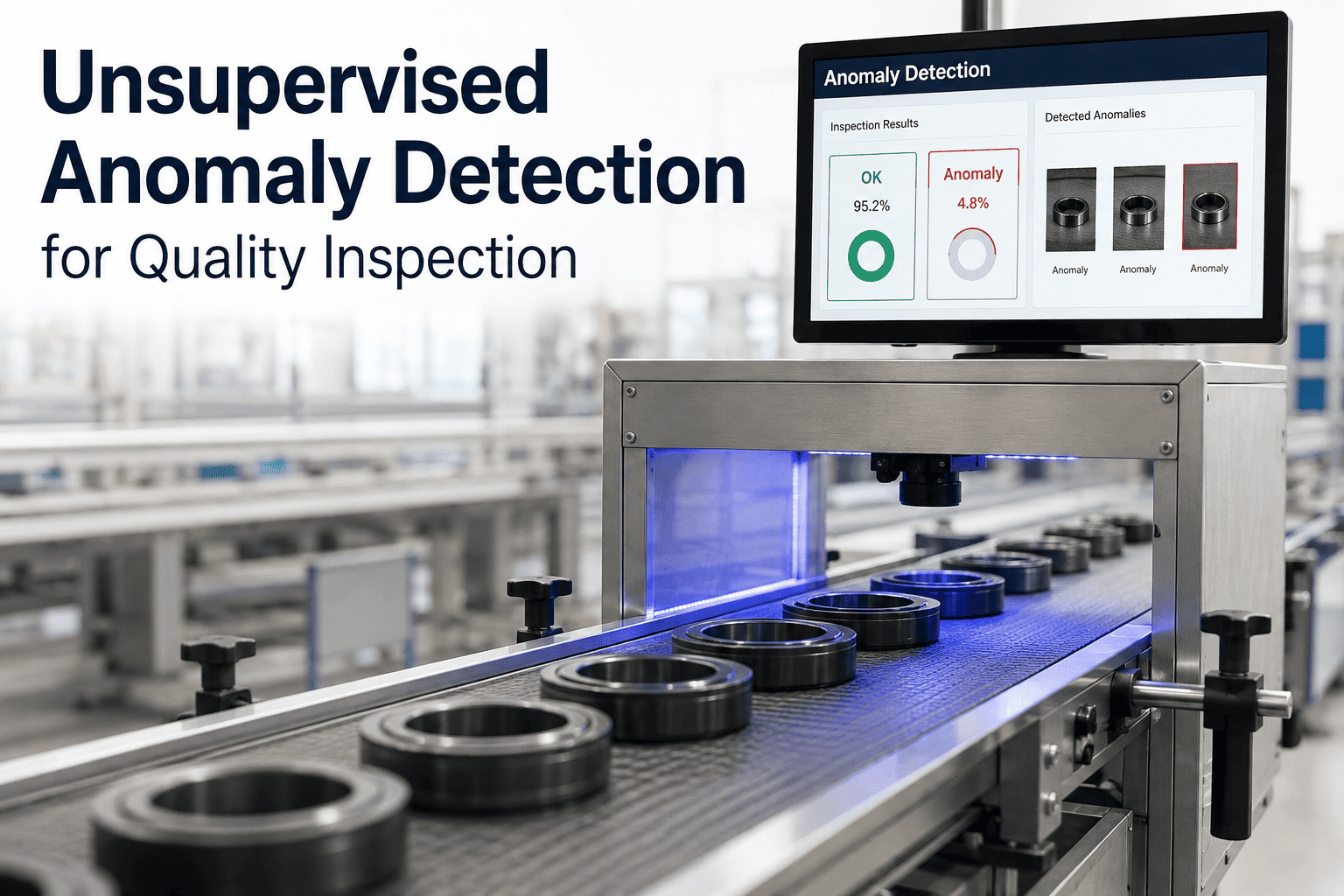
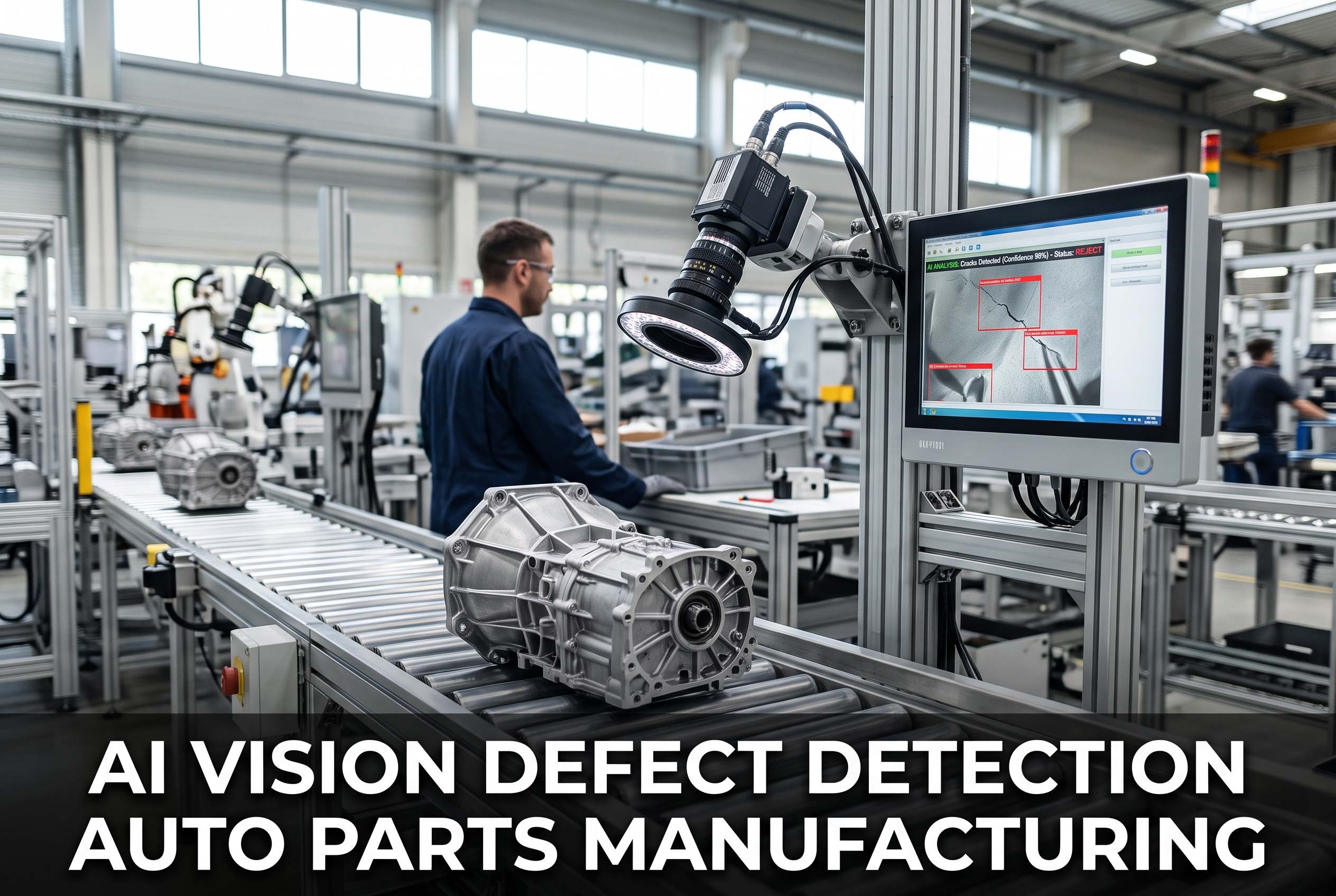
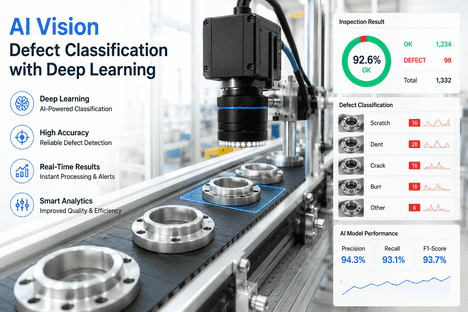
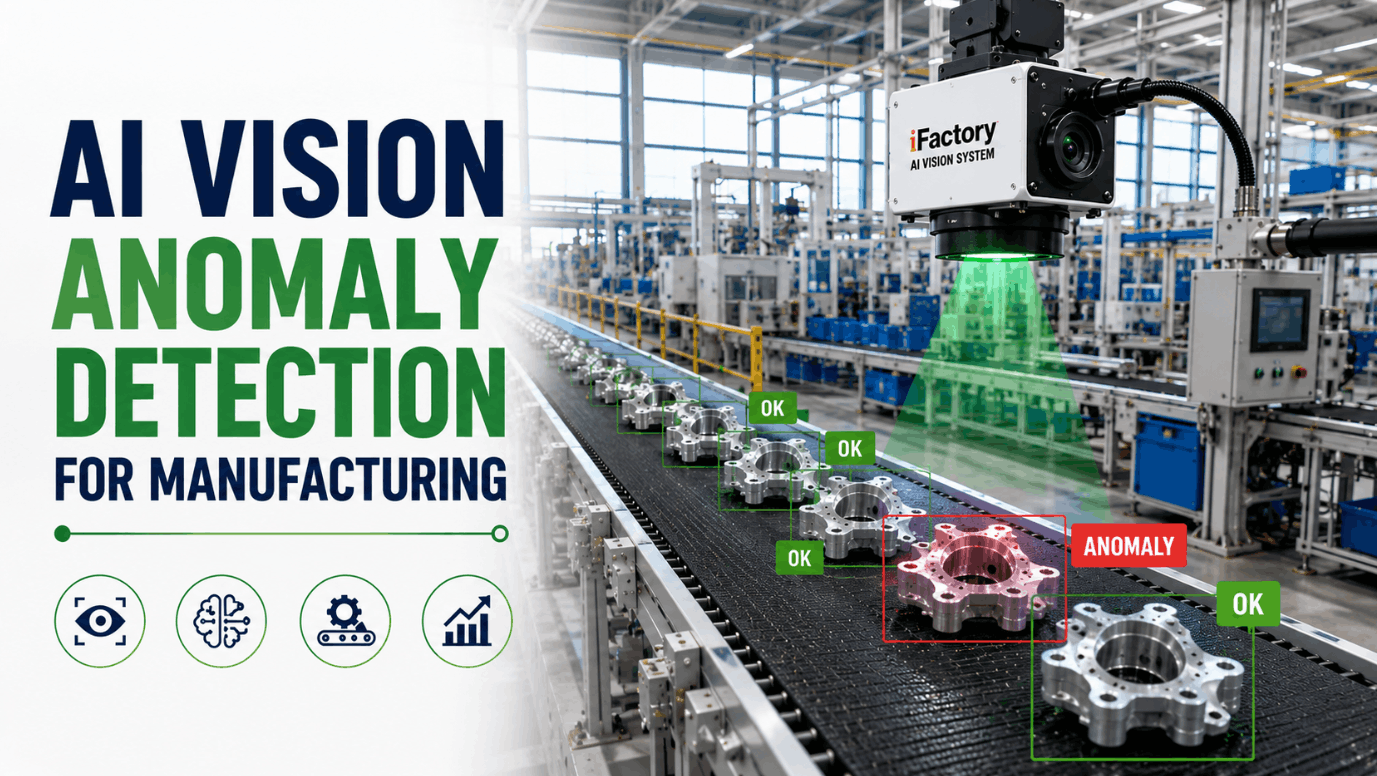
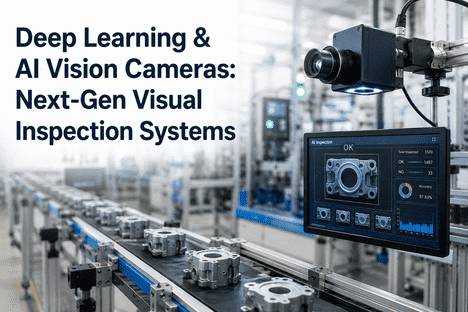
Every plant has a defect that has never happened before, and that is exactly the one a rules-based vision system is built to miss. Traditional inspection tools are trained on lists of known flaws, so the moment a new scratch pattern, a strange discoloration, or an odd surface ripple shows up, the system either waves it through or floods the line with false rejects. AI vision anomaly detection flips this around by learning what a normal, defect-free part looks like and flagging anything that deviates from it, with no labeled defect examples required. For high-mix, low-volume lines where every batch looks slightly different, this shift from "spot the known flaw" to "spot what's not normal" is the difference between inspection that keeps up with production and inspection that quietly gets bypassed. Manufacturers exploring this approach can book a demo to see it running on their own part images.
ANOMALY DETECTION · CROSS-INDUSTRY AI VISION
Catch The Defect You've Never Seen Before
Unsupervised AI vision that learns "normal" from good parts alone, then flags rare, unknown, and novel defects in real time, without months of labeling every possible flaw first.
Why Labeled Defect Datasets Keep Failing High-Mix Lines
Supervised vision models need thousands of labeled examples of every defect type before they can recognize it, which works fine for a single product running for years on a dedicated line. High-mix, low-volume manufacturing does not offer that luxury. Product variants change weekly, defect types are rare enough that labeled examples barely exist, and by the time a supervised model is trained on last month's flaw, the line has already moved to a new part number.
Unsupervised anomaly detection sidesteps the labeling bottleneck entirely. The model only ever needs to see good, defect-free parts during training, learning the texture, geometry, and surface pattern of "normal" so precisely that anything outside that pattern stands out immediately, whether it is a defect type the system has seen a thousand times or one that has never occurred before on that line.
Rules-Based Inspection
Needs labeled examples of every defect type before it can detect it
Misses novel or rare defects it was never trained on
Struggles when the product variant changes
Requires re-training and re-labeling for every new SKU
Unsupervised AI Vision
Learns from defect-free parts only, no labeling required
Flags unknown and rare anomalies by default
Adapts faster across high-mix product changeovers
Retrains on new "normal" samples in hours, not months
What The Model Actually Sees
An anomaly detection model builds a dense map of what defect-free looks like across every region of a part, then scores each new image against that map pixel by pixel. Deviations show up as a heatmap overlay, not just a pass or fail stamp, so operators can see exactly where and how severe an anomaly is before deciding what to do with the part.
Normal Region
Matches learned surface pattern closely, passes automatically
Minor Deviation
Flagged for review, often texture noise or lighting variance
Confirmed Anomaly
Clear deviation from normal, routed to hold or rework
HIGH-MIX, LOW-VOLUME INSPECTION
See It Score Your Own Part Images
Bring a handful of good parts and a known defect sample, and watch the model build a normal-pattern map live during the walkthrough.
Where This Fits Across The Plant
Why Manufacturers Are Moving Away From Rules-Only Vision
Industrial vision research has shifted hard toward unsupervised and few-shot methods over the past few years, and the reason shows up on the shop floor rather than in a lab. Reconstruction-based and memory-based models that learn only from normal, defect-free parts consistently outperform rule-based systems the moment a defect type appears that was not explicitly programmed for, which is exactly the situation high-mix manufacturers face every week. Newer vision-language approaches are pushing this further, adding semantic labels to flagged anomalies so a quality engineer sees not just a highlighted region but a plain description of what likely went wrong, cutting down the manual review time that used to follow every flagged part.
0 Labels
Defect examples required to train the base model, only good parts are needed
Pixel-Level
Localization precision, so flagged regions map to the exact defect area, not just a pass or fail
Sub-Second
Scoring time per part when running on edge-deployed GPU inference hardware
Hours, Not Months
Typical time to retrain the normal-pattern baseline after a product changeover
Industries Already Running This On The Floor
Anomaly detection was first proven in high-precision fields like semiconductor wafer inspection, where the cost of a missed defect is enormous and defect patterns are too varied to fully enumerate as rules. That same approach now applies just as directly to general manufacturing, wherever parts are inspected visually and defect types are too numerous, too rare, or too unpredictable to hand-code one by one.
Automotive & Precision Components
Surface finish, casting porosity, and machined-part tolerance checks across frequently changing part numbers
Electronics & PCB Assembly
Solder joint quality, component placement, and trace-level defects that rarely repeat in identical form
Metal Fabrication & Welding
Weld bead geometry, porosity, and surface irregularities across varied joint types and materials
Textiles & Fabric Production
Weave irregularities, staining, and texture defects across constantly changing fabric runs
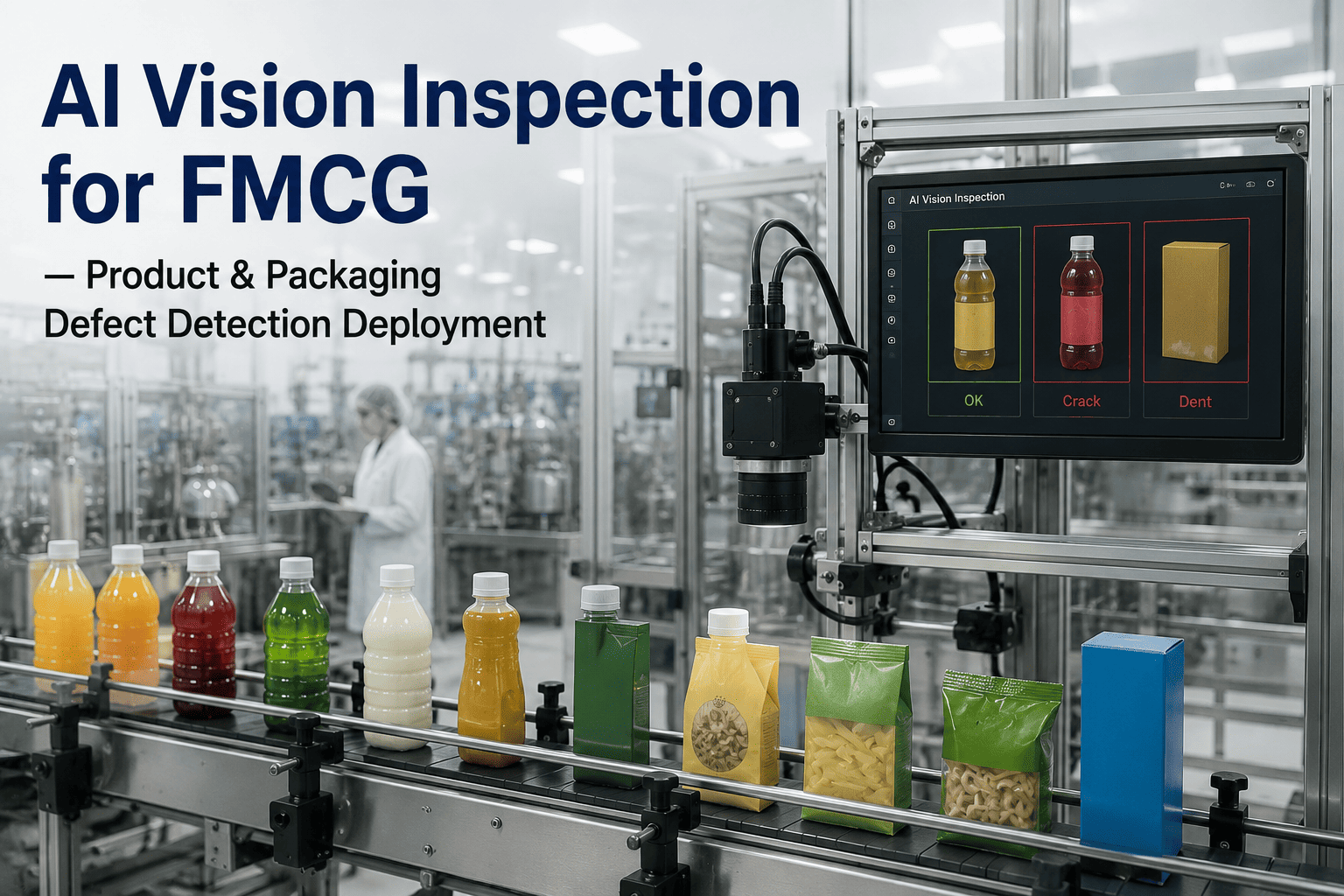
Food & Consumer Packaging
Seal integrity, fill-level consistency, and label defects across fast-rotating SKUs
Semiconductor & Electronics Mfg
Wafer and reticle surface inspection, where defect patterns are too fine-grained for manual rule sets
From Pilot Line To Plant-Wide Rollout
1
Capture Good Parts
A camera setup captures a set of known-good parts under normal production lighting, no defect samples needed to start.
2
Learn Normal
The model builds a detailed map of expected texture, geometry, and surface pattern from those good-part images alone.
3
Score Live Parts
Every part passing the camera is scored in real time against the normal map, with deviations flagged as a heatmap.
4
Route And Refine
Flagged parts route to hold or rework, and confirmed anomalies feed back to sharpen the model's sense of normal over time.
Built For NVIDIA-Accelerated Edge Deployment
Anomaly scoring runs as an edge inference workload directly on the plant floor, paired with NVIDIA GPU hardware sized to camera count and line speed, so scoring happens within the same second a part passes the lens rather than in a batch job later. A typical rollout starts with a turnkey hardware and camera package sized for one or two lines, validated against real parts during a pilot, and scaled to additional lines over a six to twelve week deployment roadmap once the model's accuracy is confirmed on your own product mix.
What Quality Leads Are Saying
We build twelve different part variants on the same line in a single week. Training a rules-based system for each one never worked. The anomaly model just needed good parts from each variant, and it started catching things our manual inspectors were missing within the first shift.
Quality Engineering Lead, Precision Components Manufacturer
Frequently Asked Questions
Do we need any labeled defect images to get started?
No. The core advantage of unsupervised anomaly detection is that it trains entirely on defect-free, known-good parts, so there is no need to collect or label examples of every possible flaw before deployment. This matters most for high-mix lines where certain defects may never have occurred before, since the model can still flag them as deviations from normal without ever having seen that specific flaw. A small set of confirmed defect images can be added later purely to validate accuracy, but they are never required to train the base model.
How does the model handle normal product variation between good parts?
Good parts are never perfectly identical, so the model is trained on enough sample variation to learn the acceptable range of normal texture, color, and geometry rather than a single fixed template. During setup, the team reviews flagged results against your own tolerance standards and adjusts sensitivity so natural variation is not mistaken for an anomaly. This calibration step is typically completed within the first few days of a pilot, using parts drawn directly from your current production run.
Can this run alongside our existing rules-based inspection system?
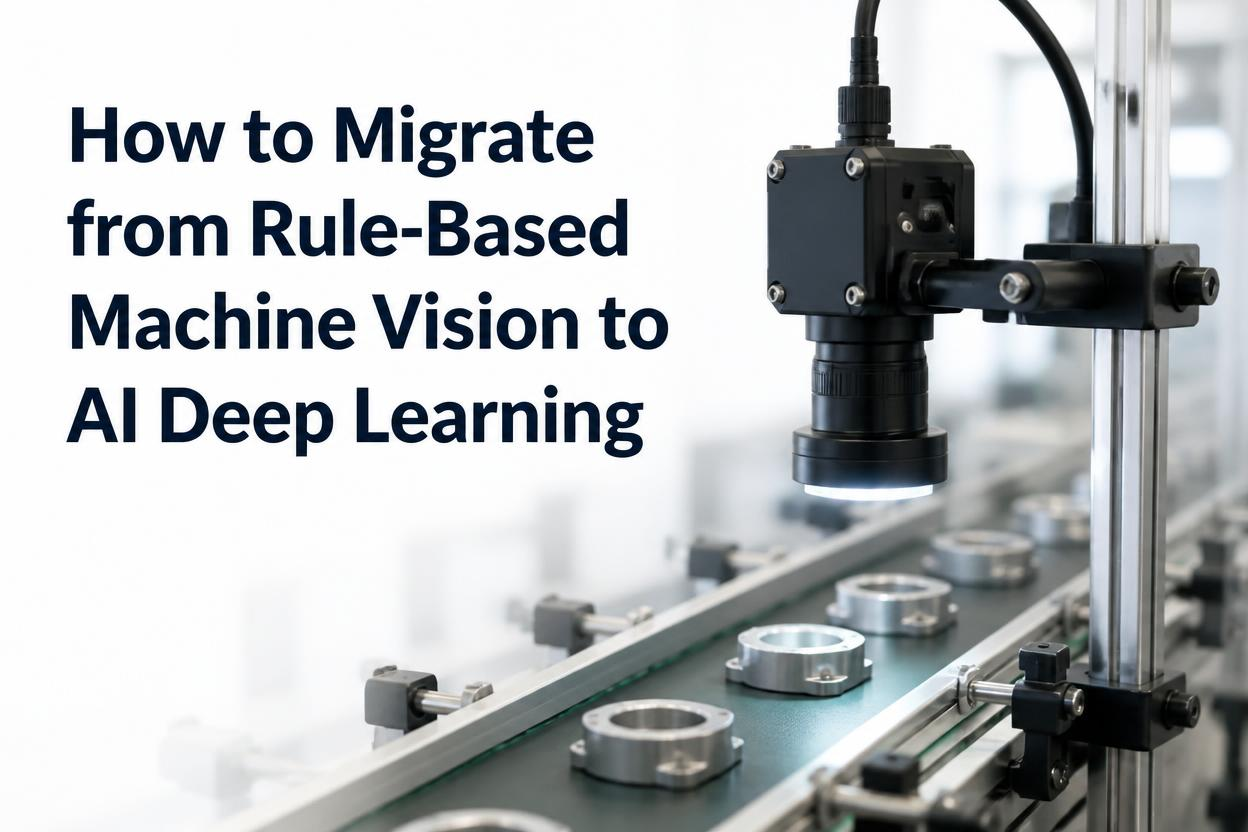
Yes, many plants run anomaly detection as a second layer alongside an existing rules-based or manual inspection process rather than replacing it outright on day one. This lets teams compare results directly and build confidence in the anomaly model's accuracy before retiring older inspection steps. Over time, most plants shift the anomaly model into the primary role once it demonstrates it catches issues the rules-based system misses, particularly for novel or rare defect types.
What kind of hardware does this need on the floor?
A typical setup pairs industrial cameras positioned at the inspection point with an NVIDIA GPU-based edge unit sized to the number of cameras and required inspection speed, so scoring happens locally without depending on a network connection to a distant server. Hardware sizing is based on line speed, part size, and camera resolution, and is scoped during a short technical assessment before any commitment. Teams can review sizing options through
support ahead of a pilot.
How long does a pilot take before we see real results?
A focused pilot on one line, using good parts already available in current production, typically produces a working anomaly model within two to three weeks, giving the team a real accuracy benchmark to evaluate. Full deployment across additional lines and product variants generally follows a six to twelve week roadmap depending on camera count and how many part variants need their own normal-pattern baseline. Plant and quality leads can
book a demo to see a rollout timeline scoped to their own line count and product mix.
AI VISION ANOMALY DETECTION
Stop Writing Rules For Defects You Haven't Seen Yet
Get a walkthrough of unsupervised anomaly detection running against your own product images and defect history.